 Stone-Ideas.com


Text der Marmomac: Die Halle 10, die Marmomac dem Design und der Natursteinkultur widmet, beherbergt jedes Jahr die von der ADI Venetien und der Delegation Trentino-Südtirol kuratierte Ausstellung. Bei der Ausgabe 2024 präsentiert das Theater Plus die architektonischen Module: Erfahrungen und Sensibilität mit der Materialsprache, ein außergewöhnliches Schaufenster für Experimente und Innovationen.
Die Designer sind es gewohnt, verschiedene Materialien zu erforschen, aber die Arbeit mit Marmor ist für sie eine Entdeckungsreise. Sie setzen sich nicht nur mit der außergewöhnlichen Natur des Steinmaterials auseinander, sondern experimentieren auch mit verschiedenen Bearbeitungstechniken, die von traditionellen Methoden bis hin zu Spitzentechnologien, wie numerisch gesteuerten Robotern, reichen. Hinzu kommt die Oberflächenbearbeitung mit raffinierten Texturen, die die einzigartige Schönheit des Natursteins unterstreichen und jedem Projekt eine unnachahmliche ästhetische und sensorische Identität verleihen.
Diese Ausstellung bietet den Unternehmen eine außergewöhnliche Gelegenheit zum Dialog und Wissensaustausch, indem sie Materialkenntnisse mit der kreativen Vision der Designer zusammenbringt. Ihre Aufgabe ist es auch, die Unternehmen über die konventionelle Produktion hinaus zu bringen und neue Horizonte der Innovation zu erkunden.
Architectural Modules stellt ein zentrales Thema in den Vordergrund: Naturstein ist vor allem für die Architektur und die Innenarchitektur bestimmt, spielt aber auch eine grundlegende Rolle in der Stadtplanung, wie die Pflasterung und die Stadtmöblierung zeigen. Dieses Thema umfasst verschiedene Produkte, von vertikalen und horizontalen Verkleidungen über Treppen, Geländer und Säulen bis hin zu dekorativen Wänden. Die Designer sind aufgefordert, ein Modul zu entwerfen, ein zusammensetzbares Element, das die Prinzipien der Vorfertigung widerspiegelt und sich durch eine effiziente Konstruktion, einfache Montage und Kontrolle sowie eine schnelle Installation auszeichnet. Diese Module stellen eine fortschrittliche Lösung für das moderne Bauen dar.
Im Mittelpunkt der Ausstellung steht die Aufwertung des Materials. Architektonische Oberflächen erfüllen vielfältige dekorative und schützende Funktionen und haben einen hohen Designwert. Sie spiegeln den Stil der Architektur wider und drücken im häuslichen Kontext die Bestrebungen und Möglichkeiten aus, wie wir in unseren Räumen leben.
Architectural Modules ist eine Reise durch Material, Form und Innovation, bei der Marmor zum Protagonisten einer Erzählung wird, die Tradition, Modernität, Ästhetik und Funktionalität miteinander verbindet.
ADI Delegazione Veneto Trentino Alto Adige
Konzept und Koordination: Carlo Trevisani, Silvia Sandini
Ausstellung Projekt: Carlo Trevisani
Grafisches Projekt: Studio Paffi
ADI Delegazione Veneto Trentino Alto Adige (italienisch)
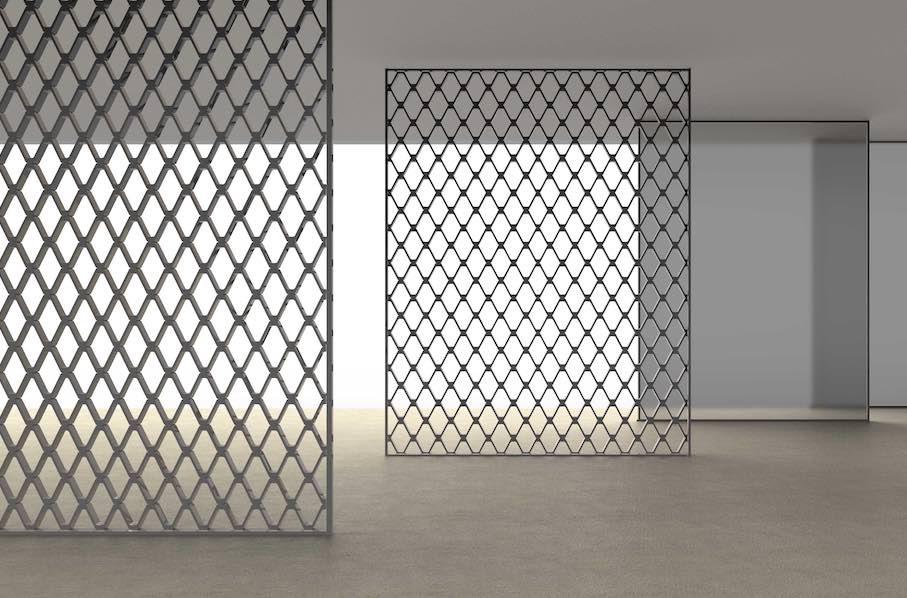
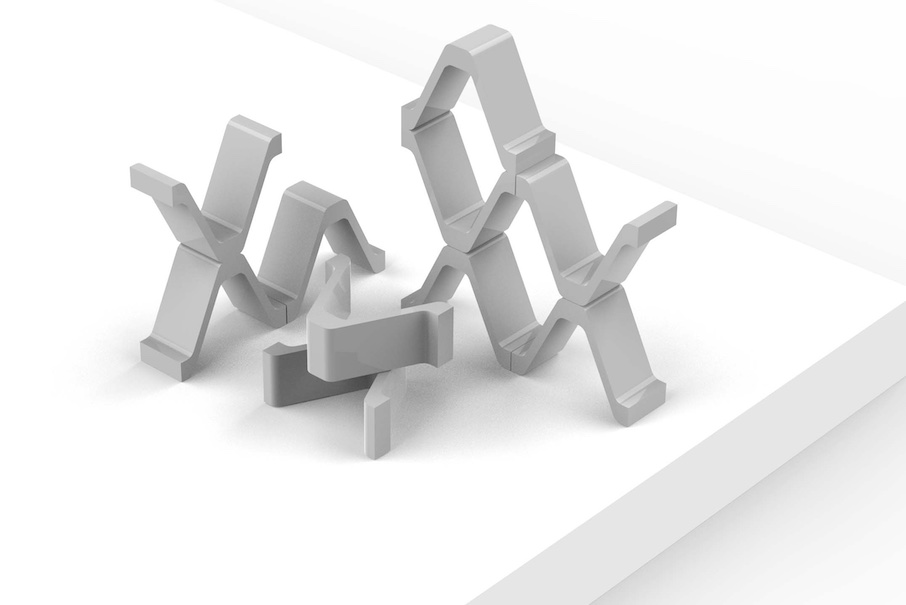
(siehe Fotos oben) Trame di Marmo/Marble Textures – Marmi Industria Friulana e Cregeo – Gianpaolo Allocco Delineodesign. Material: Clauzetto fiorito.Trame di Marmo (Marble Textures) is a module consisting of marble slabs arranged sequentially to simulate a moulded wire mesh. Its geometry is designed to combine the classic and strong aesthetics of marble with a modern and light approach, but also to be used on scrap and so minimise material waste. This concept represents an innovative interpretation of marble as a decorative material that ‘breathes’ and integrates with modern architecture.
Processing techniques: Water jet cutting and milling.
Finishes: honed, sanded, rolled and bushhammered.

 Kyma – Quarella e Marmi Santa Caterina – Nicola Bariol. Material: collection Urban Grey, color Vivaldi. Kyma is a marble module inspired by the graceful forms of Chinese architecture. Drawing from the elegant, flowing lines of traditional bridges, Kyma is designed to seamlessly integrate into any interior space. Its curving shapes introduce a fresh, dynamic element to interior design, transforming surfaces into captivating visual experiences. The module’s flexibility allows for customized space flow, offering the opportunity to direct the curves left or right to suit any specific design vision.
Processing techniques: Water jet cutting and milling.

 Hexagonlab – Leather Stone – Giovanna Carturan e Valerio Facchin. Materials: Royal Yellow (wall); paste composed of powder and flakes of Giallo Reale and hydraulic lime (flooring). Hexagonlab is an experiment whose shape comes from a geometric elaboration of the equilateral triangle module of the regular hexagon to form broken lines that fit together. With the third dimension, the thickness of the material shapes a non-regular volumetric texture.
It is a double experiment: flat version module composed of a mixture of small scraps of marble and lime to create a flooring tile. Module as a worked block suitable for wall facings or dry masonry whose external convex surface creates lights and shadows over the entire surface.
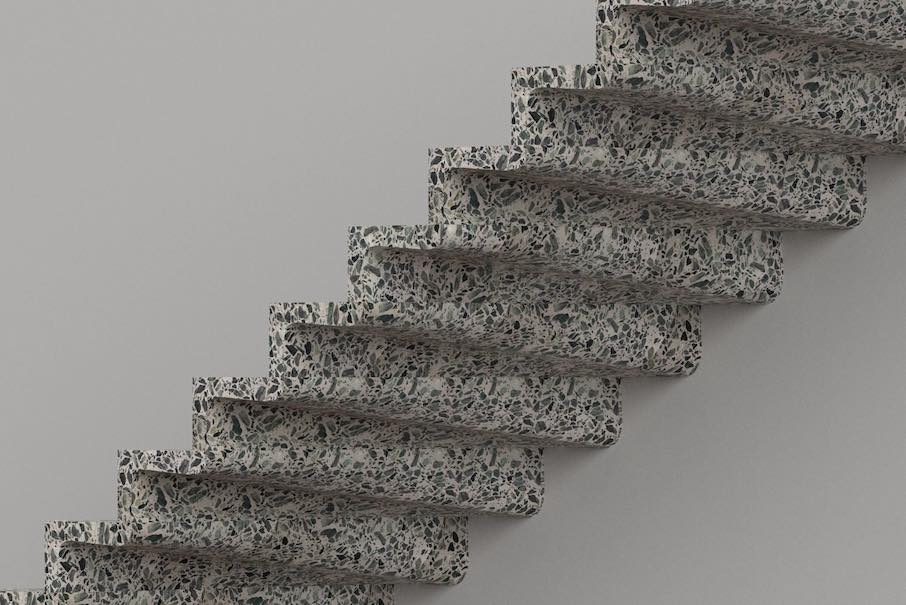
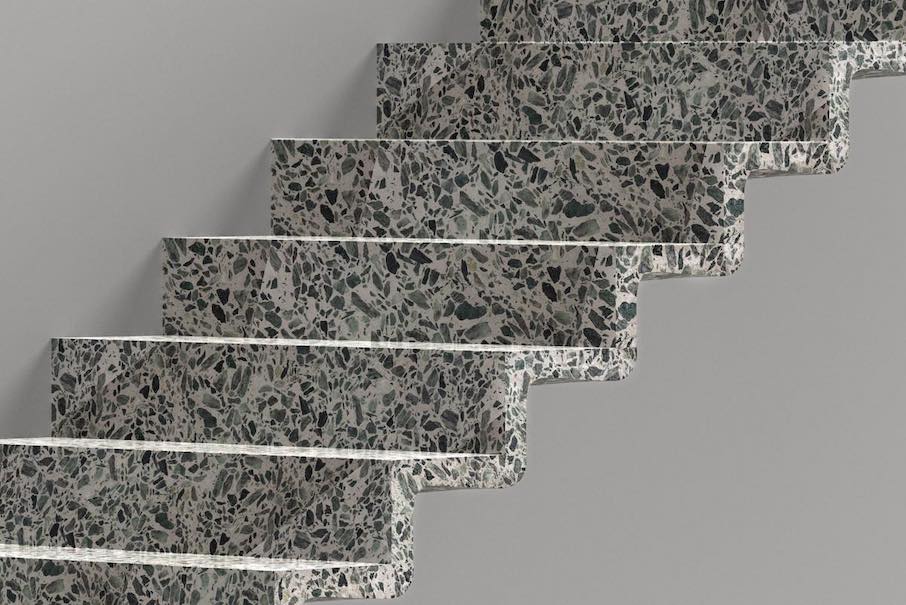 Gradiniglia – Agglotech – Paolo Criveller e Luca Mazzucco. Material: REG5101-Graniglia di marmo 50% “Verde Alpi 4” e 50% “Verde Alpi 5.” Gradiniglia is a cantilevered step made of marble grit. It is designed in accordance with the seismic standard in fact it has a special connection which makes it a whole with the curb inserted in the wall. The contrast between the two fronts is impressive: austere in the riser and footstep and having organic surfaces on the back, merging the waves of the sea with the petals of a flower.
Production technique: Agglotech terrazzo is the result of an industrial process that combines natural elements, such as marble chips, with cement and water without the addition of resins.
Machining with 5-axis CNC machine. The pre-finished ones are obtained with diamond disc cuts. Subsequently, a combing is performed with the diamond disc. The finishing sanding is done by hand.
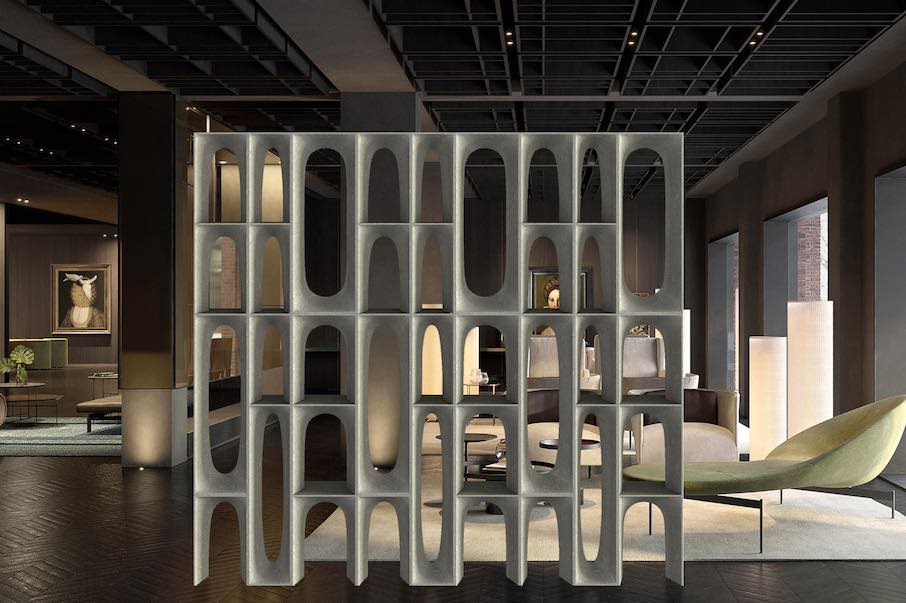
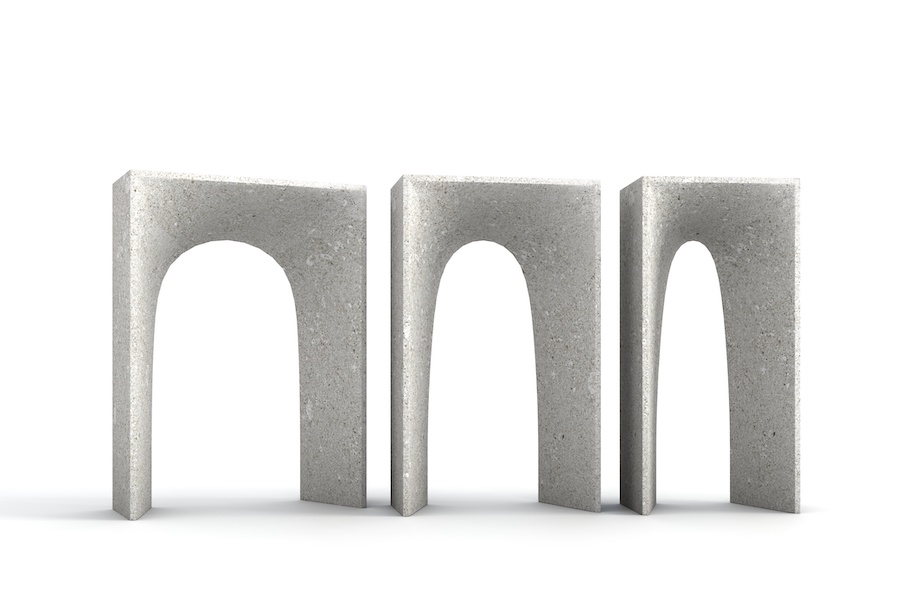 Niemeyer – Bertola Pietre – Cristian Dal Bianco. Material: Pietra di Vicenza, S. Gottardo. The concept draws inspiration from the main theme of the exhibition by paying tribute to one of the most important international architects of the 20th century: Oscar Niemeyer. The proposed module takes up the features of the arches designed in the building designed in 1965 for the headquarters of the Mondadori publishing house in Milan. The intention is the creation on a reduced scale of the building’s arches, broken down into individual modules, so as to leave interpretative freedom in the possible compositions that can be created, creating games of full and empty spaces, or games of reflections, coupling mirrored glass in the background, without neglecting the possibility of displaying objects placed under the arches. Without forgetting the practicality and concreteness that each project requires
Technical processing: block extraction, sawing with single blade. Trimming pieces to size with CNC disk. 3-axis CNC shaping with tool. Finished with hand-made abrasive paper.
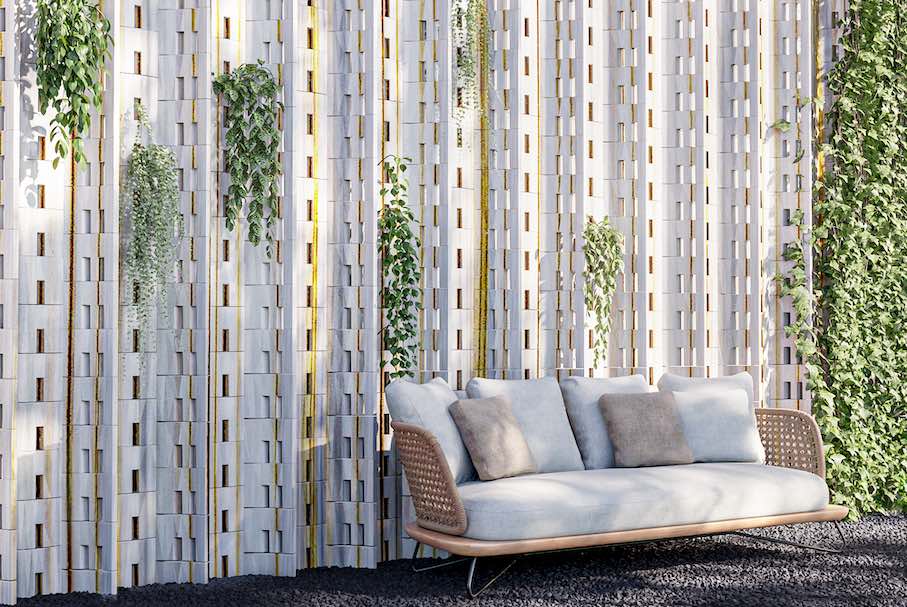
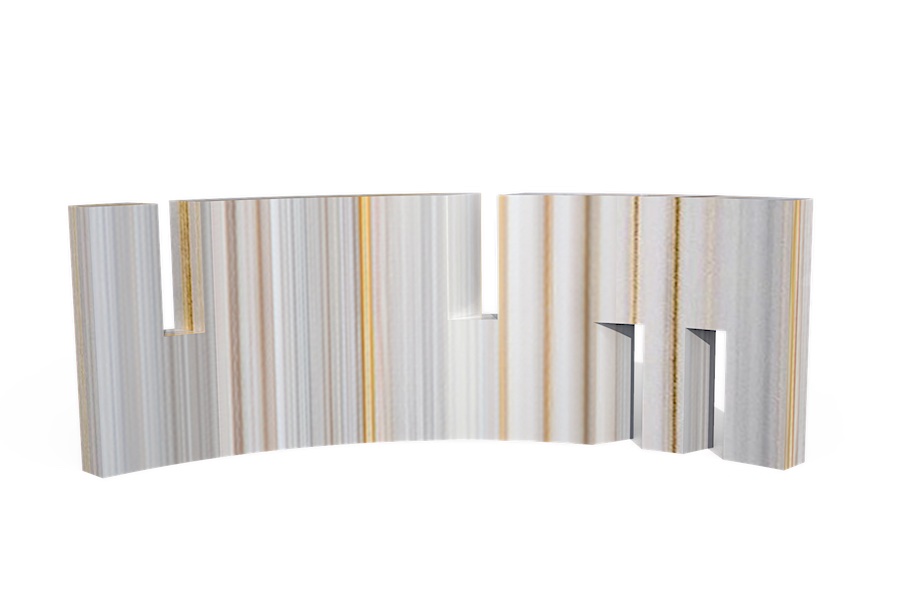 Bugnato Allegro – Marmoles Luis Sanchez – Matteo Leorato. Material: Gold Zebrino. The project draws inspiration from ancient Roman masonry works and later those of the Tuscan Renaissance, known as “bugne” or “bozze.” Historically, the “bugnato” protruded uniformly and could be conceived in various ways (gentle bugnato, smooth bugnato, rough bugnato), with the aim of conferring majesty to the facades of palaces and villas.
“Bugnato Allegro”, on the other hand, aims to lighten the facades, allowing them to “breathe” thanks to its modularity. This design allows the passage of light breezes, isolating and cooling the exterior walls of buildings.
Processing techniques: Saw cut and CNC.
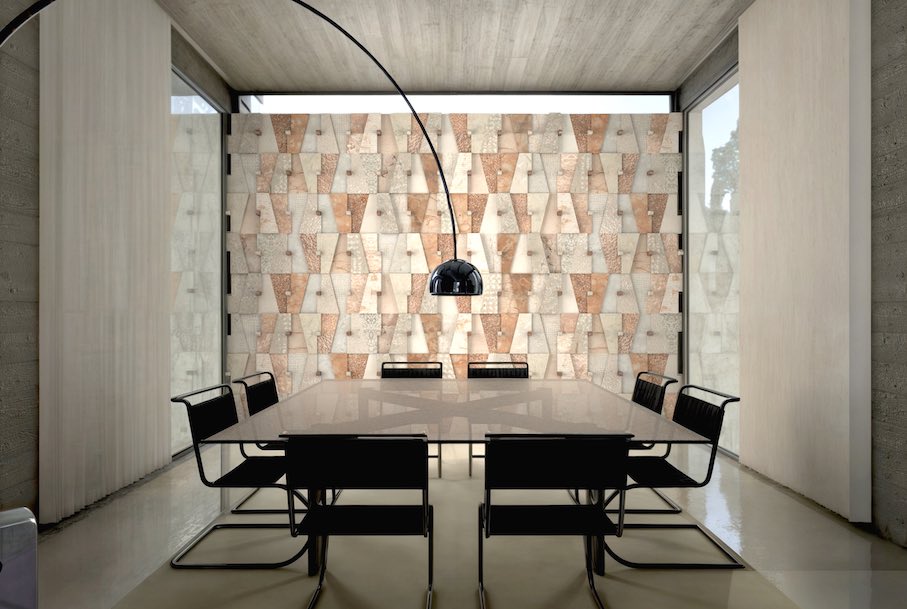
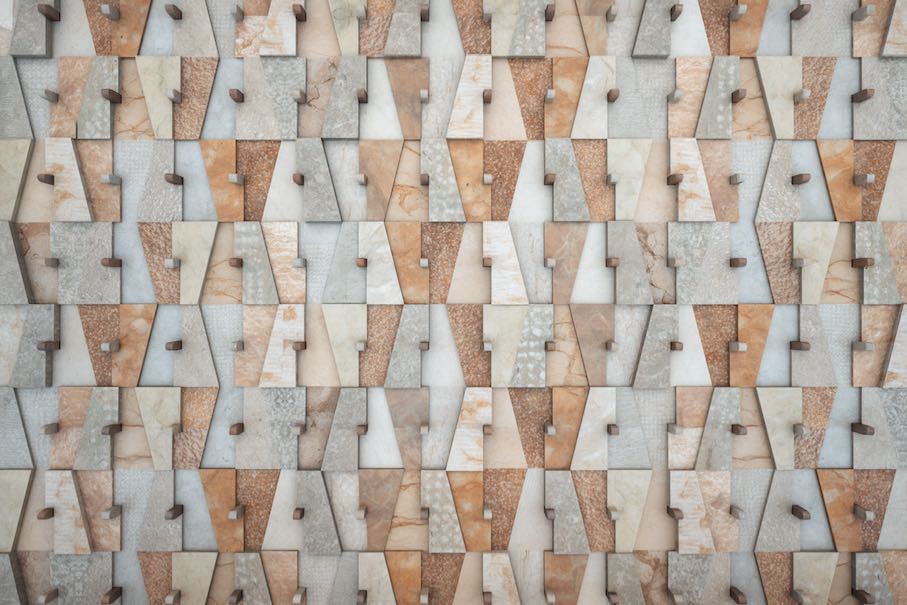 Cunei e Forme/Wedges and Shapes – Quintarelli Pietre e Marmi – Maria Vittoria Malgarise. Materials: Pietra Bianca della Lessinia, Pietra Rosa della Lessinia, Marmo Rosso Trento, Marmo Verdello Trento. “Cunei e Forme” is a wall cladding system for enhancing and recovering the Lessinia Stone and Rosso and Verdello Trento Marble. Starting from a basic design, the cladding elements and decorative wedges are obtained from waste sheets or offcuts; these will then be finished by hand according to traditional historical techniques. The different thicknesses of the starting slabs will create a vibrant play of shadows on the wall. The wedges simply inserted into the central hole can change position for the owners’ fun.
Processing techniques and finishes: hand grading, hand bush-hammering, natural quarry split, sandblasted and brushed quarry split, hand chiseling, sandblasting and brushing, bush-hammering and brushing, flaming and brushing, grinding.
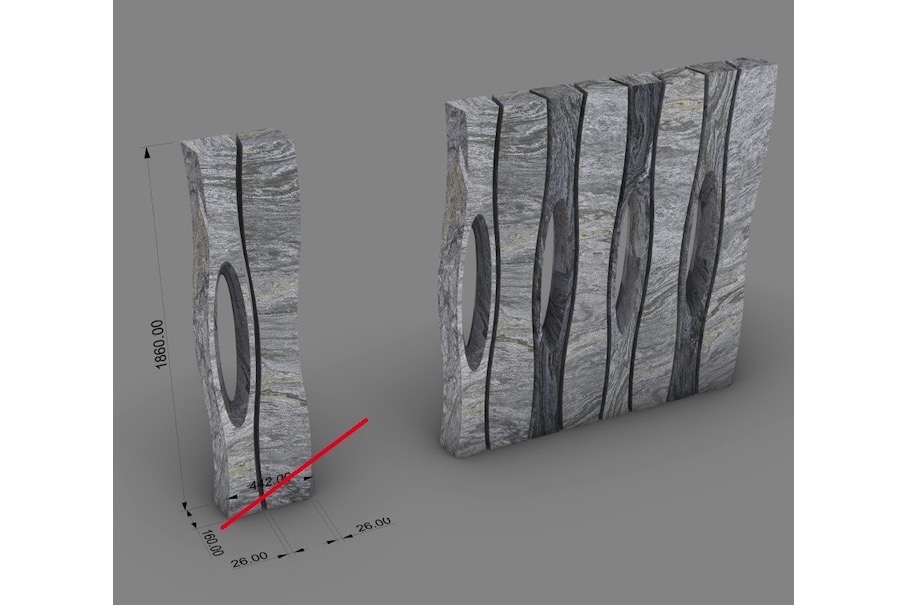
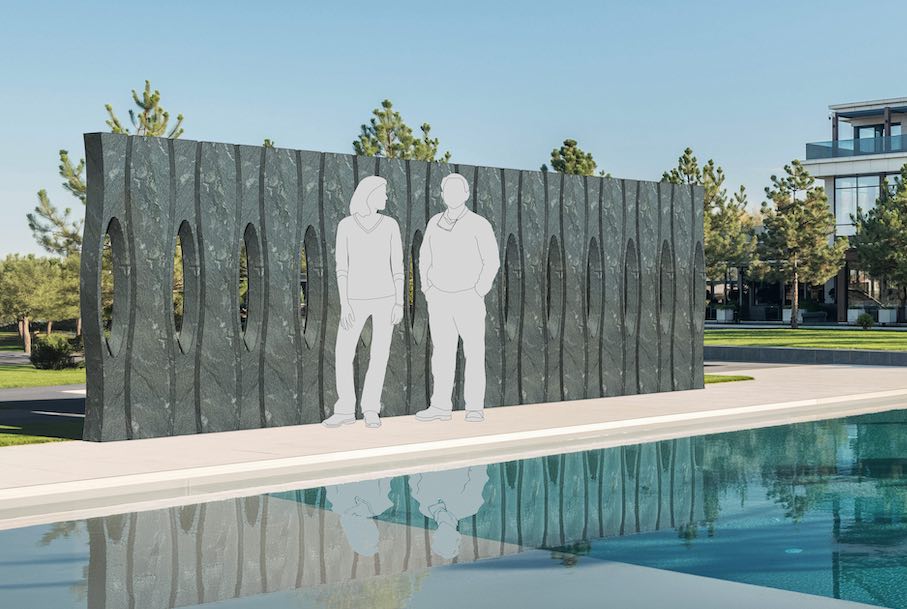 Totem Wall – Pannoia Stones e Stein Schwarz – Patrick Moroder. Material: Pannonia verde.After initial concept sketches and a joint briefing on technical feasibility and aesthetic objectives, we opted for a two-module partition with a ‘seeing and not seeing’ theme. Trapezoidal columns create the illusion of a moving wall. Distances appear fluid and variable. The oval opening in the middle, milled in an elliptical and conical shape, allows the children to see through and gives the wall a light appearance while keeping it firmly connected to the floor.
Source material for the modules is a solid stone tranche made of Pannonia green. The contours and holes are milled out on both sides using a 5-axis CNC bridge saw with a diamond milling tool. The surface processing and drilling of the mounting holes is done manually with machine support.
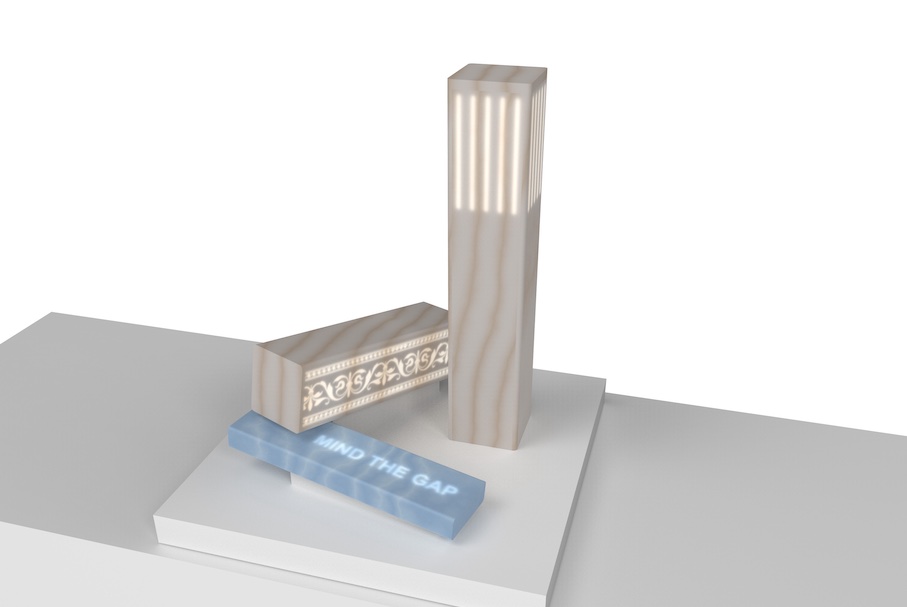
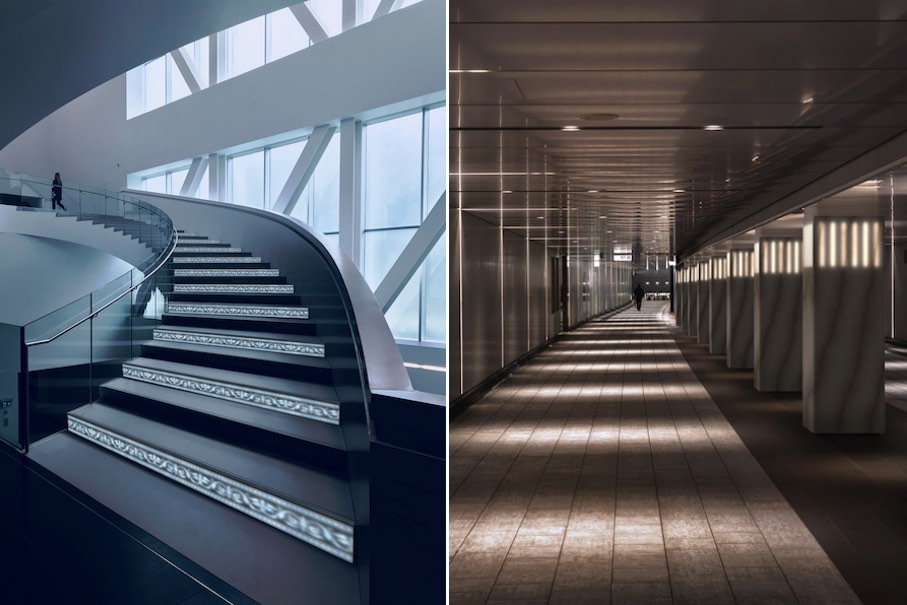 Frames – Gruppo Tosco Marmi – Paolo Perbellini e Justin Newall. Material: Classic Palissandro, Bluette Palissandro. The project forms part of the line of research “Aura Lapis” from Fishform, characterized by the use of technology combining LED lights and marble. Flat surfaces and objects are without design or decoration. The subject, light, design or message, appear from behind the surface, to later disappear. “Frames” are stone artifacts, that come from the past of a near future.
Columns and friezes reinterpret decorations with luminous strokes. Delicate and mysterious messages that appear and disappear in different architectural contexts.
Processing technique: Surface polishing and CNC reductions; insertion of LED light.
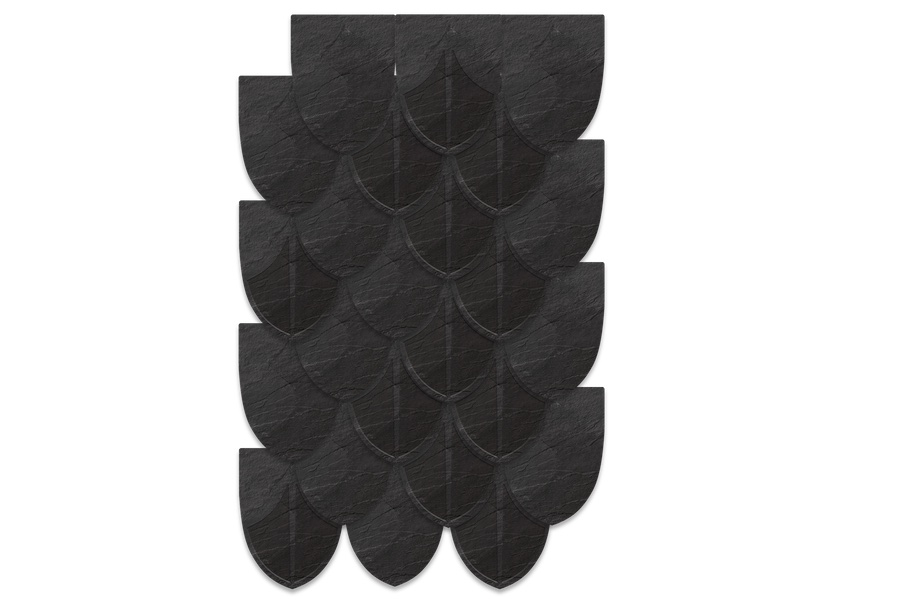
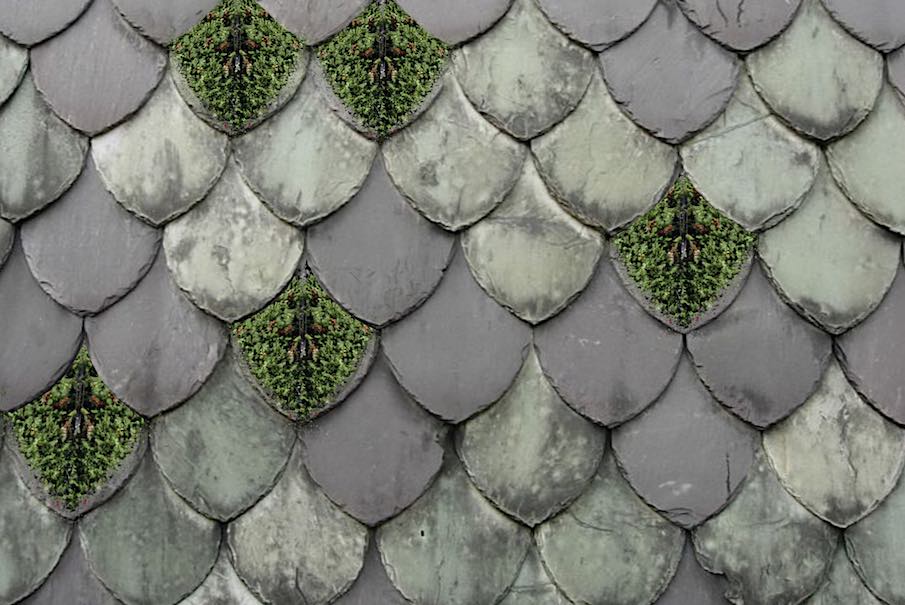 RoofLeaf: tiles for green roofs – Map-Slate – Eleonora Pesce. Material: Slate. The Roofleaf tile project, as well as by assonance, is inspired by green roofs. Green roofs are a corner of nature in atypical contexts and help to improve the environment in which we live by cleaning the air. The tile module designed for this project is a leaf-shaped inspired and made of slate. It is worked with a slight milling suitable to hold seeds/ pollen/ spores of plants carried by the wind and to keep a light layer of water so that they can grow. The goal is to create a “natural effect” and spontaneous green roof through specially designed surfaces so that wind, water and plants work in synergy to create points of green in an atypical, organized and not “intensive” context.
Processing: the material is split by hand with a simple chisel and the manual work of a skilled splitter. Once divided into sheets of approximately 1 cm thick, it is shaped with a waterjet and milled. Everything is finished by hand again.
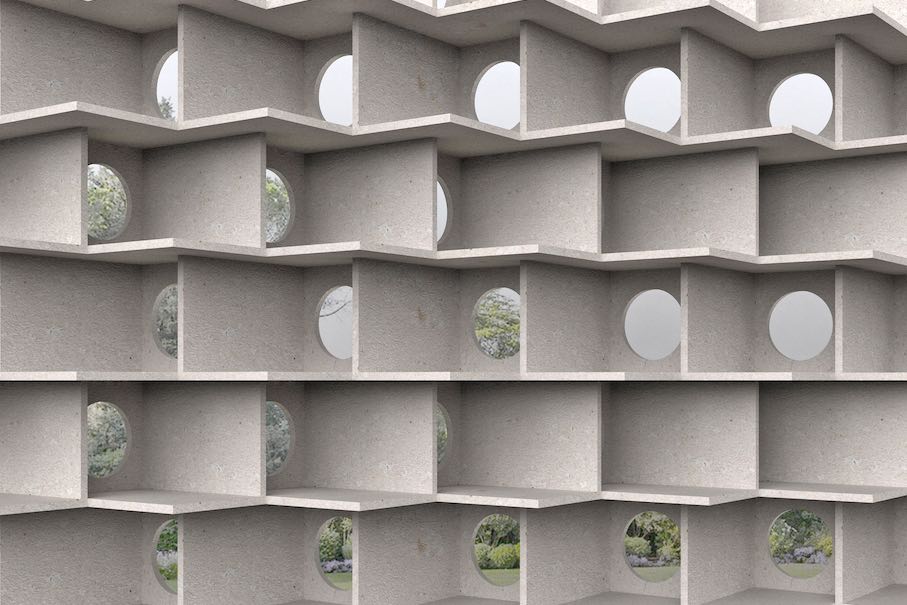
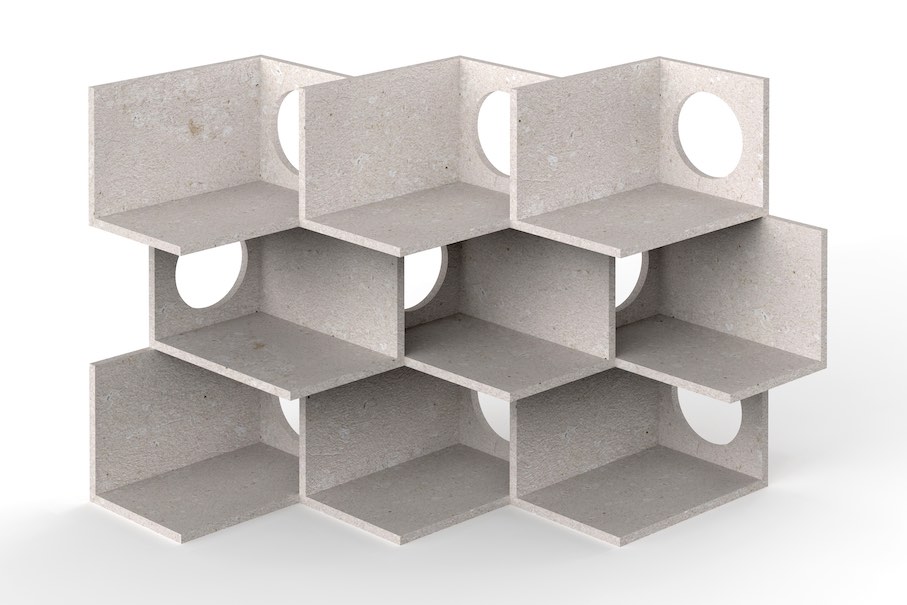 Trilatero – Achille Grassi International – Franco Poli. Material: Vicenza Stone. Architectural module in Bianco di Vicenza stone, can be used to separate public and private spaces by creating large organic and semi-transparent partitions. The module lends itself to countless aesthetic configurations that work on the depth of chiaroscuro and the light that penetrates from the circular hole in one of the three walls. The aesthetic effect is given by the repetition and alternation of horizontal planes (usable for display) and blind walls with perforated walls.
Processing techniques: CNC disc cutting and milling.
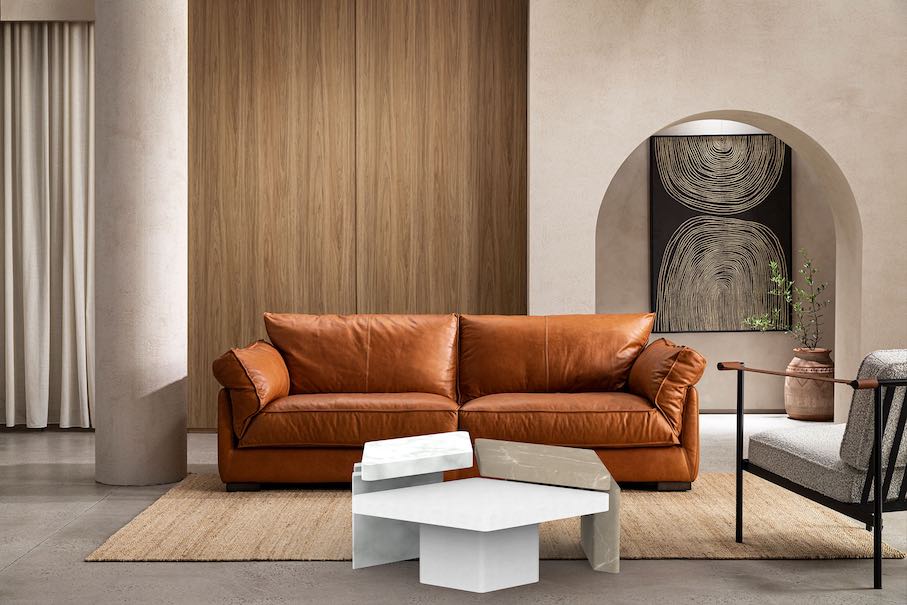
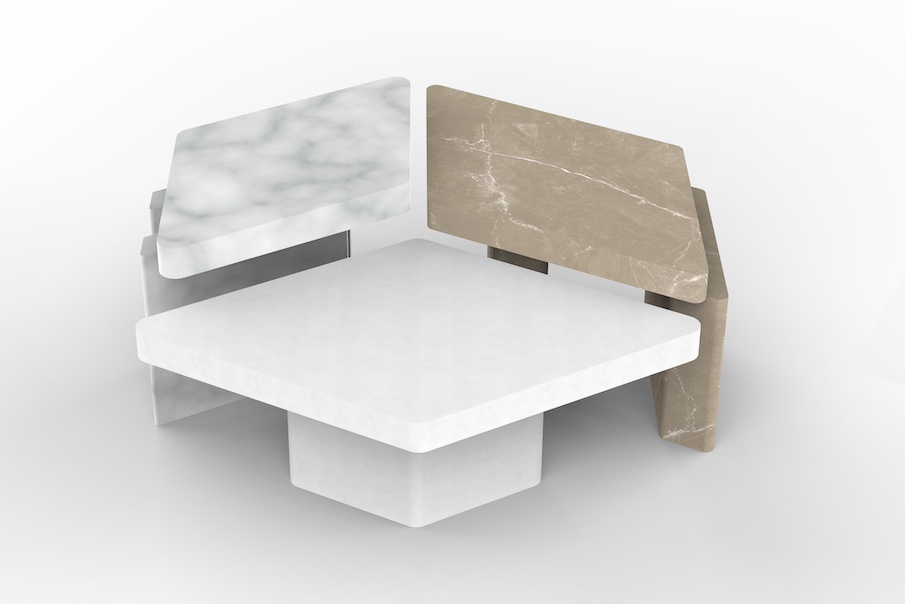 Raised Vein – Franchi Umberto Marmi – MM Design Alex Terzariol. Materials: Calacatta gold, Bardiglio, Calacatta 900. The emerging trend in material usage celebrates craftsmanship and its technologies, adding significant value. The broad surface textures highlight artisanal excellence, skillfully blending natural, raw textures with smooth, modern finishes, showcasing the fusion of culture and artisanal expertise. Handmade objects result from sustainable design, imparting narrative character and lasting significance to projects.
Decorative imperfections and the use of distinctive materials, combined with artisanal techniques, enable the development of unique surfaces that represent a new language of sustainability.
Focusing on a distinctive aesthetic, MM Design, in collaboration with Franchi Umberto Marmi, presents a project that enhances the texture of marble and the skill of local craftsmanship. Through the traditional technique of acid etching, the natural veins are accentuated, becoming contemporary decorative textures.
Technical processing: CNC shaping and etching.
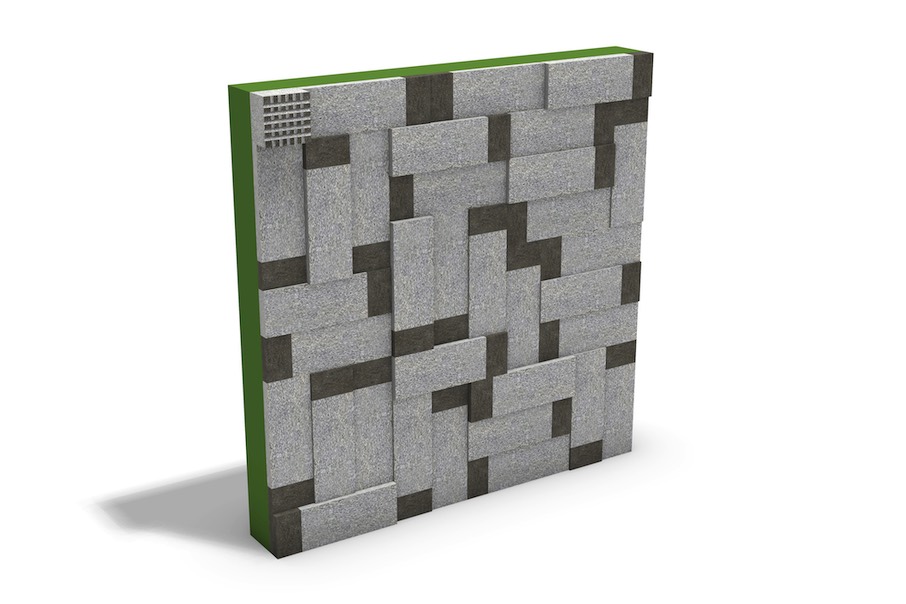
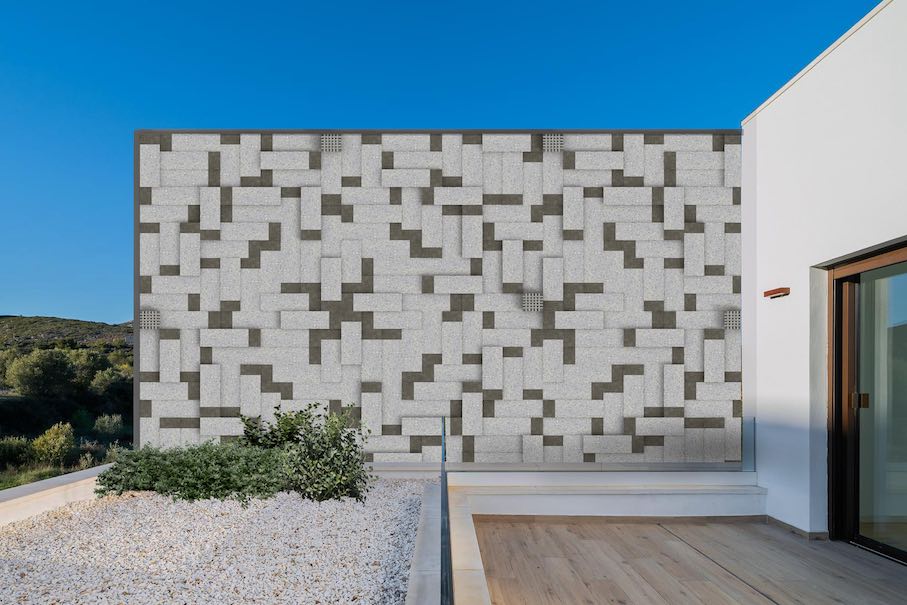 I Porfido – Porfidi Italia 2000 – Luigi Siard. Material: Porfido. “I porfido“ or the identity of porphyry. It is always fun to play with a simple module and discover the infinite possible combinations, “I porfidoI has in itself the measured combination of two finishes; the larger portion is bush-hammered and the smaller one is polished. Both in cladding and flooring, the combination of the two finishes allows the construction of more or less complex or rhythmic designs. “I porfido” can be made in different thicknesses in order to increase the character in the movement of a desired design.
Processing techniques: Saw cut and bush hammered and polished finish.
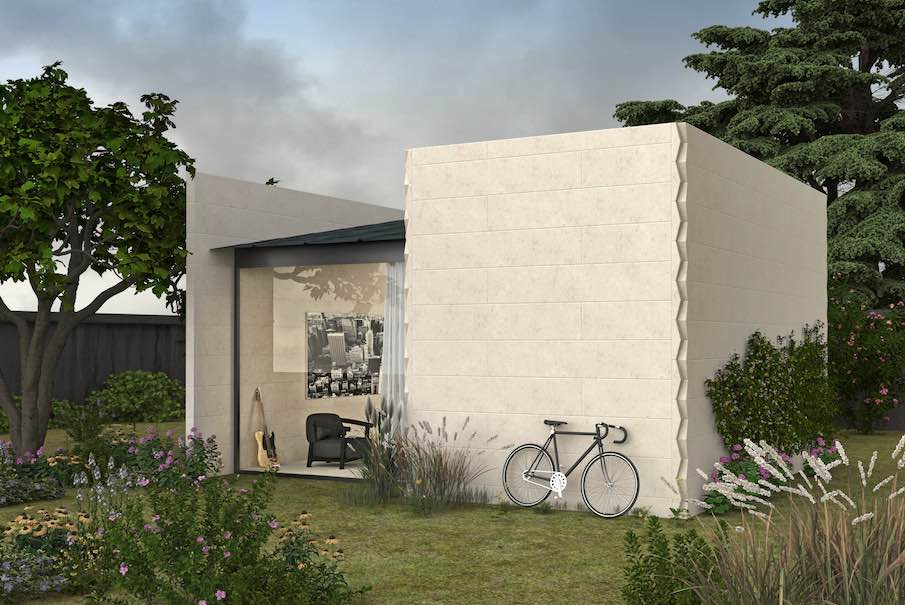
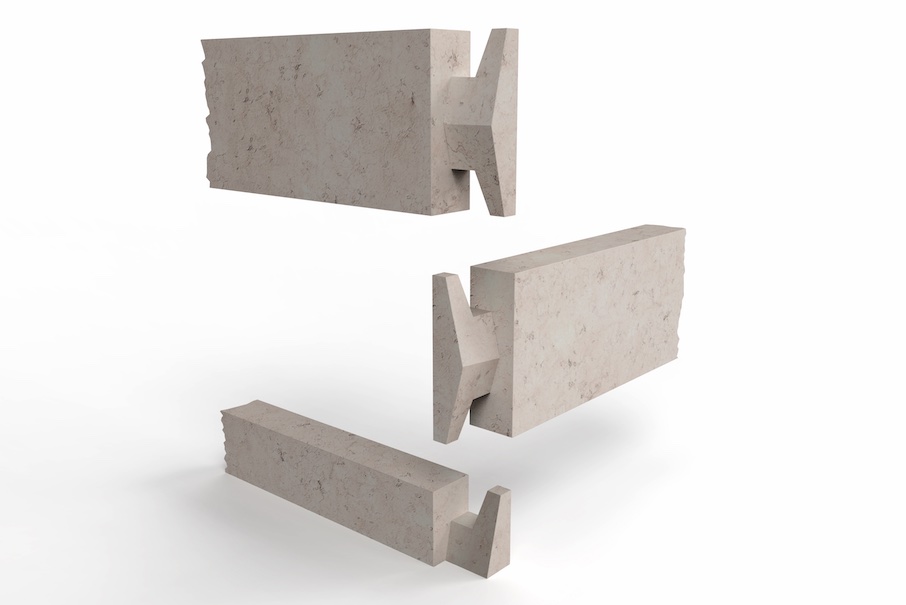 Modulo Modesto/Modesto Module – Guardini Pietre – Carlo Trevisani. Material: Pietra della Lessinia. A module inspired and dedicated to the “Stalla del Modesto,“ a historical architecture of the Lessini mountains, a spontaneous expression of rural architecture with the Pietra della Lessinia slabs that fit together. The hybridization of various interlocking architectural constructions, from stone ones to ancient wooden shelters made of logs to contemporary architectural research of “shelters”, is realized in this module. The optimization of production by exploiting cutting techniques is the basis of its characterization: the overlapping of the modules creates a multifaceted edge in the architecture.
Processing technique: CNC disc cutting.
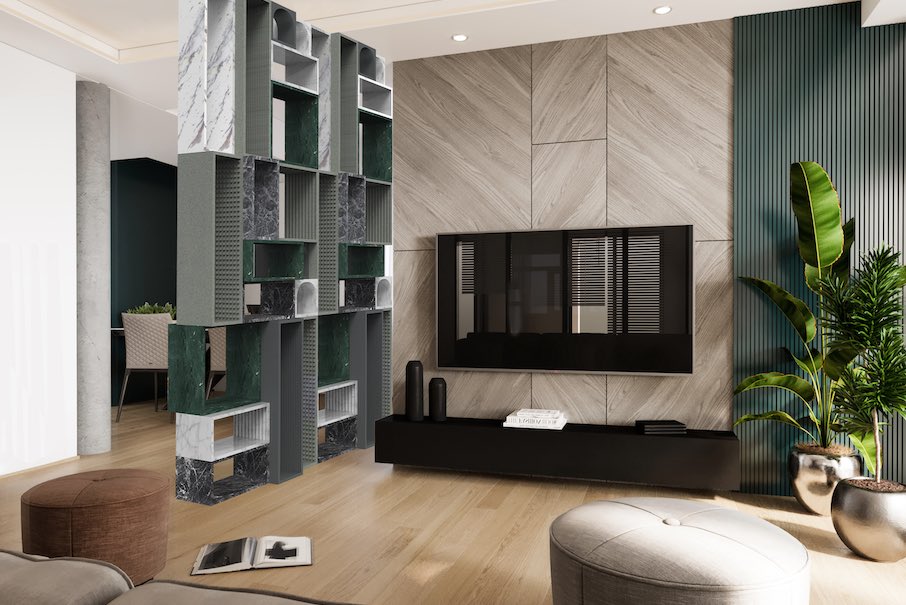
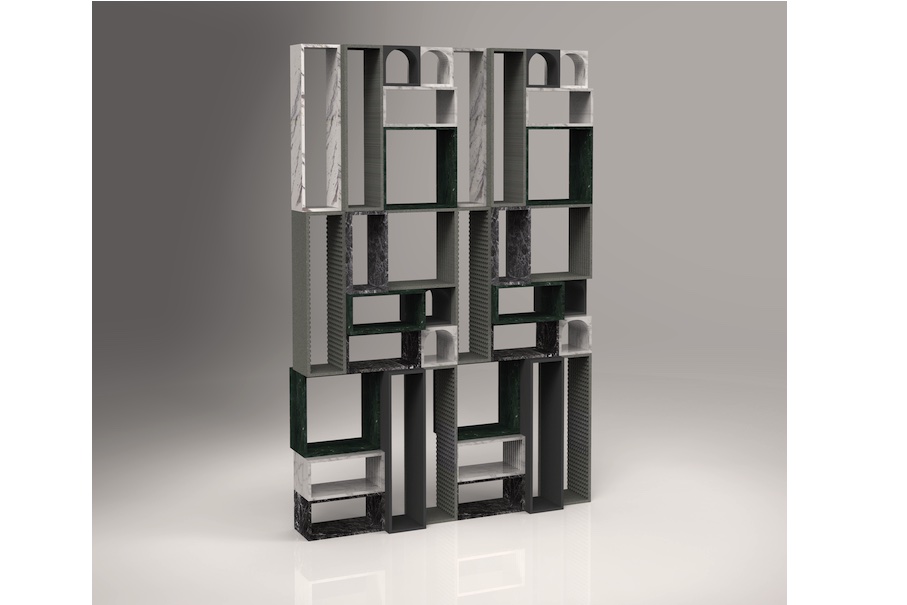 SMM – LMA Machine e Kaleidostone – Giulia Zampieri e Jessica Di Mare. Materials: Bianco Carrara, Pietra lavica, Grigio Carnico, Pietra Serena, Pietra del Cardoso, Bardiglio, Verde Guatemala. A design element made from selected marble processing waste that combines aesthetics, functionality, and craftsmanship. The project aims to create a partition element that can be assembled in various configurations to create bookshelves or dividing walls. The modular approach allows to make different configurations. The modules are sized based on what usually remains as residue from processed slabs and blocks and are dry-fitted together with steel anchors. The textures on the marble are created with disc cutting and CNC milling.
Processing techniques: Saw cut and CNC – Finishing, sanding and polishing with Lma Machine machines, with products certified by LMA.
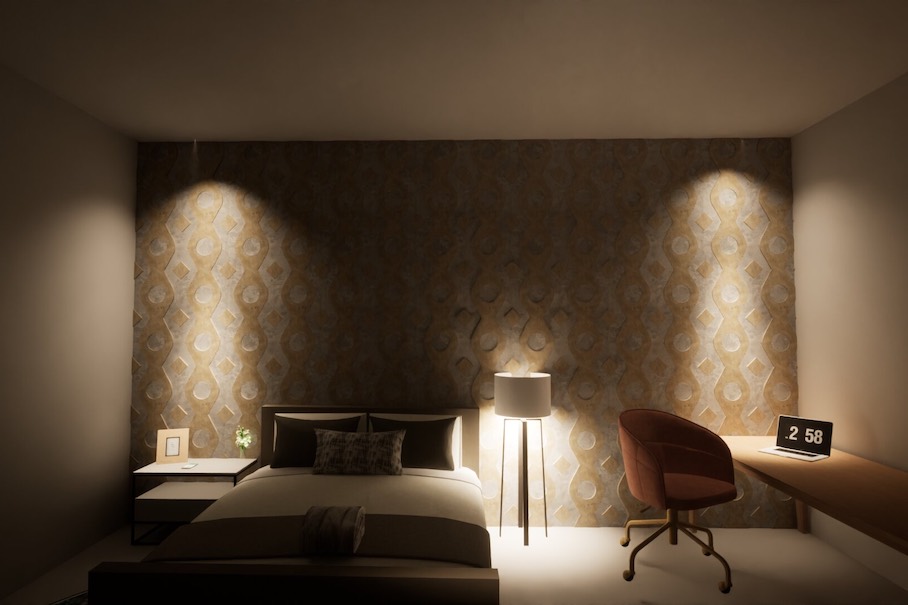
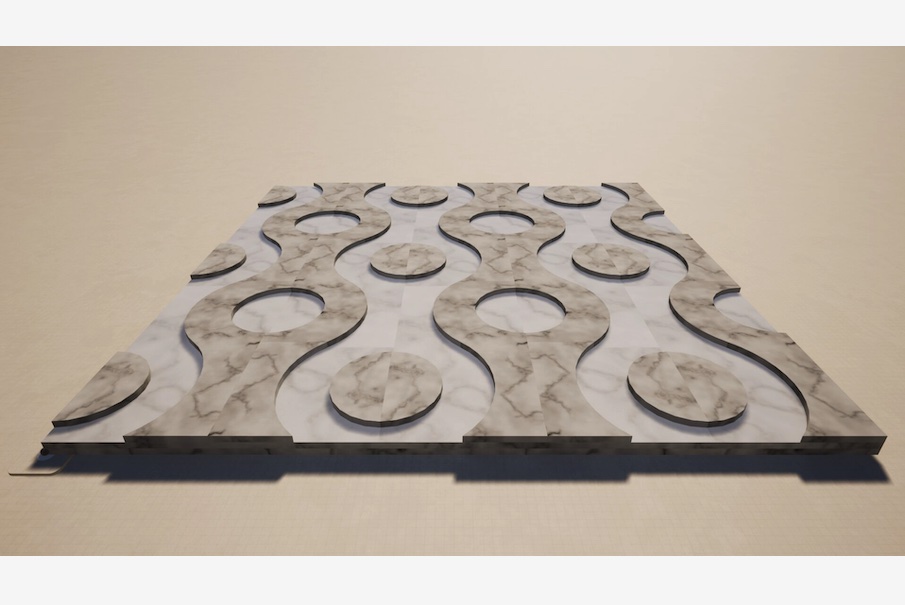 Metàlinè – Quintarelli Pietre e Marmi – Ascanio Zocchi. Material: Verdello di Trento. A line, a thickness carved into the white Verdello di Trento, the curved line that merges with the straight line, shapes are born, the square and the circle and you can also see the triangle, the basic shapes of geometry that are created by positioning the 20×40 module, to become a decorative element of the facade in interiors and exteriors. Processing of a shiny and satin surface to highlight the chiaroscuro.
Production technique: Water jet for engraving and excavation with flaming and final smoothing with brushes and diamond cutters.
(18.09.2024)