 Stone-Ideas.com


Die Ausstellung konfrontiert moderne Ideen mit den fast 5000 Jahre alten Pyramiden im Hintergrund
Die vierte Ausgabe von „Forever Is Now“, Ägyptens wegweisender Kunstausstellung, ist bis zum 16. November 2024 im Bereich der Pyramiden von Gizeh auf der umliegenden Hochebene zu sehen. Sie bringt 14 internationale Künstler zusammen, die ihre einzigartigen Stimmen zu einem kollektiven Dialog über Zeit und kulturelle Grenzen hinweg beitragen. Die Werke konfrontieren ihre modernen Ideen mit den fast 5000 Jahre alten Pyramiden im Hintergrund.
Die Künstler kommen aus dem Vereinigten Königreich, Italien, Südkorea, Südafrika, Belgien, Libanon, Frankreich, Ägypten, Indien, Griechenland, Spanien und Kanada. Zum ersten Mal werden zwei Videos gezeigt, die mit Künstlicher Intelligenz (KI) produziert wurden.
Unterstützer der Ausstellung sind: Alex Bank, Barta & Partners, Afrexim Bank, BICC cables, DHL, Egyptair, Bibliotheca Alexandrina, Sawiris Foundation, leopelle leather, und mehrere Medienpartner.
Quelle: Art d’Egypte / CulturVator
Fotos: Art d’Egypte
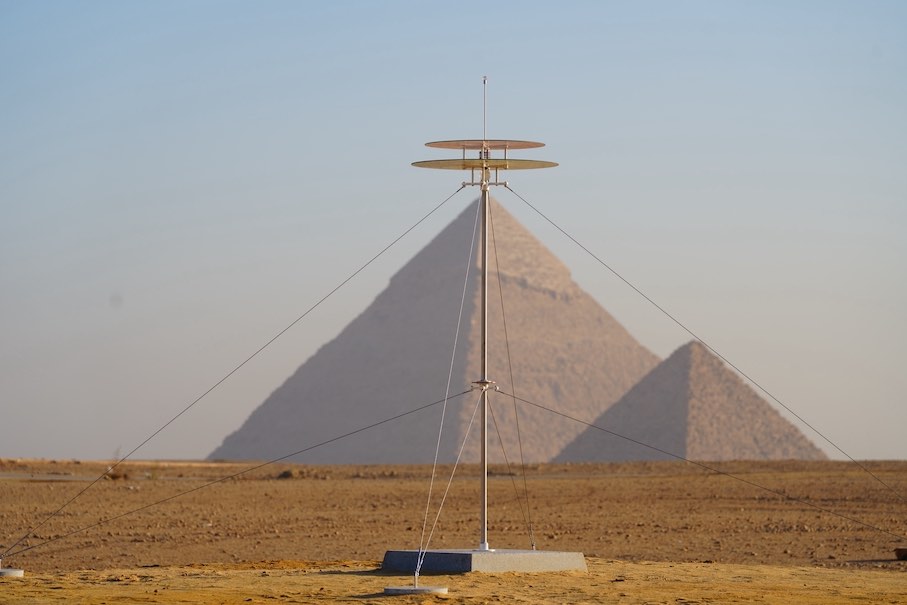
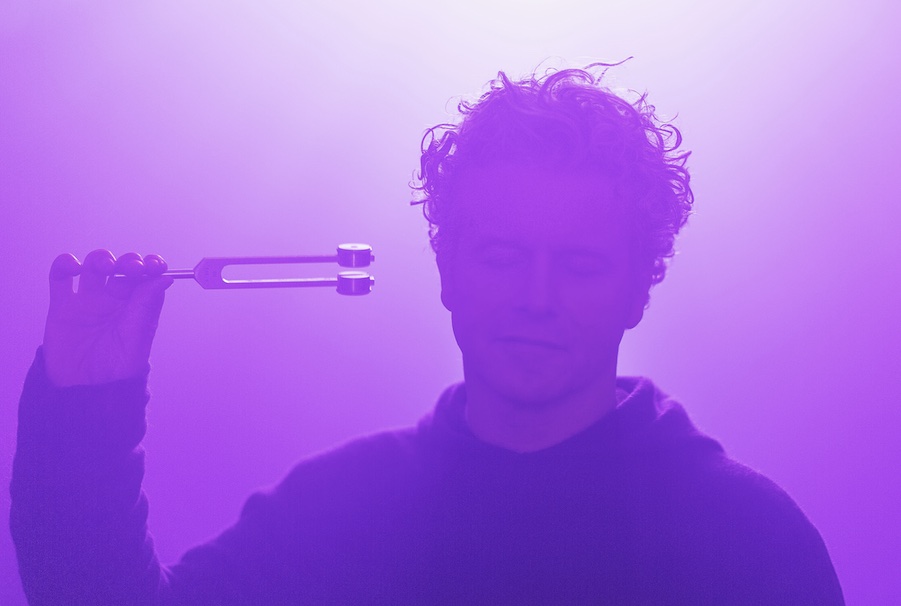 “Quadrivium“ by Chris Levine (United Kingdom). The artist is celebrated for his pioneering work in light art and spatial awareness. Levine’s installation draws on sacred geometry and astronomical ratios, particularly those found in the Great Pyramid of Khufu. His art offers a contemplative space, inviting viewers to explore the universal truths embedded in the Giza Plateau.
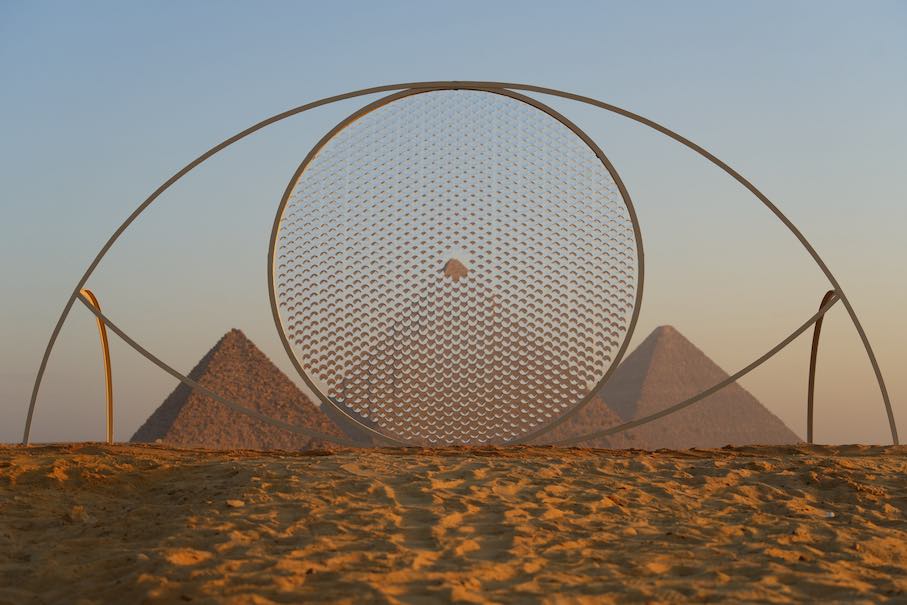
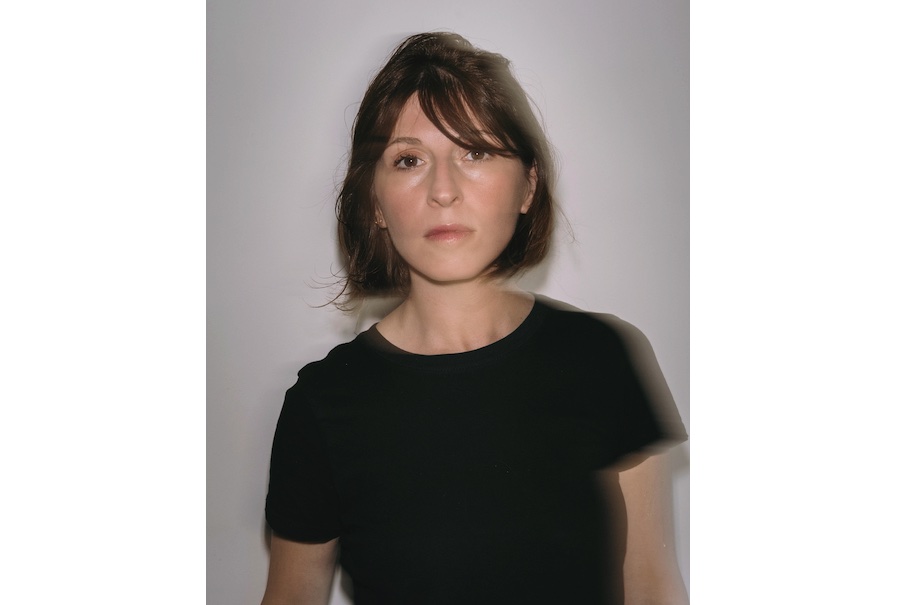 “I See, I See“ by Federica Di Carlo (Italy). The artist approaches her work with a deep connection to nature and the cosmos. Her installation symbolizes the infinite possibilities of life and the unseen energies that surround us, merging the scientific with the mystical in a thoughtprovoking manner.
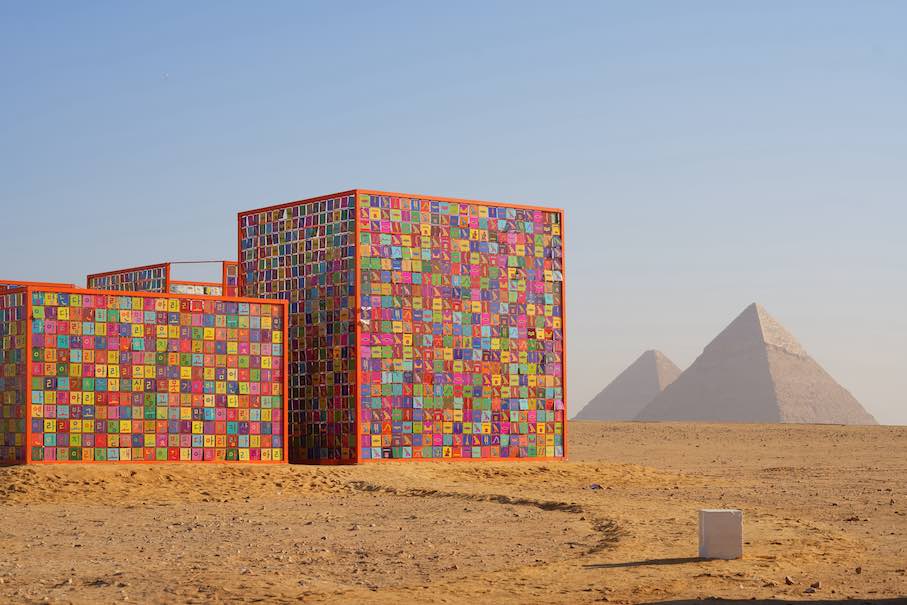
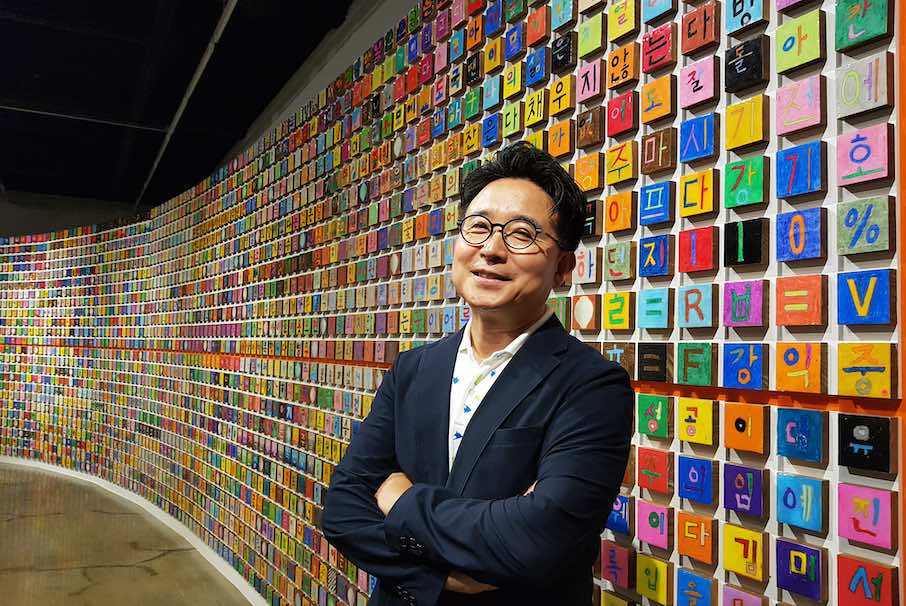 “Four Temples“ by Ik-Joong Kang (South Korea). The artists is renowned for his intricate mosaics, which bring together thousands of small canvases, each representing a story or memory. His work at Giza draws parallels between the ancient world and modern life, symbolizing the collective memories that shape our present.
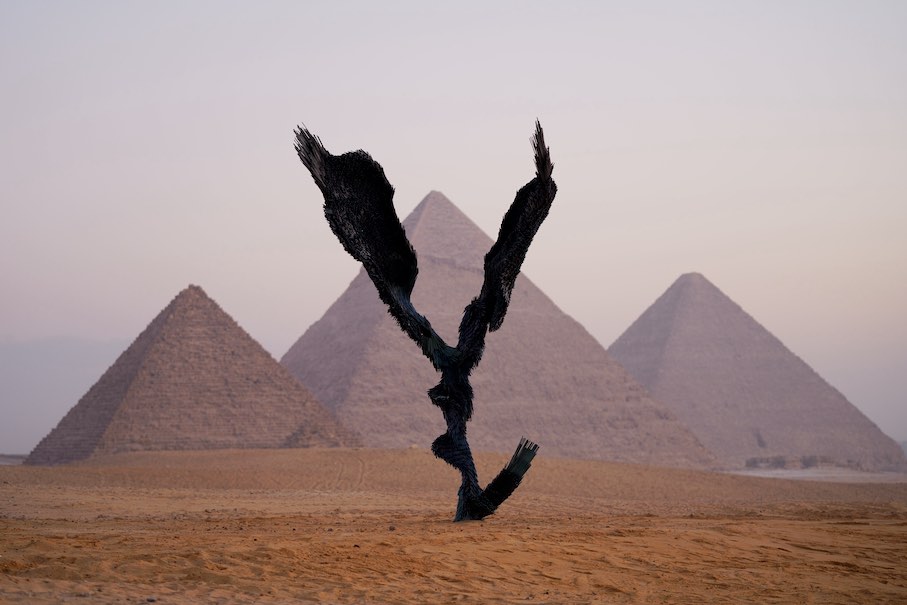
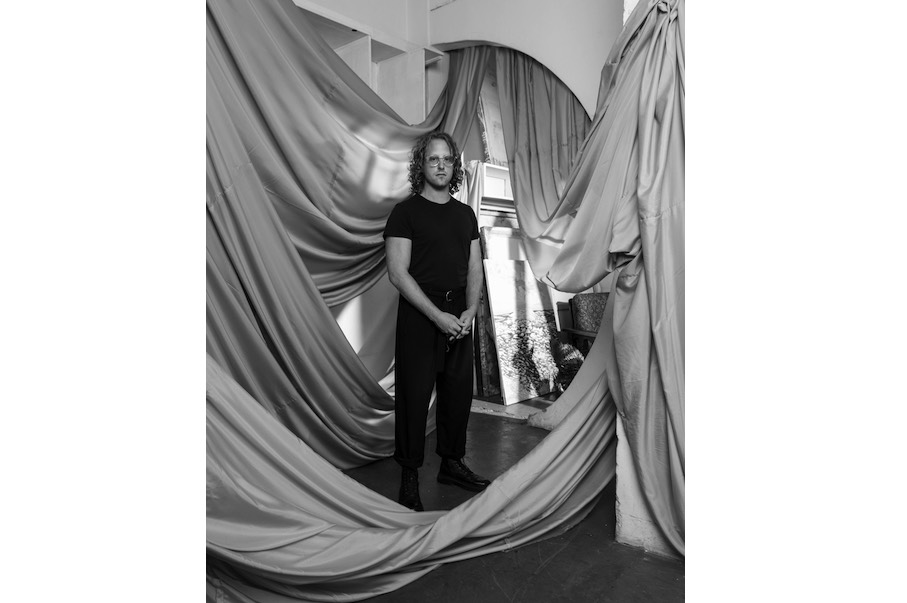 “We Will Meet Again in the Sky“ by Jake Michael Singer (South Africa). The artists creates large-scale installations that explore the tension between natural landscapes and urban environments. His work at Giza reflects on the juxtaposition of the ancient desert with modernity, challenging viewers to rethink their relationship with nature and history.
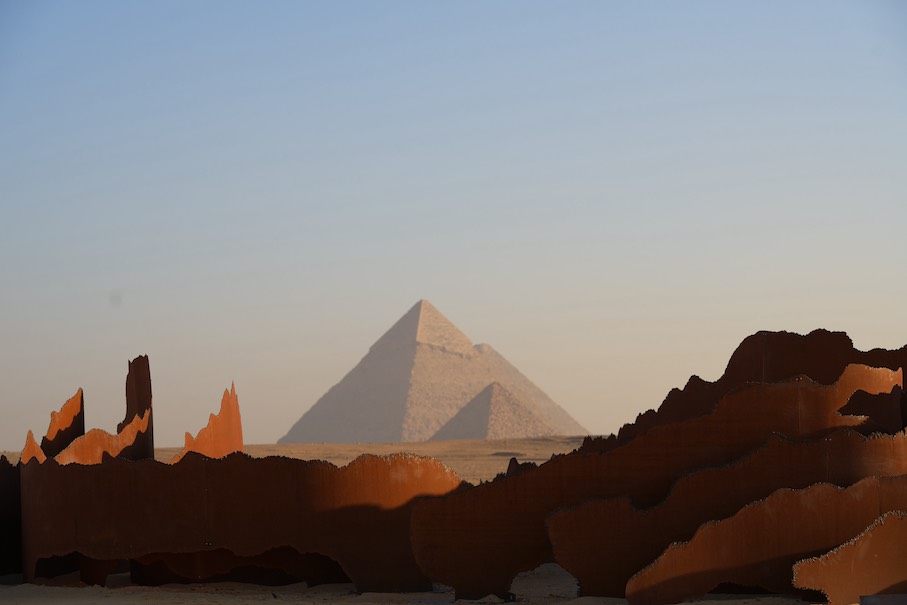
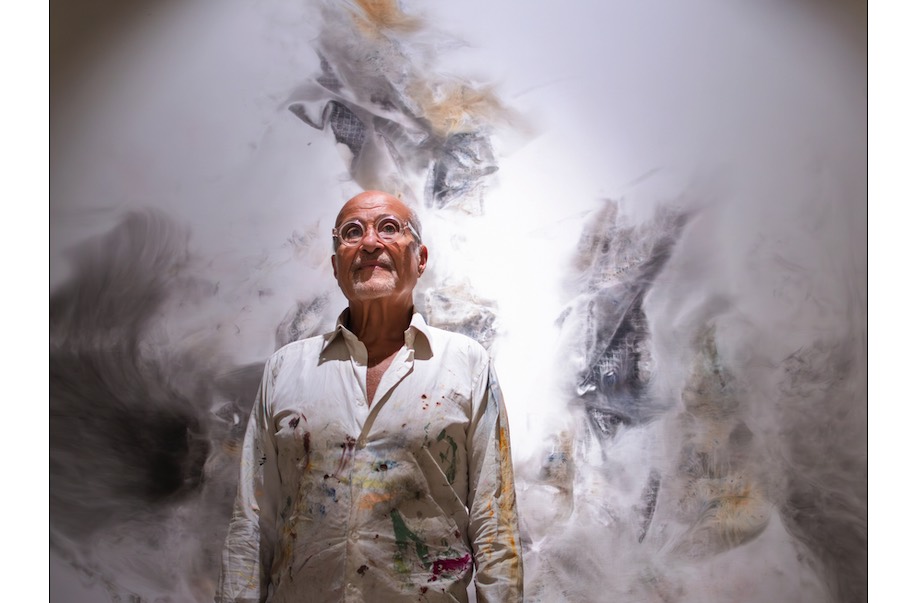 “Desert Waves“ by Jean Boghossian (Belgium/Lebanon). The artist is a master of the art of fire. His burnt canvases and sculptures are a testament to the transformative power of flame, representing both destruction and creation. At the Giza Pyramids, his work echoes the enduring spirit of rebirth.
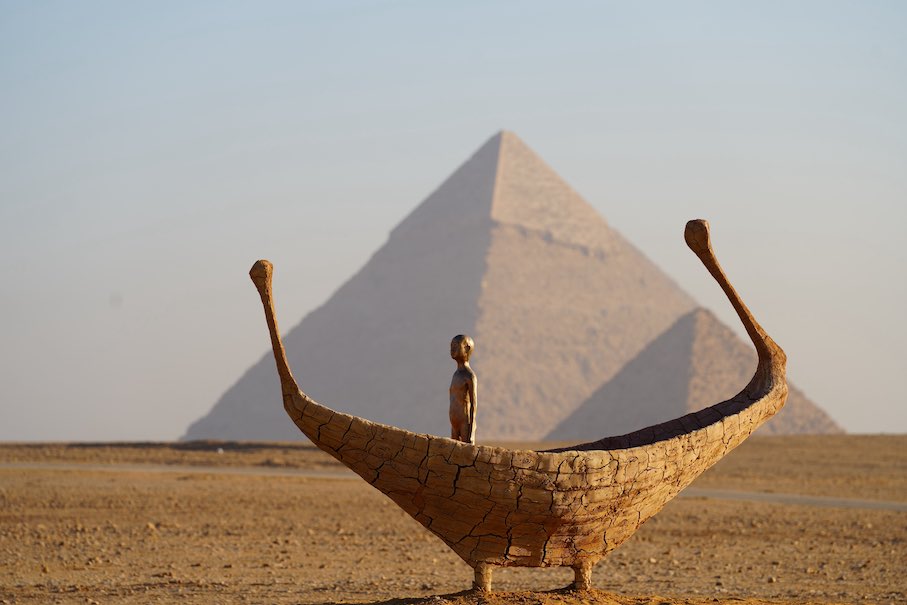
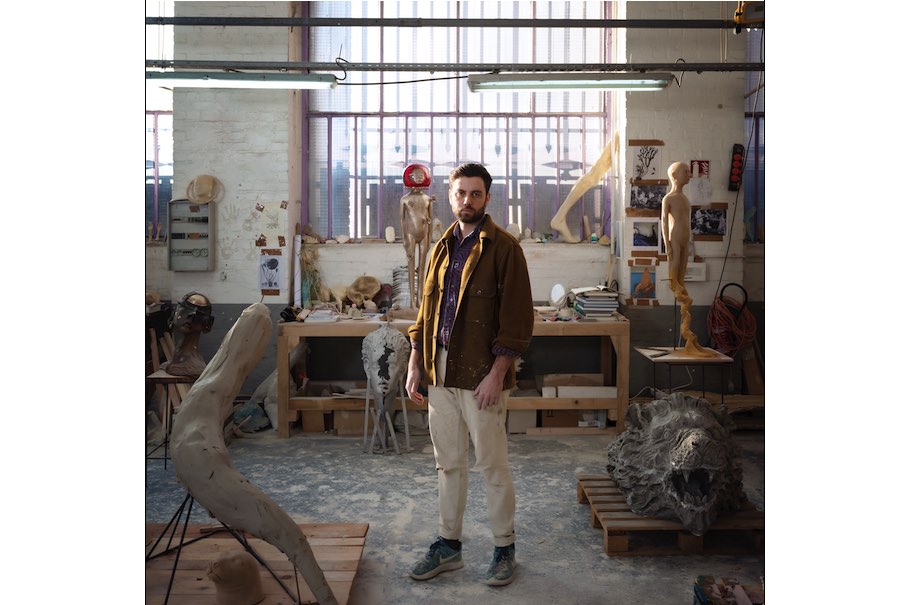 “Wessel of Time“ by Jean-Marie Appriou (France). The artist is known for his dreamlike sculptures that blend mythology with contemporary concerns. will craft an ochre clay boat at the Giza Plateau, which symbolizes transitions through time, accompanied by a “child character“ representing the connection between past, present, and future. The evolving nature of the artwork reflects the passage of time, as the Nile clay cracks and changes.
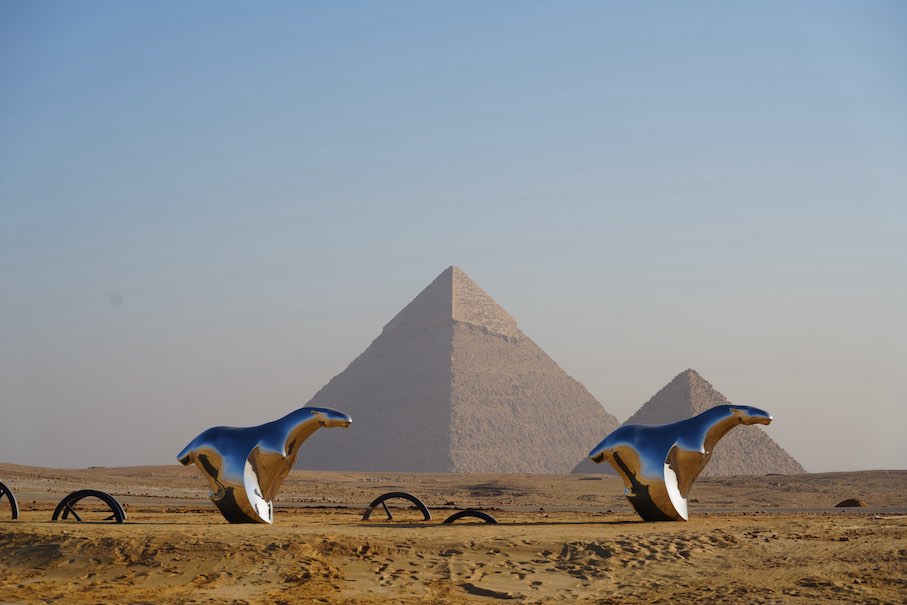
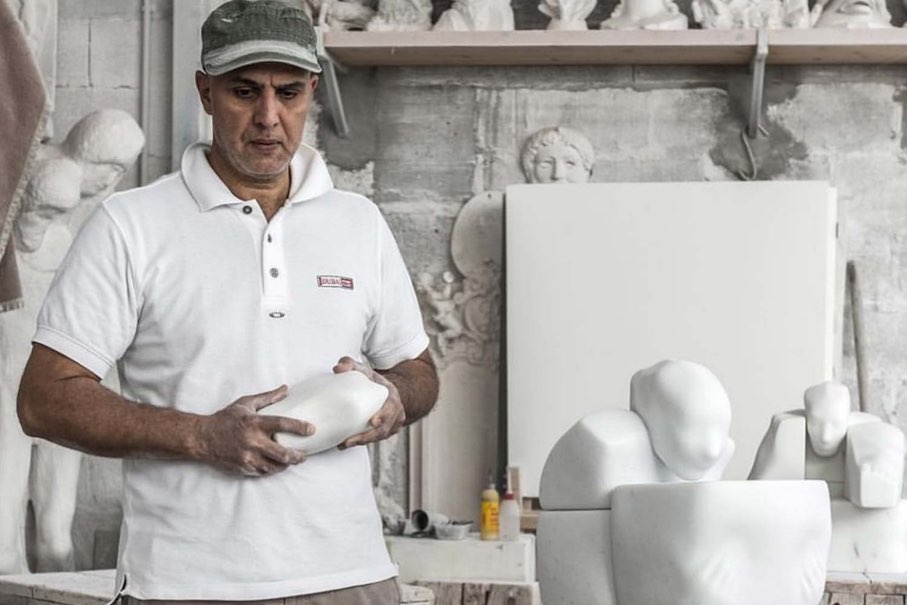 “The Race“ by Khaled Zaki (Egypt). The work brings a unique perspective that melds ancient Egyptian forms with modern abstraction. The artist‘s sculptures resonate with the timelessness of the Pyramids, embodying a fusion of past and present in their design and materiality.
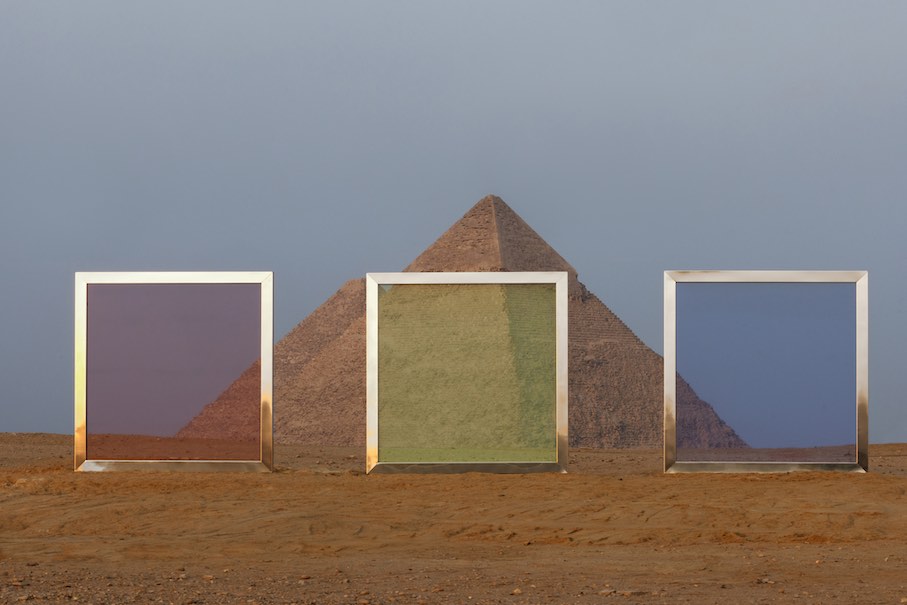
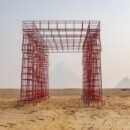
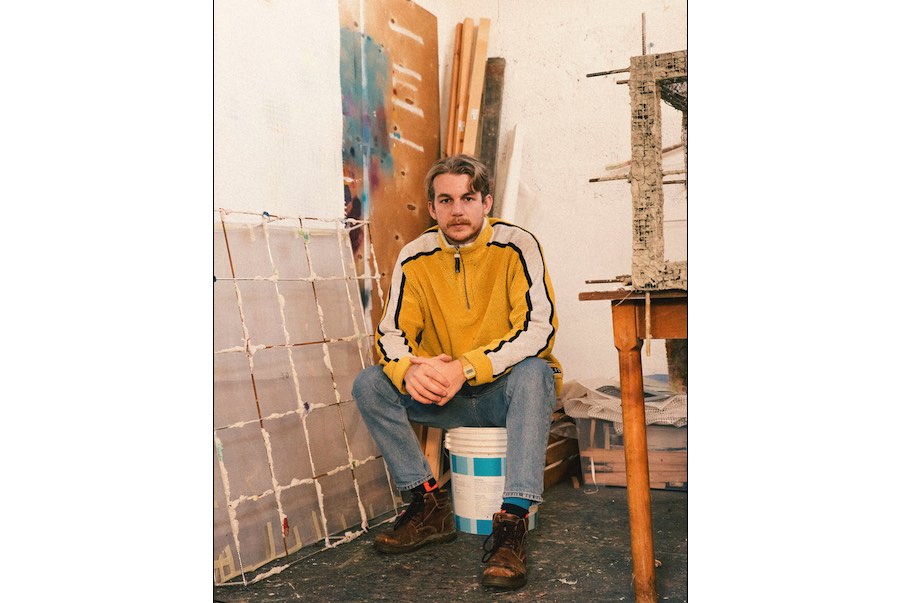 “Monochrome RGB“ by Luca Boffi (Italy) explores the intersection of natural and artificial environments through his use of grids as optical devices. His work engages communities in a shared exploration of space and memory, transforming the Giza Pyramids into a canvas for collective action.

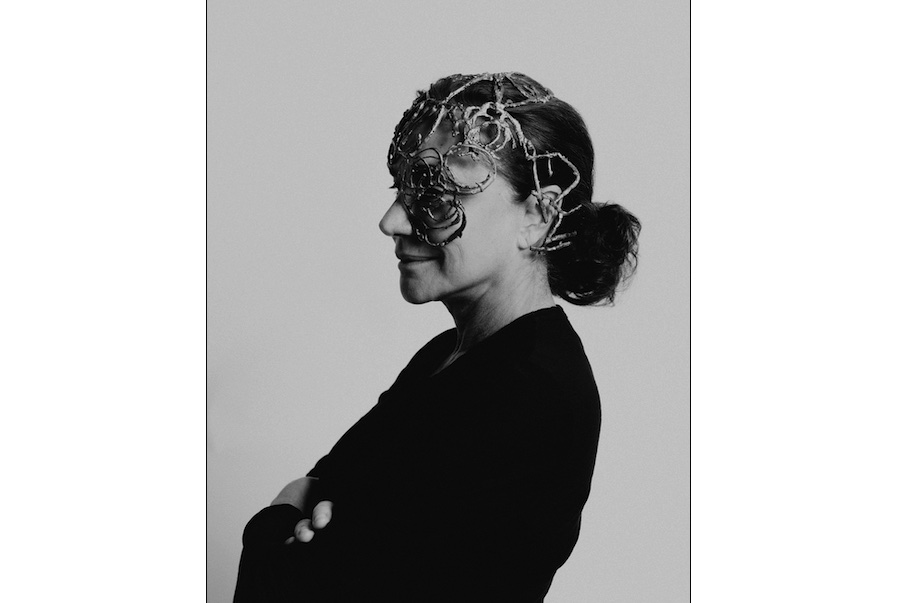 “I Love“ by Marie Khouri (Canada/Lebanon) melds the artist‘s Egyptian heritage with global influences, creating flowing arabesque forms that spell out universal messages of peace and unity. Her work reflects a deep connection to both her roots and her journey as a global artist.

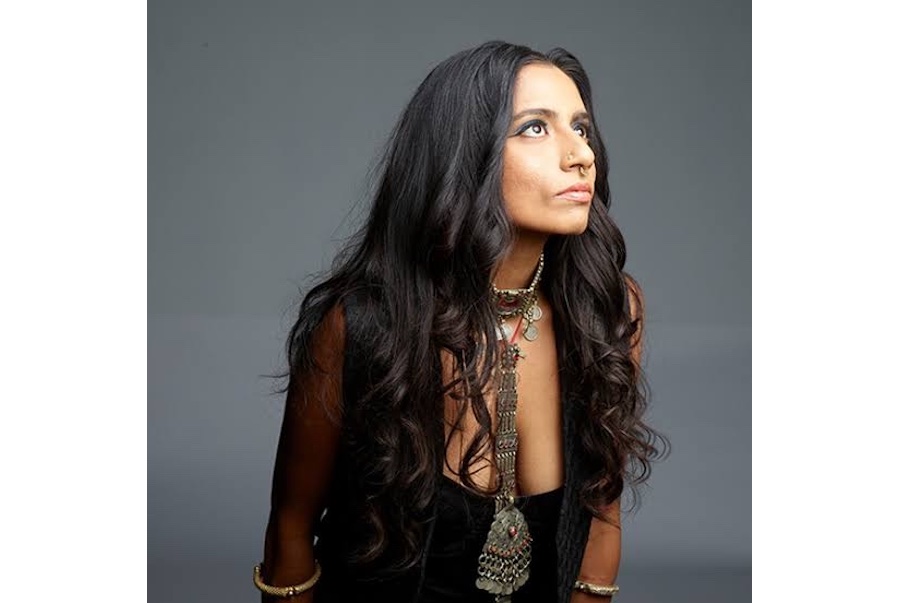 “Padma/Lotus“ by Shilo Shiv Suleman (India) merges Eastern and Western symbols to create immersive installations that represent a rebirth of consciousness. Her work, inspired by the blue lotus flower, offers a space for connection and peace, blending ancient Egyptian and Indian motifs.
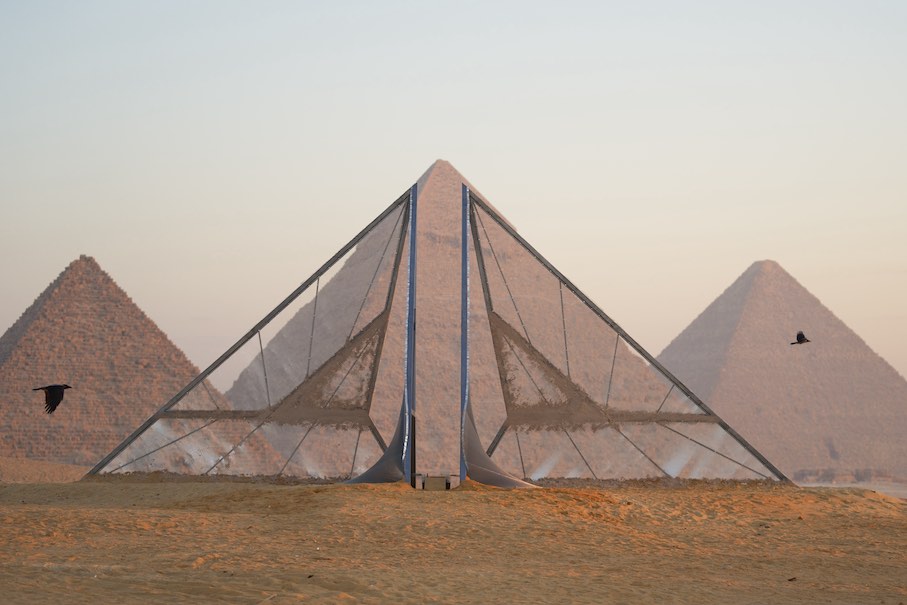
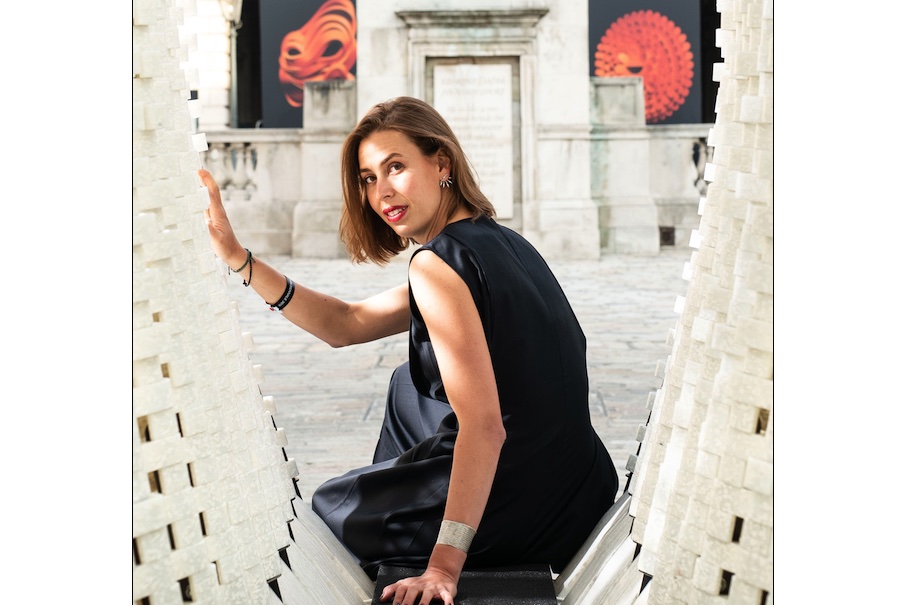 “Liquid Solid“ by Nassia Inglessis, Studio Ini (Greece). The artist is known for her sculptures that take form and transform by human interaction. Her sculpture at Giza invites viewers to engage physically and transform it as an integral part of its liquid solidity, as they journey into the past of the Ancient Egyptians to form a vision of the monument of the future that unites the Human, the Technological and the Elemental.
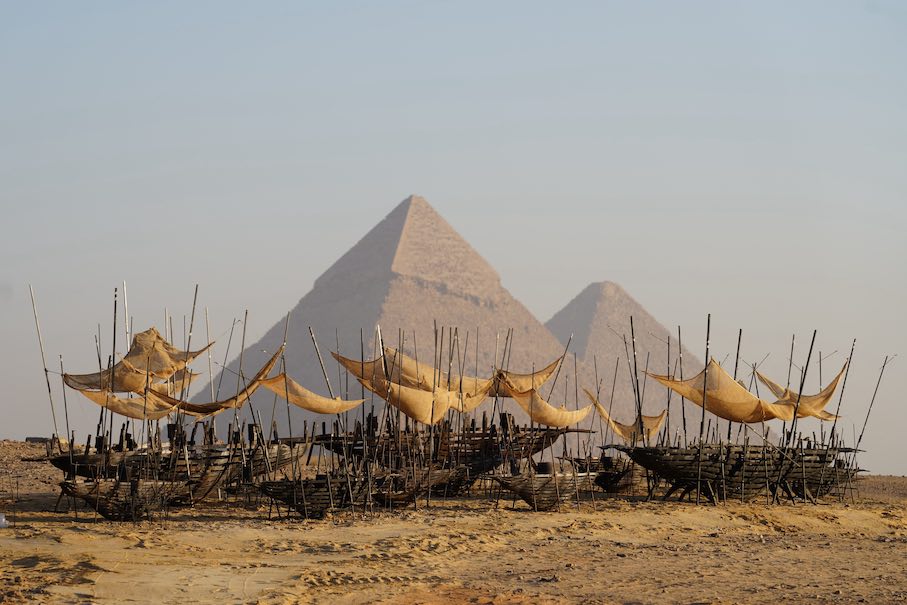
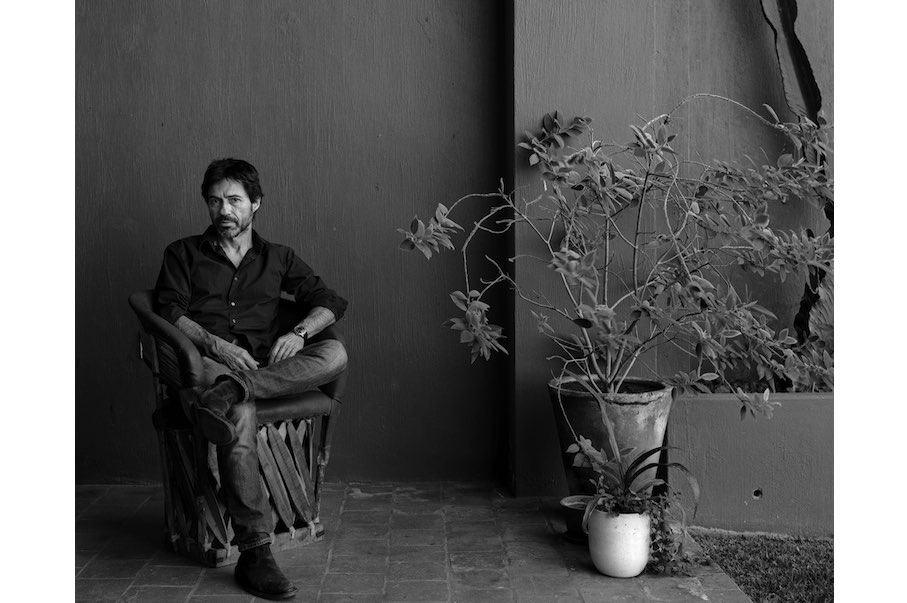 “Exodus“ by Xavier Mascaro (Spain/Latin America). The artist integrates architecture, design, and sculpture in his works that often interact with the environment. His contribution to the exhibition at Giza plays with perspectives and perceptions, making the viewer question the boundaries between what is ancient and what is new.
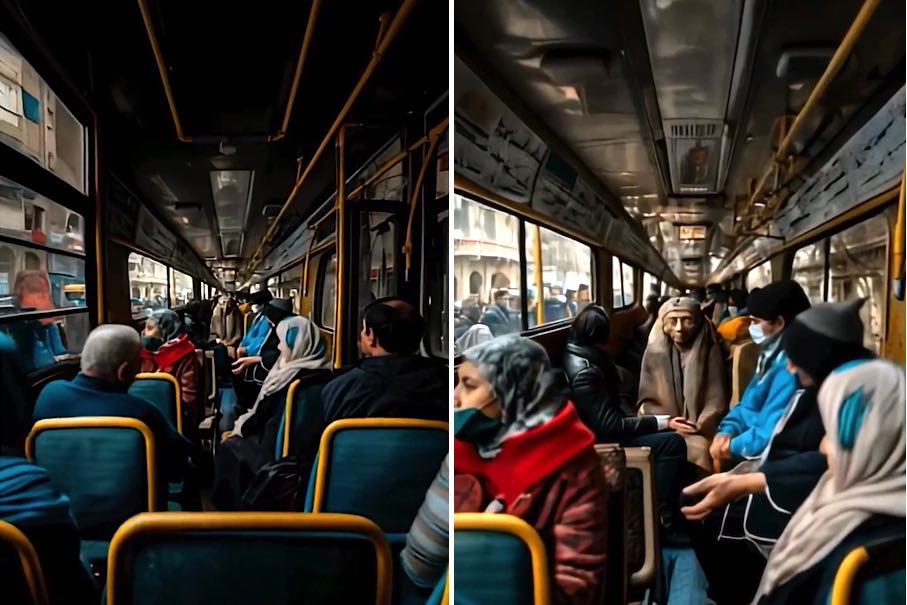 The video “Identity Oblivious“ by Hassan Ragab is a brief investigation – at times personal, but at other moments, it may be considered global. One thing is certain: it reflects how the artist feels at the moment of its creation. “Like Waneess, the protagonist of The Mummy, I am troubled by the search for what is right, trying to find a connection with people I have never met, yet whose blood runs in my veins“ (1).
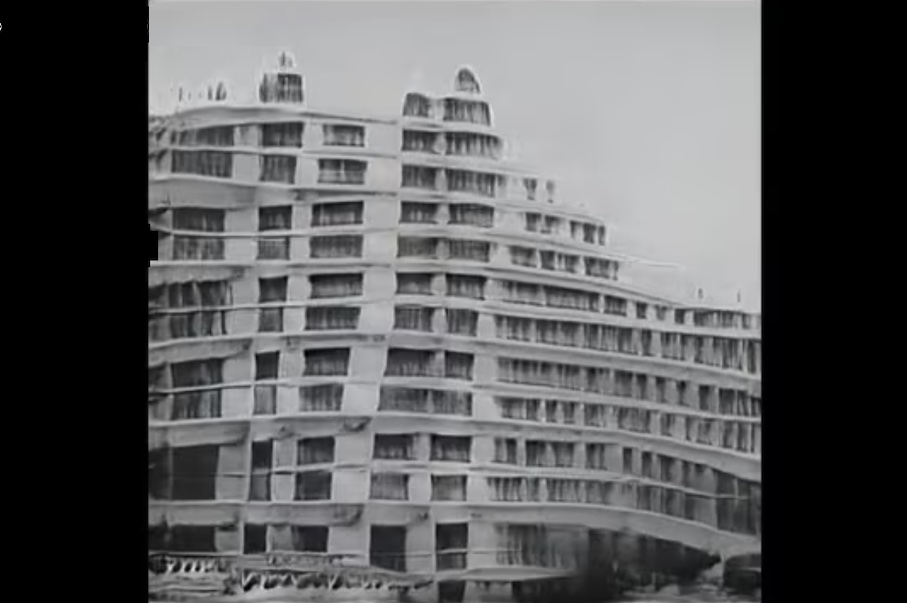 “Evanesce“ by Daniah Alsaleh is a 10-minute video, an innovative blend of research and machine learning, reconstructs the experience of watching timeless movies. It simultaneously concocts an eerie sense of familiarity that is almost palpable but challenging to quantify. Through machine learning, the project zeroes in on recurring cinematic tropes and themes, thus challenging our comprehension and recollection of these films (1, 2).
See also:
(08.11.2024)