 Stone-Ideas.com


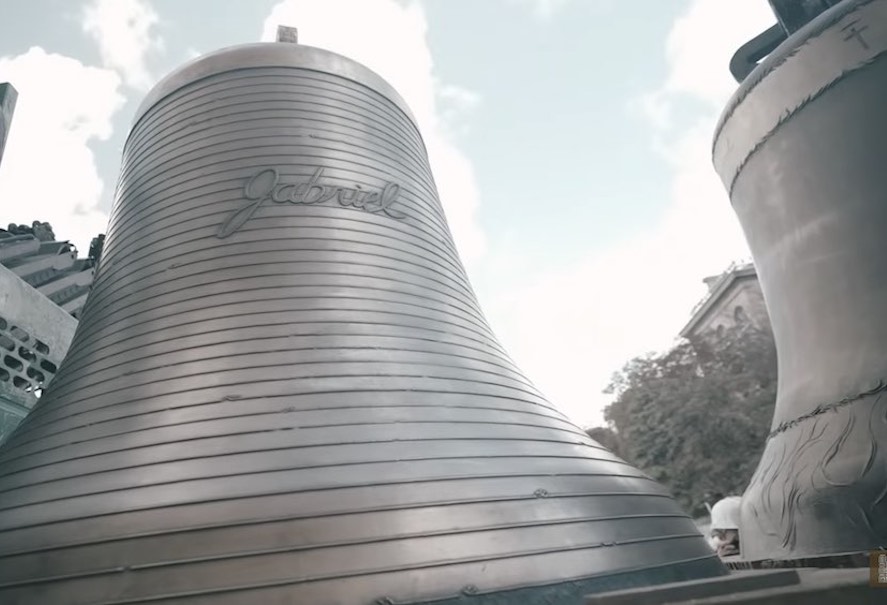
The eight colossi, weighing from under 800 kg to a good four tons, are once again hanging in the cathedral‘s north belfry at a height of 50 m
On November 08, 2024, the bells of Notre-Dame de Paris rang again for the first time after the fire on April 19, 2019. They bear individual names and have a considerable weight: Gabriel has 4162 kg, Anne-Geneviève (3477 kg), Denis (2502 kg), Marcel (1925 kg), Etienne (1494 kg), Benoit-Joseph (1309 kg), Maurice (1101 kg) and Jean-Marie (782 kg). Now they hang again at a height of 50 m in the north belfry of the cathedral.
Together with the organ, they are picturesquely referred to as the “voice of the cathedral.” There are more bells in other towers.
In the coming weeks until the planned reopening of the church on December 07, 2024, you will be able to hear them from time to time. Until then, specialists will be programming the chimes.
The bells had survived the fire without major damage; only two of them had to be restored due to the high temperatures.
Bells and their towers are among the symbols of Christianity. Towers are also known from the mosques of Islam, and bells also played a role as musical instruments in the empires of ancient China.
Famous from modern times, for example, is the Liberty Bell in Philadelphia, which accompanied the public reading of the US Declaration of Independence on July 8, 1776. Today it is located in the Liberty Bell Pavilion at Independence National Historical Park. It is inoperable due to a crack.
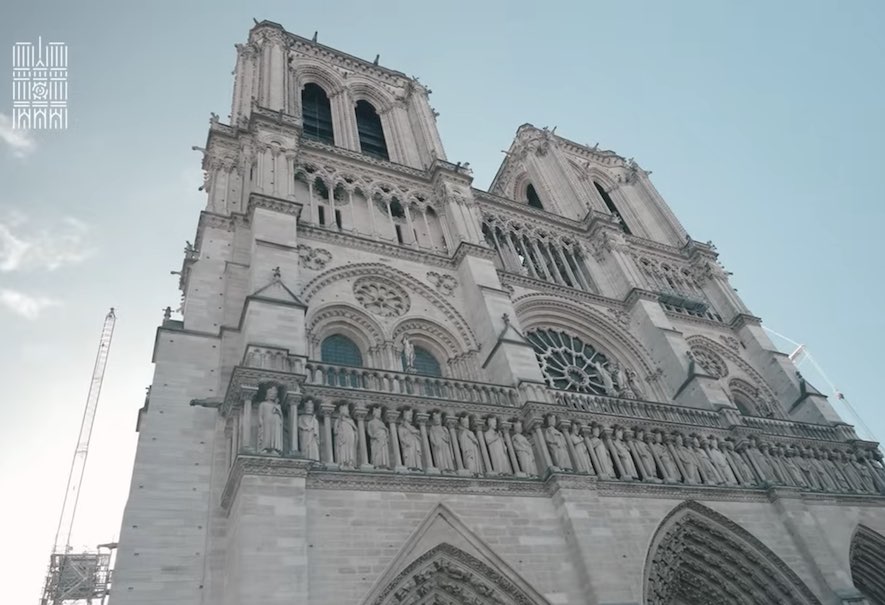
Before modern means of communication, bells had a variety of communicative functions: A bell could be rung to warn of fire in the city or of approaching enemies or storms.
Many bells carry a message of peace.
There are two different forms of sound: The short chime, in which a hammer strikes the bell, informs soberly and briefly about quarter hours or hours; a large peal, executed with a clapper inside the bell, gives the mere signal an emotional extension.
The ringing of Catholics bells is precisely regulated: This is usually as a call to mass, but can also be when a pope dies, for example. Yet in such a case, the ringing is mostly used with a call to mass for the deceased.
Citizens often like to combine this with political statements: in September 2019, many people in Christian Europe wanted to support the “Fridays for Future” demonstrations by ringing the bells and, in return, offered the local church congregations the opportunity to pray for creation after the demonstration.
You can imagine a swinging bell like a pendulum. After a while, the clapper inside it also starts to move.
The clapper strikes the edge of the bell, which is reinforced for this purpose. Ideally, it does this at the moment when the bell reverses.
Great forces are exerted during the ringing: “When the bell swings, the thrust is so great that the belfry has to bear ten times the weight of the bell!” says a report from the Diocese of Paris, which we have linked below. Yet there are hardly any reports of church towers collapsing when the bell rings.
On September 12, the bells of Notre Dame were delivered to Paris on a flatbed truck coming from the company Fonderie de Cloches Cornille Havard in Normandy.
The diocese‘s report on the meticulous lifting of the colossi one by one through the eye of a needle in the north belfry plays on the myth that has surrounded bells since time immemorial: “At the top of the tower, Marcel waits patiently next to Jean-Marie and Étienne. Benoît-Joseph is also virtually already in place, wrapped in a blanket and hovering over the void.”
Diocese of Paris (French)
Work on the north belfry of the cathedral
Return of the Bells
Ringing a bell weighing almost 16 tons
See also:

(09.11.2024, USA: 11.09.2024)