Stone-Ideas.com


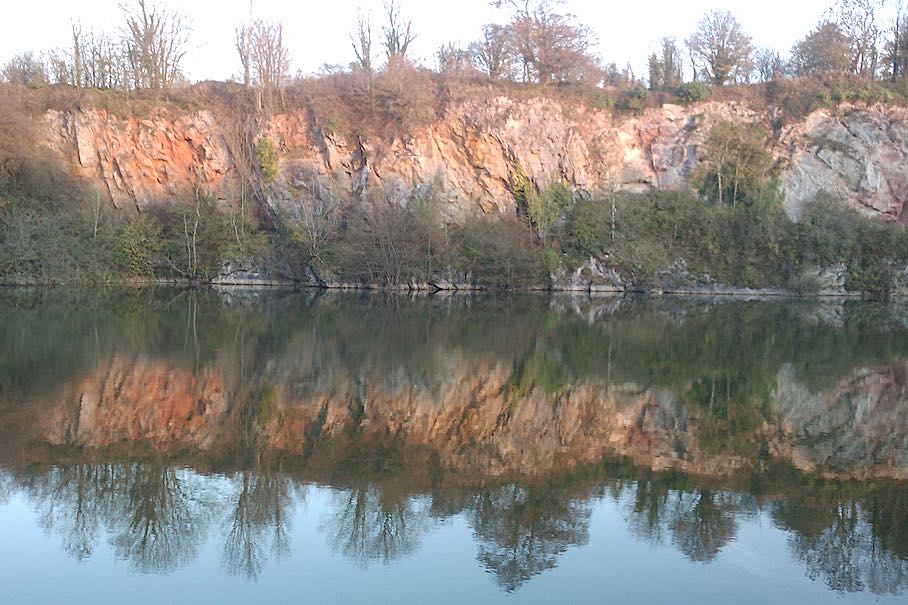
The public image of the quarries is changing: while they were once considered dead zones in nature, closer examination by biologists has now led to them representing important habitats in the otherwise cleared landscape, especially for pioneer species of plants and animals. As so-called stepping stone biotopes, they are also important for the species to be able to spread. Now another function is coming into focus, namely their potential as a drinking water reservoir.
Experts have known about this for a long time and use it for this purpose. Now the Bureau de Recherches Géologiques et Minières (BRGM, French Research Institute for Geology and Raw Materials), colloquially France’s Geological Service, has carried out a study on this specifically for the Finistère department. This is the outermost tip of Brittany that juts out into the Atlantic.
The background to the study is climate change; until now, the focus on drinking water was more on the quality of the precious foodstuff. Now, securing supplies during dry periods is also important.
The BRGM has also compiled methods of planning and implementation.
There are exactly 1109 quarries in the department. The large number is surprising to the layman, but it is due to the fact that houses were once built from local rock all over the country.
Many of these quarries are therefore small – often they are not even the size of a football field. They are usually round and have now filled with water.
This is the water that is the focus: contrary to what you might expect, it is not rainwater that has run into the hole in the ground from outside or has rained in directly. Rather, it comes from the groundwater. This is high in many places in the department and had to be pumped out during the stone extraction. The BRGM experts have identified five sites of “immediate interest,“ plus two more with “medium-term“ significance and 16 with a long-term role.
For six of them alone, a volume of almost five million cubic meters was determined.
Please note: You should not come to these pits with a cup and skim off the liquid – that is not recommended anywhere. However, the water is suitable for processing into drinking water so that it can later be piped to the public.
A major problem is the acidification of the water.
This was already proven in Brittany in 1991, writes the BRGM in its final report: Acidification occurs when the rock massif is opened up and the sulfides oxidize. This affects all stones that contain sulfur compounds, in this case granite, slate, sandstone and others.
The BRGM names ways to solve the problem and also mentions a new method. Also, elsewhere, the topic is known and has been handled: the study mentions comparable reservoirs in Belgium and elsewhere in France. Such uses already exist in Finistère itself.
The study also covers a wide range of technical details, such as water level management, monitoring the oxygen content and securing the terrain with fences.
It is also pointed out that an inventory of the local fauna and flora must be carried out before a site can be used.
And: the population must be involved in the planning. Regarding the five selected sites, the BRGM explicitly states that there is “local appreciation for the water supply.”
BRGM (French)
See also: