 Stone-Ideas.com


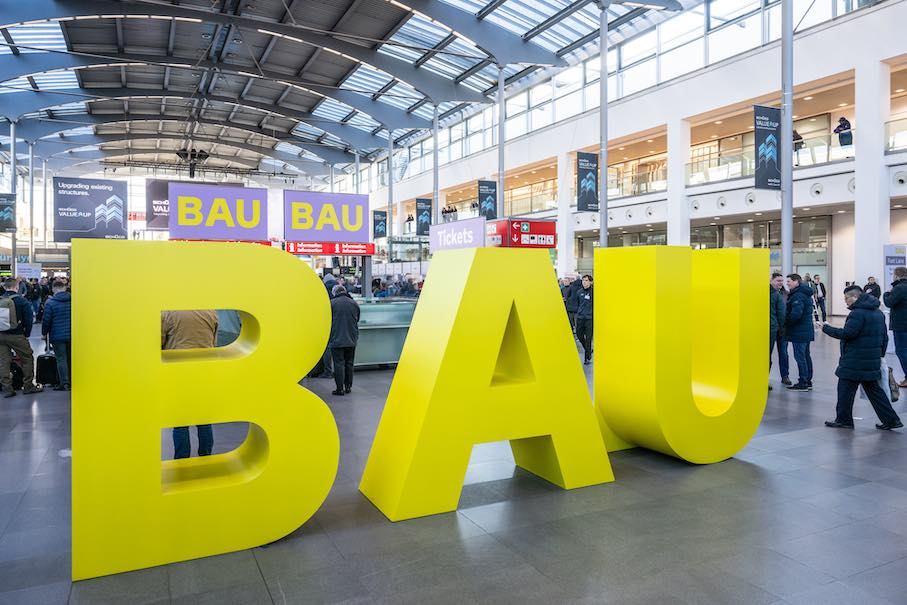
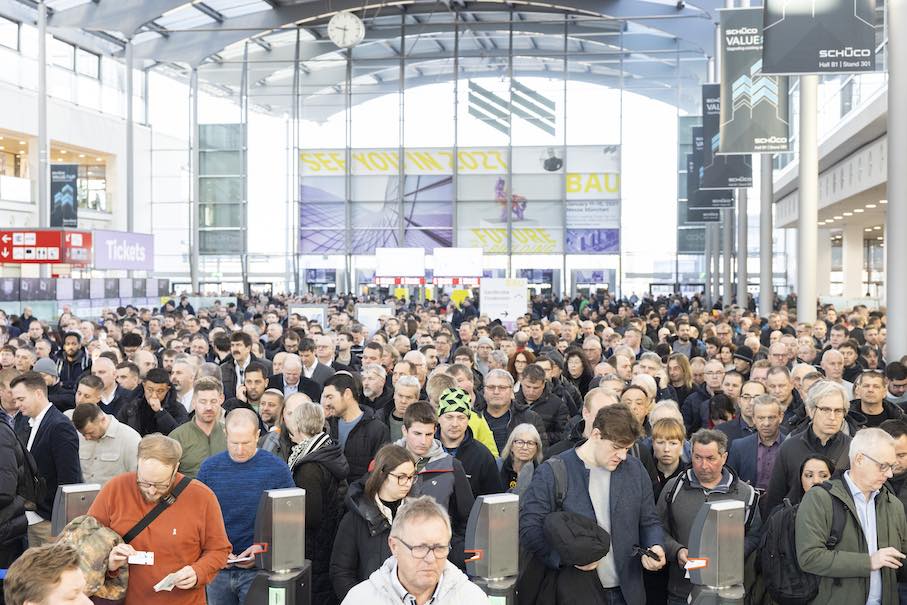
The BAU, which takes place every two years in Munich, is considered the leading trade fair in the industry and strives to reflect the current trends in its lecture program. The 2025 edition (January 13 to 17) focused on the key topics of “resilient, climate-friendly construction”, “transformations city/countryside/urban district”, “resource efficiency”, “modular, serial, productive” and “cost-effective construction” – some of them demand a radical rethink from planners and investors. At one point there was even talk of a “revolution in construction”.
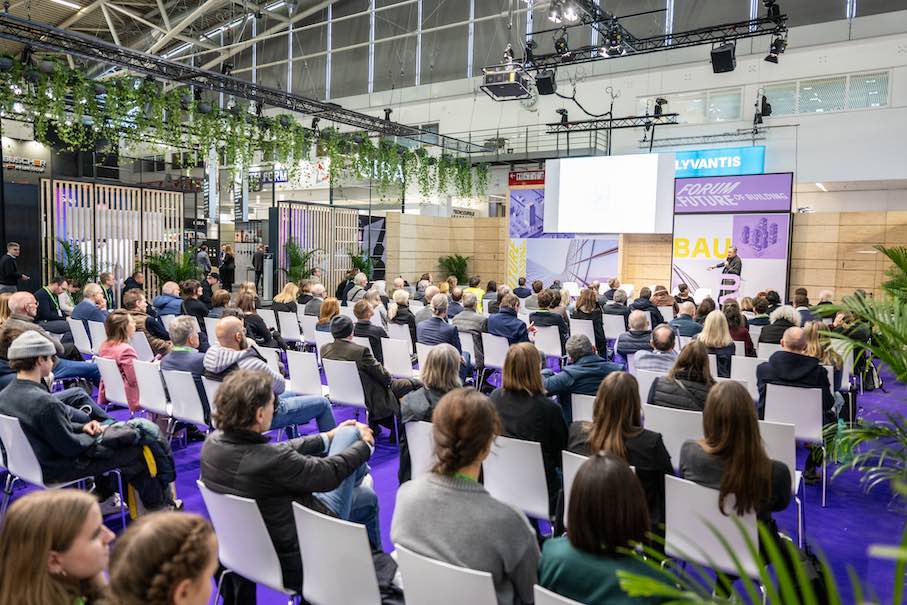
The various aspects were examined in the “Forum The Future of Building”. It was extremely well attended, with up to 150 listeners in some cases.
One aspect of the “revolution” was that construction in the future would no longer have to be driven by finances, but by sustainability.
This means that the first priority in planning should not be costs and returns, but the question of how to achieve the best results in terms of sustainability. This means: After the decision has been made about the building’s carbon footprint being as low as possible, the second step is to find out how to achieve this as cost-effectively as possible.
One of the options for this is serial construction and construction with modules, which are experiencing new popularity.
Another central theme for sustainability is the selection of building materials.
Another is continuing construction, meaning the reuse of elements from a demolition (recycling) or the reuse of an entire building (conversion).
As far as building materials are concerned, wood currently ranks first in terms of popularity and as a lecture topic. Solutions using more exotic materials such as straw or clay were also presented.
What is remarkable from the perspective of the natural stone sector is that natural stone was only mentioned in one of the almost 50 lectures. And that was only as a material for facade cladding, not as a solid load-bearing building material.
We would like to mention a few aspects from a wide range of subject areas:
* When building with straw bales, “truth windows” are common: they are installed in stairwells, for example, and when you look inside a wall, you can see that straw is really the load-bearing material;
* Sustainable buildings must be “suitable for grandchildren”, it was said: they must remain usable for future generations and the CO2 issue must also be considered across generations;
* Continuing construction must not only be an issue for chic old industrial plants, but must also apply to succinct large housing projects. “As little demolition as possible” was the guiding principle from a lecture;
* Reuse must be tackled creatively: the windows in Swiss railway trains were mentioned as an example, which are considered highlights among designers and are now in demand for new buildings;
* Building in modules sometimes requires complex planning for the transport of oversized elements: what does it look like on the way from the factory to the construction site with narrow tunnels or light bridges?
* Basements and foundations are CO2 emitters because a lot of concrete is used there. Can lightweight building materials on the floors above reduce this?
The “revolution“ now is often only due to the fact that the construction industry has not followed trends in other areas of the economy in recent decades: For example, with household appliances, such as washing machines, the dismantling of an appliance into its individual parts has been taken into account since the 1980s. With BIM (Building Information Management) or resource passes, builders are making up for what they have missed.
BAU 2025: Internationalization as a profile
BAU 2025 was shortened by one day. There were well over 180,000 visitors (2023: 190,000), and the number of exhibitors was 2,230 (2023: 2,260) from 58 countries (2023: 49 countries). With 52 percent of foreign exhibitors, it reached a new record. The most strongly represented exhibitors were Germany, Italy, China, Turkey, Austria, Poland, Belgium, Switzerland, Spain, the Netherlands and Greece.
The same development was seen on the visitor side: here the proportion of guests from abroad rose to 44% (2023: 40%). The top visitor countries besides Germany were Austria, Italy, Switzerland, Poland, Turkey, Romania, China, the Czech Republic, Spain and Croatia.