 Stone-Ideas.com


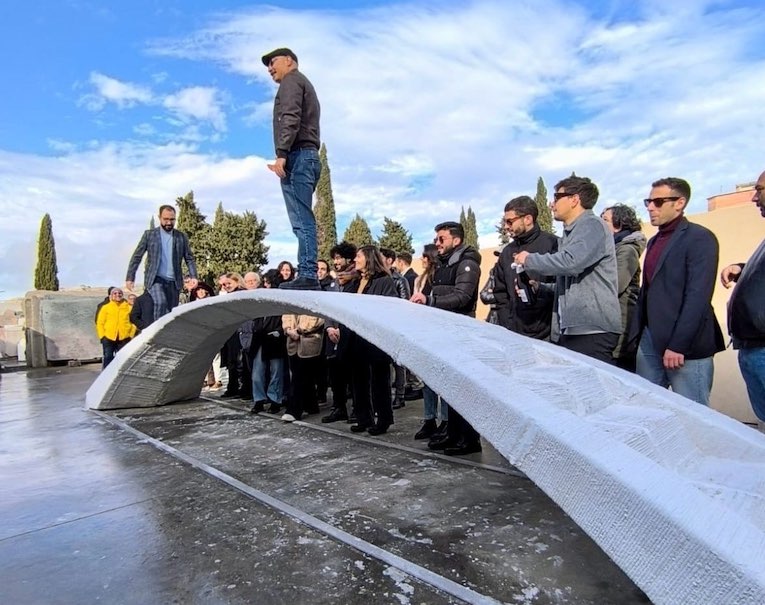
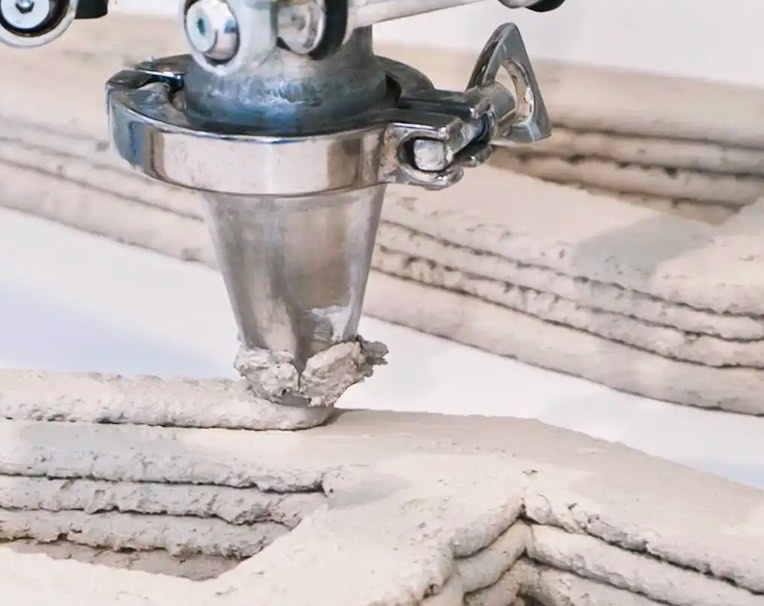
The “Da Vinci’s Bridge“ project is a tribute to the great Italian engineer and at the same time an experiment on the use of modern techniques and materials in construction: The building elements were produced using 3D printing, and stone powder was used for this.
Giuseppe Fallacara, professor of architecture at the ArCoD Department of the Politecnico di Bari in the very south of Italy, has been researching innovative constructions with stone (Stereotomy) for many years and was inspired by da Vinci’s idea for the name of his prototype with a six-meter span.
It was inaugurated on December 20, 2024 at the Gurrado Marmi company in Gravina di Puglia.
The 13 segments of the construction are made from stone powder using a 3D printer. Stone powder is the mass that is produced when a raw block is sawn into slabs: It is a type of pulp that a 3D printer can lay on top of each other in layers. The binding agent in the ball of the Da Vinci Bridge was lime-based.
A similar use of leftovers is known from the wood industry, where the sawdust can be recycled into chipboard, for example.
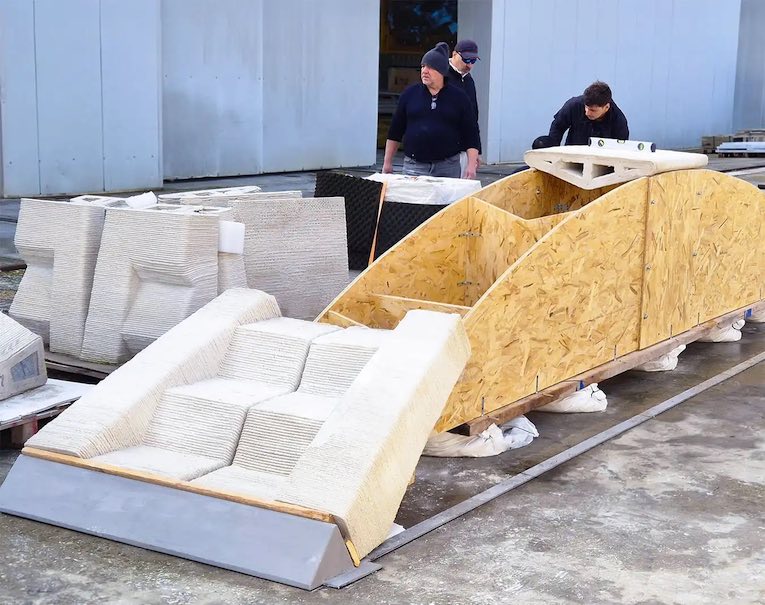
The know-how for handling the stone pulp came from the company B&Y, and the printer was provided by the manufacturer WASP. B&Y is a start-up by Dr. Vincenzo Gurrado, who in turn comes from the natural stone company of the same name.
The next steps will be to examine the mechanical properties of the new elements and the construction as a whole and to optimize the printing process.
Possible uses for stone powder are important for the natural stone sector insofar as waste recycling has a positive impact on the material’s ecological balance.

Project management: Prof. Giuseppe Fallacara (Dipartimento ArCoD – Politecnico di Bari)
Optimization of the model for manufacturing: Arch. Ilaria Cavaliere (Politecnico di Bari), Arch. Angelo Vito Graziano (Politecnico di Bari, FabLab Poliba), Mattia Morandi (WASP)
Optimization of the material and manufacturing of the building blocks: Dott. Vincenzo Gurrado (B&Y), WASP, Ing. Claudio Gallo (Politecnico di Bari), Arch. Francesco Ciriello (Politecnico di Bari)
Production: WASP and B&Y
Partner: New Fundamentals Research Group
Photos: Giuseppe Fallacara, WASP and B&Y
Video from another working group: How Concrete Homes Are Built With A 3D-Printer