 Stone-Ideas.com


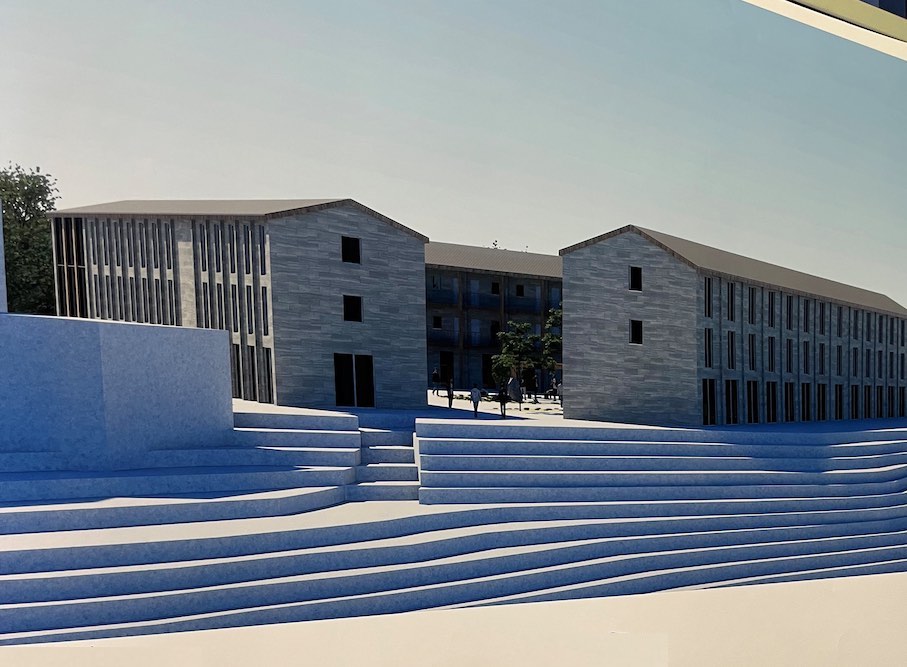
An important step has been taken with a project that may become groundbreaking for the natural stone sector in Germany: It is the “Campus Stone Center Wunsiedel” (Campus Stone Center in Wunsiedel), which will expand the existing center for the qualification of stonemasons. It will have a dormitory with 65 double and 22 single rooms as well as common rooms plus a cafeteria and kitchen.
Some aspects of the project are groundbreaking:
* The objective for the architectural designs was explicitly to use natural stone as a material; However, it was optional to include other natural materials from the area, such as wood or clay;
* the designs for the new buildings were created by architecture students, not professional architects. The students are based at the Technical University (TU) Dortmund, where natural stone is much a topic in research;
* one of the tasks for the participants was to think about special constructions for the natural materials used.
The Fichtelgebirge, where the Stone Center is located, wants to use the new facility to establish itself as a center for sustainable construction in Germany and beyond. Within a radius of 20 km from the Stone Center there are three granite quarries, dense forests with sawmills, an active clay pit and several other sources of raw materials.
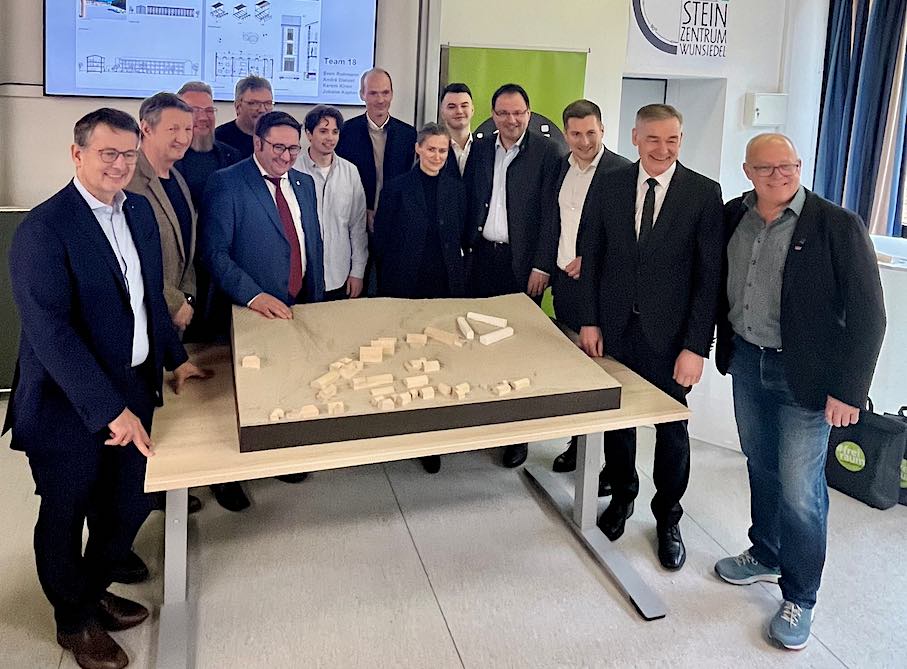
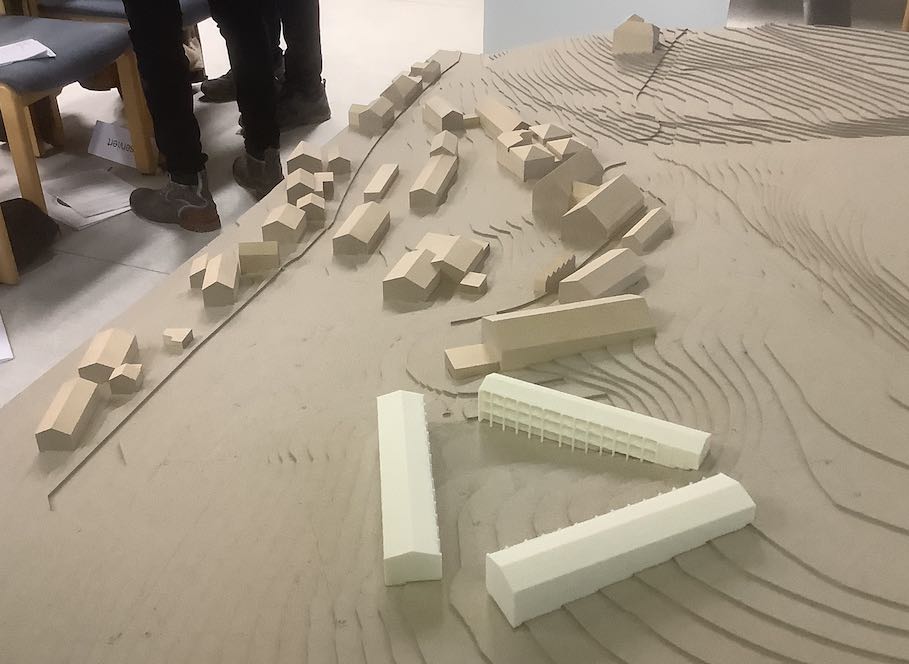
At the end of February, the winning student design was presented to the public at the Stone Center. The compound is divided into three long buildings with natural stone for the facade and wood for the front arcades. Both materials are used as load-bearing structures. The facades and arcades for the three buildings are identical, which reduces costs. They are arranged around a central area so that a central square like a marketplace can be formed in the style of the villages in the area. A small pavilion is planned there, again made of stone and wood.
The prize money for the winning designs was €1,000, €600 and €400 respectively. The money came from the Freiraum Fichtelgebirge initiative, which wants to make the region attractive “for doers.“
The winning design was chosen from a shortlist of five works by student groups from TU Dortmund.
A total of 31 student groups from the university took part in the project. That was 119 people. The number shows the students’ great interest in sustainable construction.
The project was led by architecture professors Anne Hangebruch and Christian Hartz from the TU Dortmund.
Many prominent figures came to the presentation of the winning design: The state of Bavaria was represented by two state secretaries (finance, economics), and the stonemasons presented themselves with two associations. The German Natural Stone Association (DNV) was also there with its president Hermann Graser. Incidentally, it was he who came up with the idea of realizing the project in cooperation with TU Dortmund.
In their welcoming speeches, all those present emphasized that natural stone has a great future as a building material with a low ecological footprint and that an important impetus for this could come from the campus in Wunsiedel. In Germany, solid construction with natural stone is not yet common, which is also due to the fact that the regulations for special components such as stone window lintels are still being drawn up.
A German peculiarity is that construction may only take place in the way specified in the regulations.
The prospects for implementing the selected design are not bad. The State Secretary from the Ministry of Finance said that his department was already working on financing for the new building.
Hermann Graser highlighted the importance of natural stone for building in the future and, wondering in view of industrial society, stated: “We produce artificial stone with great energy consumption, but the natural stone is readily available below our feet.“