 Stone-Ideas.com


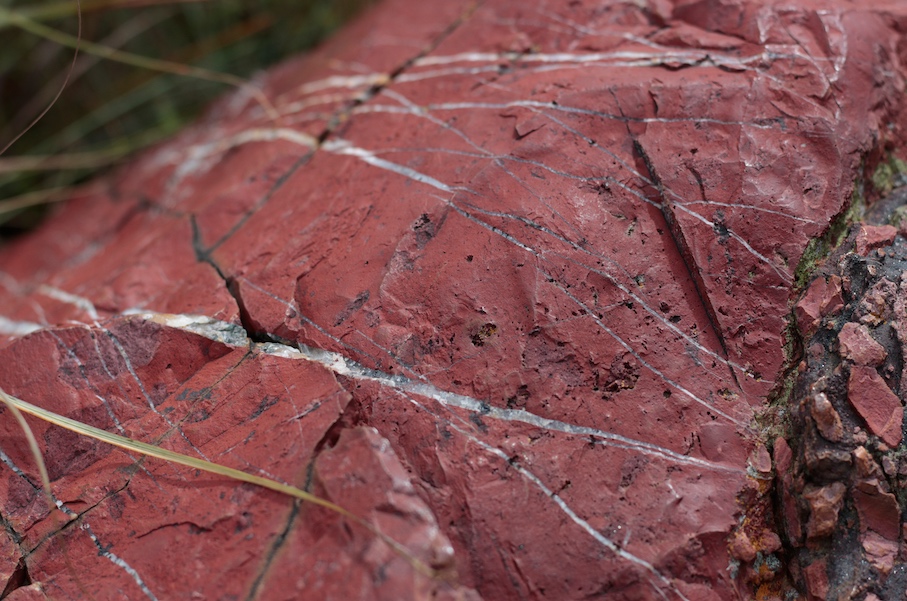
As early as the Stone Age, people in Africa traveled long distances to procure colorful stones which formed the raw material for the manufacture of tools. Not only the quality of the material was essential to them, but also its color. The researchers analyzed 40,000-year old stone tools from what is now the Kingdom of Eswatini on the borders of South Africa and Mozambique, formerly Swaziland. They found that thousands of years ago, hunter-gatherers traveled between 30 and a hundred kilometers to collect certain rock materials with striking colors, such as red Jasper, green Chalcedony and black Chert.
The international study was led by Dr. Gregor D. Bader from the Department of Early Prehistory and Quaternary Ecology and the Senckenberg Centre for Human Evolution and Palaeoenvironment at the University of Tübingen, Germany. It has been published in the Journal of Archaeological Science. The study has been published in the Journal of Archaeological Science.
“Colorful and shiny materials seemed attractive to early humans; they often used them for their tools. We can only speculate as to whether the colors had a symbolic meaning,“ Bader states.
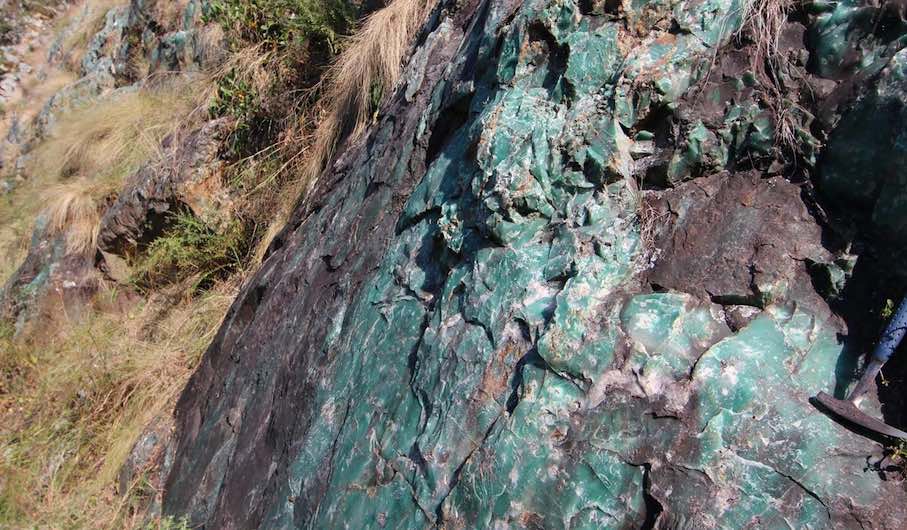
What is particularly interesting is the finding that color preferences shifted over time. While black and white chert and green chalcedony were frequently used in the Middle Stone Age in Africa 40,000 to 28,000 years ago, red Jasper was particularly popular in the later Stone Age, around 30,000 to 2,000 years ago. “Both colors occurred close together in the same valley and the same river deposits, so that we can assume a deliberate selection of different materials at different times,” Bader says.
The technical aspects of the investigations was made possible by close collaboration with Dr. Brandi MacDonald from the research reactor in Missouri, USA. In the neutron activation analysis, the stone samples were irradiated with neutrons, and the researchers received an exact geochemical fingerprint for each piece. This allowed it to assign materials and origins.
To reconstruct the movements of early humans, entire regions must be examined. In the study, the international research team included several sites with tools and potential sources of raw materials. “Eswatini, with the collections of the National Museum in Lobamba, provided good conditions for this. Artifacts from numerous archaeological sites are kept there,“ Bader says. In the study, the researchers examined stone artifacts from the four sites of Hlalakahle, Siphiso, Sibebe, and Nkambeni.
Gregor D. Bader, Christian Sommer, Jörg Linstädter, Dineo P. Masia, Matthias A. Blessing, Bob Forrester, Brandi L. MacDonald: Decoding hunter-gatherer-knowledge and selective choice of lithic raw materials during the Middle and Later Stone Age in Eswatini. Journal of Archaeological Science, https://doi.org/10.1016/j.jas.2025.106302