 Stone-Ideas.com


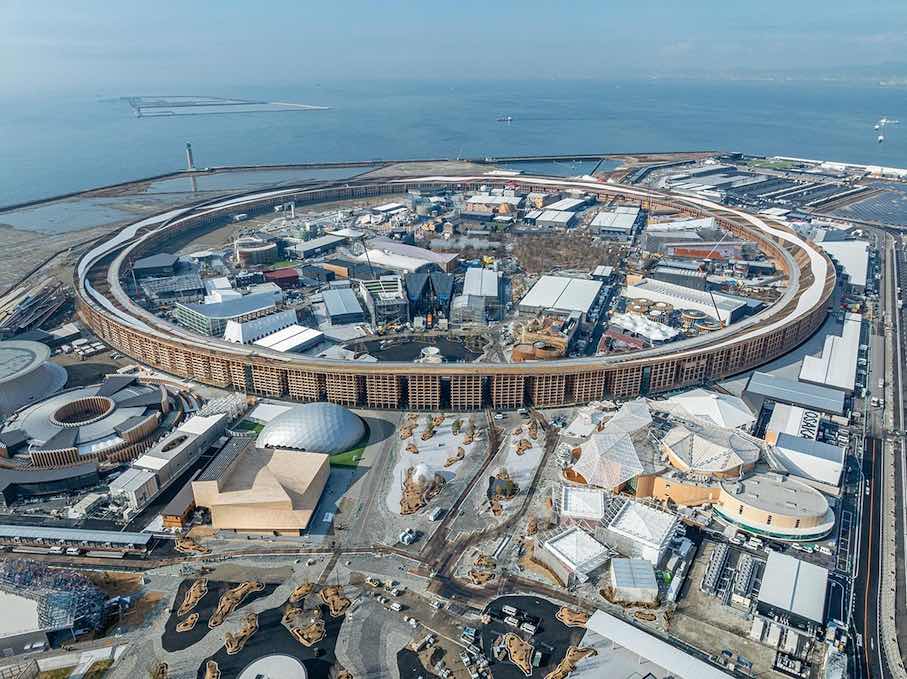
Natural stone is barely present at the World’s Fair Expo 2025, which takes place from April 13 to October 13 on the artificial island of Yumeshima off the coast of the Japanese city of Osaka. Its theme is “Designing Future Society for Our Lives.“ Wood is traditionally used primarily as a building material in the country.
In addition, Japan’s stone industry has experienced a decline in recent decades: Only a few quarries are still operating, and there are also very few companies processing imported raw materials. In contrast, natural stone is used extensively in elaborate tombstones in cemeteries; however, the materials for these end products come almost exclusively from China.
One of the few activities in Osaka involving stone is the “Love Stone Project EXPO 2025” by Japanese sculptor Atsuya Tominaga. It is part of the Osaka-Kansai Triennale 2025 art festival, takes place on the World Expo grounds, and aims to create an artistic connection between the city and the World Expo.
Atsuya Tominaga has placed boulders on the grounds: Visitors are invited to work with each other and hand-sand the surfaces of the boulders, ultimately creating a truly gleaming shine. The idea is to spread the message of love and peace among people.
The artist launched the project in 2011. After the severe earthquake in Japan, he was fascinated by the large boulders lying around in the earthquake zone, which, like the people there, had experienced the disaster firsthand. Two years later, for the “Our Love“ project, he brought boulders from Italy, Iran, and the former Yugoslavia to Japan and had them polished by locals and visitors as part of the 25th UBE Biennale sculpture festival.
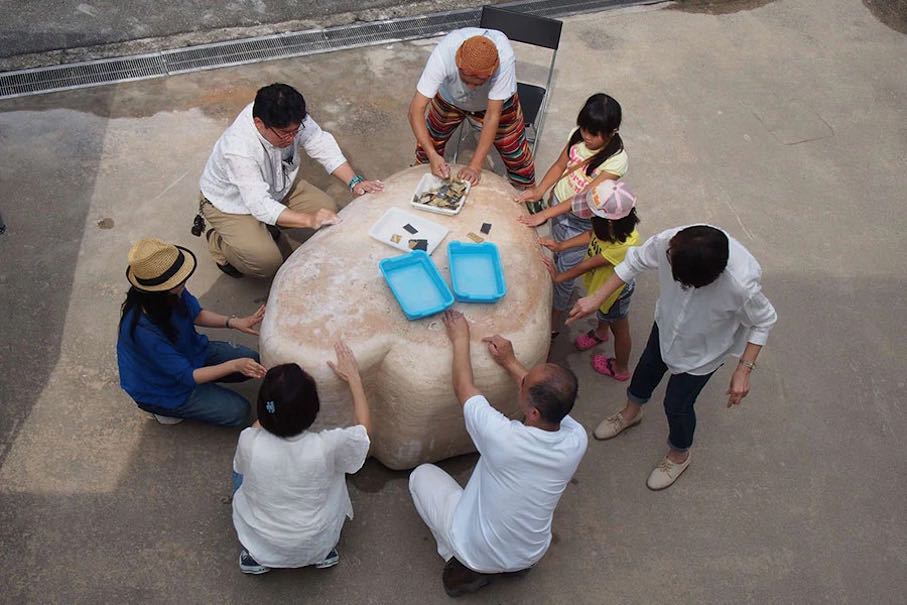
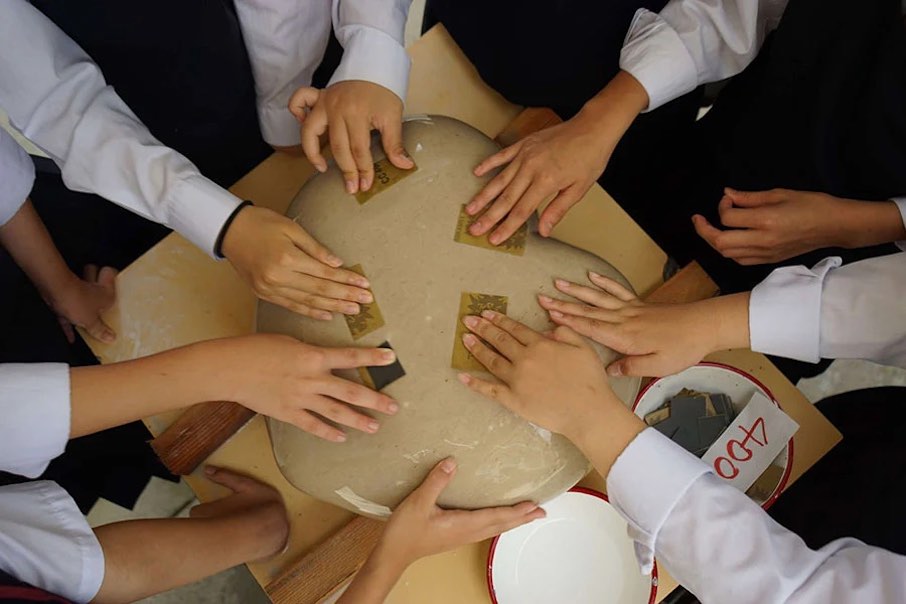
Since then, the project has taken place at over 300 locations worldwide with around 30,000 participants. For the Osaka Expo, he brought together granite boulders from the United States, Finland, South Africa, Australia, and Japan. Their shapes resemble human hearts, their surfaces are initially rough. At certain times, Expo visitors are invited to polish the stones with sandpaper. Five different grits of sandpaper are available for this purpose.
“By the end of the Expo, the five stones, once coarse, will shine brilliantly and reflect the sky over Yumeshima,” states a project presentation by Osaka-Kansai, which represents the artistic connection between the Expo and the city. “During the process, each stage of polishing brings out a unique texture and charm, offering all visitors a visually appealing experience.”
Wood as a building material is highlighted in the central element of the Expo: “The Grand Ring“ by architect Sou Fujimoto has an outer diameter of 675 m, a width of 30 m, and a maximum height of 20 m. The beam structure was constructed using traditional Japanese craftsmanship and modern woodworking and construction techniques. Sou Fujimoto also created the overall concept for the facility.
As is customary at World Expos, the participating countries have their own pavilions. They are erected only for the duration of the Expo and are then dismantled and partially reused. The topic of sustainable building materials is addressed everywhere.
None of the reports in the international and national press mention that natural stone, although another environmentally friendly building material, is missing at Expo. Once again, it becomes clear that the ecological strengths of stone are not in the public’s awareness.
The first World’s Fair took place in London’s Hyde Park in 1851. The idea came from Prince Albert, the husband of Queen Victoria. At that time, the country was a leading colonial power and industrialized with iron and coal. The aim of the World’s Fair was to provide an international showcase of the achievements of countries: They presented their latest scientific discoveries, new technologies, and the resulting new products.
For the very first edition, the gardener and architect Joseph Paxton created the famous “Crystal Palace,“ a 600-meter-long hall made entirely of glass with a supporting iron structure. The spectacular building of the 1889 exhibition in Paris was the Eiffel Tower.
For Saudi Arabia at Expo 2025, for example, Foster + Partners recreated a desert settlement. The facades, made of artificial stone, feature geometric patterns.
The next Expo will take place in 2027 in Belgrade, Serbia. This will be followed in 2030 by Riyadh, the capital of Saudi Arabia.
Love Stone Project (Osaka-Kansai, Facebook)