 Stone-Ideas.com


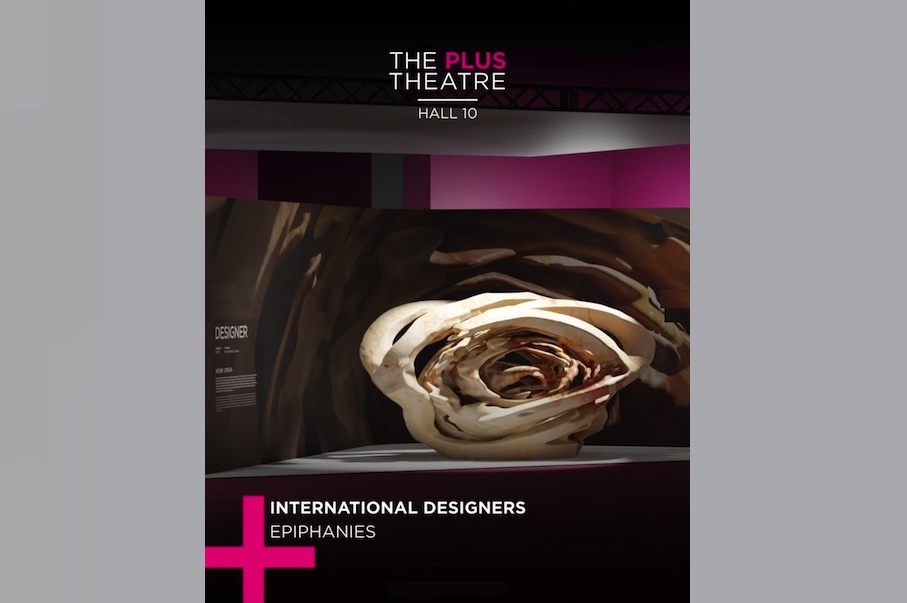
The use of natural stone is subject to changing circumstances, such as fashions or the spirit of the time, the technologies available for extraction and processing, and much more. For example, since industrialization, unlike for thousands of years before, stone has no longer been used as a load-bearing construction material, but only for curtain walls or adhesive decoration for facades, walls, and floors.
At the same time, a uniform color was considered the most elegant material variant of stone, as if it were an industrial product.
Since the emergence of the environmental movement, and even more so since the climate crisis, circumstances have changed once again. Pioneering designers and engineers are thinking about ways, for example, to avoid stone waste or what to do with it.
They are also looking for ideas on how to use stone in a way that is truly appropriate for the material and how to creatively utilize the material‘s imperfections.
Industrial designer Raffaello Galiotto is one of these masterminds. And Marmomac traditionally sees itself as a venue for experimentation and innovation in natural stone.
Galiotto, who has a studio in Chiampo, not far from Verona, has been discussing these questions for a long time in various projects at the trade fair. You can find them by searching for his name in our archive.
Now, for the second time, he has brought together creative minds for the Plus Theatre in Hall 10 of Marmomac in order to find new applications for stone or new design ideas.
Galiotto, as curator, has named this year‘s presentation “Epiphanies” (Enlightenment). Of course, the focus is on options opened up by modern technologies.
Renderings: Designers
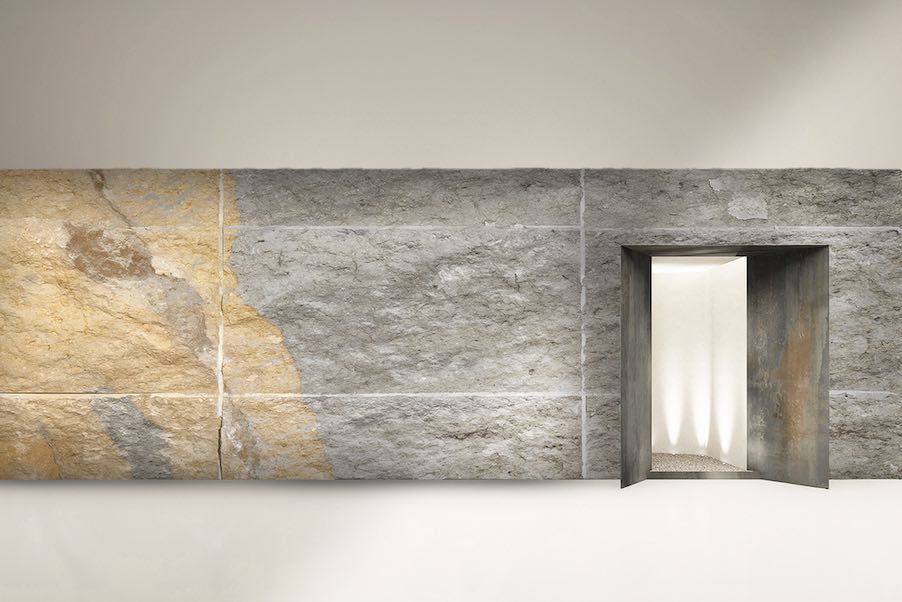
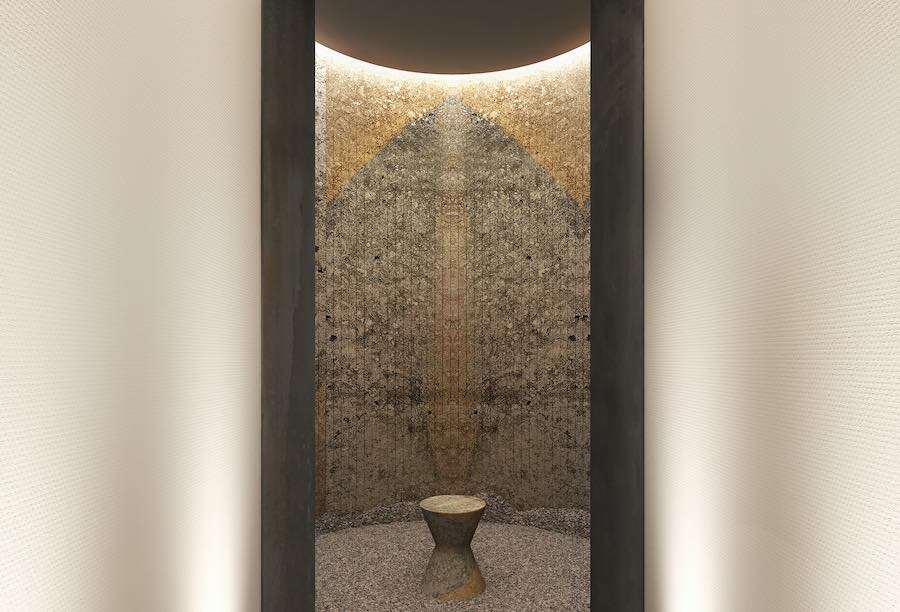 In their project “Reasoning with stone,” Matteo Fraticelli and Marcela Sottile from FROM architecture explored the unpredictable variations that nature allows even in its stones. Using two types of stone, they created a light-dark design for a wall. The idea is intended for a meditation room.
“Reasoning with stone“
Designers: Matteo Fraticelli, Marcela Sottile _ FROM architecture
Company: Grassi Pietre
Material: Pietra di Vicenza, Perla Blu grade
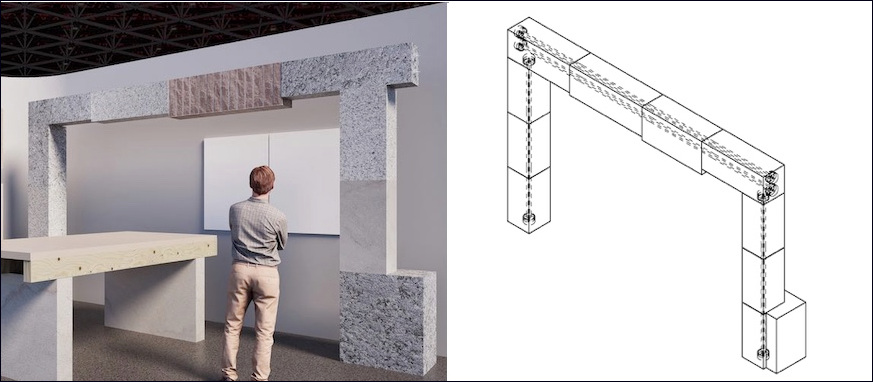 In “The Return of Natural Stone,” Anne Hangebruch (junior professor at the Technical University of Dortmund, Mark Ammann Architects) and Nerissa Yeung from Groupwork take a closer look at the new possibilities of traditional solid construction with stone. The exhibition features a stone beam made possible by holding the individual parts together with tensioned steel cables. Such constructions can grow both in height and width. Stone is an attractive building material due to its low ecological footprint. Another topic is stone-wood modules.
“The Return of Natural Stone“
Designerinnen: Anne Hangebruch (junior professor at the Technical University of Dortmund, Mark Ammann Architects), Nerissa Yeung (GROUPWORK)
Company: Bamberger Natursteinwerk Hermann Graser
Materials: Mainsandstein weiß grau, Neckartäler Hartsandstein, Leistädter Sandstein, Epprechtstein Granit, Kösseine Granit
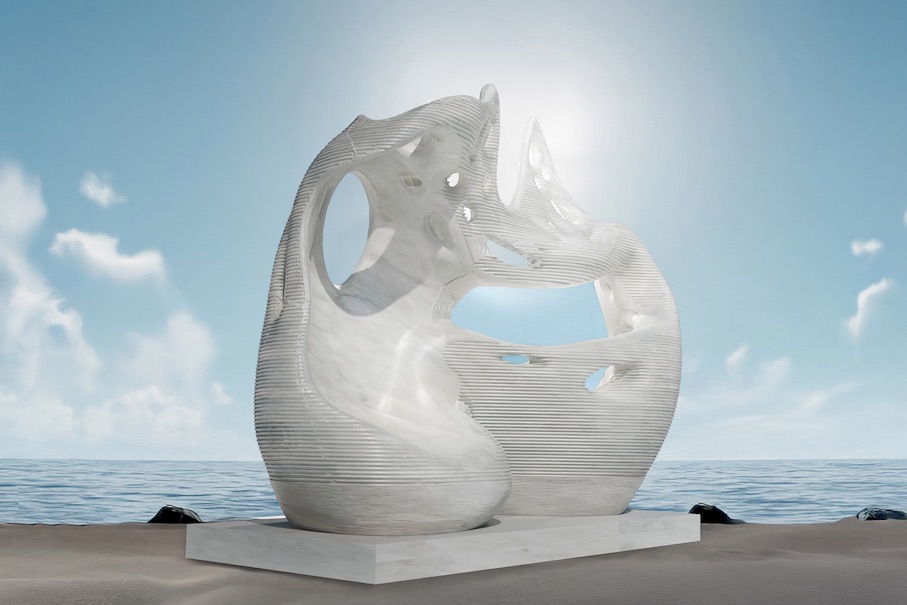
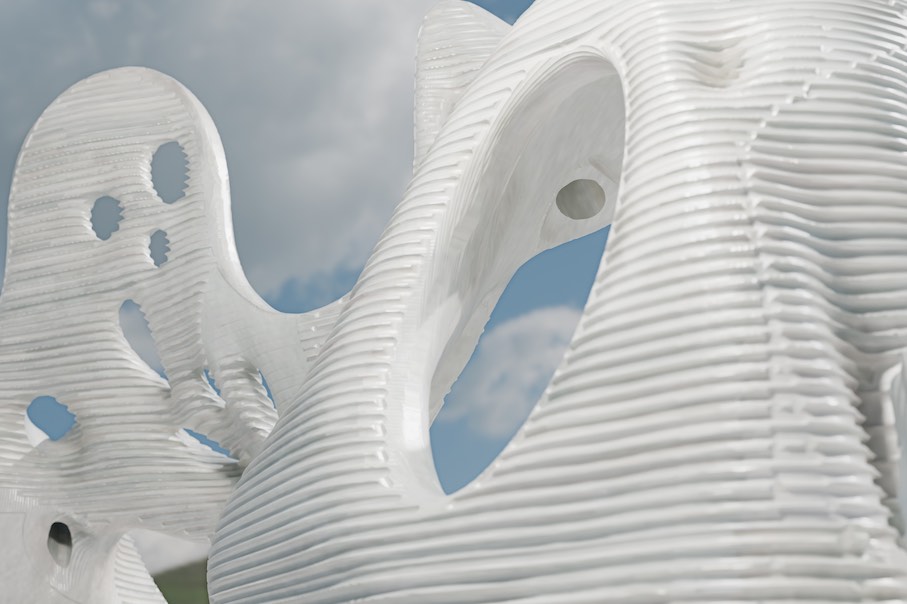 With “Lucidum” (Moment of Light), British-born designer Tara Moore, who lives in Carrara, shows everything that is possible with white marble from Tuscany. If we interpret the rendering correctly, it consists of two seats that stand next to each other but are oriented in opposite directions. Their shapes, which cannot be achieved with other tools, reveal that they were manufactured with a CNC robot arm; the artist deliberately did not sand down the steps on the surface as evidence of machine production.
“Lucidum“
Designerin: Tara Moore_Marble Projects
Engineer: Alessandro Marchetti
Company: Robologica
Material: Bianco Carrara
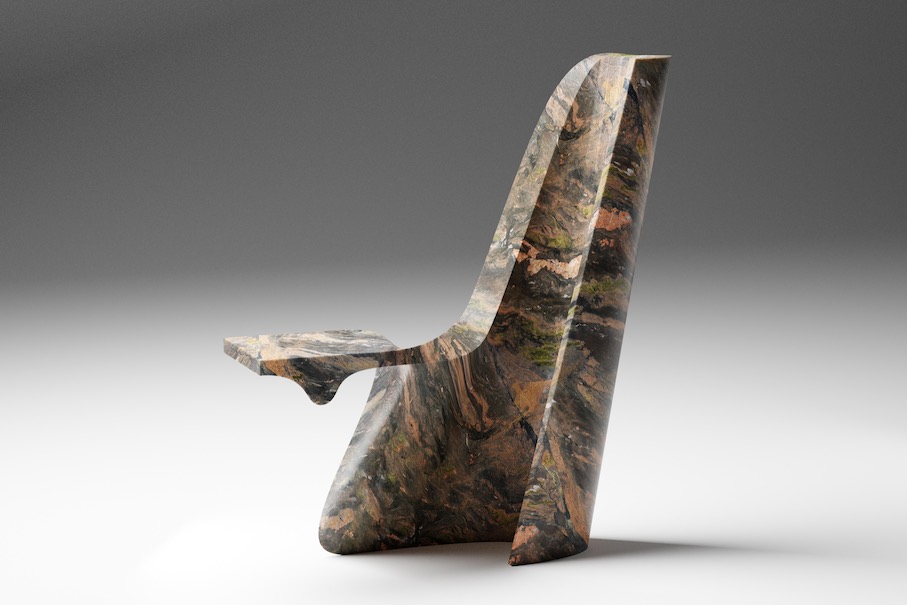
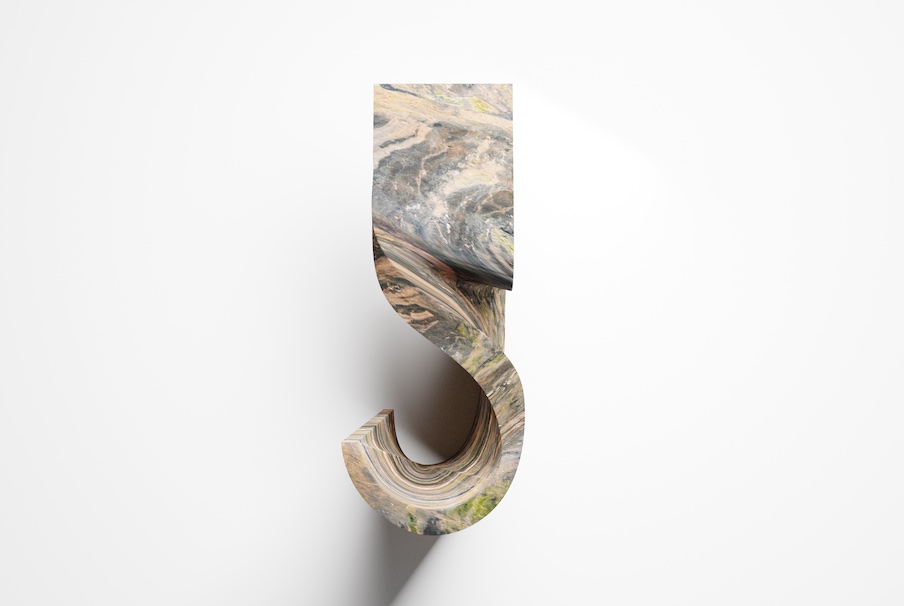
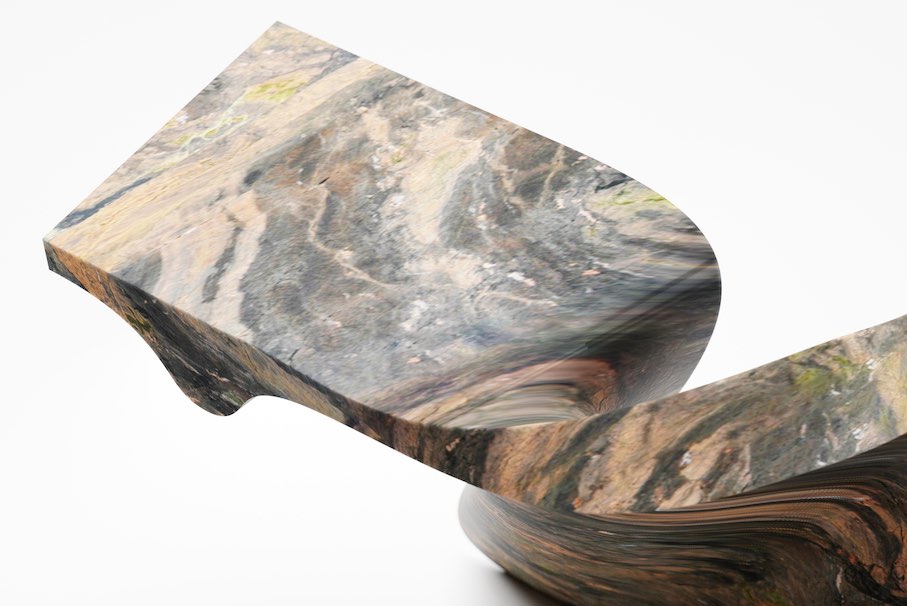 Ludson Moulin Zampirolli from Brazil was inspired by the “Araçari” (Arassari) from the Toucan family. Striking about these birds from South America is, apart from their colorful plumage, their large beak. Similarly, Zampirolli used a CNC robot arm to carve unusual proportions out of a block of stone.
“Araçari“
Designer: Ludson Moulin Zampirolli
Companies: Pellegrini Meccanica, Decormarmi
Material: Capolavoro Picasso by Granistone