Stone-Ideas.com


The Maijishan Grottoes are a fascinating example of how people in earlier centuries connected their faith, nature, and art. They documents of culture and history are located in Gansu Province in northwest China. To be more precise, they are the 140-meter-high Maijishan Grottoes, from whose red sandstone, artists of various dynasties carved almost 200 caves containing over 7,000 statues from the 5th to the 18th century.
Parts of the figures can be seen from the outside, and many works of art, such as painted clay figures, are hidden in niches within the caves. The complex is a Unesco World Heritage Site.

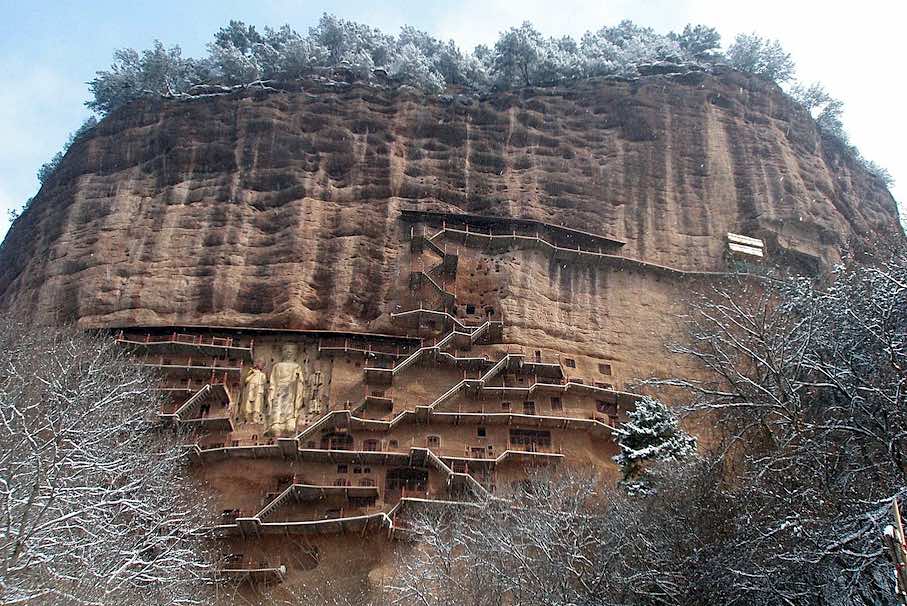
The access points, via a system of stairs above the abyss, are certainly striking – but they were only created for today’s tourists. For centuries, access was only possible via stairs in the stone wall or ladders.
This brings us to the current problem: The number of visitors from home and abroad is large, and the sandstone is also subject to natural weathering, in part as a result of climate change. How can you create a visitor center for such a place that conveys the fascination of the place to tourists while simultaneously conveying the message of the ancestors?
The architects at ZXD Architects + BIAD were initially inspired by the landscape and then by Buddhism. Buddhism presumably came to this area with the traders on the Silk Road.
In their description, the architects first note that there are several such inselbergs there: “They stretch across the earth, calm and steady.” The deep emotions with which they approached the project can already be felt here.

The solitary shape of the mountains and their arrangement reminds the viewer of rings, and the circle is also a central idea in Buddhism: “All living things, if they do not seek ‘liberation,’ will forever be in the cycle of life and death in the ‘Six Paths,’ with no end.” They quote a phrase from an early form of the religion.
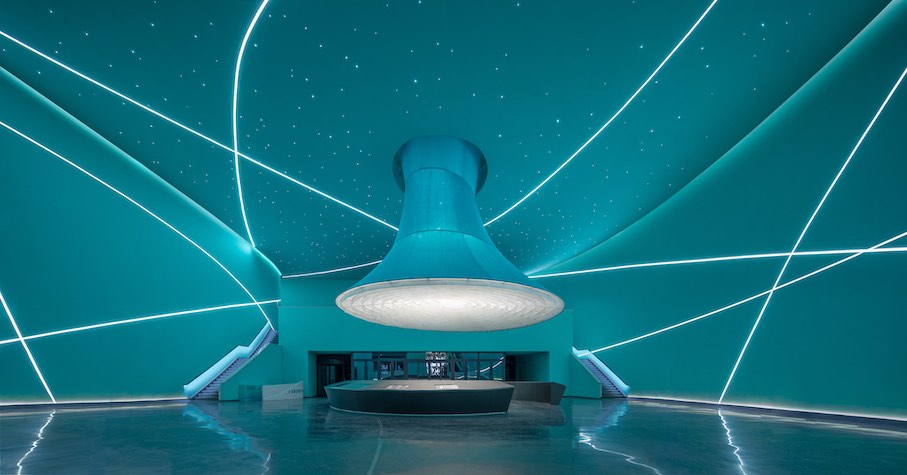
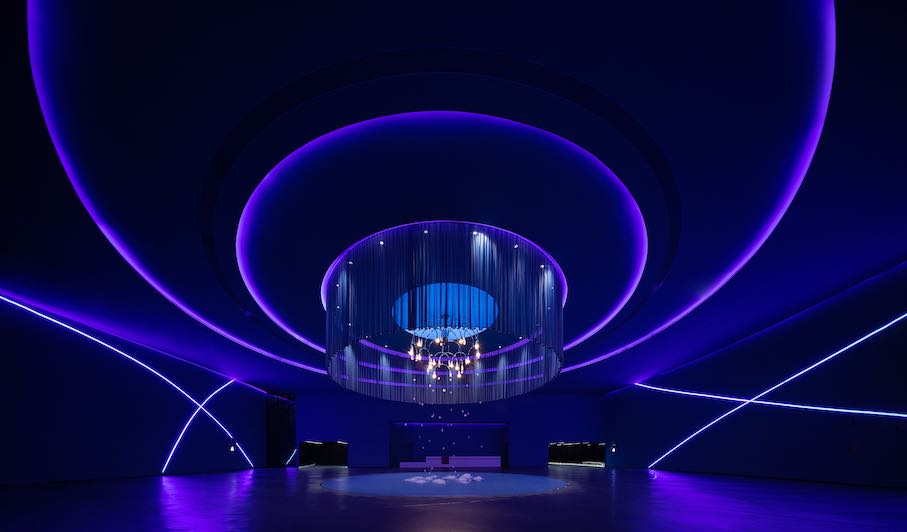
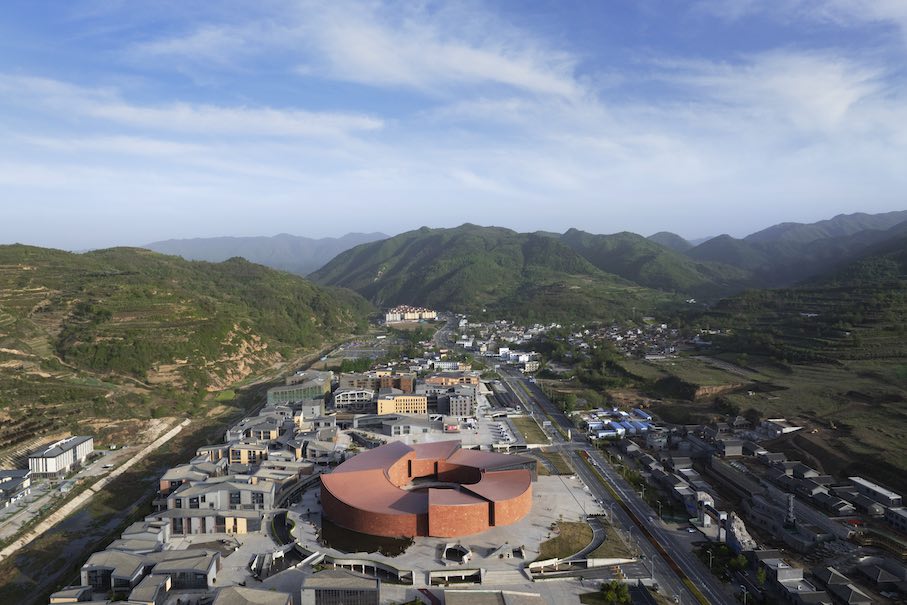
The simple circular shape also characterizes the visitor center. The circle is divided into six sections that emerge from each other and rise and fall.
The quasi-flowing line is intended to give visitors a “soft and soothing feeling, which can make people feel calm inside,” is the aim of the architecture.

This is also intended to give travelers a break from the hustle and bustle of everyday life at home: The architecture “creates an environment that is in line with the peaceful atmosphere pursued by Buddhist practice, allowing tourists to feel inner peace when entering the building.”
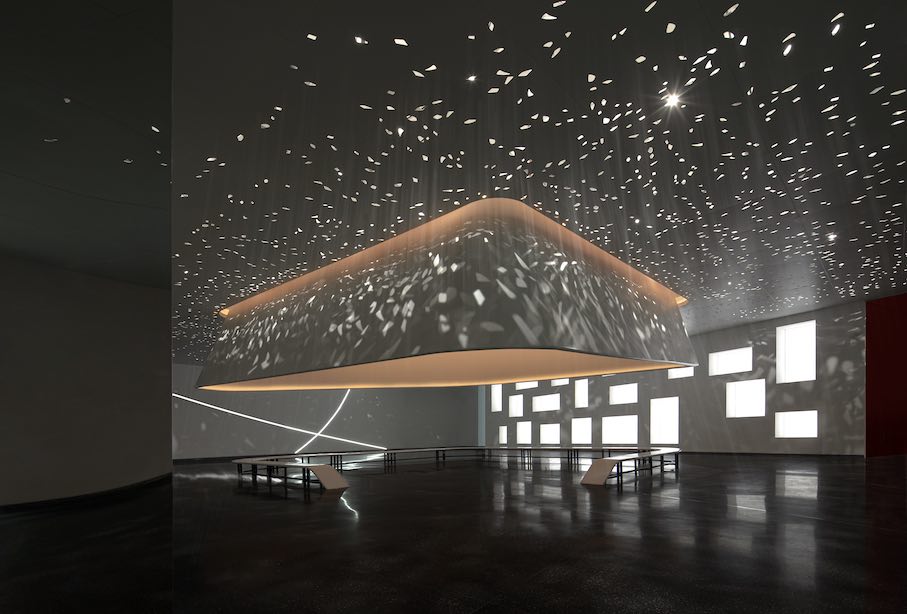
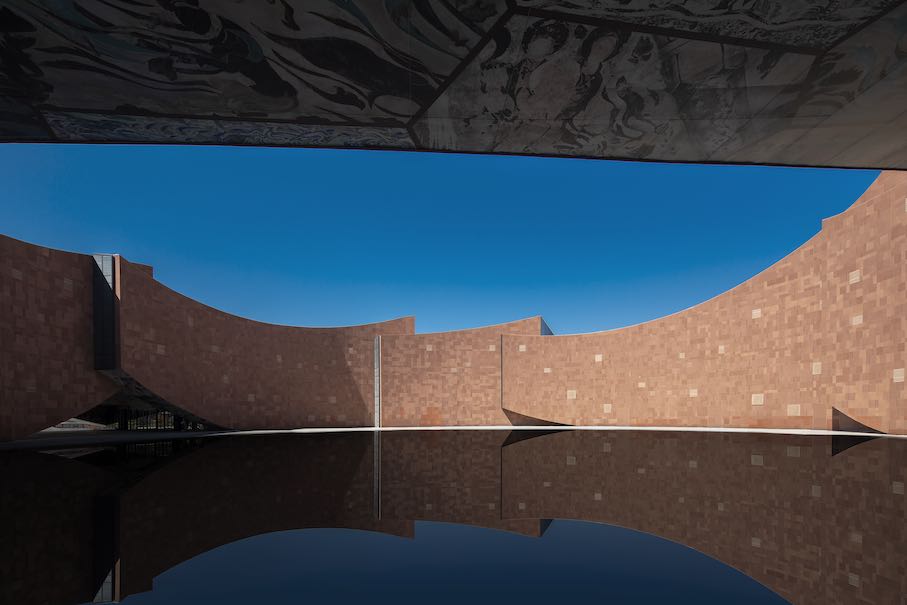
Where the sections intersect, light from outside falls into the interior: “The light shines into the building with a mysterious power and serves as a summons that guides the audience from one space to the next,” the architects write.
And they continue: “The annular space is the fundamental feeling of the architectural experience. Meanwhile, the undulating mountain terrain of the surrounding natural environment is integrated into the overall design, enabling the humanistic sentiment and the power of the environment to overlap and form an energy field with contemporary spirit. It acts as a participant in the public space with environmental power, and extends this momentum throughout the entire site design.”
It’s about mystical building, and the architects conclude: “Just as Buddhism assumes humans as beings with sentiments and with a broad mind, the shape of the building also appeals to tourists from different cultures and backgrounds, providing a space for harmonious coexistence.”
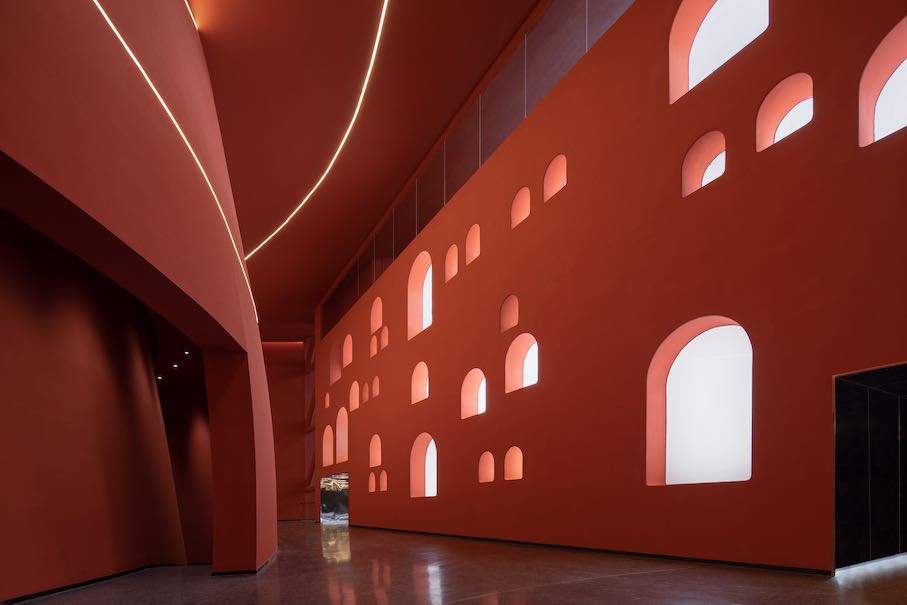
The visitor center has the same red sandstone facade as the nearby mountain.
Fotos: Arch-Exist, Xiangdong Wang, Hanmo Vision