 Stone-Ideas.com


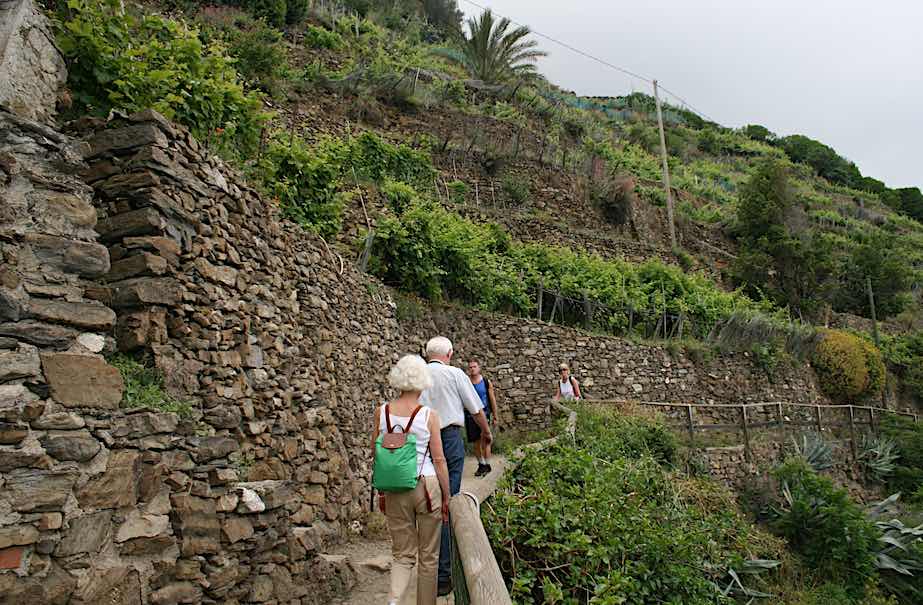
Although humanity‘s cultural heritage is threatened in many ways by climate change, it also holds the potential to help us adapt to the far-reaching changes currently taking place in our environment. This is because the way our ancestors lived was always tailored to the conditions of their time. This applies to construction and agriculture, to name just two examples.
Teresa Erbach, a scientist at the Research Institute for Sustainability (RIFS), has now produced a study on this topic. Entitled “Using Cultural Heritage in Climate Adaptation: Fields of Application and Functions,” it analyzes how preserving cultural heritage – in other words, learning from past centuries – can help us today.
The RIFS is an institute at the GFZ Helmholtz Center for Geosciences based in Potsdam. It conducts research with the goal of “understanding, advancing, and guiding processes of societal change towards sustainable development.“
“Engineered and built environment“ is one section of the study. It includes major infrastructure projects like flood levees and seawalls, as well as small structures like floating houses. Artificial levees were created as early as in Ancient Egypt, and drainage systems from Mycenaean times are still in use today. In the North Sea area, the construction of water management infrastructure began around 1000 CE, although varied strategies for coping with recurring flooding were developed even earlier. For centuries, for example, settlements were only built on naturally high ground or artificial mounds, and space was kept free to make room for floodwater.
“Technological and ecosystem-based“ options include monitoring features like protecting coastal infrastructure with mangroves and salt marshes. In this field, too, all four functions are active. Such cultural heritage can yield economic benefits when, say, traditional techniques allow income to from agriculture or tourism. Finally, aesthetic factors can be of relevance when such practices heighten the cultural or sensory attractiveness of a landscape.
Numerous other aspects are discussed in the study.
Overall, the specific circumstances on the ground must be considered in each case. This highlights the political dimension of the issue: “In each and every case, the answers depend on values, varying perceptions of climate adaptation, and cultural and moral considerations,“ is emphasizied on the webpage of the study.
Teresa Erbach: „Using Cultural Heritage in Climate Adaptation: Fields of Application and Functions“. Wiley Interdisciplinary Reviews – Climate Change, 16(4).
doi:10.1002/wcc.70011