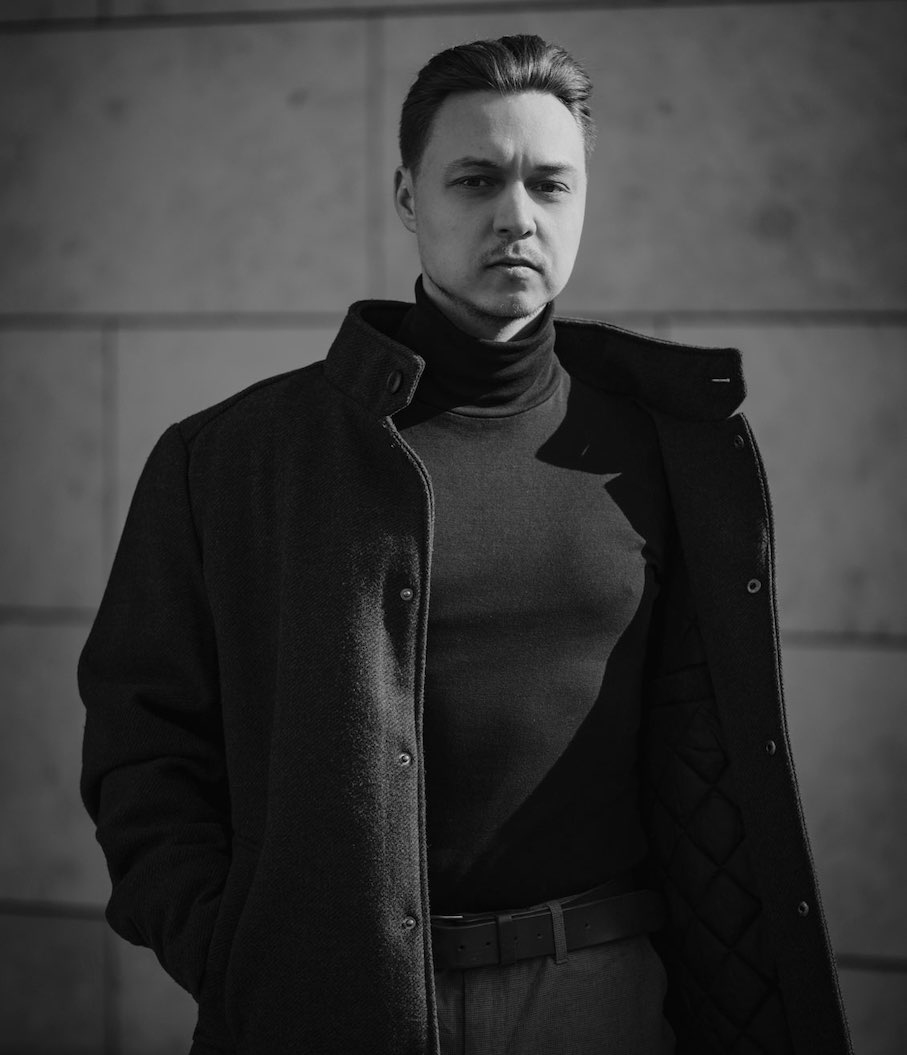
Stone-Ideas.com


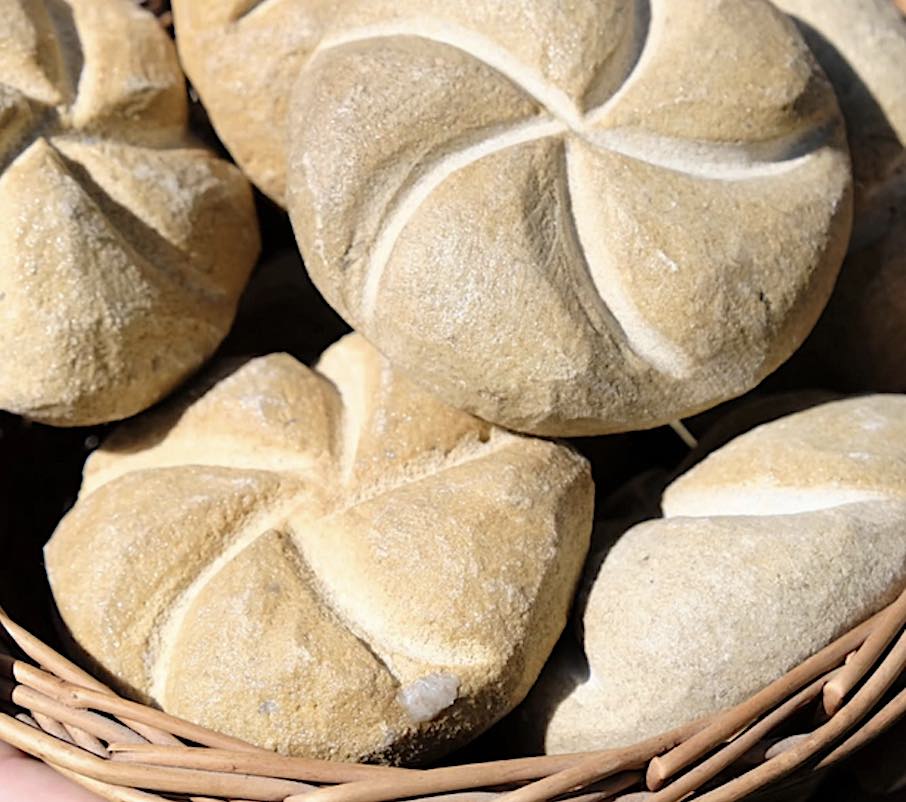
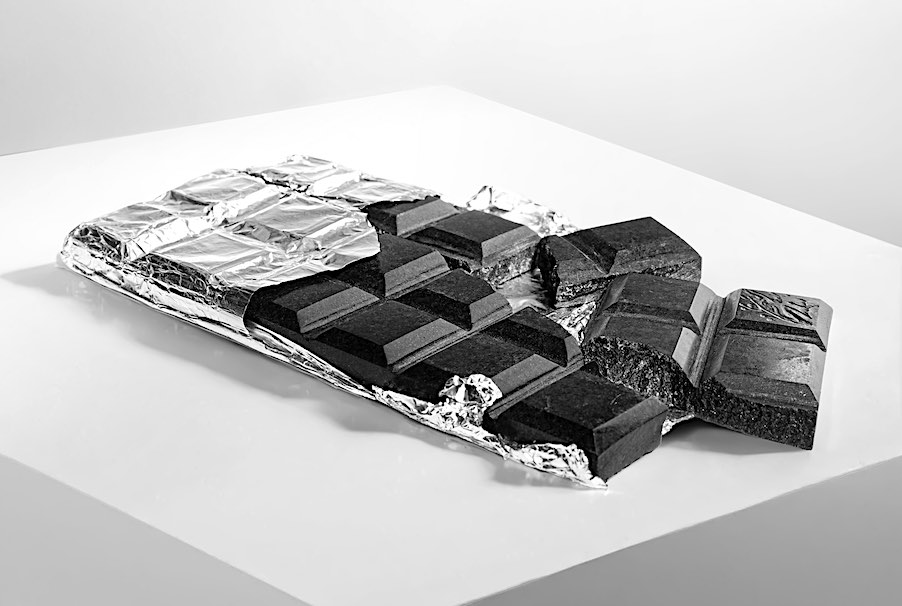
You should pay close attention if, for example, you come across a tray of baked goods in a pedestrian zone and Albert Wrotnowski is nearby. The Polish artist creates deceptively realistic replicas of these and many other foods in stone. For the fine flour coating on a wheat roll, for example, he uses stone powder, which is left over from sawing the blocks.
Albert Wrotnowski’s goal is not to poke fun at the uninitiated. For him, art must have a message, and in the case of the rolls from the “The Common Good“ project, this message revolves around waste in some segments of the population and hunger and poverty in others.
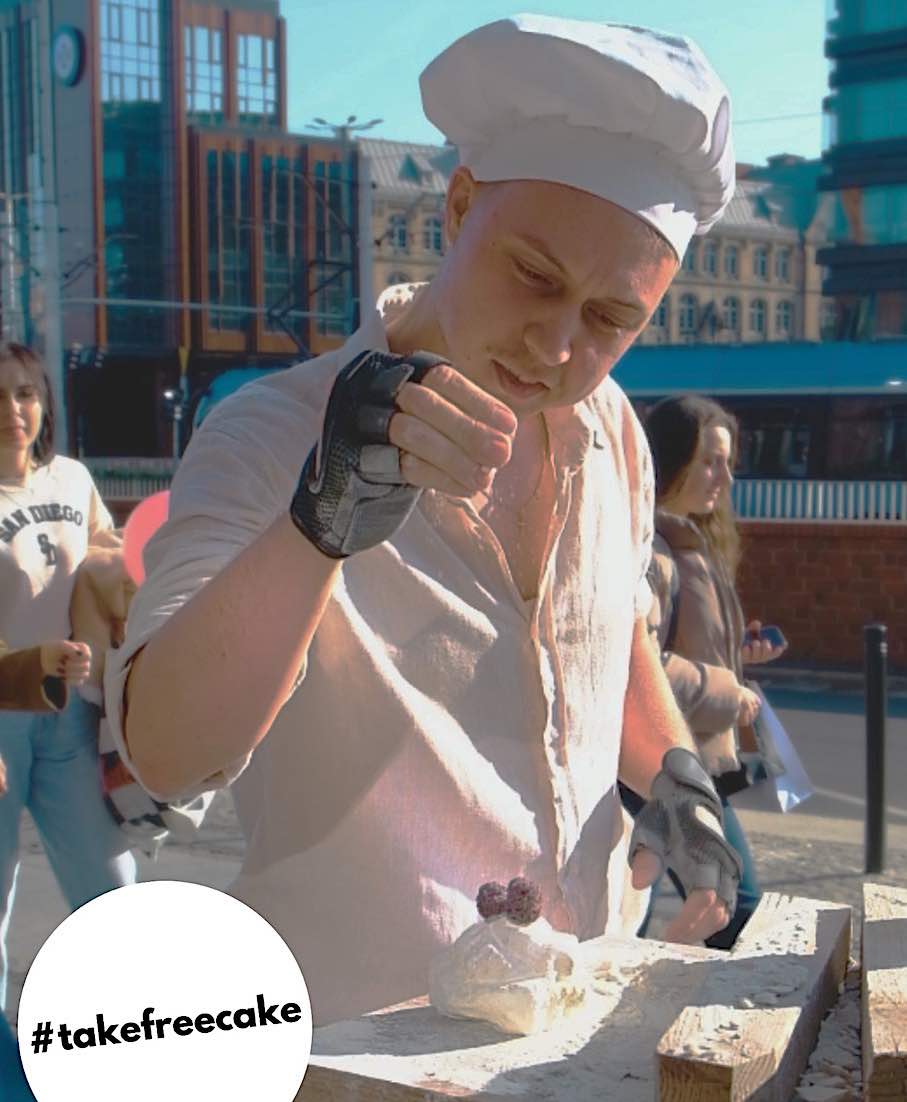
“takefreecake” was another project that went even further in its appeal to viewers: “A sweet object in the form of an eclair with a lollipop or a chocolate bar ultimately leads to a bitter reflection on the society’s condition, the role of religious institutions, global conflicts, war and indifference,” he wrote us.
On the one hand, Wrotnowski observes the world as it is. On the other hand, he likes to surround his artwork with fun activities: You can find him somewhere outdoors, dressed as a pastry chef, working on his raw material – with hammer and chisel.
He deliberately mixes up roles.
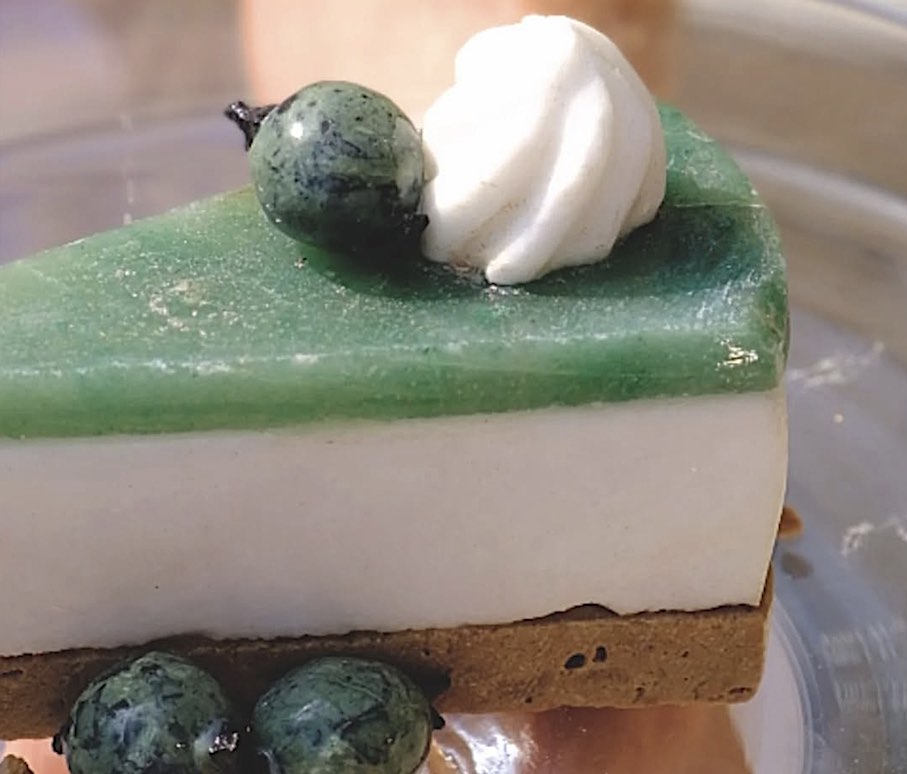
We asked him if fun is important to him in these activities. His answer: “I like to go to people, show them how I make my art, and answer their questions. People recognize me and say: ‘Oh, it’s the baker who carves his cookies.’ That makes me happy, especially when I see them smile.”
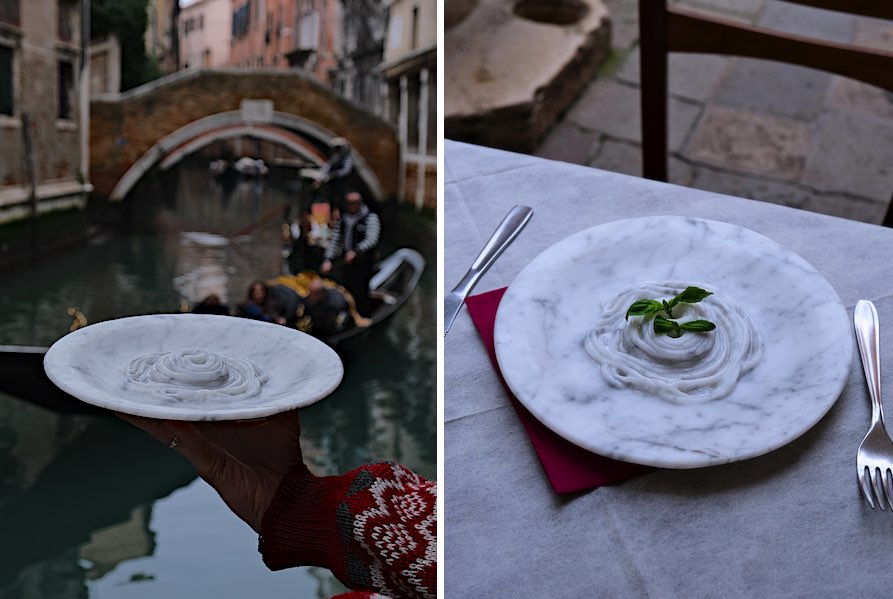
His actions are not repeatable, but rather unique and only minimally planned. This is also due to the material: “I don’t know if the stone will break and I have to start over.“
From the material perspective, his fascination with minerals is central. He knows them in detail and knows which colors he can conjure up on their surfaces and how. He generally avoids using artificial colors.
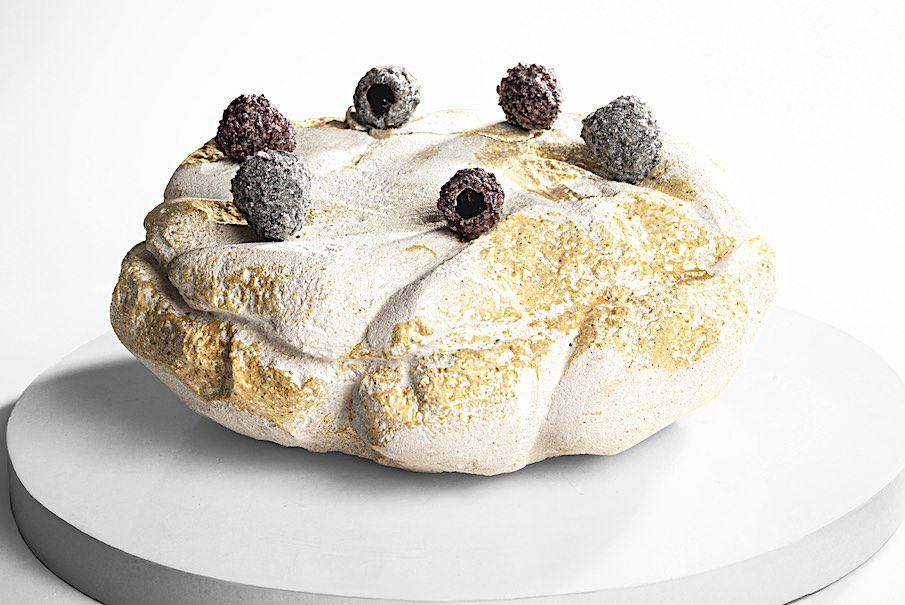
The work “The Great Pavlova“ consists of limestone, decorated with raspberries or blackberries made from pieces of semiprecious stones. “I am a mineral enthusiast,“ he summarizes.
In addition to sculpture, he also works as a geology teacher: “I work as a cultural animator, educating the youth. I conduct geological and artistic classes in Poland.” Overall, he sees himself as a “cultural animator.”
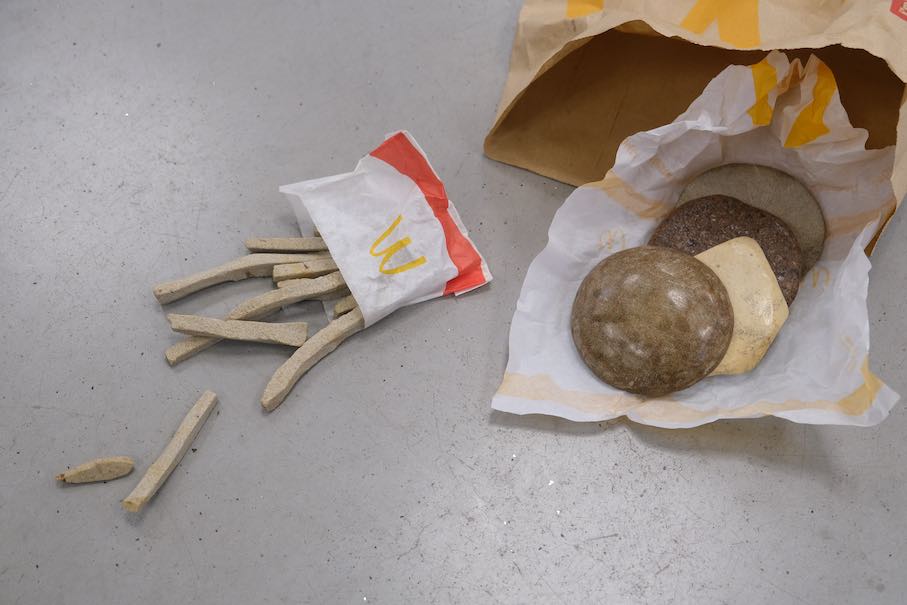
A stonemasonry competition at the Stone+tec trade fair in Nuremberg in 2018 was important for his professional career: There, his work was awarded first prize by the jury, “probably because it was an unusual idea, even though the other participants’ work was technically better,” as he says.
But that gave him a decisive boost: As a student at the Academy of Fine Arts in Wrocław at the time, he perfected his stoneworking expertise and completed his studies. Today, he participates in numerous international competitions.
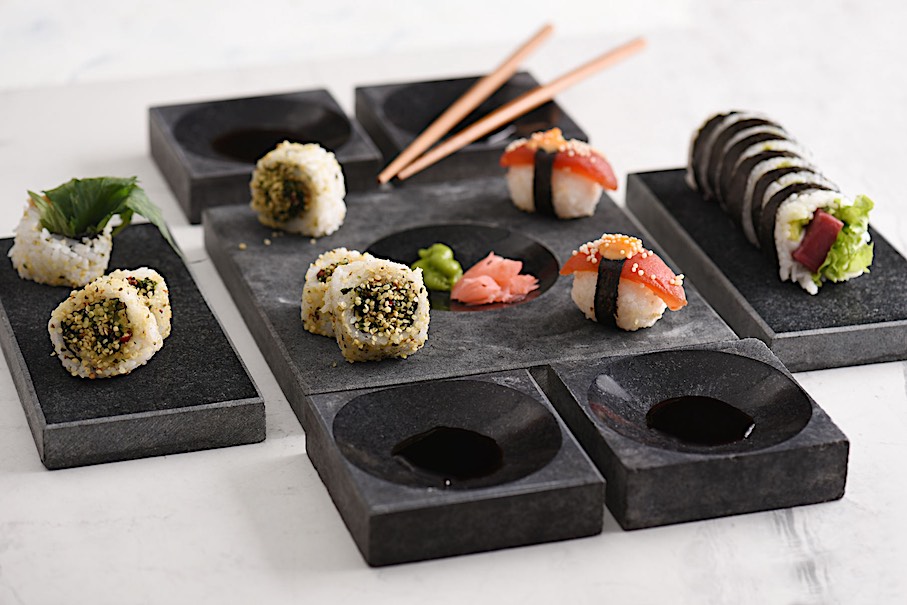
Together with his wife Janina Kudlaszyk-Wrotnowska, he founded the company Mimozy. The company creates and sells “applied art,” as the two call it. One example is the sushi sets for top restaurants around the world.
Mind you, these are table settings for real food – you can enjoy the food without worrying that you might have to go to the dentist afterwards.
Photos: Albert Wrotnowski