 Stone-Ideas.com


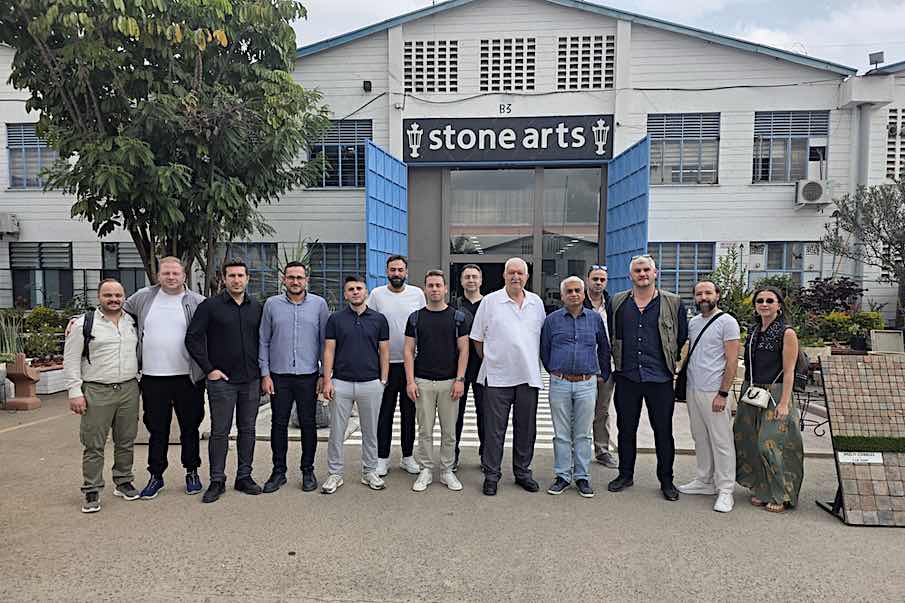
The Turkish association Aegean Mineral Exporters’ Association (EMIB), based in Izmir, where the country‘s most important natural stone fair takes place, sent a trade delegation to Kenya’s capital, Nairobi, from July 27 to 31, 2025. Representatives from ten natural stone companies met with potential trading partners from there and from the neighboring countries of Somalia, Ethiopia, South Sudan, Uganda, and Tanzania to explore the market potential. Association President İbrahim Alimoğlu was very hopeful after the visit: “Kenya has considerable potential for the natural stone sector. It is one of the largest markets in the region,” according to a report on the EMIB/EIB website.
The talks with 48 contacts took place at the five-star Nairobi Serena Hotel. “We gained first-hand knowledge of important market trends on the African continent and were able to gain valuable insights into suitable products for this market and into the demand there,” Alimoğlu is further quoted as saying.
The program also included visits to local companies: Some sell natural stone for construction and interior design, while one is active in the field of kitchen countertops, but only shows artificial stone on its website.
It is clear that Turkish companies want to supply finished products. There is no mention of supplying blocks, as is the case in China. The association’s website lists “shopping centers, residential buildings, and service buildings” as areas of application for Turkish marble and other types.
“Thirty percent of these contacts could yield positive results in the short or medium term,” Alimoğlu concludes. “That’s an excellent result when visiting a market for the first time.”
The Turkish Ministry of Trade sponsored the trip, which, incidentally, was not lavishly funded: The company bosses and representatives flew economy class and booked the night flight from Istanbul to Nairobi and back. A few hours after arriving in Nairobi, they visited local companies, and in the evening, they had to prepare for the next day‘s meetings at the hotel.
The Turkish government has had an eye on the African continent since 2003, when it launched the “Opening to Africa” initiative. From the outset, the aim was to reach markets beyond the target countries in North Africa. These countries mainly purchase chemical products from the Bosporus, as well as agricultural products, steel, textiles, raw materials, and cars.
Cooperation in the field of defense, i.e., arms deliveries, is also an important aspect.
In the first half of 2025, total Turkish exports to Africa came close to US$10 billion. Morocco led the way (1.8 billion), followed by Egypt (1.6 billion), Libya (1.3 billion), Tunisia (0.554 billion), South Africa (0.305 billion), and Nigeria (0.242 billion), according to the newspaper Daily Sabah.
In the near future, EMIB plans to send trade delegations to South Africa and Nigeria as well. This can be done as part of the UR-GE program, which supports small and medium-sized companies in their export activities. One member of this business delegation is quoted on the association‘s website as saying, “We plan to continue the initiative that began with Kenya with other target markets such as Brazil, Morocco, and Algeria.”
Participating Turkish companies were, in alphabetical order: Alimoğlu Mining Industry and Trade Joint Stock Company, Alimoğlu Marble Granite, Çelikkol Marble Mining Industry and Trade Limited Company, COBANEXPORT Mining, Ermaş Mining Tourism Industry and Trade Joint Stock Company, Haz Marble Industry and Trade Joint Stock Company, Merdivenci Marble, Özçınar Electrical Materials Mining Industry and Trade Limited Company, Şenler Marble, und TT Stone.
Umbrella organization Aegean Exporters‘ Association (EIB)
