Stone-Ideas.com


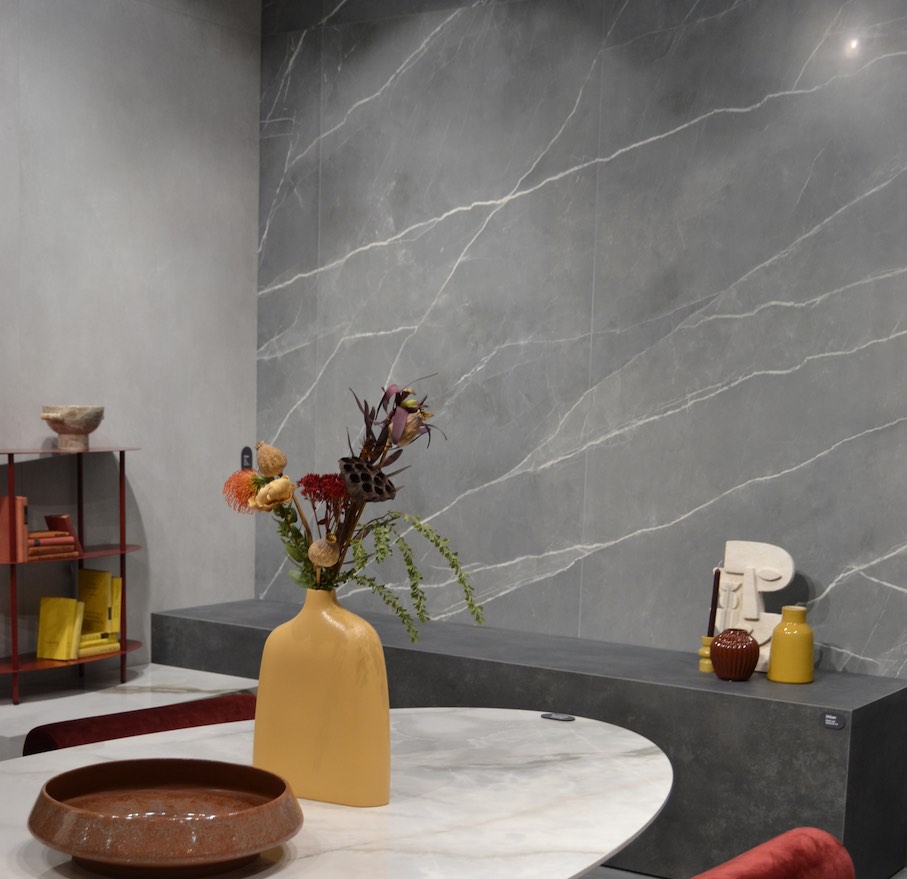
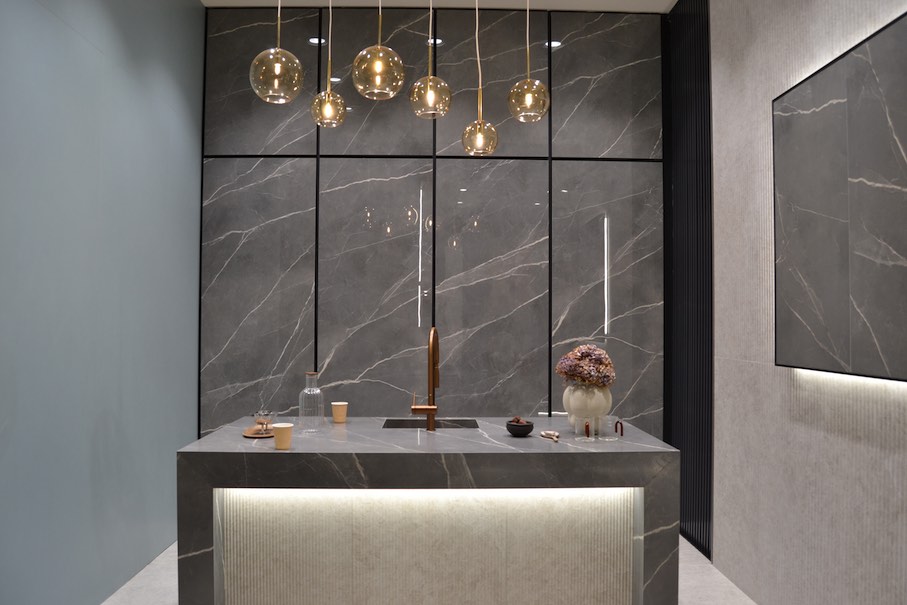
Sustainability is a major topic also in the ceramics industry. This was evident at the 42nd edition of the Cersaie trade fair for tiles and bathroom furnishings, which took place in Bologna from September 22 to 26, 2025 (almost simultaneously with the Marmomac natural stone fair in Verona). As in previous years, the trends were a high proportion of recycled material and reduced CO2 emissions during the necessary firing of the raw material. In addition, some suppliers focused on reduced tile thickness and increasingly larger formats.
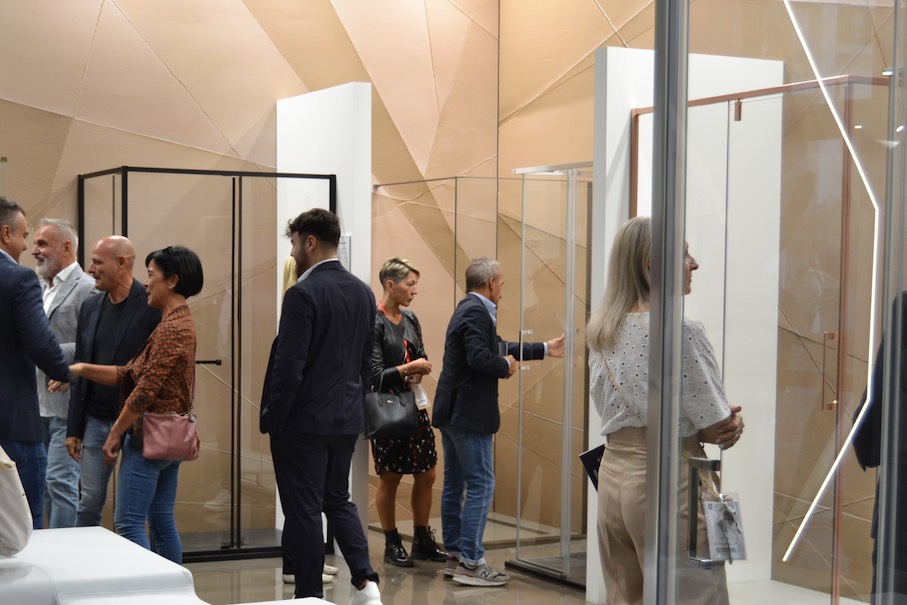
First, the trade fair figures: 627 exhibitors (2024: 606) presented their products in 16 exhibition halls covering an area of 155,000 m². Of these, 39 % came from abroad, representing 29 countries. A total of 94,577 trade visitors attended the fair (-0.8 % compared to 2024). The proportion of foreign visitors was 47.5 %. On invitation of the Italian trade organization ITA and the Ministry of Foreign Affairs, 210 buyers visited the fair in Bologna.
Among other things, tiles were exhibited that are now only 2 mm thick (in words: two millimeters), after having already been reduced from six to three millimeters in recent years, and the industry immediately interpreted this in terms of sustainability: It was emphasized that the energy consumption for firing these thin pieces is significantly lower than for normal products and that less CO2 is released during transport due to their lower weight.
In fact, the industry is extremely active in improving the ecological balance of its products. For example, the EU-funded CCS4CER project is underway in Emilia Romagna, a center for Italy‘s tile companies. The aim is to capture CO2 from the tile manufacturing process and carbonate it, i.e., turn the greenhouse gas into building materials, for example. Research into this promising process has been ongoing for a long time, but it is still in its infancy.
Other important topics included:
* Super sizes such as 320 x 160 cm (10.5′ x 5.25′) and larger are now so common that installers with the appropriate expertise are difficult to find;
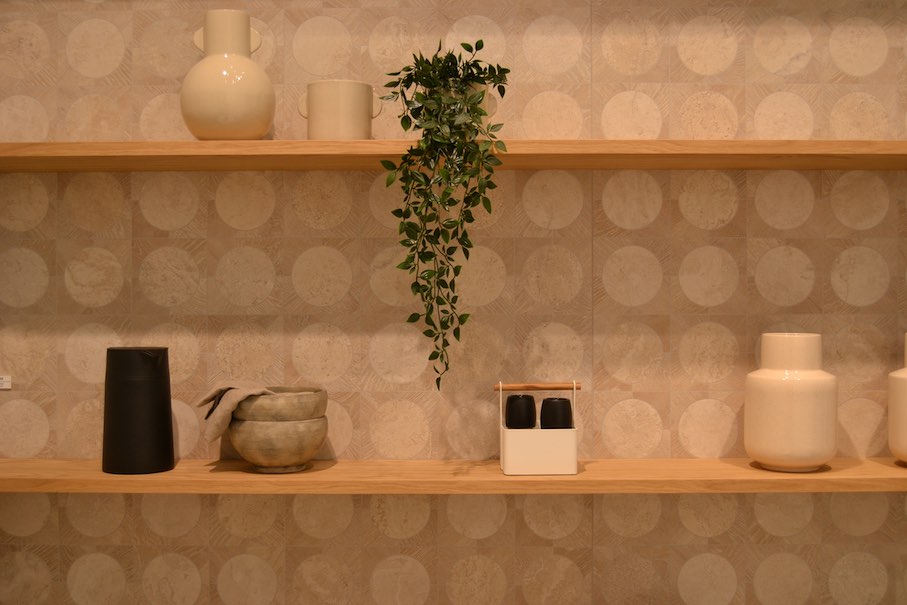
* advances in digital printing allow for hyper-realistic looks, not only replicating real materials like natural stone or wood, but also creatively inventing new types of stone or new woods;
* 3D surfaces and geometric reliefs are available in many variations;
* Bioactive ceramics are another topic: their surfaces are said to have antibacterial, pollutant-reducing, and self-cleaning properties;
* magnetic tiles were presented again. In the past, their weak point was that the substrate had to be extremely flat;
* Vitra Tiles presented V-Tone technology, which is designed to eliminate color differences between production batches.
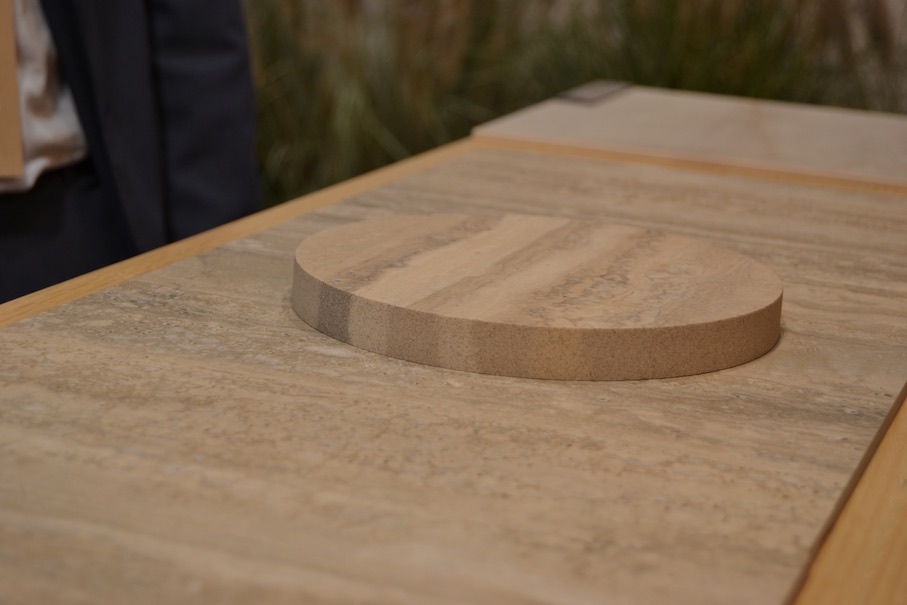
The Full Body technology could enable the ceramics industry to break into new areas of application: granulate is mixed with mineral flakes and pressed under high pressure at a temperature of 1300 degrees. Unlike traditional ceramics, where a material image is printed onto a carrier layer, the entire tile consists of a uniform mixture of materials.
This allows for material thicknesses similar to those of building blocks. Ariostea, one of the developers, writes: “The Full Body³ technology is the product of over thirty years of material development, with the result that ceramics are no more used only as flat decoration but as long-term building components.”
Cersaie 2026 will be brought forward by one week and will take place from September 21 to 25.
Photos: Cersaie