Stone-Ideas.com


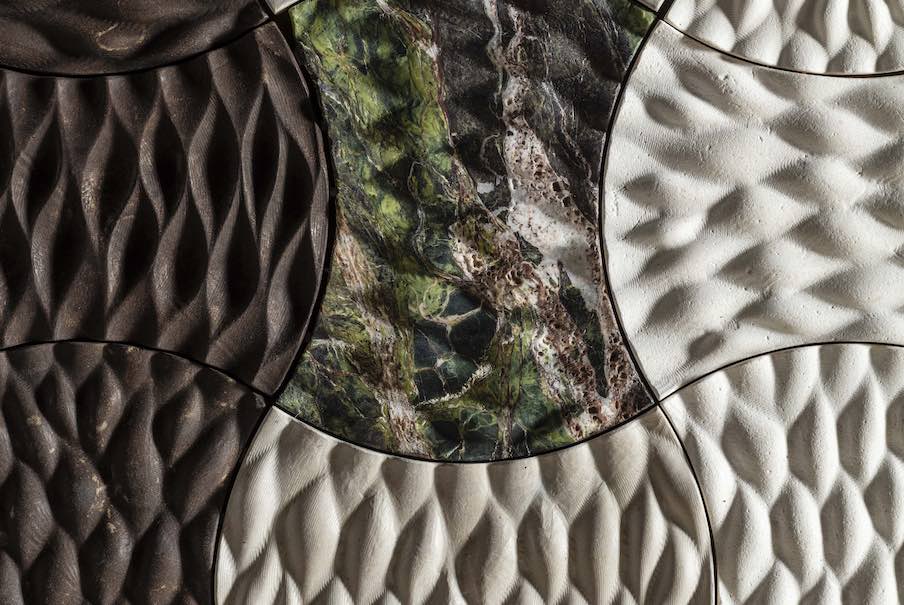
The company Lithea is based in Sicily and often references the ancient cultures around the Mediterranean in its designs. The latest creation, titled “Vello D’Oro“ (Golden Fleece), is about Crete and the Minoans. The designer was Daniel Eltner.
The design for the wall tiles is centered around the Minoan double-edged axe. It was probably a cult object or status symbol on the island during the Bronze Age since 2000 BC, characterized by two opposing, rounded edges. In Persia, it was also used as a weapon. We read this on Wikipedia.
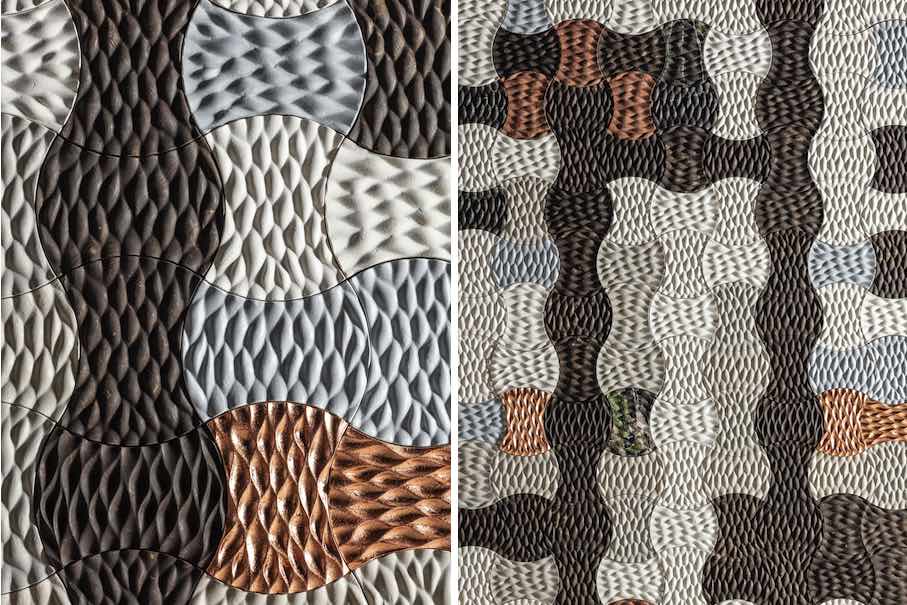
Daniel Eltner, originally from Germany, modified this basic shape to create interlocking modules with two variations. Each individual element can have its own stone type and thus its own color. The stones used are Pietra Pece, Crema Tunisi, Rosso Diaspro, Forrest Green, Bianco Fenice, and Bardiglio Imperiale.
The surface of the tiles features a regular hump pattern. The size is 20.5 x 15.2 cm.
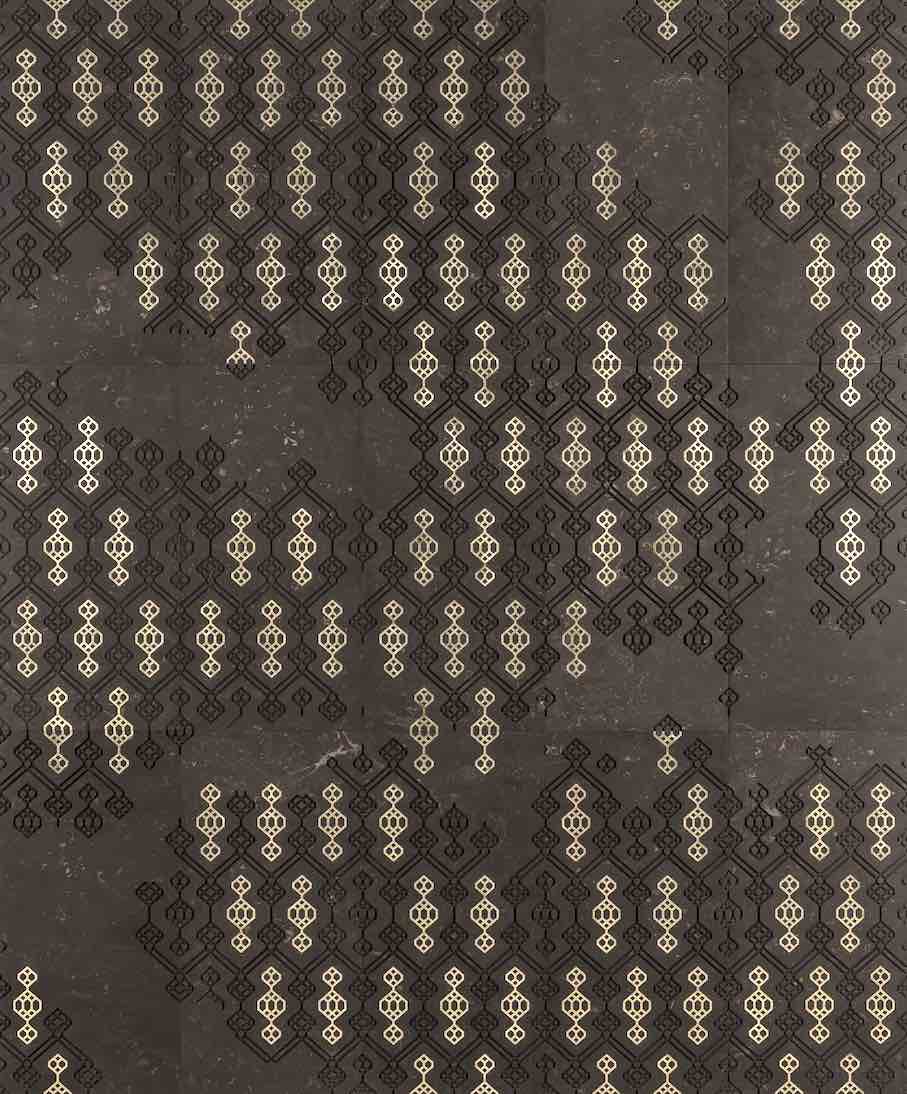
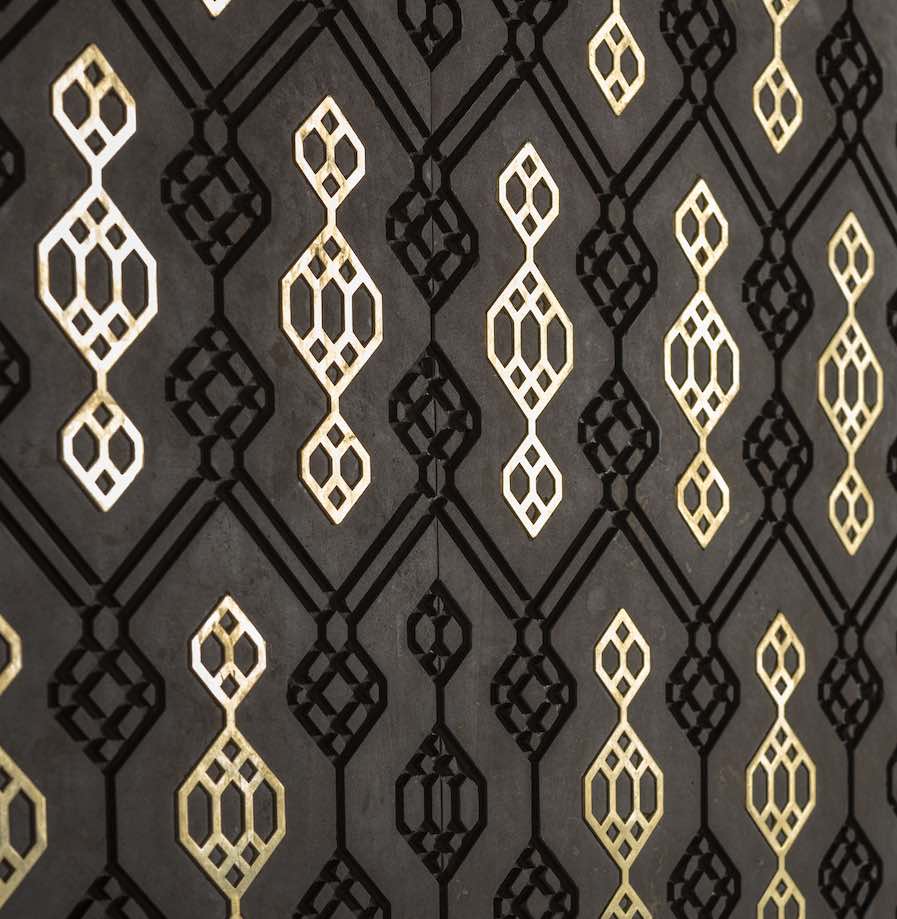
Another new addition to the 2025 collection is Pierluigi Piu’s “MóGORO“ collection. Here, the designer drew inspiration from a typical woven pattern from Sardinia. To create this design, he used a CNC-controlled machine to engrave fine channels into the surface of the dark Pietra Pece. Some of these patterns are filled with copper inlays, whose surface has a satin finish and slightly protrudes from the stone.
The name refers to a village on the island where a Christian miracle is said to have occurred: Two villains had stolen communion wafers, but lost them, and the wafers left marks in the stone as they fell.
The story of the Golden Fleece is quite gruesome, as is often the case in ancient myths, and so we tell it here: In Boeotia, there lived King Athamas, who separated from his wife and chose a new partner. Soon, they had children, and the first wife feared for the lives of her offspring. The gods reacted and sent the Golden Ram, who could fly and speak. He took the children under his wing and carried them eastward. While crossing the strait near present-day Istanbul, however, the girl fell off and into the sea. Her name was Helle, and the strait has since been called the Hellespont (Sea of Helle). The ram delivered the brother to a land on the Black Sea. In gratitude for his rescue, the ram was sacrificed, and its fur was kept in a temple as the Golden Fleece.
Later, according to Homer, the Argonauts, led by Jason and with the help of Medea, stole it. But that is another story, in which lots of children and rivals are also murdered.
Photos: Nino Bartuccio