 Stone-Ideas.com


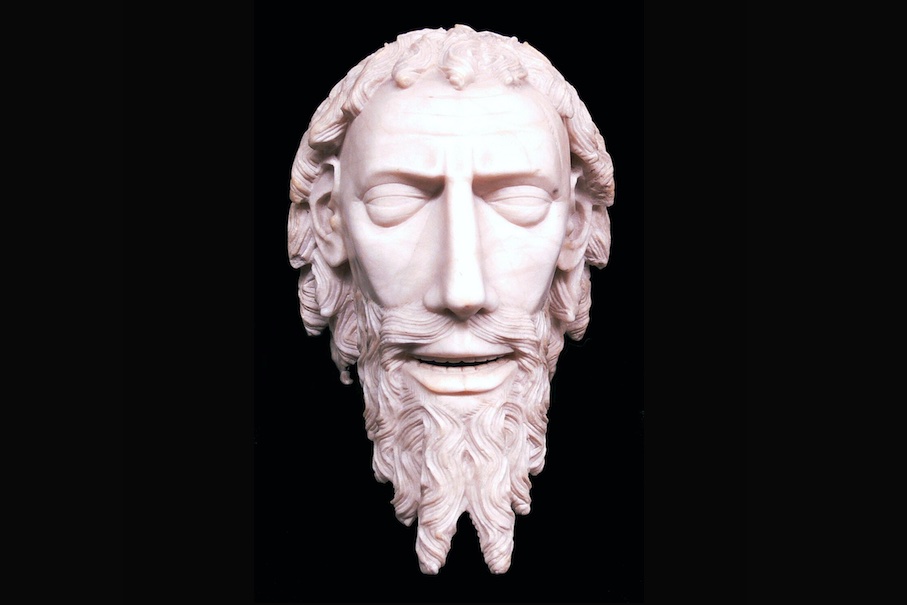
White marble was the most popular material among sculptors in antiquity. Museums contain countless examples of sculptures of various sizes and originating from all over the world, especially around the Mediterranean. The biographies of the most famous artists, their working methods, and the sources of the materials, as well as the delivery routes from the workshops to the customers, are correspondingly well documented.
In the Middle Ages, however, there was another material used in art in Europe that sometimes even challenged the role of marble: alabaster. For over half a millennium between the 12th and 17th centuries, and especially between the 14th and 16th centuries, it played an important role for small statuettes and even for entire church furnishings. They have been preserved – however, almost nothing is known about the way alabaster was once worked, or about the trade routes for art, and very little is known about the old quarries.
Researchers from all over Europe have generated a great deal of new knowledge in this area in recent decades. Most recently, the “Materi-A-Net“ project took up the topic. The Institute of Art History at the University of Cologne, together with the French Geological Survey (BRGM) and the museum in Leuven, Belgium, led the project.

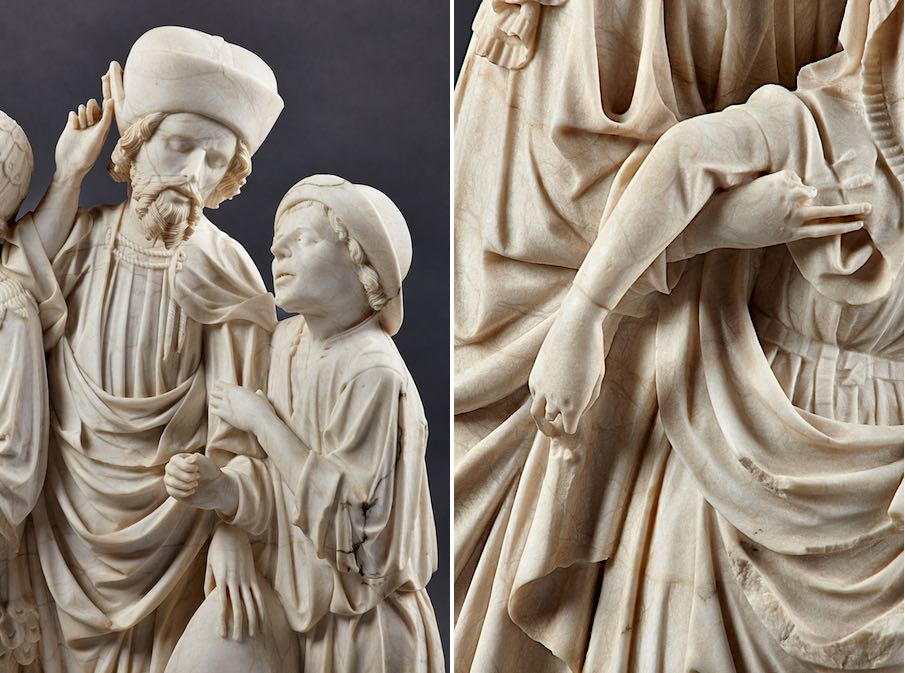
At its core, it focused on the networks of the time: For a time, there was a veritable “alabaster diplomacy“ between princely courts princely courts in today’s France and Germany, the so-called Lorraine-Hesse-Franconia triangle. There, local rulers had alabaster quarried and commissioned works of art that were then sold throughout Europe. The artists, usually traveling from court to court, cultivated political relations between the rulers and also ensured the dissemination of their knowledge and skills.
The alabaster referred to here is a form of gypsum with a high water content; when completely dry, it is called anhydrite. Its white color can be very similar to marble, but it is much easier to work. However, it is not weather-resistant.
It occurs in regular beds or nodules in sedimentary rocks.
In the Midlands of England, mass production had been established by the time of the Reformation, with products shipped to the continent in large quantities. In Spain, it was mined primarily in the former Kingdom of Aragon, in the Ebro Valley and in the Pyrenees. Tuscan alabaster was already mined by the Etruscans, but there was a hiatus until Renaissance sculptors rediscovered the material.
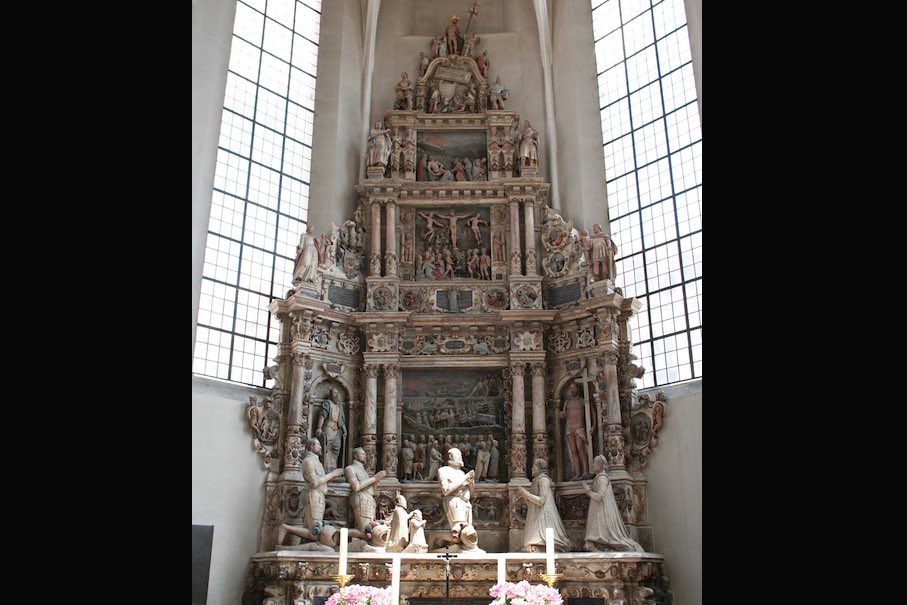
Many alabaster quarries in France have now been identified, as well as in Germany and further east through Poland to Ukraine.
With such a wide distribution, there is naturally a great deal of confusion for current research. Two examples:
* The famous sculpture of the Virgin of the Annunciation by Javernant was at home with an angel in a small church in France; today, the Virgin is in the Louvre, and the angel is in the Cleveland Museum across the Atlantic. With the help of isotope analyses of the alabaster, researchers have now been able to determine with certainty that the stone in both cases was mined near the village of Malaucène in the Vaucluse department. Initially, however, there was confusion—even with this geochemical method: One of the first material samples was fatally taken from the exact spot in the statue where a restoration had taken place using material from elsewhere. The restoration was discovered only a few years ago;
* Researchers are gradually getting closer to the famous Master of Rimini. “His works, made exclusively of alabaster, could be found from the Adriatic to Artois, from the Italian lakes to Silesia, and can now be seen in museums around the world,“ states a report in French in the magazine “The Conversation.“ He must have skillfully exploited the networks of the time – however, the hub of these networks, namely his workshop, has not yet been identified. However, research using isotope analysis has narrowed down the possible locations: Surprisingly, it was discovered that all of his works were made from a single type of alabaster, which came from a quarry not far from Nuremberg, Germany. There must be a reason for this – because the English variety was available throughout Europe as an alternative to this alabaster, and an enterprising artist must have also considered the cost of acquiring the material.
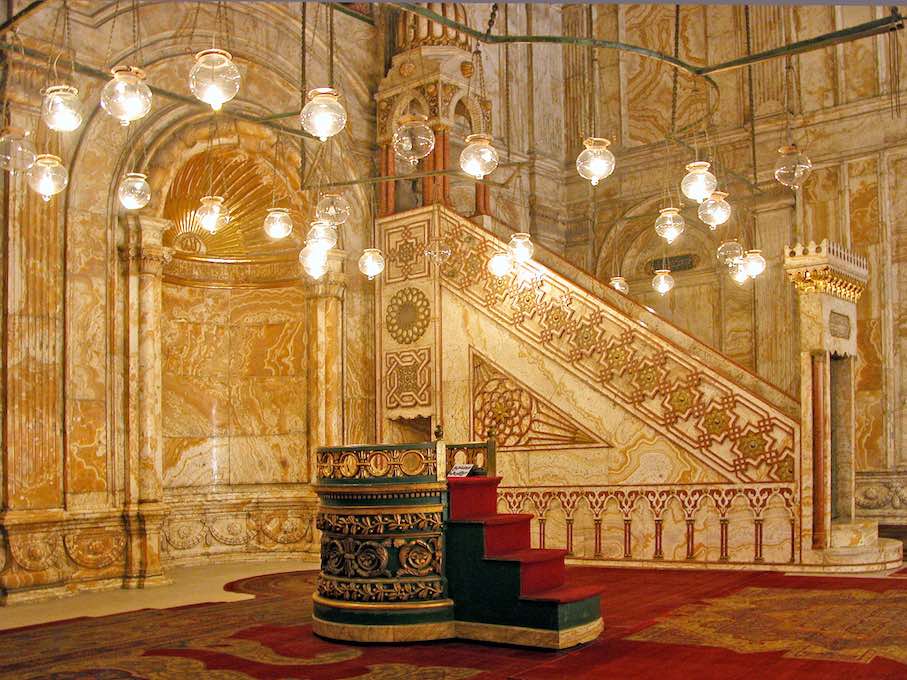
A topic in the “Materi-A-Net“ project. Traces on the material provide ample information about this. We now know that there were workshops dedicated solely to alabaster, but also those that worked with wood and the soft stone, such as the famous Tilman Riemenschneider in Germany. A video shows how a saw is used to cut an alabaster lump into the desired rough piece for artistic work.
Overall, the research also contributes to learning more about everyday life a few hundred years ago. The website of the French Geological Survey BRGM states: “Europe has always been crisscrossed by invisible trade networks through which goods, people, and ideas circulated, constantly changing and reforming.“

It has long been known that traders transported marble over long distances. The same applies to amber from the Baltic region, which has been found in Celtic graves, as well as ceramics from Etruscan workshops or from present-day Greece. Now, alabaster has also found its way into the ranks of these special materials.
BRGM (French)
The Conservation (French)
Crucifixion Altar from Rimini in the Liebighaus, around 1430, Frankfurt/Main, Germany