Stone-Ideas.com


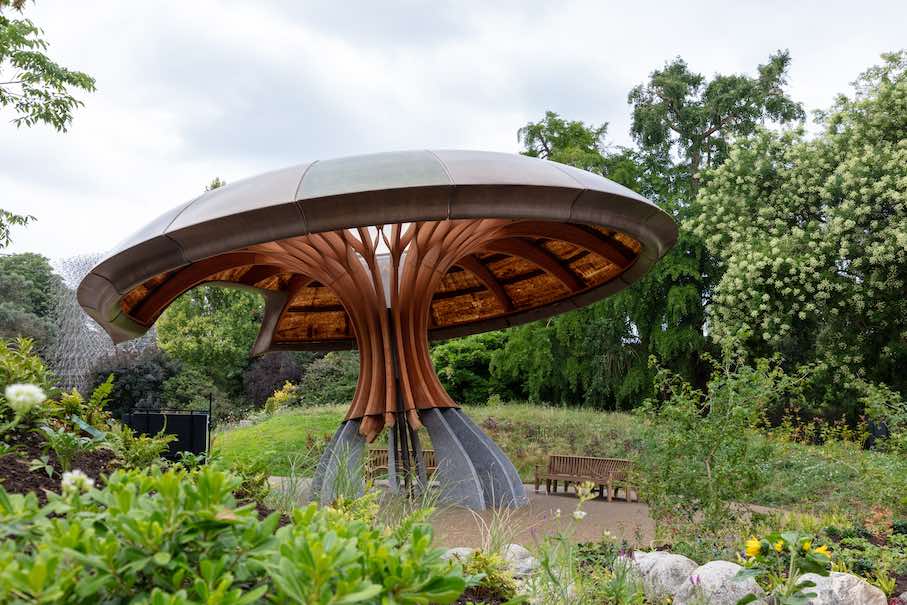
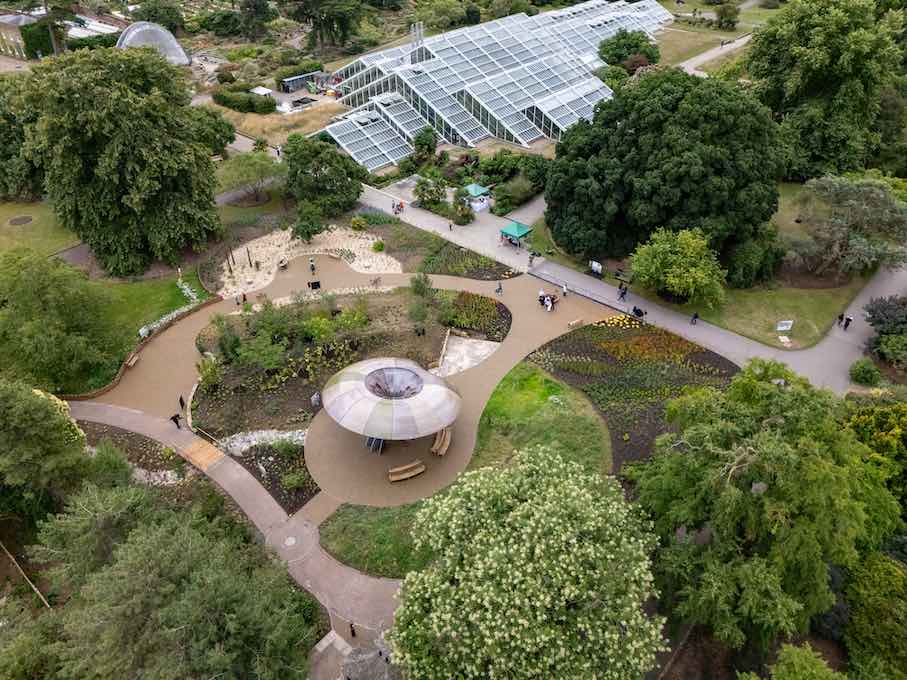
Kew Gardens in London, which, with its spectacular greenhouses and extensive outdoor areas, is one of the oldest and largest botanical gardens in the world, has had a new, modern attraction since June 2025: It’s the “Carbon Garden,“ and you’d guess that its core theme is climate change. Maltese architect Jonathan Mizzi has created an extraordinary object that vividly illustrates this complex topic: The structure, estimated at 20 meters high, symbolizes a plant that has grown out of the ground and become a kind of tree.
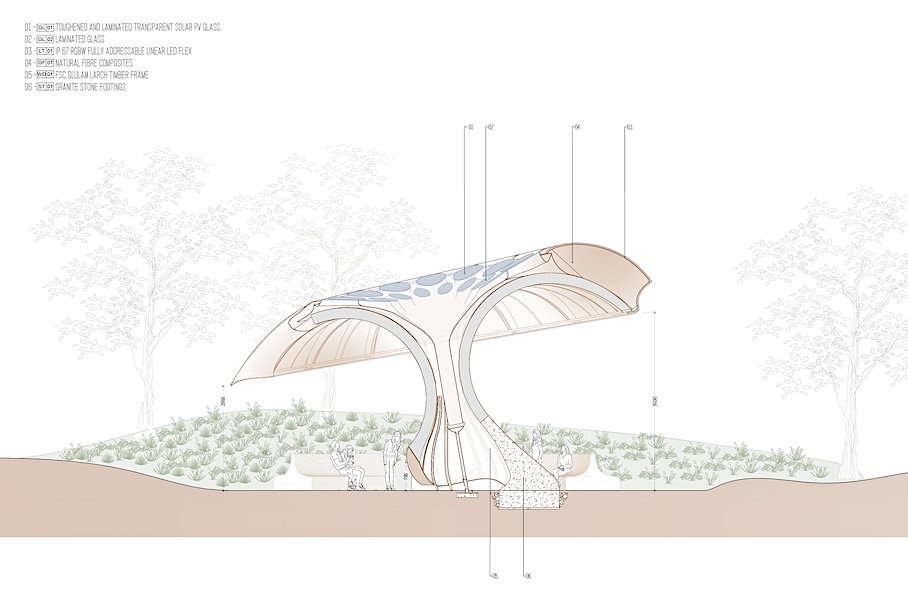
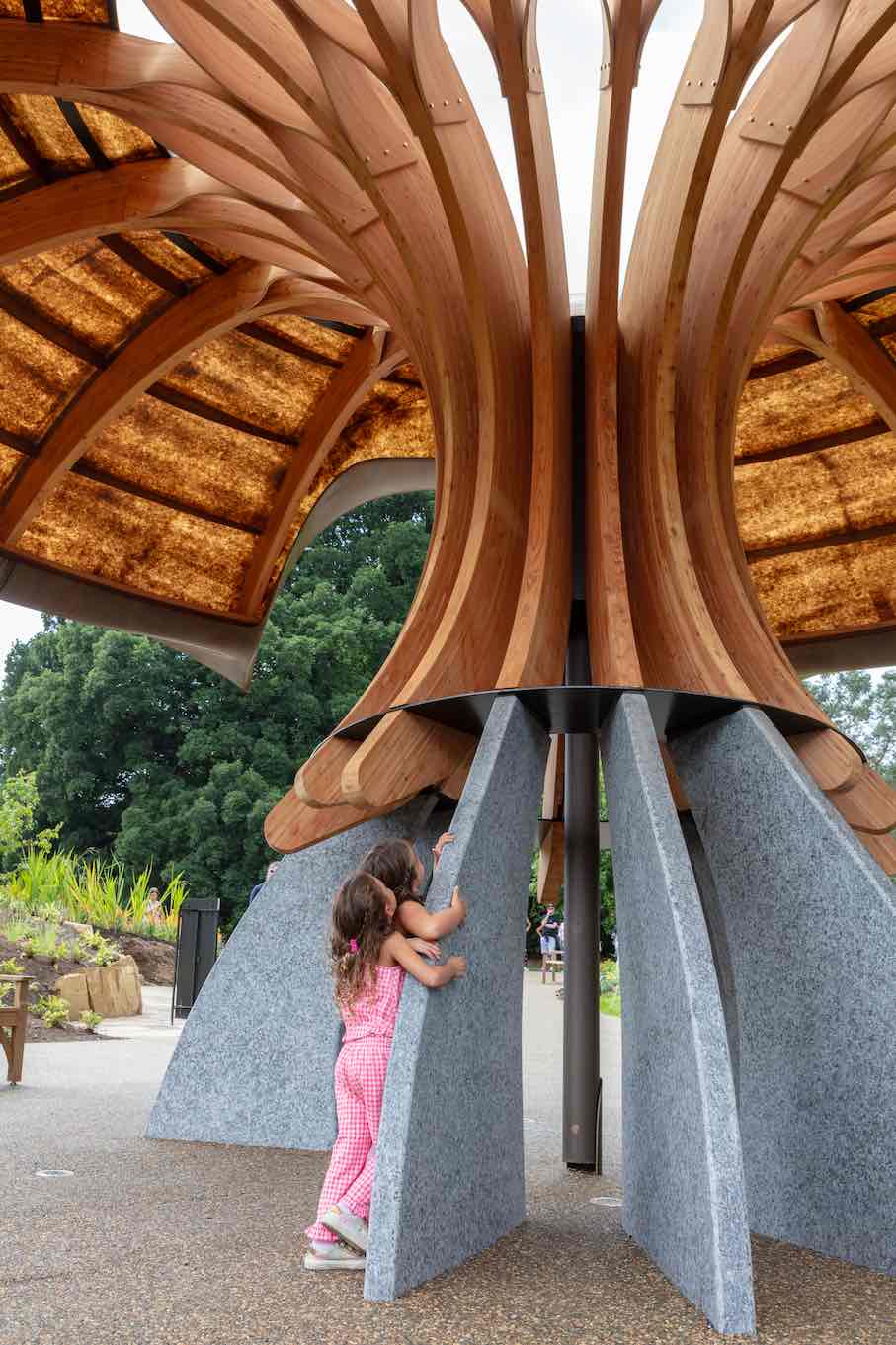
Only natural materials were used: granite stilts support the structure, topped with elegant wooden arches, and a roof made of natural fibers stretches above it all. The rediscovery of climate-friendly, traditional building materials is the theme here.
The roof protects the garden’s visitors from rain and channels the water from above into the surrounding area, and at this point, at the very latest, the observer realizes that something is wrong: This canopy is not upright, but slightly tilted, and gradually the observer realizes that the structure is also inspired by the shape of the carnivorous pitcher plant.
The architect probably chose this roof shape as a gathering place without any ulterior motive. Rather, he wanted to demonstrate the diverse functionality of nature’s design.
He thus sees the entire work not as a tree, but as the fruiting body of a fungus: In the case of a fungus, the actual plant is the underground root system (mycelium), which is never visible; only in autumn does it push its fruiting bodies upwards in many places. This is the fungus as we know it, and which is sometimes even edible.
But sometimes they are also poisonous, and in some cases even insidious, because, as in the fly agaric with white spots on a funny red cap, they are almost devilishly attractive, especially for small children.
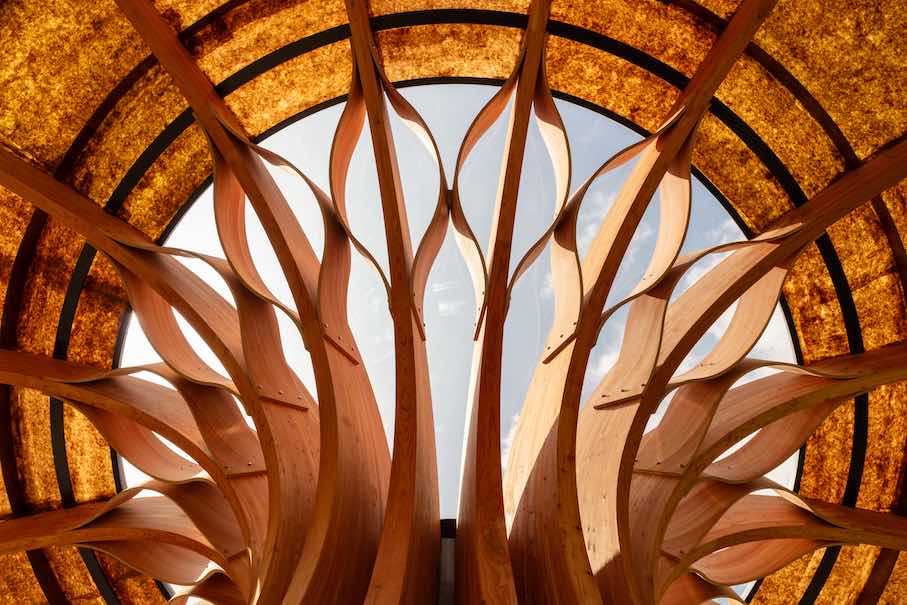
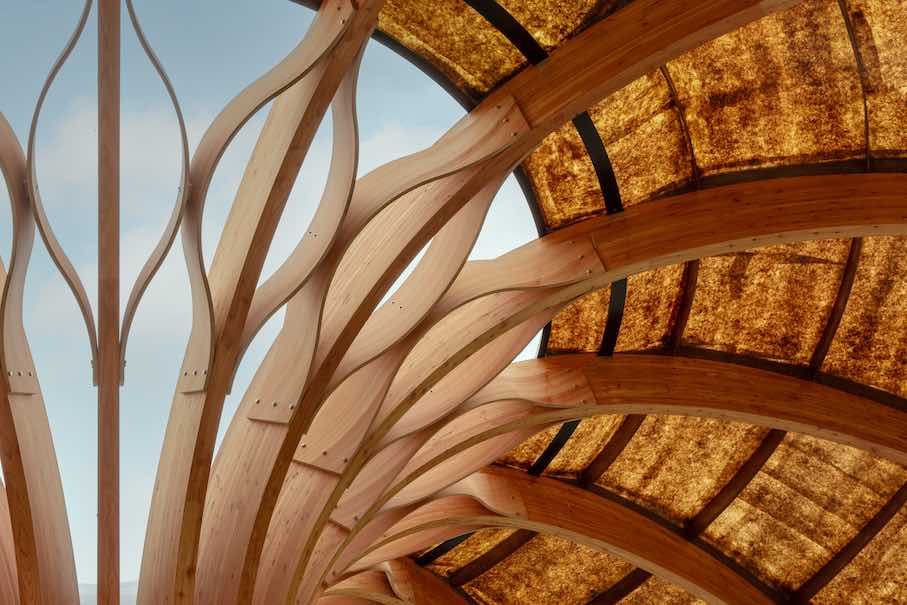
Mizzi, on the other hand, wants to use his installation to address the balance between humans and nature: “The Carbon Garden is designed to inspire action, inviting visitors to become advocates for nature and empowering them with everyday solutions to support the health of our planet. ”
The architect rose to prominence with his proposal for a “digital twin“ of the Blue Lagoon on the coast of the Maltese island of Comino. This natural bay, similar to lagoons in tropical seas with crystal-clear water and rich flora and fauna, is threatened by excessive tourism. Mizzi proposed an image of the lagoon made up of 4,500 drone photos and two billion pixels, which would serve as a basis for conservation measures.
Photos: Luke Hayes, Eden Rice/Mizzi Studio
Fabrication: Xylotech
Engineering: Atelier One