 Stone-Ideas.com


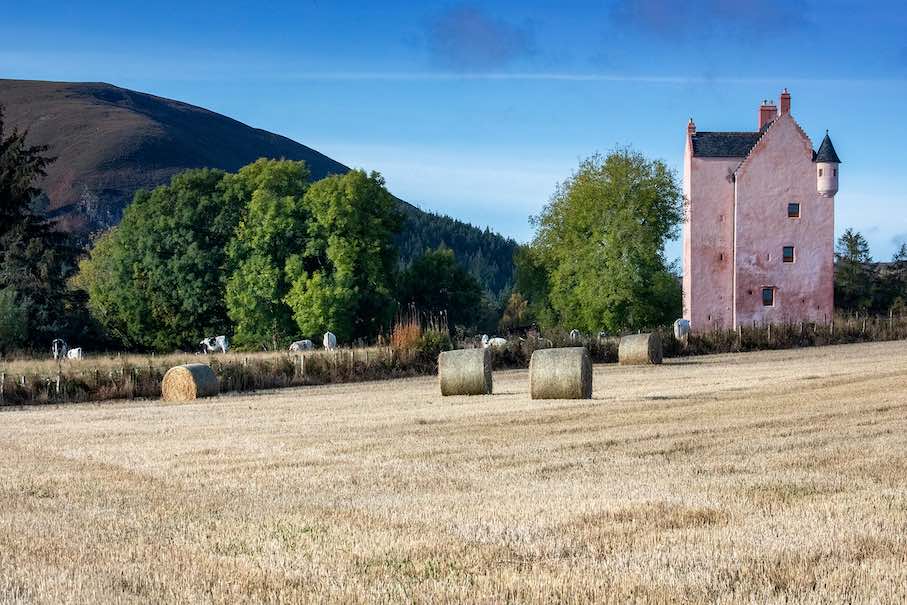
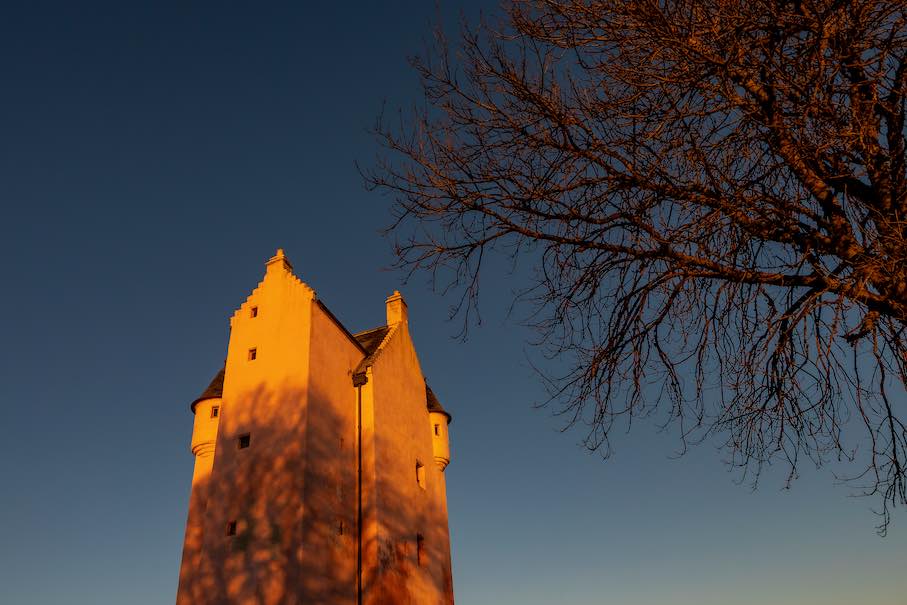
Fairburn Tower in Scotland is a residential tower from centuries past and, after its restoration, now serves as a holiday apartment
The Landmark Trust protects historic buildings in Great Britain from decay and repurposes them
Residential towers from past centuries remain striking features in the landscape, capturing the imagination of future generations. They are found throughout Europe; one example is Fairburn Tower, located just under 30 km from the Scottish city of Inverness (and the Loch Ness Monster). The restoration by the architects at Simpson & Brown was shortlisted in 2025 for the Andrew Doolan Best Building Award, the highest honor bestowed by the Royal Incorporation of Architects in Scotland (RIAS).
The building’s preservation is thanks to the Landmark Trust. This organization rescues historic landmarks from decay and gives them a new function as holiday apartments. The financial risk the Trust takes on with such projects is exceptionally high. The way the non-profit organization documents the history of the building and its former residents, as well as its preservation in accordance with heritage preservation principles, is also exemplary.
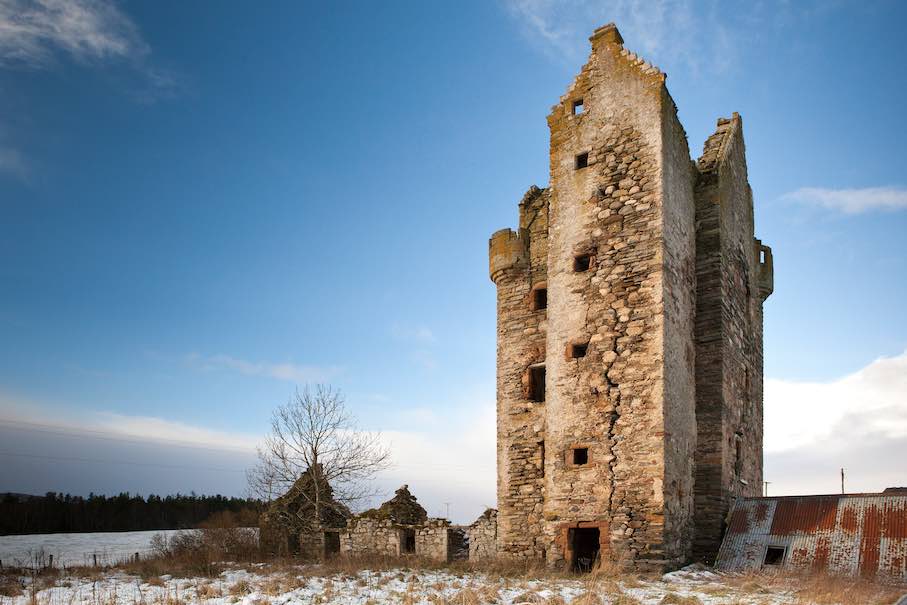
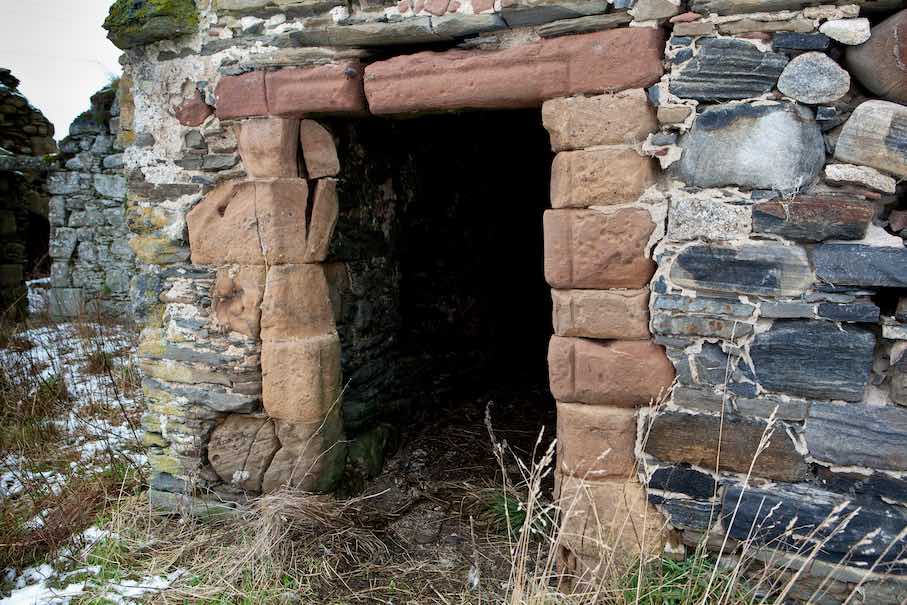
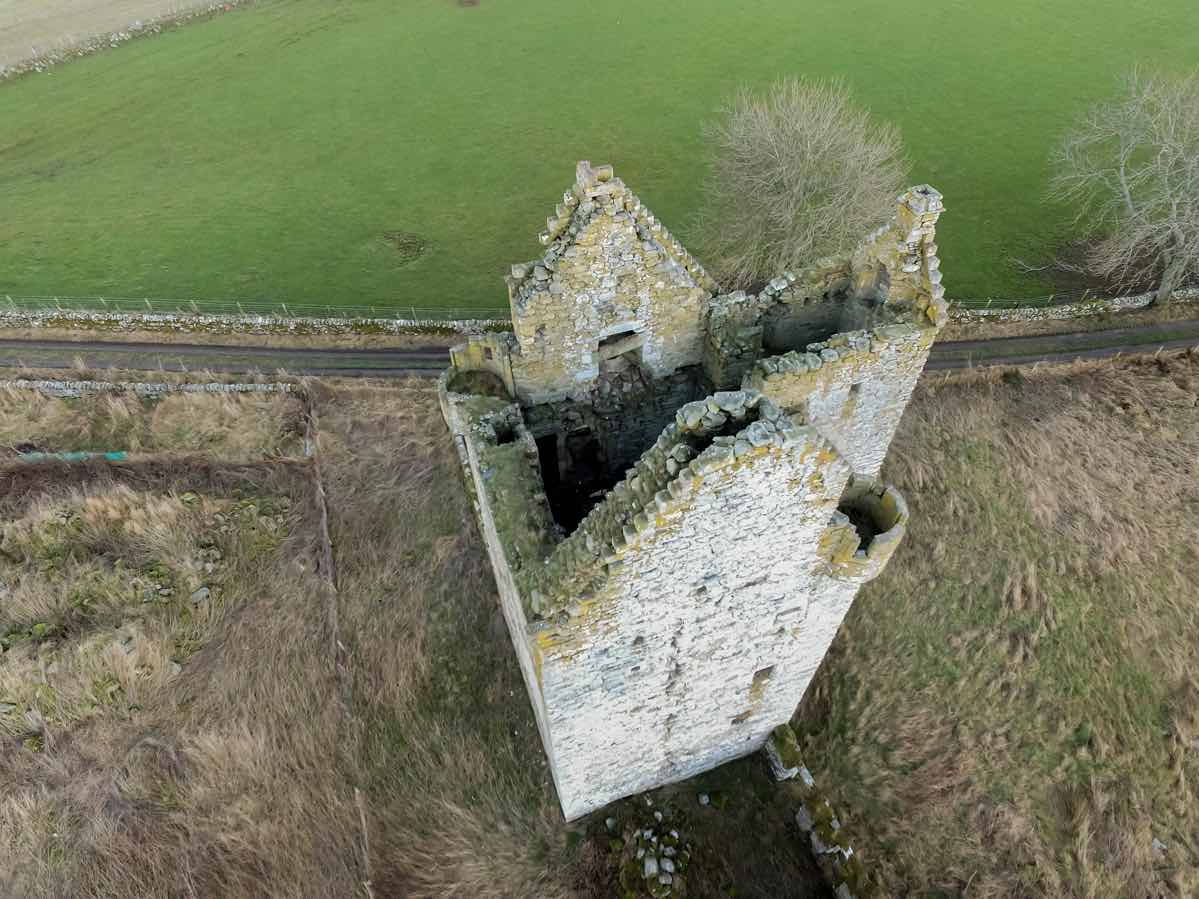
The Fairburn Tower Trust website features numerous photos of the tower before and after its restoration, as well as a PDF with detailed descriptions of the renovation.
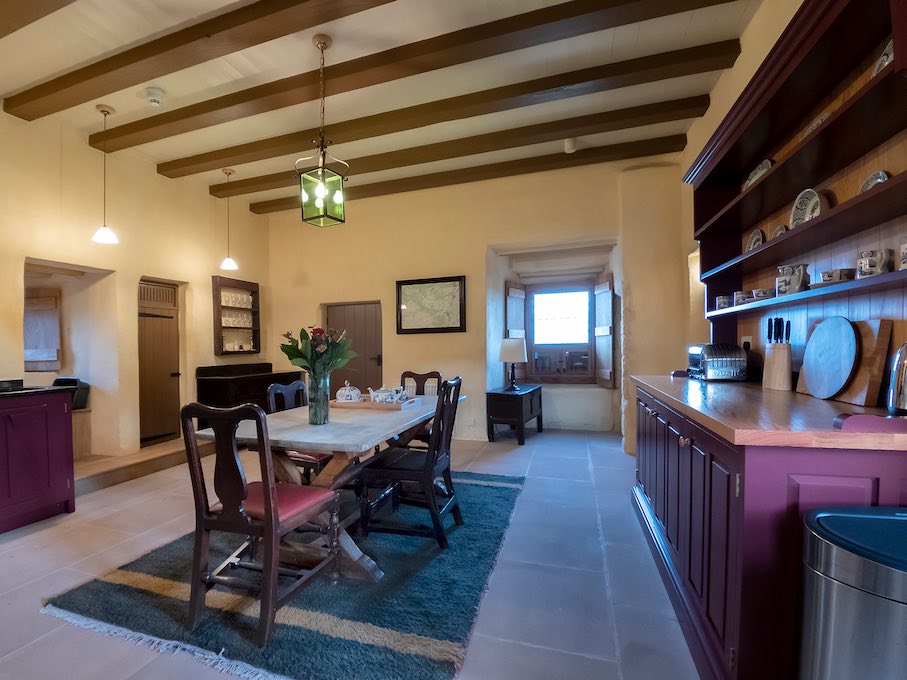
Of course, the website also describes the living situation and amenities for potential guests. In the case of Fairburn Tower, this means there are five floors; the two upper floors are the bedrooms, one with a double bed and the other with two single beds. Those staying there will have to climb stairs, but the 360-degree view of the seemingly endless landscape is magnificent.
The tower was built around 1545 by Murdoch (“Murdo“) Mackenzie, a close confidant of the Scottish king, namely his valet. Presumably, he received the building site as a reward for his services; in return, he likely kept watch from his tower for any hostile gatherings in the area.

In the following century, the tower was extended, as depicted in a drawing: At that time, the stair tower was added to the side, making the rooms inside the original shaft more spacious.
In 1715, the Jacobite Rebellion broke out, with which the Stuarts sought to regain power in the British Isles—but the descendants of Murdo Mackenzie backed the wrong side and lost power and influence.
As a result, the tower remained unoccupied for a long time and thus unprotected from the elements. A description from 2020 of its condition states: “The staircase tower had become parted from the main building, the vast weight of stone pulling it away. Cleaves wide enough to insert a limb into had snaked their way up to the parapet from cracked lintels at the base. Newly fallen stones showed the cracks were still alive and doing their mischievous work.”
At that time, the Landmark Trust, together with the architects Simpson & Brown, launched the project.
As one of the stabilization measures, a concrete spiral staircase was installed in the stair tower. The “Internal walls have been lime plastered and limewashed, and surviving fragments of original lime plaster have been preserved and left visible,” states one aspect of the building’s preservation. The installed bathrooms and showers are adapted to the historic materials.
Regarding the details of the restoration, it was also necessary to determine how the crenellations on the roof should look. Nothing remained of them.
As for the roof covering, slate salvaged from demolished houses was used, since the former quarries in Scotland are no longer in operation.
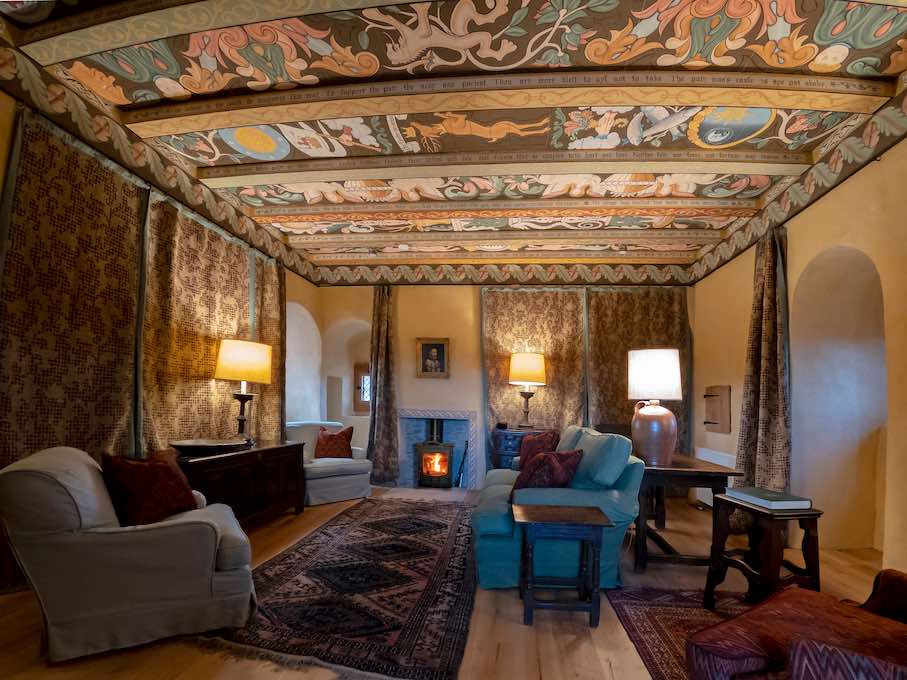

The new ceiling painting also presented a particular challenge, as it had to be completely reinvented, yet it took into account the tastes of past centuries: The depictions “show great imagination and variety on these ceiling boards, which depict all manner of decorative elements: Classical references to both humans and animals; plants and fruit, grotesques. Family iconography or heraldry did appear, but only as relatively minor elements. It was an age that loved emblems and coded references that could be decoded by the viewer.”
The Trust writes on its website to potential guests: “Here you can experience history firsthand, in a place that captures all of Scotland’s romantic and tumultuous past, set in the beautiful Highland landscape.”
PDF of the restoration and the building’s history
Photos: Landmark Trust