Stone-Ideas.com


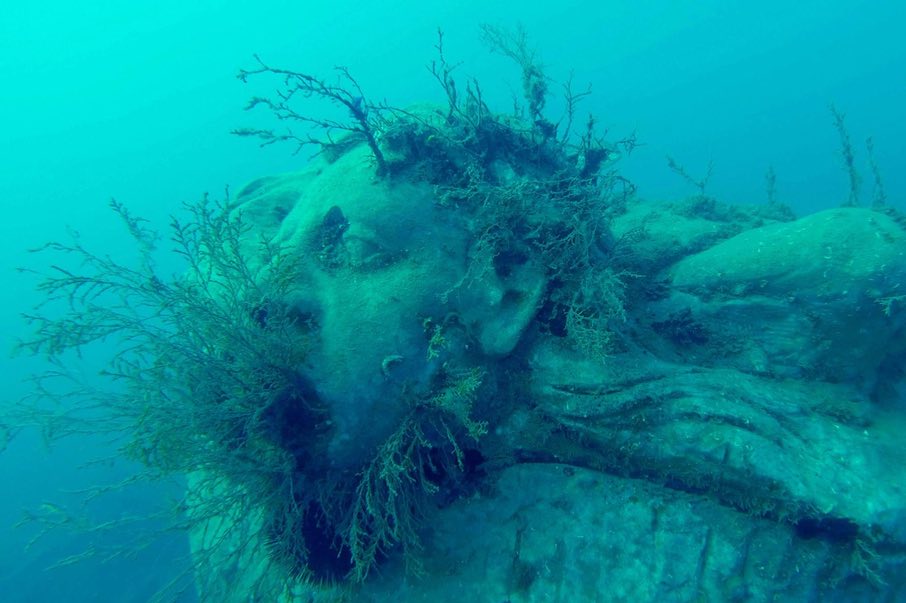
Whether the fish meet at certain times in the bay of Talamone on the Tuscan coast to debate the sculptures in the underwater museum “Casa dei Pesci“ is unknown. Since the summer of 2024, they have had new reason to do so: five new sculptures were submerged there, joining the nearly 30 artworks already installed, made of the famous white marble from the nearby Carrara mountains.
And now the “House of Fish“ has been expanded to include a “House of Octopuses“ (Casa dei Polpi): artificial terracotta caves have been distributed around the bay for them to lay their eggs in.
Most recently, illegal fishermen had sunk 100,000 traps in the sea, designed to catch octopuses searching for spawning grounds.
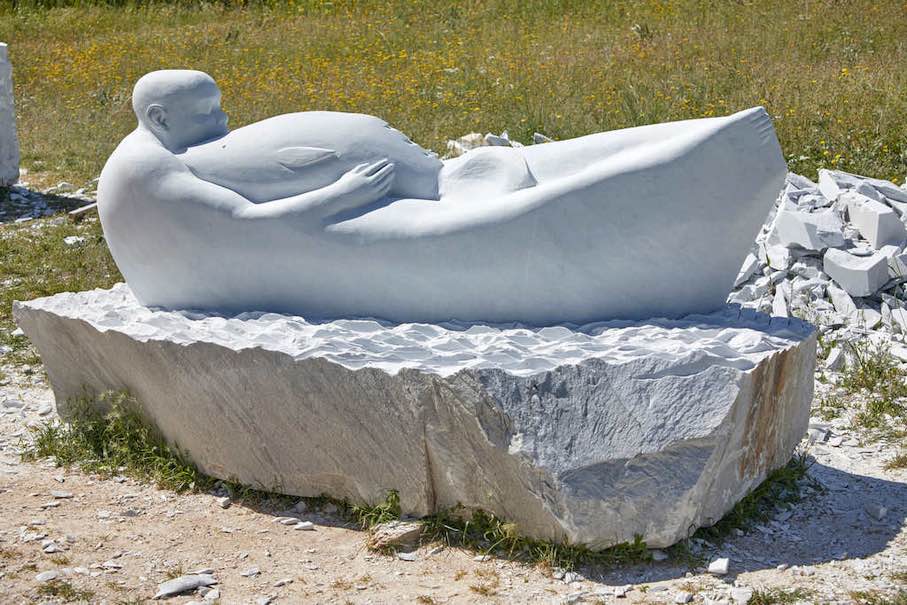
The story begins 40 years ago with fisherman Paolo Franciulli: He realized that illegal trawling right off the coast was destroying his livelihood. These nets, dragged across the seabed, wipe out the living creatures and also tear out the seagrass that marine life needs.
Franciulli wrote letters to the press and authorities, confronted the illegal fishermen directly in the 1980s, sought advice from Greenpeace and the WWF, and finally threw concrete blocks into the sea to disrupt the nets.
In 1992, he launched his fishing tourism business: On his boat, he took international visitors out to sea, vividly described the plight of the fishermen, and demonstrated that and how sustainable fishing is possible.
From the guests, he heard about the similar actions of artists, such as Agnes Denes from the USA, who in 1982 spread topsoil and planted wheat on a rubble site at the World Trade Center in Manhattan.
This paved the way for Franciulli to move to the mountains: He asked quarry owners for donations of marble blocks, contacted international sculptors, and commissioned them to create a work on-site at the port.
In a video, he summarizes his “Arte di Difendere il Mare“ (The Art of Defending the Sea): His project only gained real attention when he stopped throwing concrete into the sea and instead placed artworks there. We would add: It was also effective that the stone used came from Michelangelo’s quarries.
Marketing at its finest. And so, in 2024, the new sculptures remained in the port for a while until they were lowered into the sea by a floating crane in front of the press.
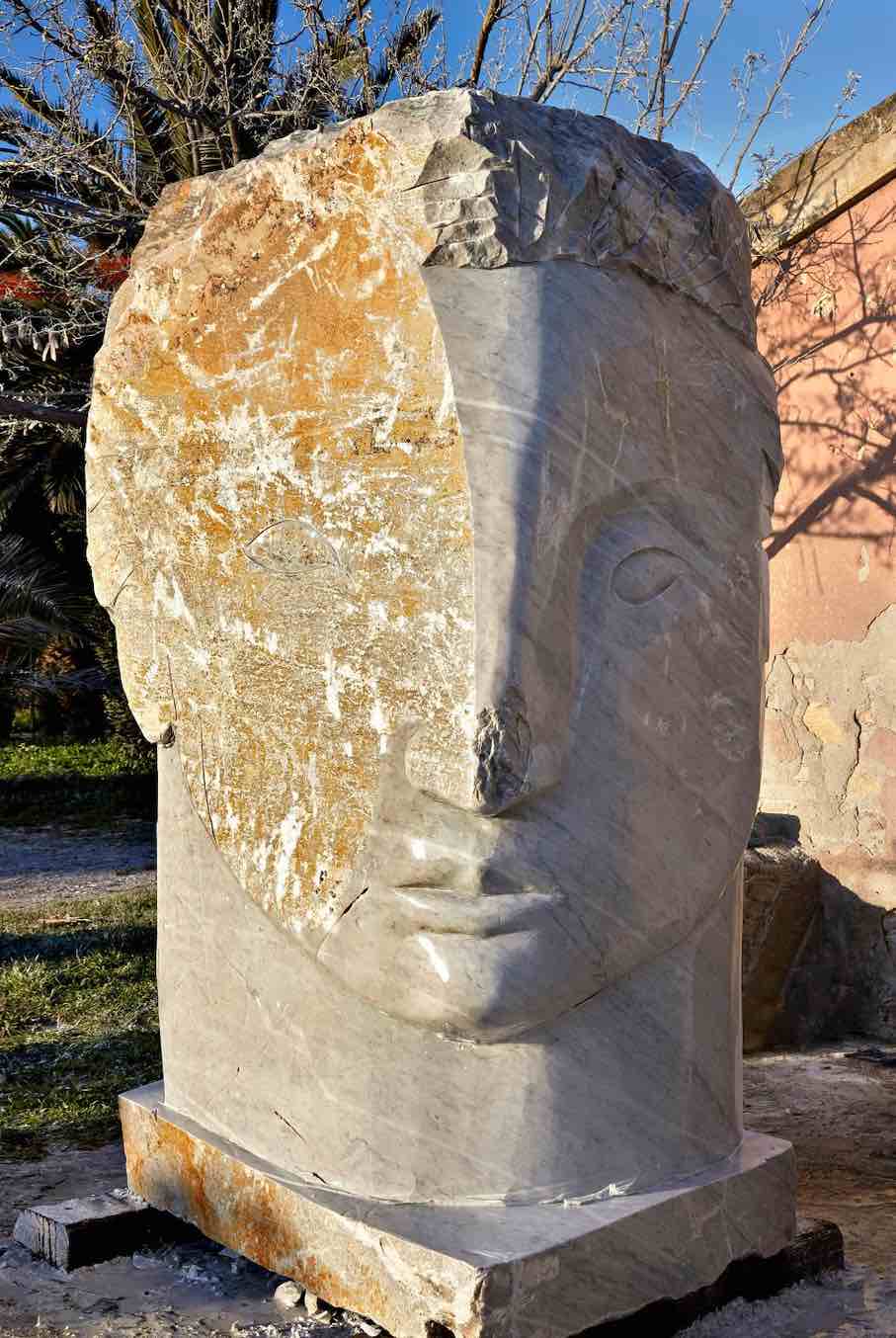
The sculptures can be viewed on the Casa dei Pesci website. They are, well, not exactly meticulously detailed. But their role isn’t that of fine art.
Rather, they are meant to contribute to the Casa dei Pesci activists’ efforts to save the sea by working with the mountains.
Most recently, three large barriers made of concrete blocks were placed in front of the Maremma Regional Park to hinder illegal fishing in the Ombrone estuary.
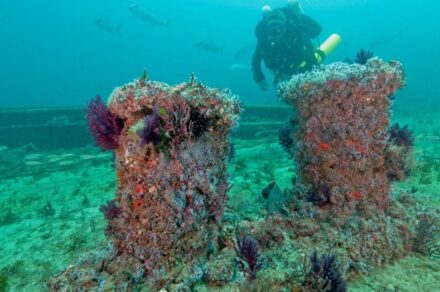
Meanwhile, there is good news from Talamone: The Neptune grass meadows have regenerated, and the schools of bluefin tuna have returned. The oldest marble sculptures on the seabed are already thickly overgrown with all sorts of aquatic plants and, contrary to what we initially assumed, they are probably no longer of any interest to the fish as works of art.
Photos: Casa dei Pesci