 Stone-Ideas.com


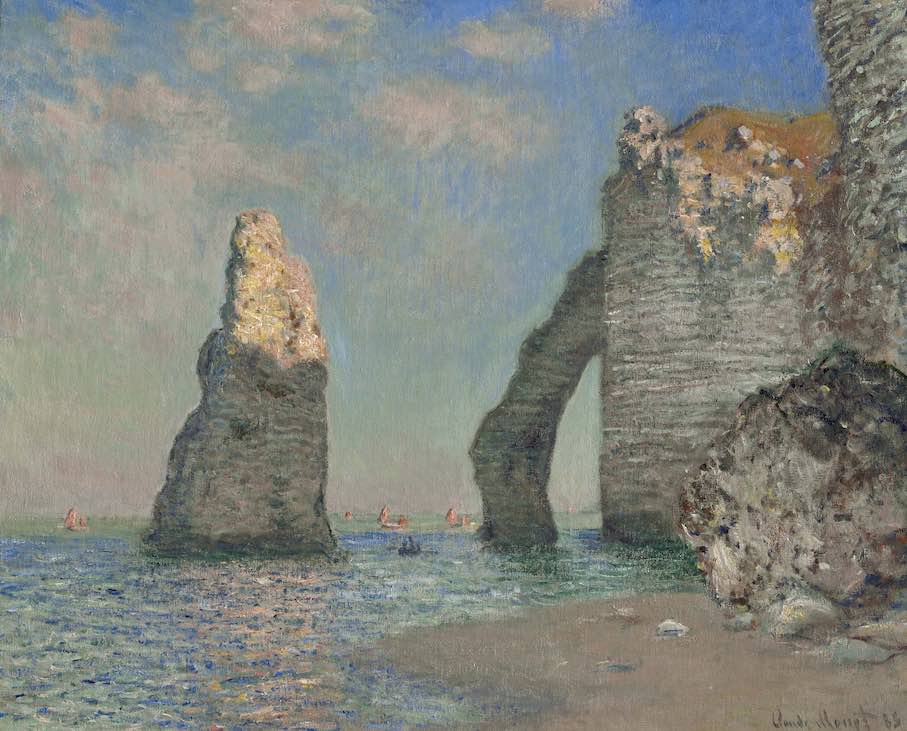
Cliffs on a coastline have always fascinated people, as this is where the wild sea and the immovable rocks of the land meet. One special place is the steep coast of Étretat on the Atlantic coast of Normandy with its striking three rock arches – the Porte d’Amont, the Porte d’Aval, and the Manneporte. In the 19th century, the place captivated numerous artists, including the up-and-coming painter Claude Monet, who dedicated several paintings to the rock arches: inspired by the ever-changing light and weather conditions, he began painting a series of motifs in Étretat, a working method that would later become his trademark.
The Musée des Beaux-Arts de Lyon is presenting a major exhibition in collaboration with Städel Museum in Frankfurt/Main, Germany, until March 01, 2026, named „Étreat par-delà les falaises. Courbet, Monet, Matisse“ (Étreat beyond the cliffs. Courbet, Monet, Matisse) on the artistic discovery of the former fishing village and its influence on modern painting. Around 170 outstanding paintings, drawings, photographs, and historical documents from leading French, German, and other international museums, as well as from various private collections, will be on display in Lyon. These include 24 works by Claude Monet alone.
Through the many representations of the unique site in this exhibition, we can see the changes in the perception of the landscape and its representation over the course of a century, from Romanticism to Modernism.
Drawing on two major paintings executed in Étretat by Gustave Courbet and Claude Monet and present in the collections of the museum, this exhibition is the first to retrace this evolution. At a time when the site of Étretat is under threat from over-use by tourists and the erosion of the cliffs hastened by the effects of climate change, the exhibition invites us, through 150 works and documents, to question our perspective on the landscape and the myth-making process.
By the way: The coastline of Seine-Maritime with Étretat is bordered by a long ribbon of white chalk cliffs at the foot of which the foaming sea takes on milky green hues, earning it the name Côte d’Albâtre, or the Alabaster Coast.