 Stone-Ideas.com


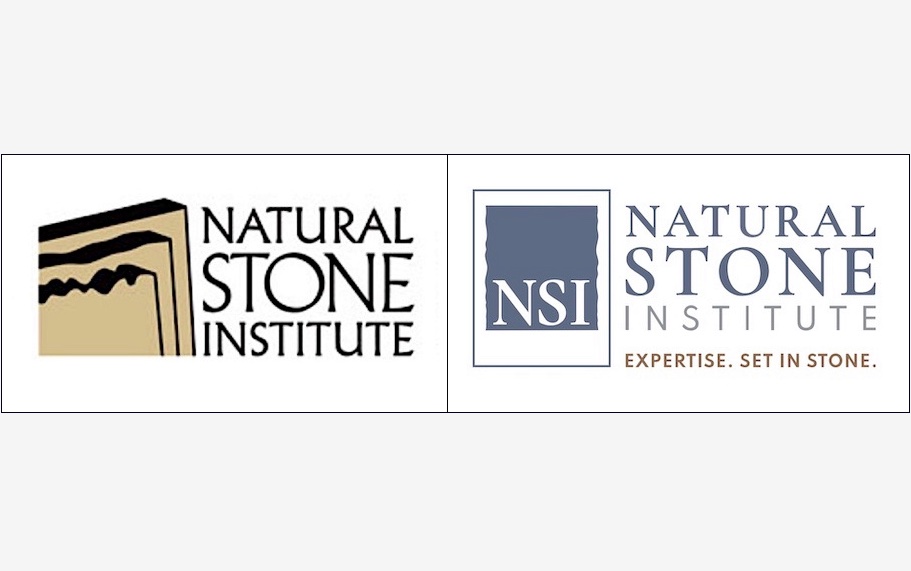
The Natural Stone Institute (NSI) has a new design, meaning a new logo and a new typeface. The website has also been redesigned – currently only a temporary version; a final new layout is planned to go live in summer 2026.
Such a significant change to the graphic corporate identity of an association or company is substantial, which is why we have taken a closer look at the details.
The logo manages the feat of evoking natural stone – specifically, a block with two sides already worked and two still raw.
Its rectangle is positioned vertically, but its solid weight undoubtedly gives it a firm footing. Nevertheless, the icon leaves open the possibility that the block could become a narrow, rectangular pillar or, perhaps, even rise as an elegant, round column.
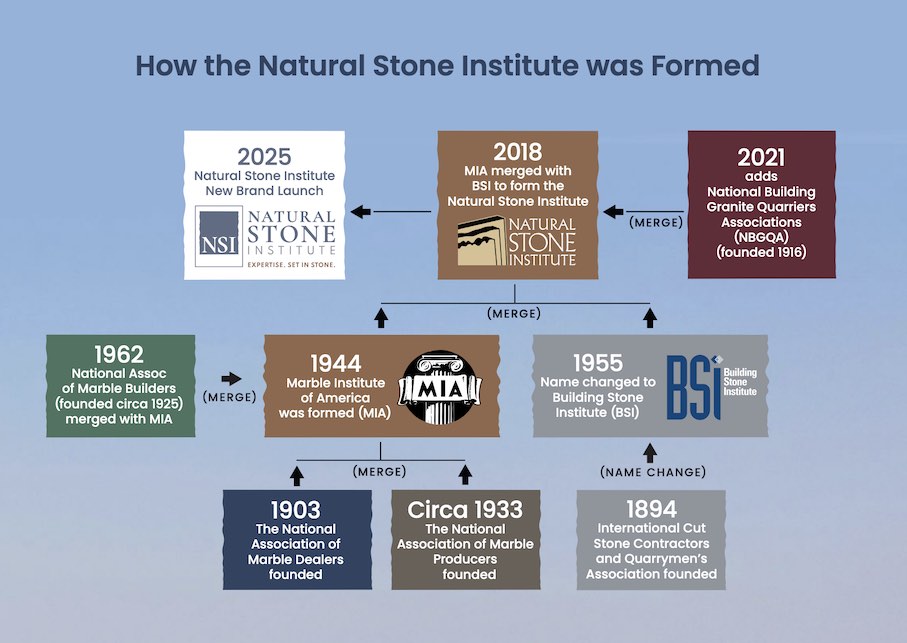
Stability and reliability are the messages that the logo aims to convey for both the association and the material. After all, the NSI’s predecessors date back to 1894, as the graphic below shows:
The logotype, the lettering next to the logo, follows the same design approach. The association’s name is divided into its three words, with the most important term, as is customary, featuring the boldest and largest letters.
In keeping with current trends, the tagline is placed at the very bottom: its statement “expertise, set in stone” is broken down into individual words. The period connects these elements; the design is emphatic, so much so that the tagline practically shouts “Expertise! Set in Stone!” But exclamation marks would be out of fashion these days.
For the redesign, the NSI contracted the David James Group (DJG).
As befits a good association, numerous other aspects are discussed in detail on a subpage of the website.
This also includes clarifying its own self-image and communicating it to the public. The NSI does this, as usual, without much fanfare, albeit in clear terms: In a PDF for members, the 2025 association president, Even Cohen, states that the NSI will (continue to) “the leading voice for natural stone worldwide.”
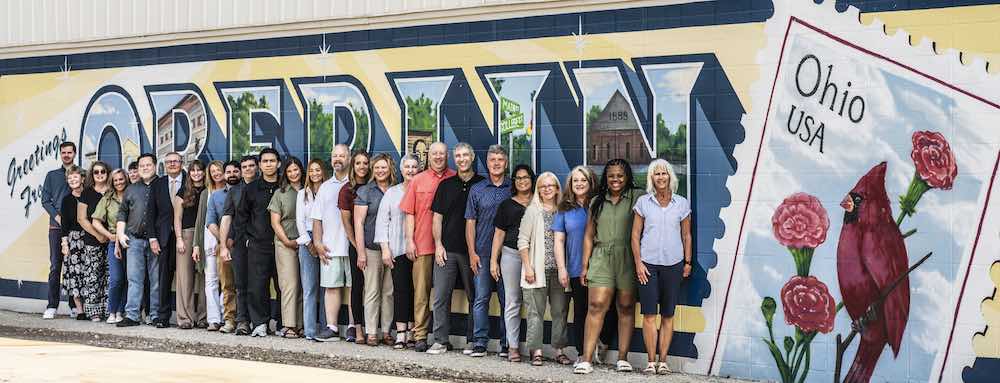
This might raise some concerns among those abroad regarding the global power of the USA as the home of the NSI. The association’s headquarters are located in Oberlin, Ohio, not far from Chicago.
We have often heard such opinions at official business dinners.
However, it seems to us that the international members of the association have now dispelled these concerns. Association CEO (CAA) Jim Hieb clarifies in his message to the members what the new layout is solely about: It is intended to help “renew our commitment to you, our members.”
The association sees its raison d’être as providing an unconditional service to its members. The success of this commitment is reflected in the number of members, which now exceeds 2,000 from more than 50 countries.
And: The focus is not only on the members, but on the industry worldwide!
One example is the support available for preventing silicosis in the workplace, which is also accessible to non-members. To be mentioned is also the “Safety in Stone Business Guide”, FREE for everybody.
In its leadership role, which Even Cohen mentioned earlier, the NSI sees itself as the first line of defense against all threats affecting the industry as a whole.
A past example of this was the fight against the claim that certain types of natural stone emit radon gas or radiation, more than 15 years ago. The NSI did not hesitate to solicit financial support from industry associations worldwide to dispel the rumor through scientific investigations.
In the end, everyone benefited, even those who did not want to contribute financially.
A recent example of this approach arose from the US tariffs on imports of certain natural stones from Brazil. Centrorochas, the country’s national assciation, turned to Oberlin for support. With diplomatic caution, the NSI Council subsequently issued a statement advocating for “open, fair, and free trade among member countries.” The primary argument presented in the justification was that the imported material would also create prosperity in the US, meaning jobs and consumer demand.
So, yes, the NSI does engage in lobbying. But it does so based on values. In the case of silicosis and workplace safety, the value is the health of workers in stone processing; in the case of tariffs, it is fair global trade.
Natural Stone Institute (NSI)