Stone-Ideas.com


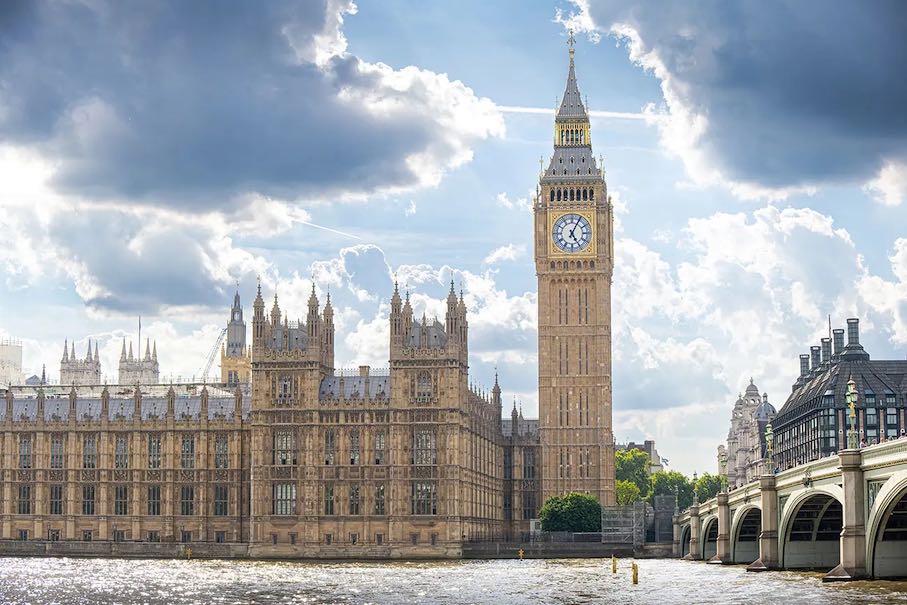
The restoration of Big Ben garnered one of the RIBA London Awards 2025, presented annually by the Royal Institute of British Architects. Most people around the world probably immediately picture the slender silhouette of the clock tower of the British Parliament Buildings when the name Big Ben is mentioned, but in reality, it only refers to the 13.7-ton bell that strikes the hours.
The tower itself has been called the “Elizabeth Tower“ since 2012, in honor of the then Queen’s Diamond Jubilee.
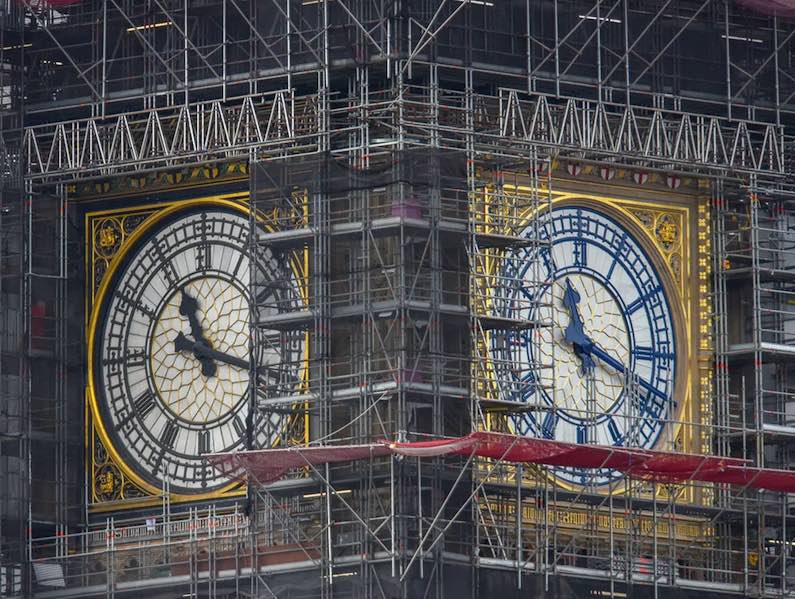
It is 96.3 meters (315 feet) tall and has a square base with sides of 12.2 meters (39 feet). Its elegant, almost weightless form is particularly striking. It seems impossible to miss what it is really all about – the clock faces, with a diameter of 7 meters (23 feet) and a height of 55 meters (210 feet) .
Even today, the clock faces, along with the overall structure, convey a message of modernity and global power: Great Britain had become an economic power beyond Europe, following Portugal, Spain, and the Netherlands. With its iron industry, it had developed into a leading player in science and technology, and in 1884, with Greenwich Mean Time (GMT), it established the reference point for all clocks and the global time zone system. Big Ben is one of the two towers of the Palace of Westminster, the seat of Parliament.
It was built by architects Charles Barry and Augustus Pugin between 1845 and 1859, after the previous tower burned down. William Turner captured the event in a painting.
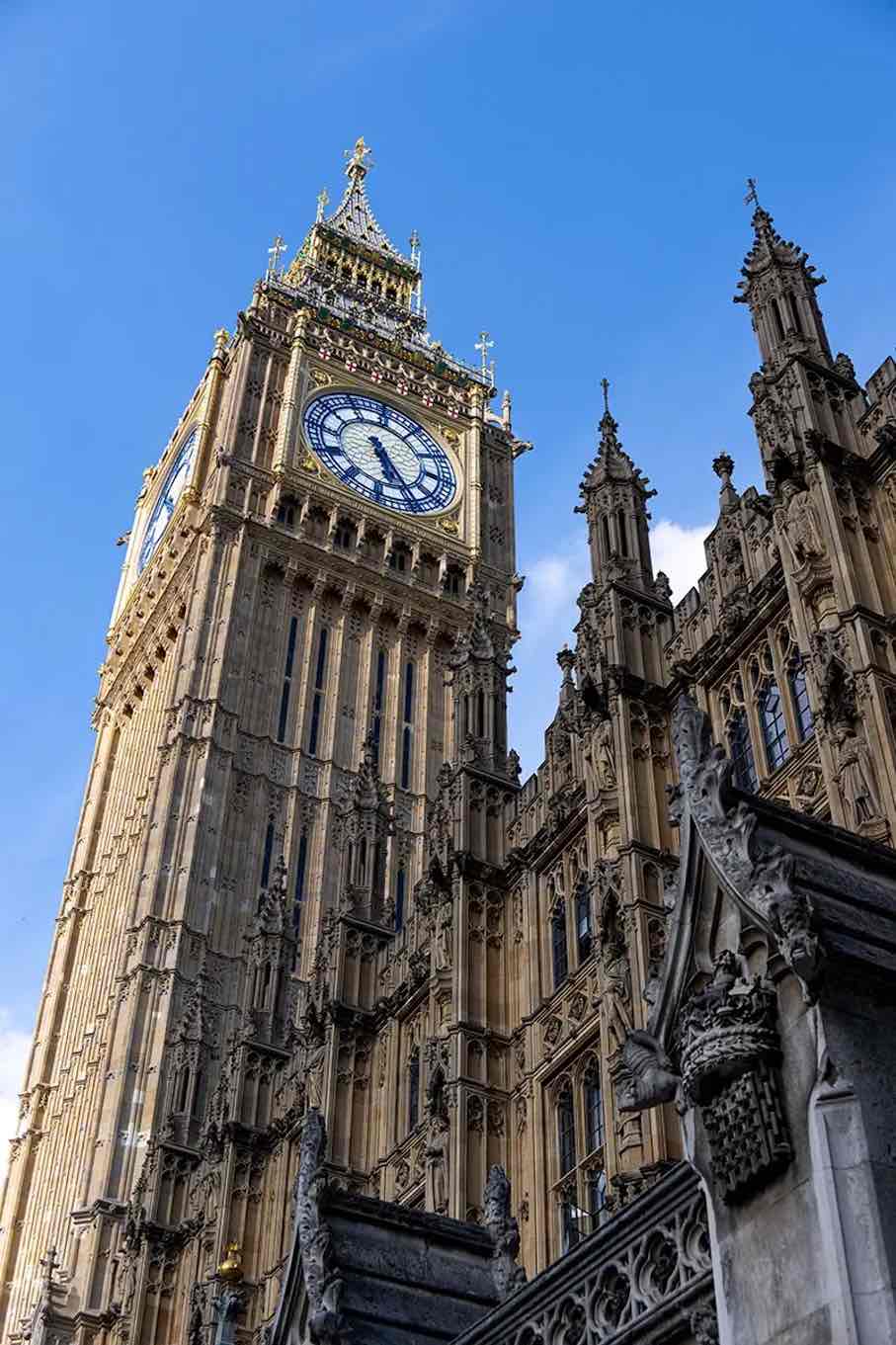
The architectural taste of the time is reflected in the Neo-Gothic style, with elaborate natural stone ornamentation supported by an internal brickwork structure.
Rory Smith, the lead stonemason for the restoration work at DBR Ltd, notes: “Unusually the tower was built from the interior outwards, without an external scaffold. Granted, it’s a clever and efficient construction method but it doesn’t lend itself to modern conservation work.”
His detailed report on the stonework was published in Stone Specialist magazine and describes many details.
Among other things, he mentions the volume of material used in the original building: “It is constructed of 850m3 of Anston stone from Yorkshire, Clipsham stone from Rutland and Caen stone from France, which covers 2,600m3 of brick.”
The restoration of the stones involved the full range of services expected of a 150-year-old building: swapping pieces that had been eroded by wind and weather, and replacing stones from previous renovations that did not match the originals in color, and much more.
However, the actual scope of the necessary work was still surprising: “The project started off with in the region of 250-300 indents. That rapidly increased to 900-1,000 indents as we surveyed the full extent of the deterioration and disrepair.”
The stonework was treated with respect: where damaged pieces had to be removed, they were cut into smaller pieces and repurposed.
The overall project, led by Purcell Architecture, also included the installation of an elevator and the renovation of the exhibition and administrative spaces.
The restoration work was completed in 2022, coinciding with the Queen’s Platinum Jubilee.
Photos: House of Commons