Stone-Ideas.com


Lithea Company, based in Patti, Sicily, finds inspiration for its annual collections in the ancient cultures of the Mediterranean. The designers were and are Elena Salmistraro, Martinelli Venezia, Michele De Lucchi, Azaz Architects, glàuco, Pierluigi Piu, Marella Ferrera, Astrid Luglio, Philippe Nigro, Egidio Panzera, Marco Piva, and Mario Scairato. The new pieces were presented at the Salone del Mobile.Milan 2026.
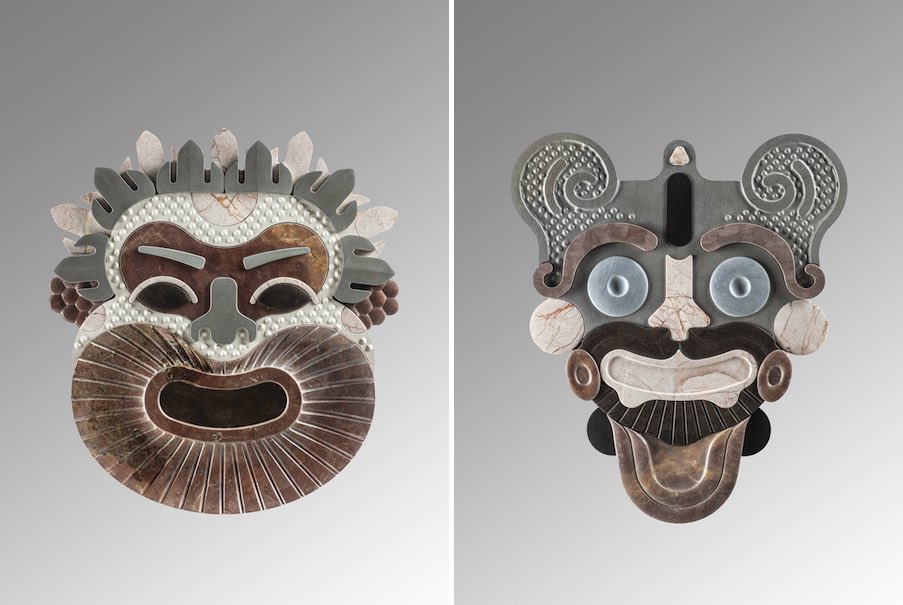
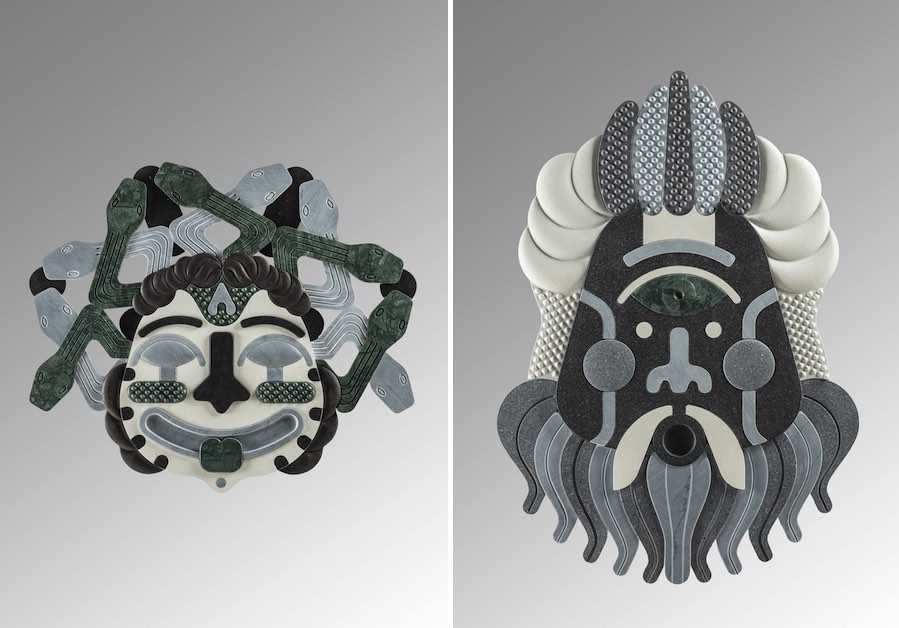 During her artistic journey, Elena Salmistraro visited the theaters of ancient Greece. There, masks played an important symbolic role in performances, expanding the actors’ expressive possibilities. The designer created four such masks under the name “Thalia“: Bacchus, Euriale, Medusa, and Polyphemus. Lithea writes: “The stone is treated as if it were skin or fabric — carved, engraved, layered to transform the decorative object into a scenic character. Marble, brought back to its ritual and theatrical dimension, becomes a living presence and the wall, where here is attached, becomes a stage.”
 One of the works by Saudi designer Shahad Alazzaz / Azaz Architects is the surface entitled “Jadeela.“ Here, the artist takes up the ancient art of braiding a horse’s mane and translates it into stone. Valuable and elegant horses play, and have played, a significant role in Arab culture.
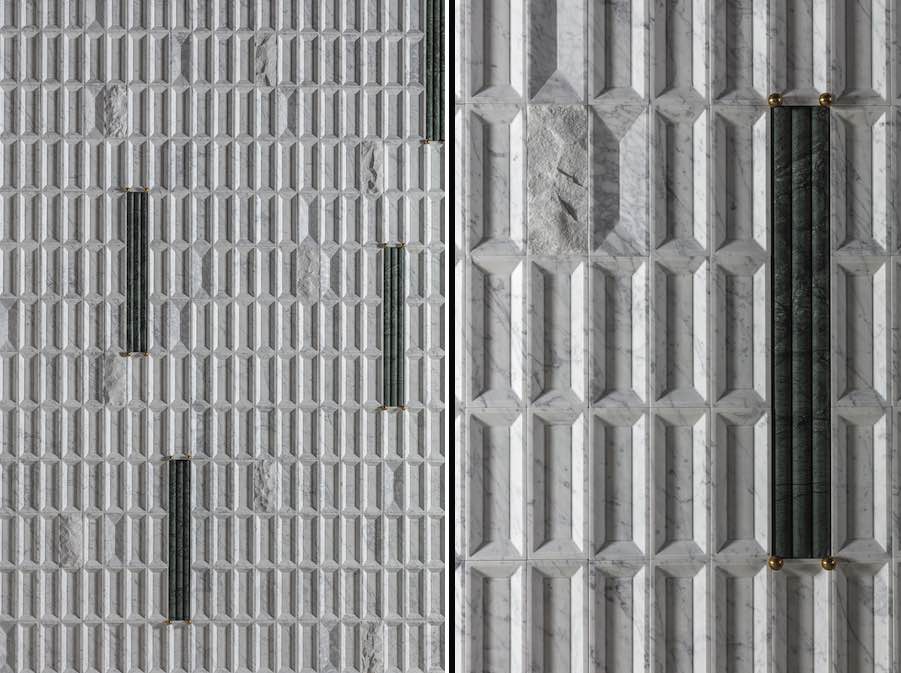 For “Windows of Light,” Shahad Alazzaz created wall tiles that, like the facade of a skyscraper, feature many small window openings. Individual elements play a distinct role within this design.
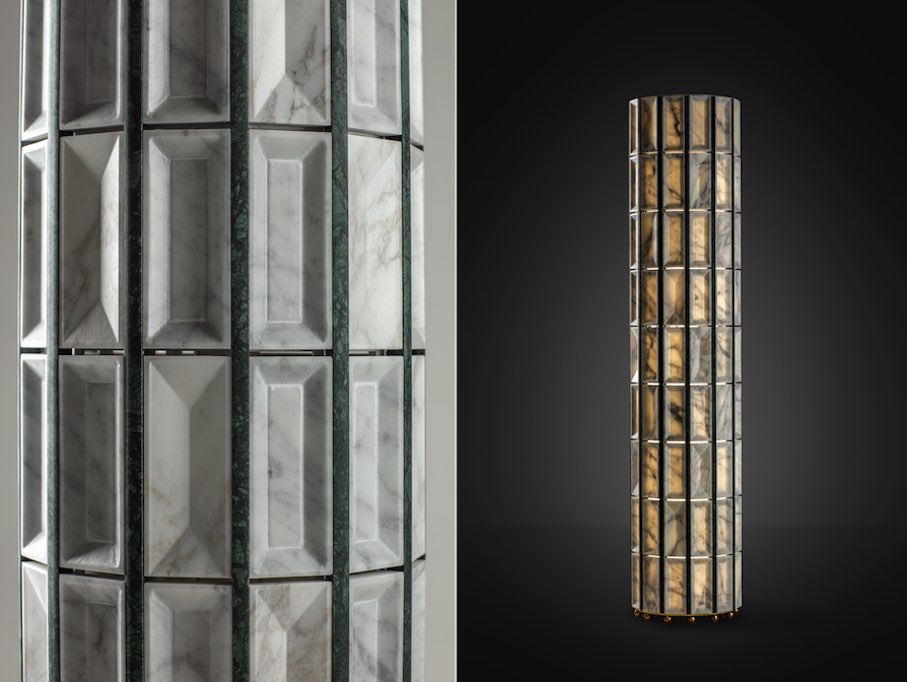 The “Stellina“ floor lamp takes the design idea and transfers it to another object.
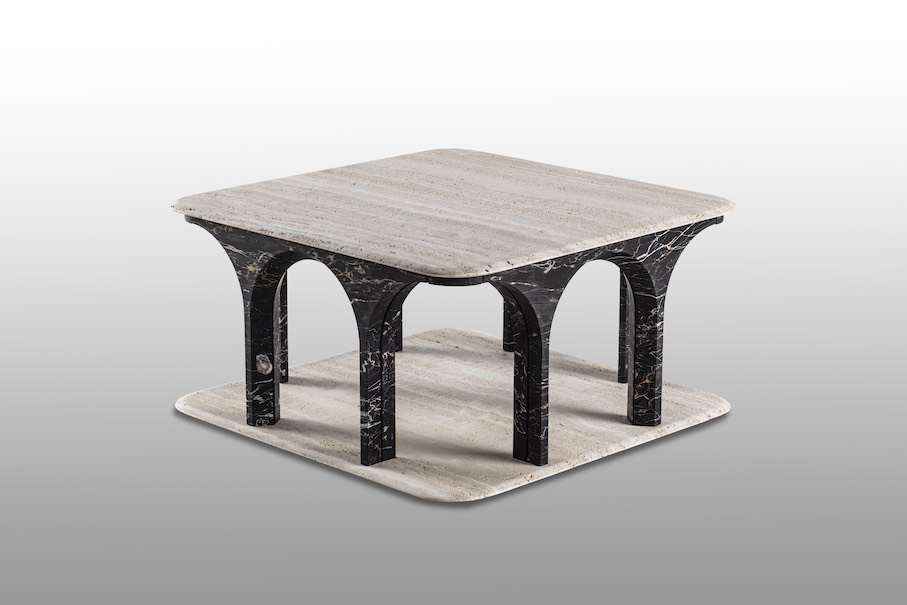
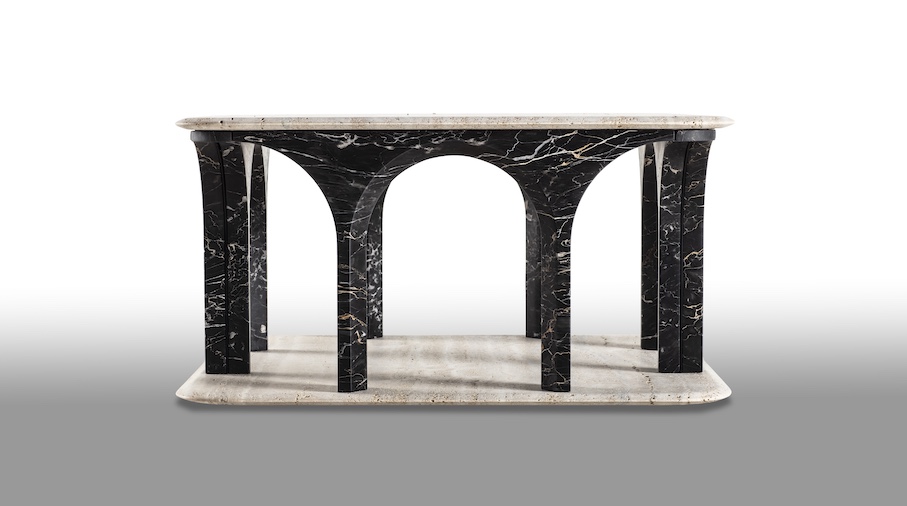 With the “Arcate“ side table, designer glàuco brings an important element from architecture into interior design: the arch. Inside, each element is reinforced with metal.
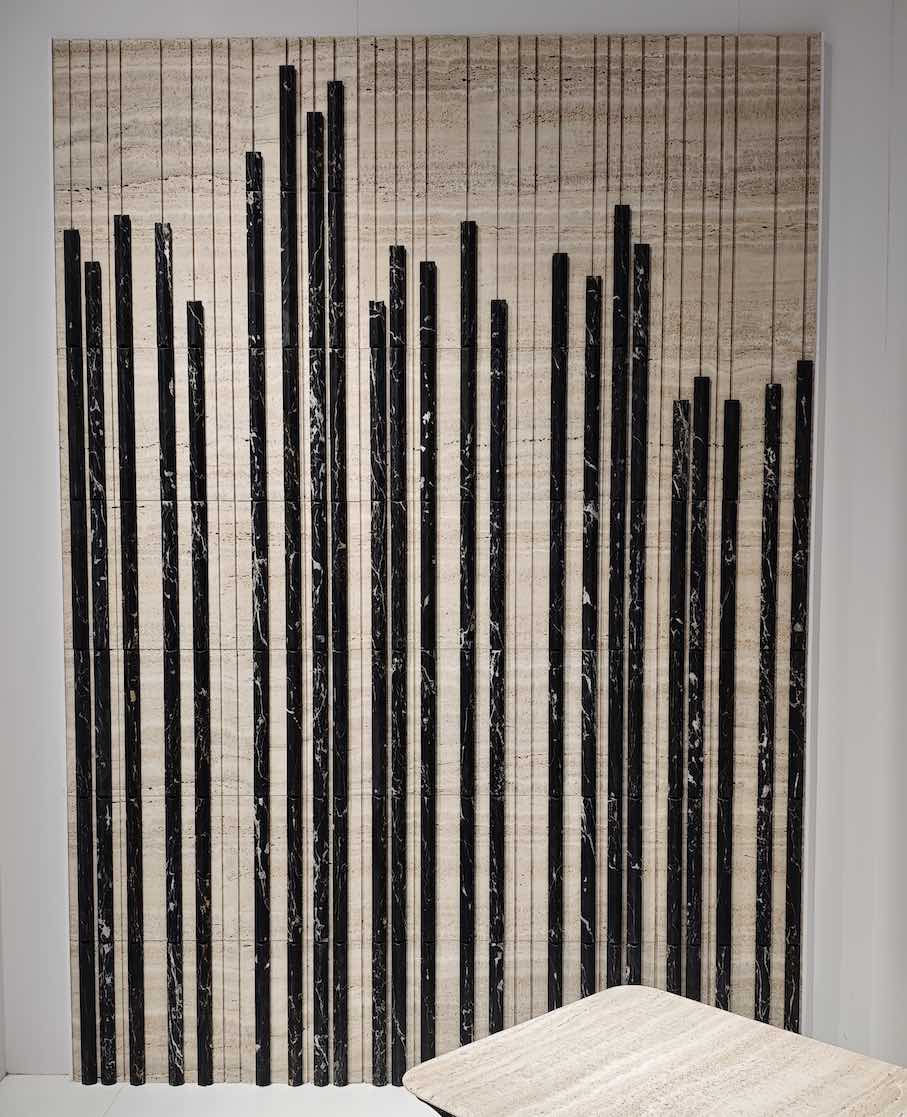 For “Cannitu,“ glàuco drew inspiration from bamboo and its unique growth pattern. Starting with a basic element, the user can design their own wall.
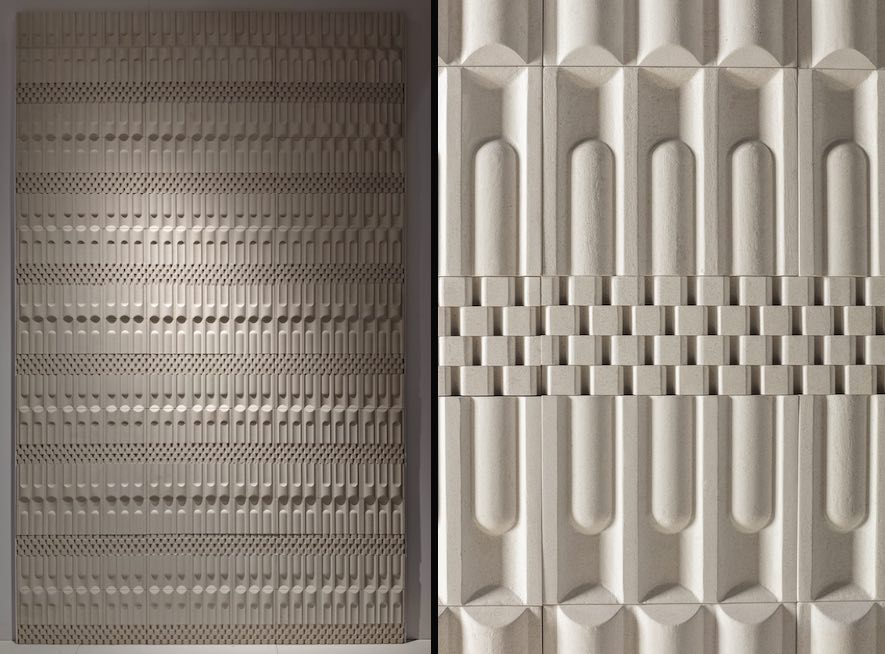
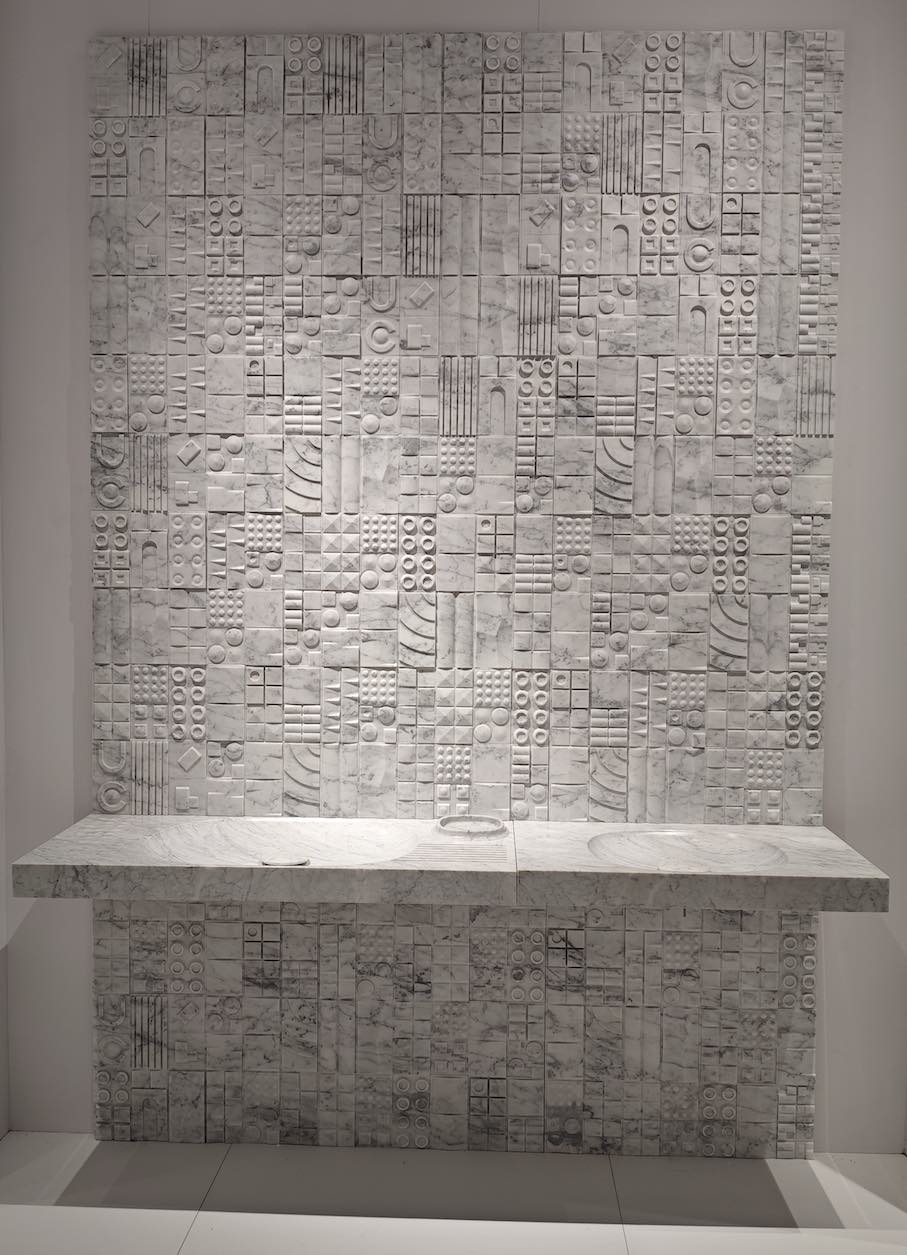 “Frammenti” by Martinelli Venezia consists of 27 different tiles (in the 20×10 format): Each module is characterized by engravings, reliefs and textures that transform the surface into a field of visual and tactile traces.
“The design is never unitary but emerges from the juxtaposition and repetition of elements, giving shape to a micro-architecture that develop through a grammar of solids and voids, light and shadow, continuity and discontinuity,” as stated in the press release. “Frammenti is an open system characterised by geometries and material variations, which interprets the wall as an active surface, capable of conveying rhythm, and depth.”
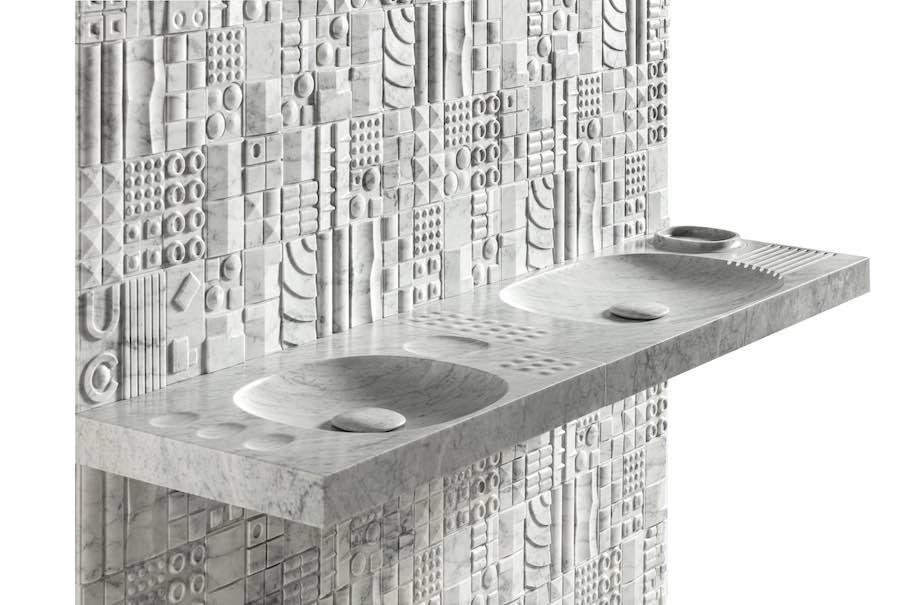
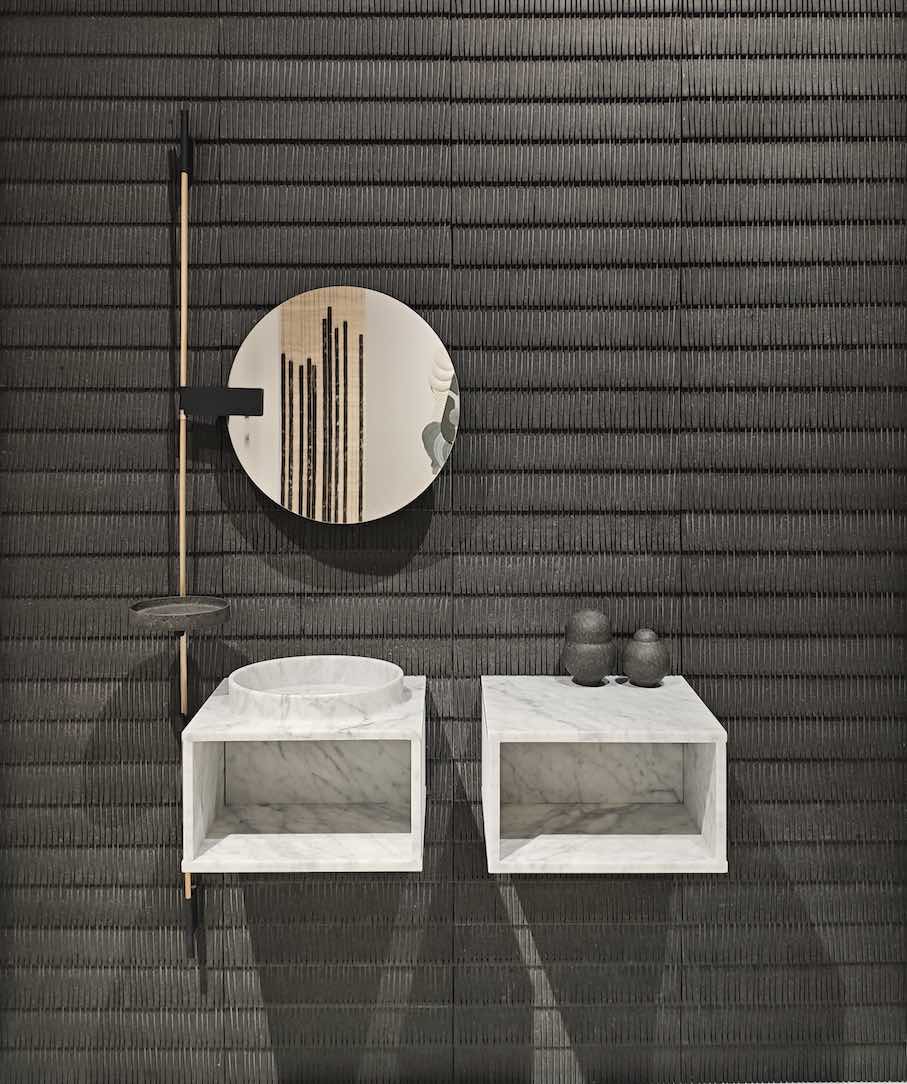 Another new product from Martinelli Venezia is the “Sorgente“ washbasin and the “Minimo“ washbasin system.
Photos: Lithea