Stone-Ideas.com


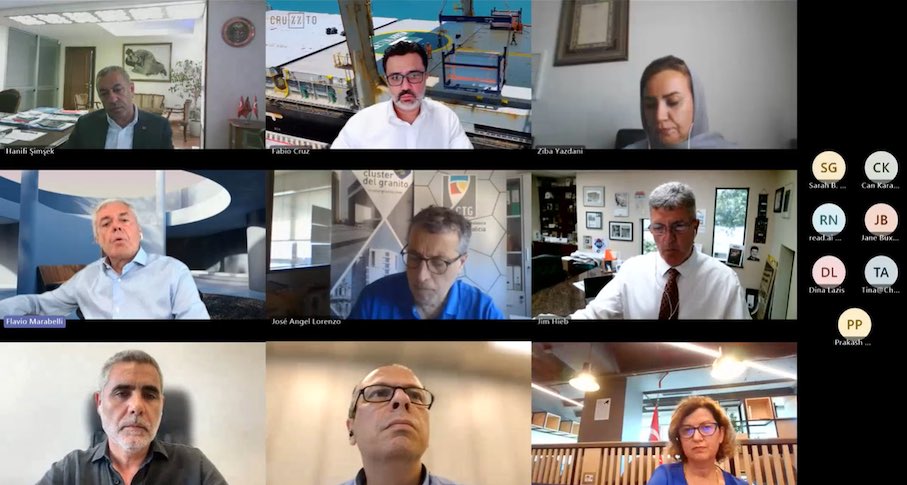
The Natural Stone Strategic Alliance (NSSA), the stone industry’s new global organization, took another step forward in its international consolidation during a meeting held on July 01, 2026, where members reviewed progress in the federation’s institutional structure and aligned the next steps for its ongoing strategic projects. Officially incorporated as a non-profit organization in the United States, the NSSA currently brings together 11 member organizations representing 10 natural stone producing and consuming countries: Brazil, Germany, Greece, Iran, Italy, Portugal, Russia, Turkey, the United Kingdom, and the United States. The alliance aims to expand to 20 member organizations by the end of the year, further strengthening its global representation.
Among the key developments discussed during the meeting was the strengthening of the organization’s governance structure, with measures aimed at expanding its representation and enhancing its decision-making process.
Another topic on the agenda was the federation’s institutional development. The NSSA continues to build partnerships with major international trade shows, an initiative that will expand its institutional reach and support its global cooperation projects. Members also discussed the development of the organization’s official website, which will serve as a hub for its main initiatives.
As the federation’s first collaborative initiative, the EPD Global project aims to integrate the Environmental Product Declaration (EPD) initiatives developed by its member countries. The project seeks to map the development stage of each national EPD program and provide a global overview of the natural stone industry’s environmental progress, further strengthening the material’s position in international markets.
Discussions surrounding exposure to respirable crystalline silica remain a priority for the organizations that make up the federation, particularly following Australia’s restrictions on engineered stone products and the ongoing regulatory debate in California, United States. In this context, the Natural Stone Institute (NSI) continues to lead scientific research, regulatory initiatives, and communication efforts aimed at demonstrating, through technical evidence, the differences between natural stone and engineered surfaces.
Source: NSSA / Centrorochas