 Stone-Ideas.com


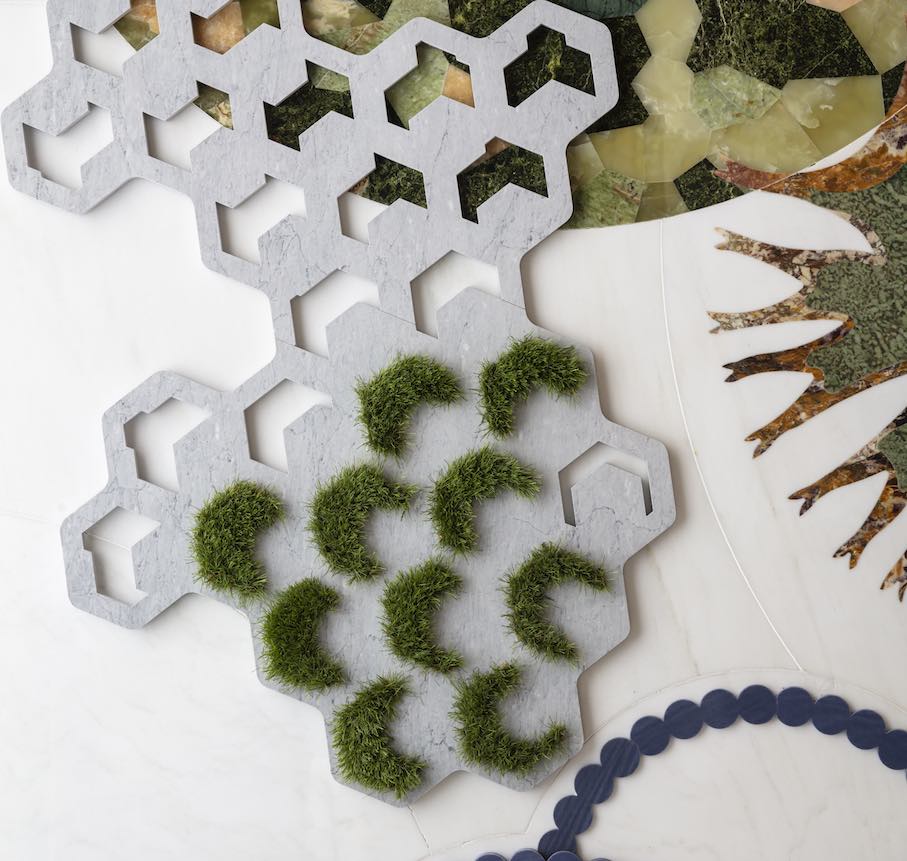
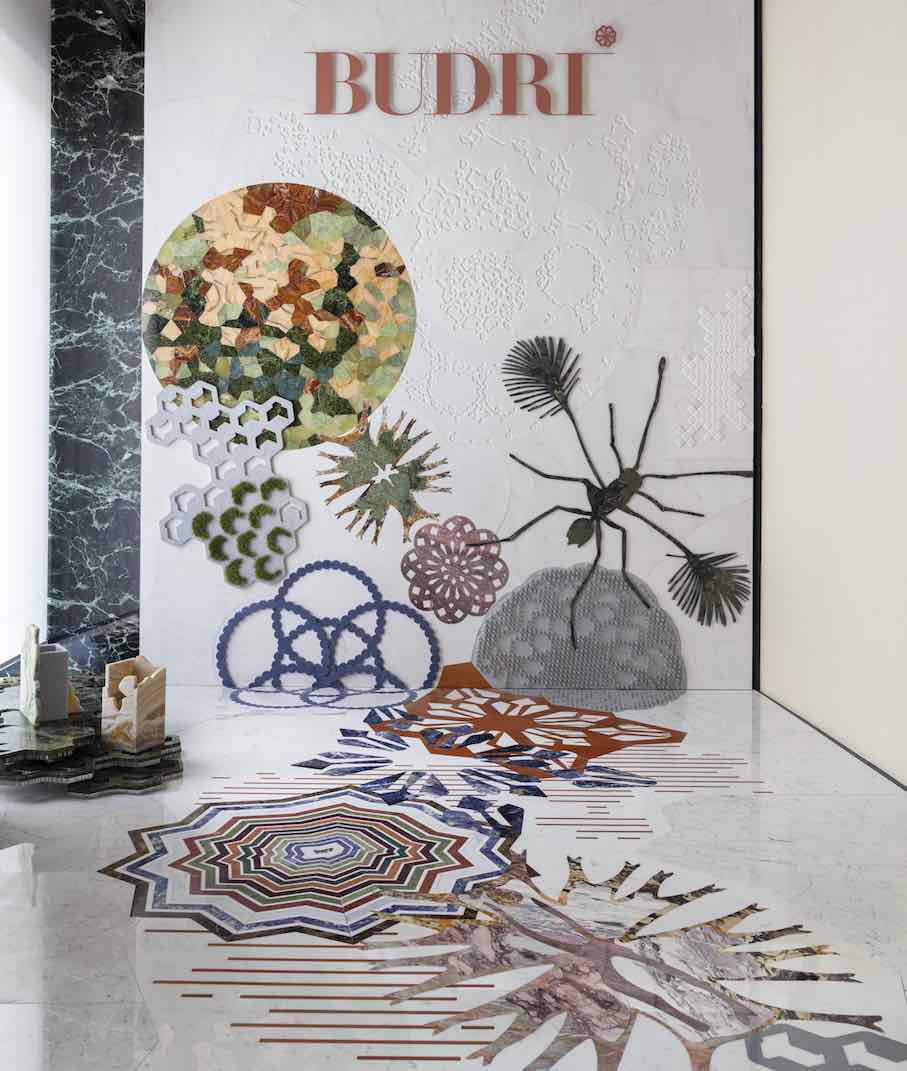
Over the past 20 years, the Italian company Budri, together with its designers, has incorporated many of the world’s major themes into its artistic work. One such theme was environmental issues, such as the responsible use of stone or the recycling of production waste.
This raises the question for us: What about artificial intelligence, which is such a big topic right now – does Budri have nothing to say about it with its stone works?
The answer to our question can be found in the press materials for the current “Arc-Hive“ collection, which was first presented to the public at Milan Design Week in April 2026: There, the term “Slow Creativity“ appears, which Alessandra Malagoli Budri, the company’s creative director, uses. What she means by that is: “We risk seeing things without really observing them, and not perceiving their value, their creativity, their detail, their language.”
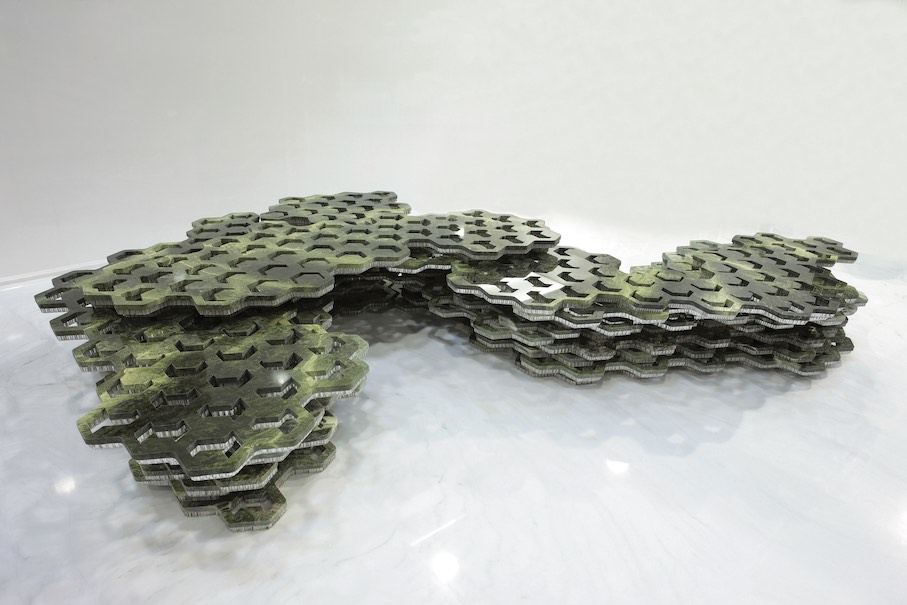 2009: Algae Benches from the Macrosterias collection. Benches made with inlaid honeycomb structures in Verde Bowenite marble, stacked on multiple levels. The visible combination with the aluminum support is intentional.
Budri’s response to the increasing importance of algorithms is to pause for a moment and truly appreciate human-made ideas – unlike AI programs, which, driven by profit maximization, produce a constant output that, in reality, only reproduces in new combinations what already exists.
AI cannot create truly new ideas – at least not yet, it should be noted. What the future holds remains to be seen.
“Arc-Hive“ looks back on 17 years of collaboration between Budri and the Spanish-born designer Patricia Urquiola. Twenty objects from the collections of this period are on display in the company’s showroom at Foro Buonaparte 60 in Milan.
The presentation begins with “Macrosterias“ from 2009, a milestone in the company’s development, when it incorporated a fictional biology into its inlays. “Marble became a carpet, a tropical mat, a vertical covering capable of surprising with its depth and visual lightness,” the company recalls in its press materials.
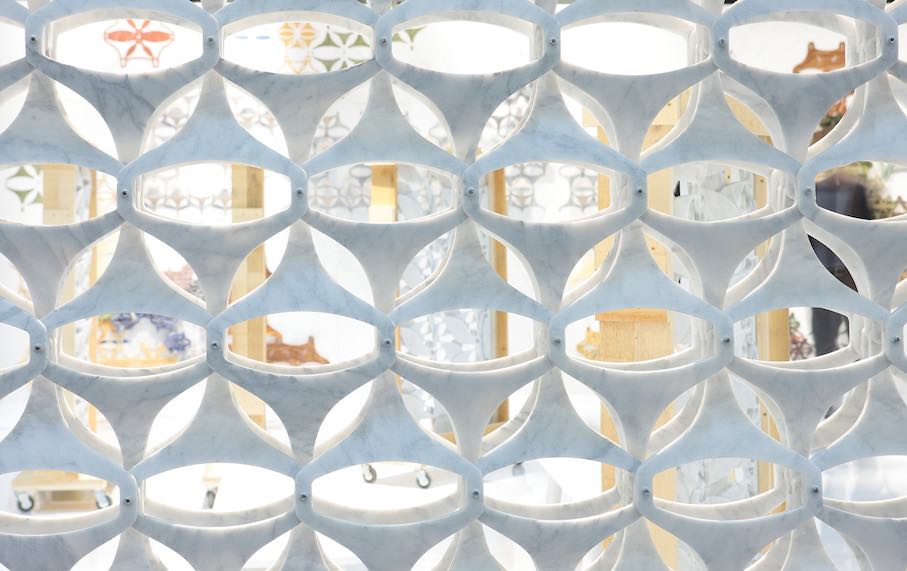
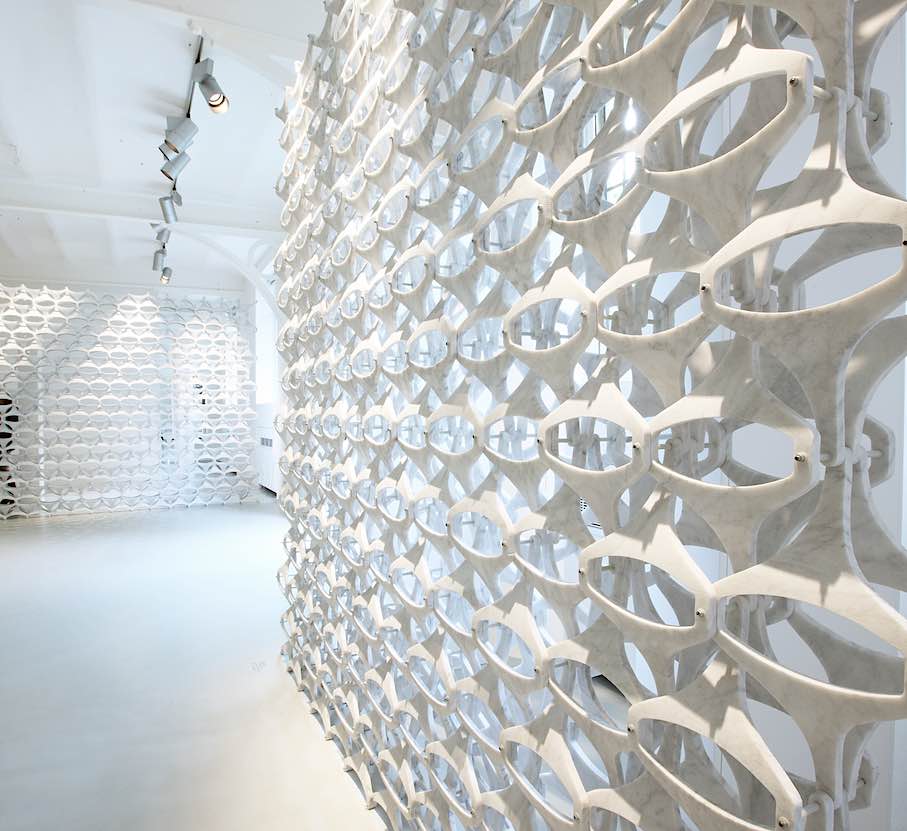 2010: Lace Screen from the Marblelace collection. A large, highly complex perforated wall in Bianco Carrara, created with concave and convex elements that create a jalousie-effect texture.
And the company continued with what were once truly innovative approaches: “From that moment on, experimentation became a distinctive feature for Budri: onyx treated like watercolors, marbles combined with woods, resins, and glass, quartz and geodes transformed into sculptural furniture pieces, inlaid surfaces evoking soft textiles, suspended staircases that defy gravity. Marble, traditionally associated with rigidity and classicism, progressively freed itself from its own stereotypes to become a narrative material, flexible and dynamic.”
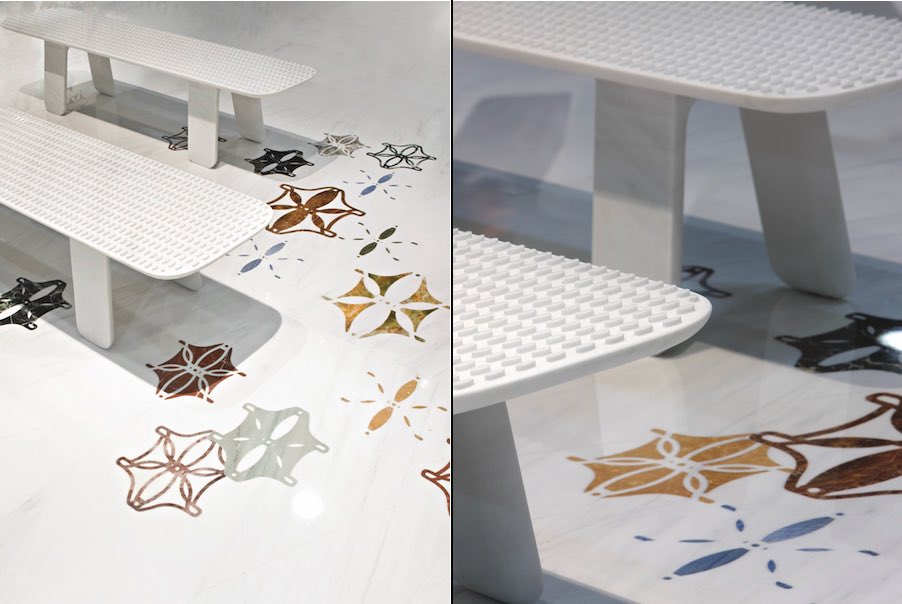 2010: Fachiro Benches from the Marblelace collection. Benches made of polished Bianco Carrara marble, with “biscuit“ legs. The iconic “pixel“ texture gives the seats a unique look. Available in two sizes.
Critics might suspect that Budri, with its retrospective, was simply trying to escape the constant pressure to produce new collections every year. In reality, however, the company didn’t just dust off a few old objects from the basement; they even enlisted the designer Francesca Renai as curator of “Arc-Hive.”
We present some of the objects from the exhibition along with the company’s descriptions and invite our readers to take their time discovering what was once new in each piece – while, meanwhile, the AI races on outside.
Photos: Budri
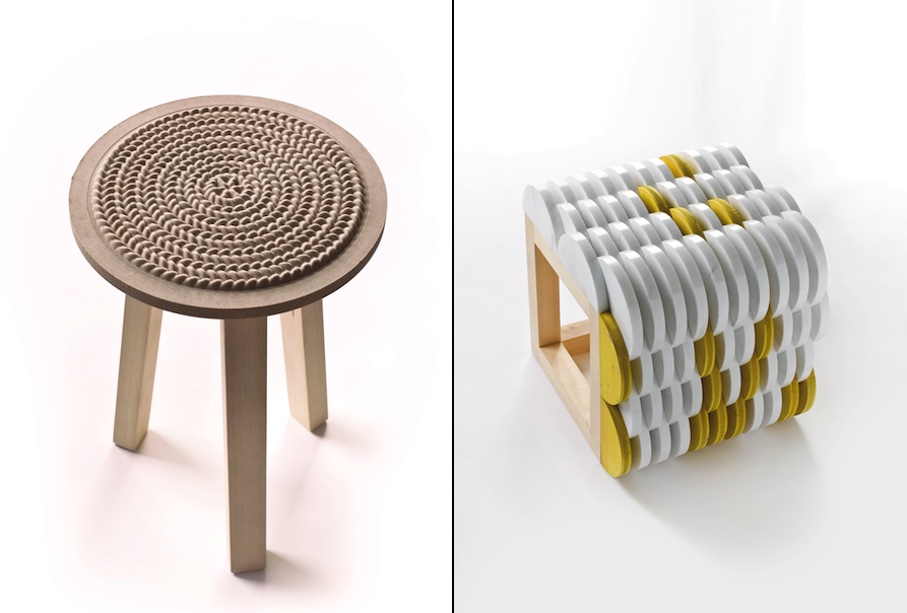 2012: (Left) Nat|F|Use Coffee Table. Coffee table with a knitted texture, made of gray limestone with a concentric tricot pattern.
(Right) Semicircles Bench from the Nat|F|Use collection.
Semicircle bench in Bianco Lasa marble and spruce wood with a neon yellow finish. Internal frame in spruce wood.
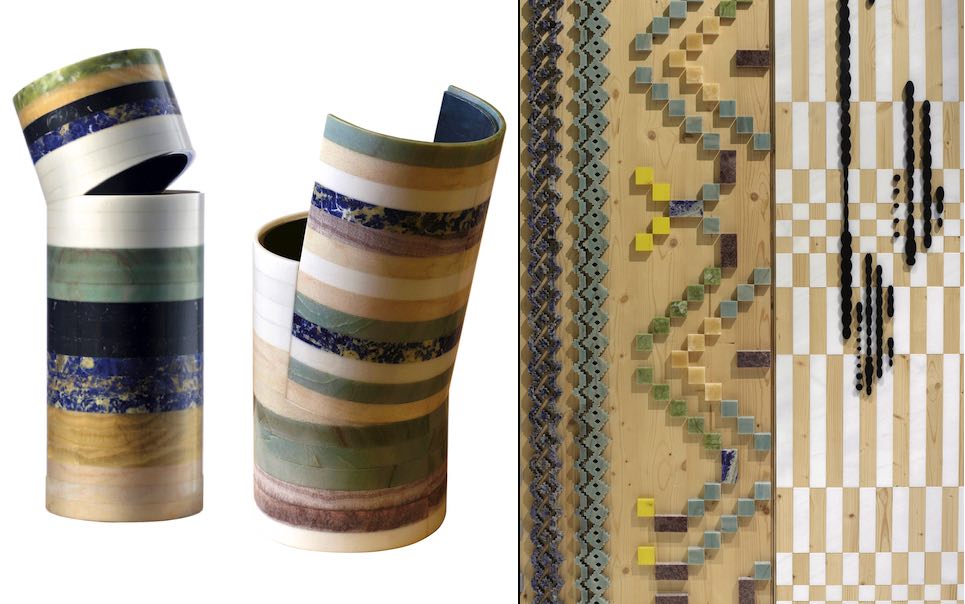 2012: (Left) Y-Tube Vases from the Nat|F|Use collection. Vases inspired by the joints between hydraulic pipes, composed of a regular alternation of thin marble and onyx rings of varying widths and colors. A second cylinder, positioned at an angle, forms a Y with two slanted openings.
(Right) Nat|F|Use Paravent. Screen inlaid with glass, wood, and polychrome marbles and onyxes, enclosed in neon yellow wooden frames.
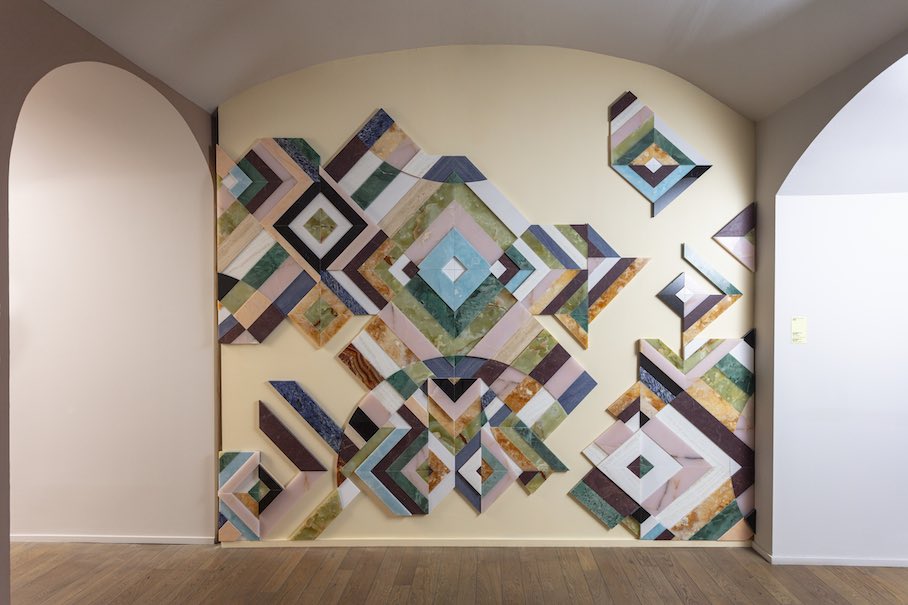 2013: Earthquake Artwork. Fragments of marble and semi-precious stones, sourced from the stunning and precious slabs that survived the 2012 Emilia-Romagna earthquake, are “reborn“ in the expansive and majestic Earthquake 5.9 artwork. Precious marbles and onyxes are juxtaposed with “color-block effect“ areas. The large lenticular-effect decoration covers the wall in alternating backgrounds.
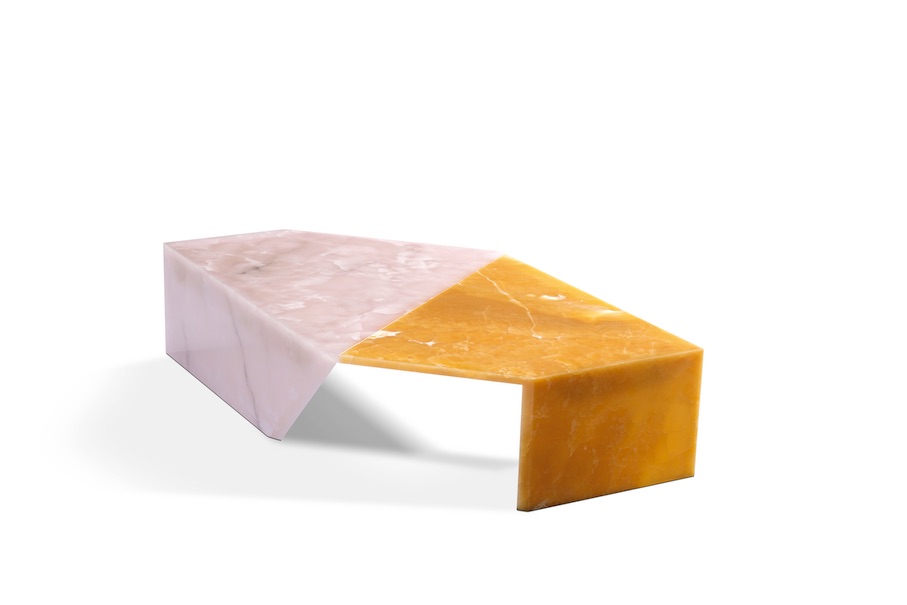 2013: Origami Bicolor Coffee Table from the Earthquake 5.9 Collection. As if marble were paper, the Origami Coffee Table collection is inspired by Japanese origami. The two-tone variant, in Honey Onyx and Pink Onyx, offers a combination of delicate pastel tones.
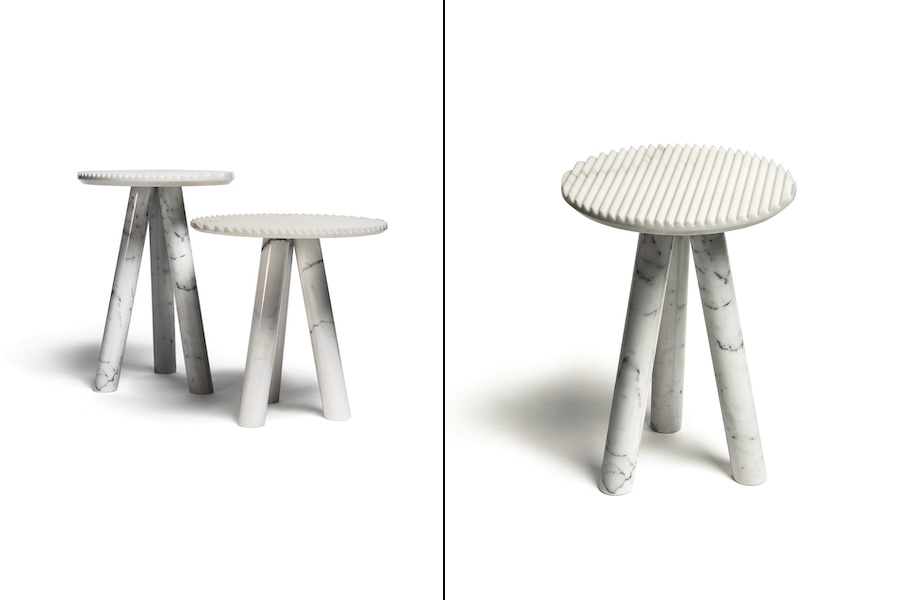 2014: Rabbet Coffee Tables available in Calacatta marble. The comb-textured tops feature sloping, beveled edges. The straw-shaped legs enhance the geometric design and highlight the natural veining of the marble.
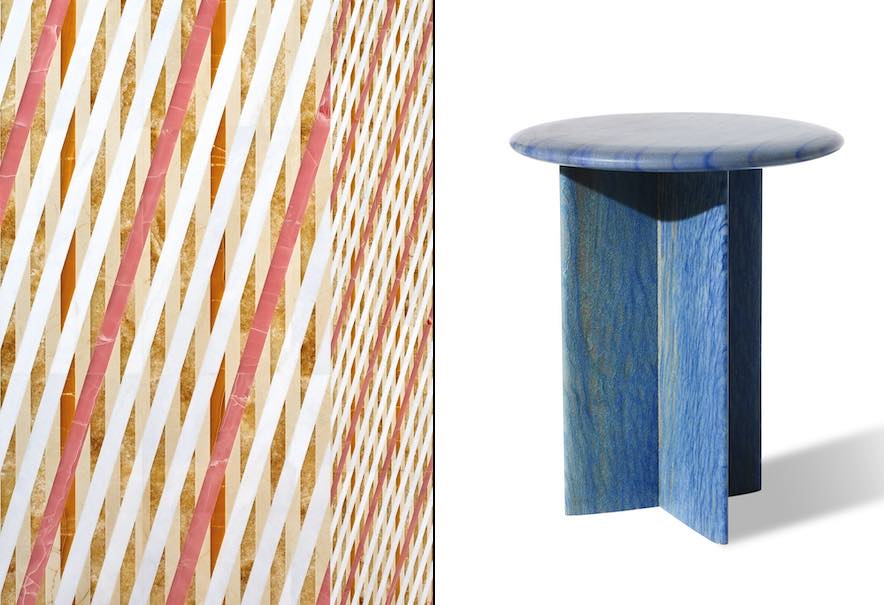 2015: (Left) Papiro Bonbon Wall Inlay. Wall inlay with a Bonbon motif, from the Papiro collection. Made of polychrome marble and onyx: Bianco Sivec, Pink Onyx, Rosa Portogallo Estremoz, Honey Onyx.
(Right) Papiro Coffee Table. Coffee Table made of Azul Macaubas, a precious quartzite extracted from the Brazilian Macauba quarry. The circular, solid wood “button“ top, with a polished finish, rests on a T-shaped base, highlighting the longitudinal grain.
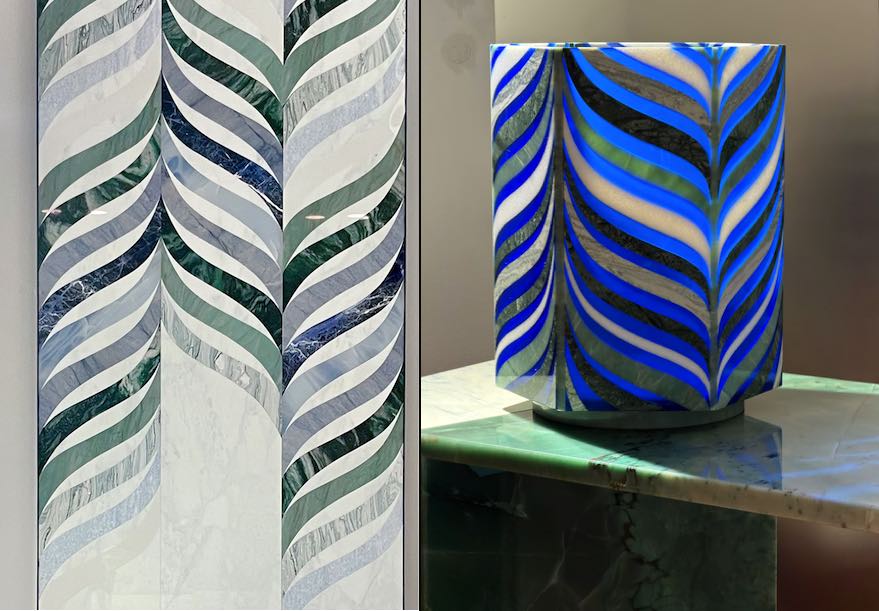 2018: (Left) Algas Wall Inlay from the Agua collection. Modular wall covering with artistic inlay that reproduces the algae of the Algas vase on a larger scale. Sinuous and elegant inlays in Verde Cipollino, Lapis Lazuli, Bianco Sivec, Verde Lapponia, Verde Acquamarina, Azul Macaubas, and Onice Bianco, on a Calacatta Caldìa base.
(Right) Algas Vase from the Agua Collection. Algas Vase, focus of the Agua Collection, is an astonishing hexagonal vase which evokes the sinuous, fluctuating strand of seaweeds. It features a marble inlay in delicate shades contrasting with sections of blue resin. The inlays in Verde Cipollino, Bianco Sivec, Lapis Lazuli, Verde Acquamarina, Verde Lapponia, White Onyx, Azul Macaubas and Verde Guatemala match the bottom of the vase in Verde Acquamarina.
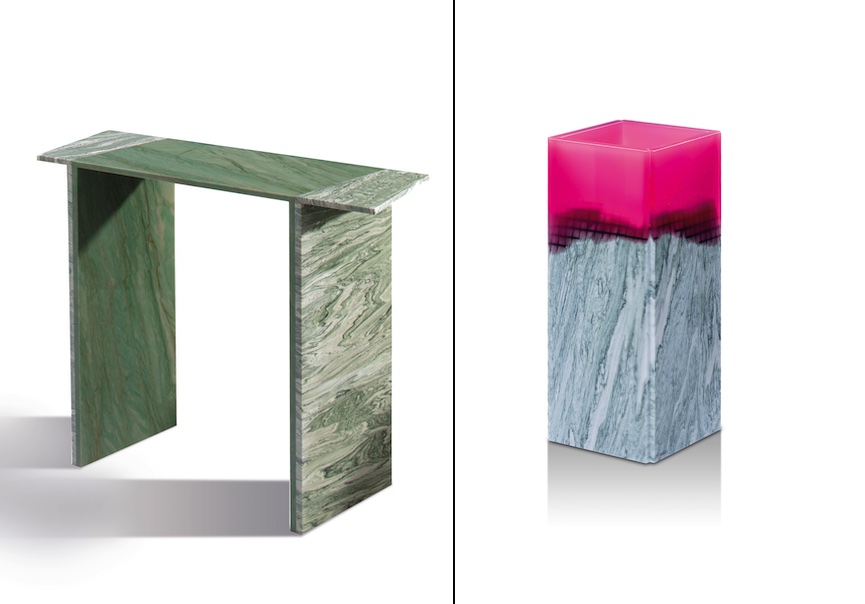 2018: (Left) Orilla Console Table from the Agua Collection. With a strong graphic connotation, the Orilla Consolle is made of Verde Cipollino and Verde Acquamarina. The top features a graphic continuity with the diagonally placed legs.
(Right) Orilla Onyx & Cipollino Vases from the Agua Collection. The Orilla vases, meaning “shore“ in Spanish, are inspired by the seashore and the clarity of marine waters. They are crafted from precious Iranian White Onyx and Verde Cipollino, combined with colored resins. The materials are “contaminated“ by a black mesh, a scar from the original slab from which they are carved. The colored resins —emerald green, indigo blue, coral red, and neon pink— create a striking contrast, a play of light and transparency that overlaps in different perspectives.
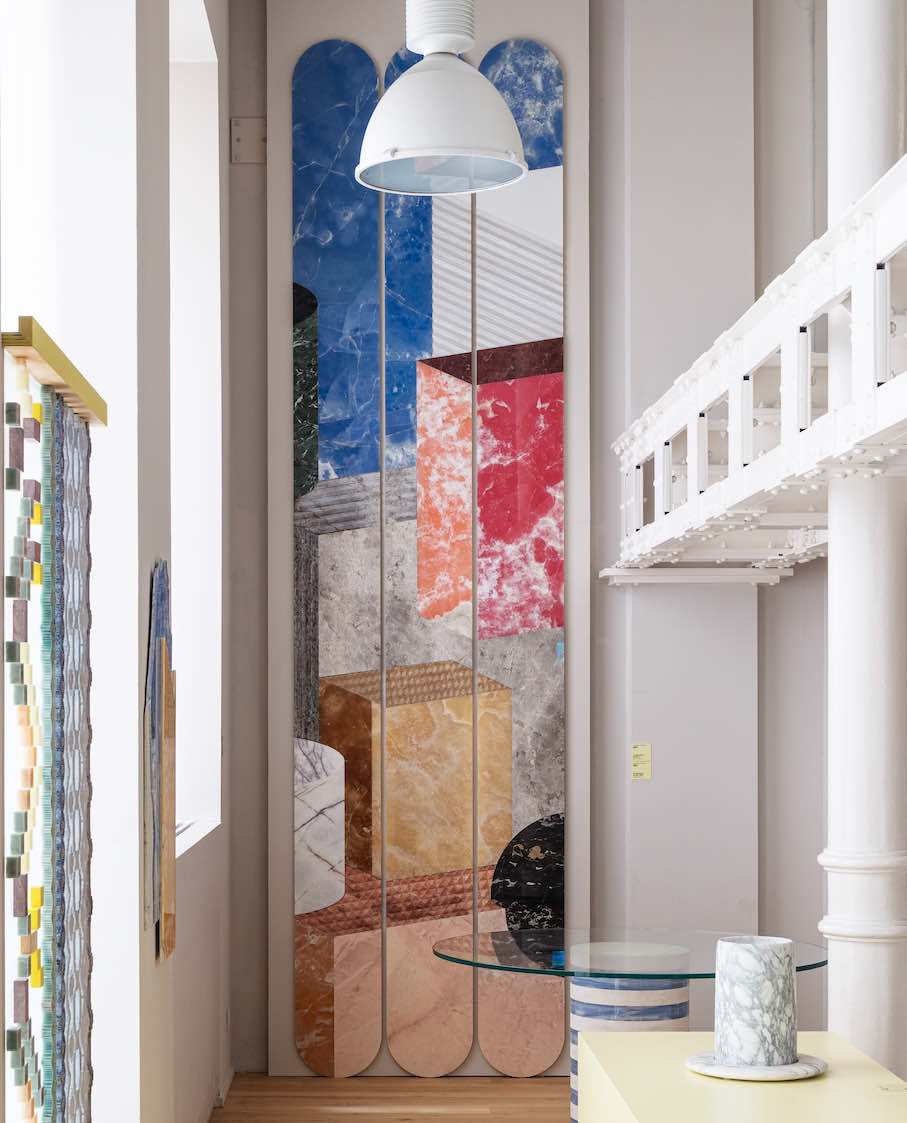 2021: Architexture Artwork. The Architexture Artwork creates a dialogue with space through architectural volumes and depth plays. Geometric shapes and nuanced colors enhance the stone’s veining, while a sky in Aquarel Iranian Onyx dominates an imaginary city. The relief textures, inspired by Italian architecture, enrich the work, intertwining material and history.
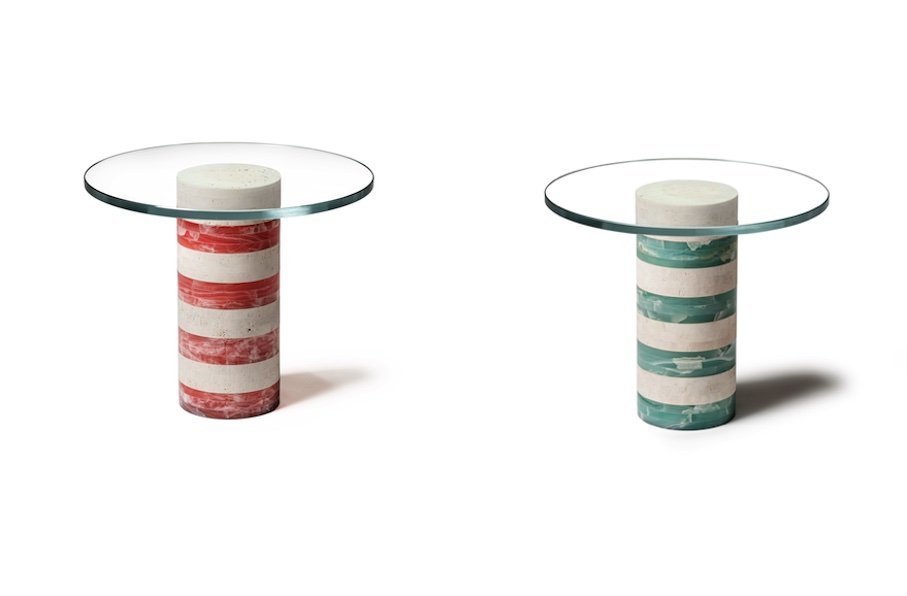 2021: Architexture Side Tables. Side tables with a circular top in extra-clear glass and striped column legs composed of alternating travertine, a rough and textured material, and Iranian onyx.
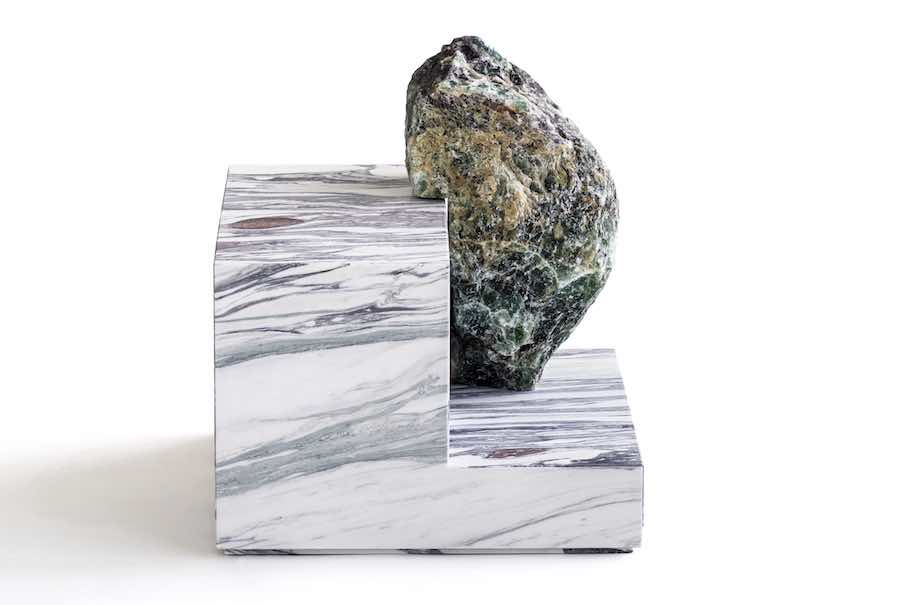 2024: Mass Rocas Fluorite Coffee Table from the Geodies collection. The one-of-a-kind Mass Rocas Fluorite coffee table takes its name from the presence of a primordial Fluorite stone. The Fantastico Arni marble, Vena Viola, with its pictorial veining, forms a perfect match with the fluorite’s hue. The table, with its rigorous form, houses the large stone with its imperfect forms, typical of rocks in their natural state. The fusion of smooth material, the rough matrix of the stone, the sheen of the marble, and the matte colors of the stones is the recurring theme of this precious, one-of-a-kind coffee table.
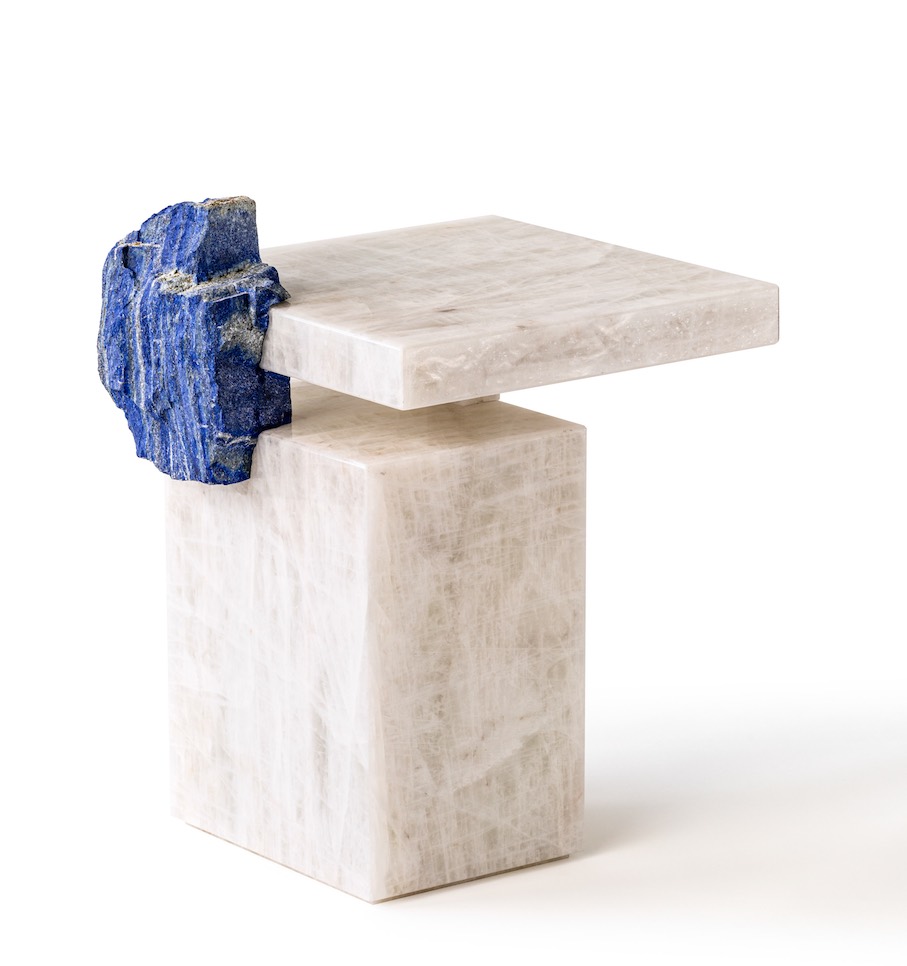 2024: Mass Rocas Sodalite Side Table from the Geodies Collection. Mass Rocas Sodalite – Side Table takes its name from the extraordinary presence of a primordial Sodalite stone. The boulder, in its purity, becomes an integral part of the tabletop. The white quartzite that composes the piece, with its delicate streaks, forms a perfect combination with the blue hue of the Sodalite. The tabletop appears suspended from the base.