 Stone-Ideas.com


Design was once again one of the major themes at this year’s Marmomacc in Verona. 15 exhibiting companies and internationally renowned designers focused on the theme of „Skin, Texture.” The trade fair wrote: „Some focused on effects linked to the variegated and multi-colour texture of marble. Other companies re-thought their approach to natural stone – which is generally associated with the cladding of walls and floorings/pavings – by seeking new applications and new uses. The interpretation of the ,skin’ theme overcame two-dimensional limits through the expression of the plasticity of stone or of three-dimensional figures. ,Skin’ can be a synonym for sustainability and lightness, contrasting the weight of the material, blurring the boundaries between natural and artificial.”
Below, we present the works with explanations from the designers.
Photos: Alberto Parise
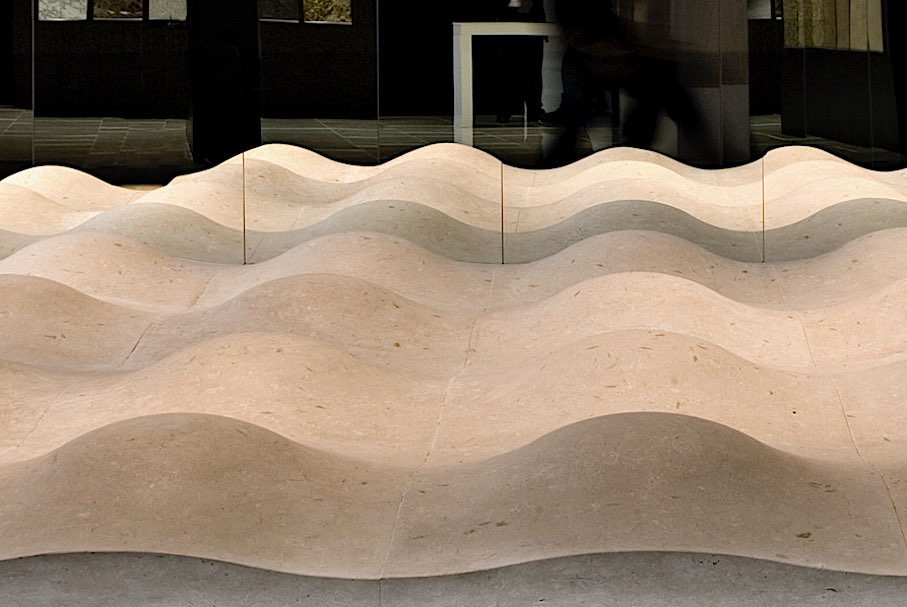
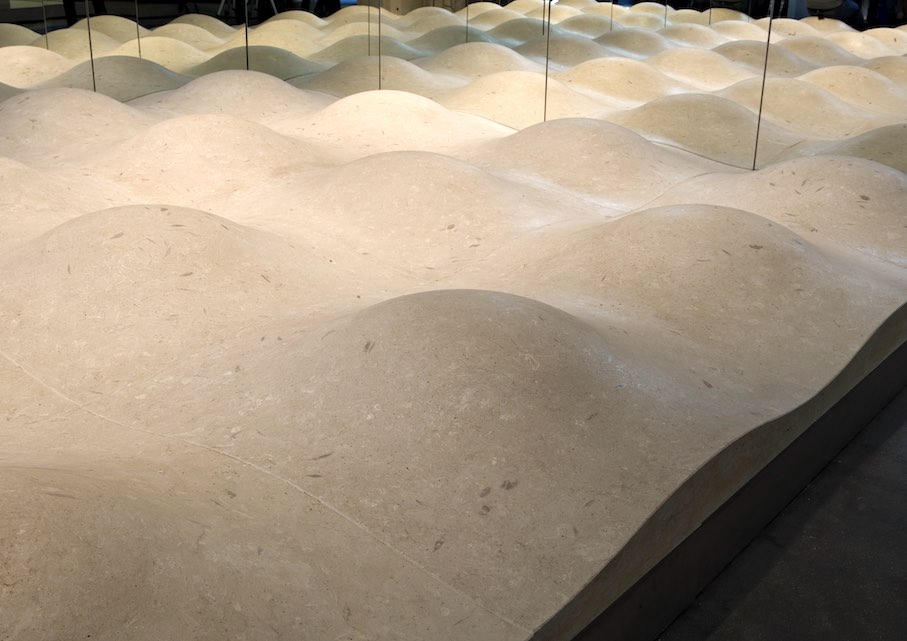
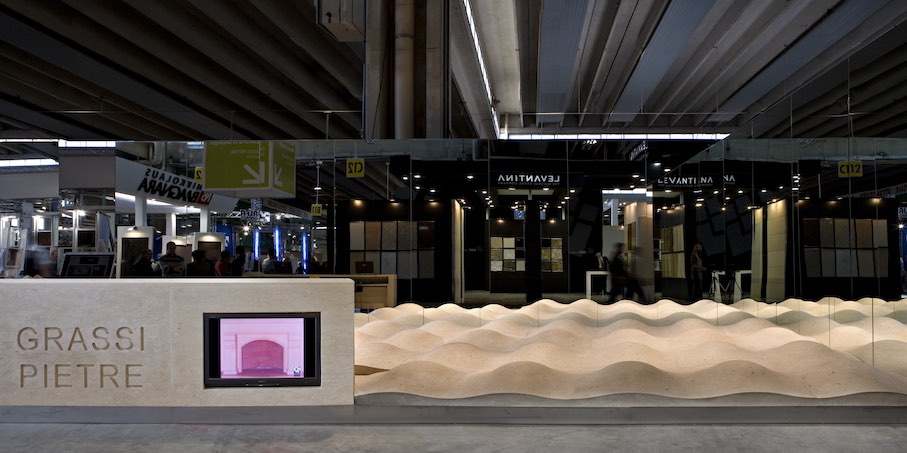 Stefano Giovannoni for Grassi Pietre: „I worked with Vicenza Stone, a light and porous material that is easy to cut, in shades ranging from grey to black, which also contains a series of fossil remains. For Marmomacc, I developed an undulating flooring to create the idea of a soft surface resembling sand dunes, reflected in mirror-finish walls precisely to emphasise certain characteristics of this material such as colour. The project is named ,Dune’; by playing with shades of colour, I managed to create a texture similar to the surface of a desert, almost as if to create the impression of an infinite space.“
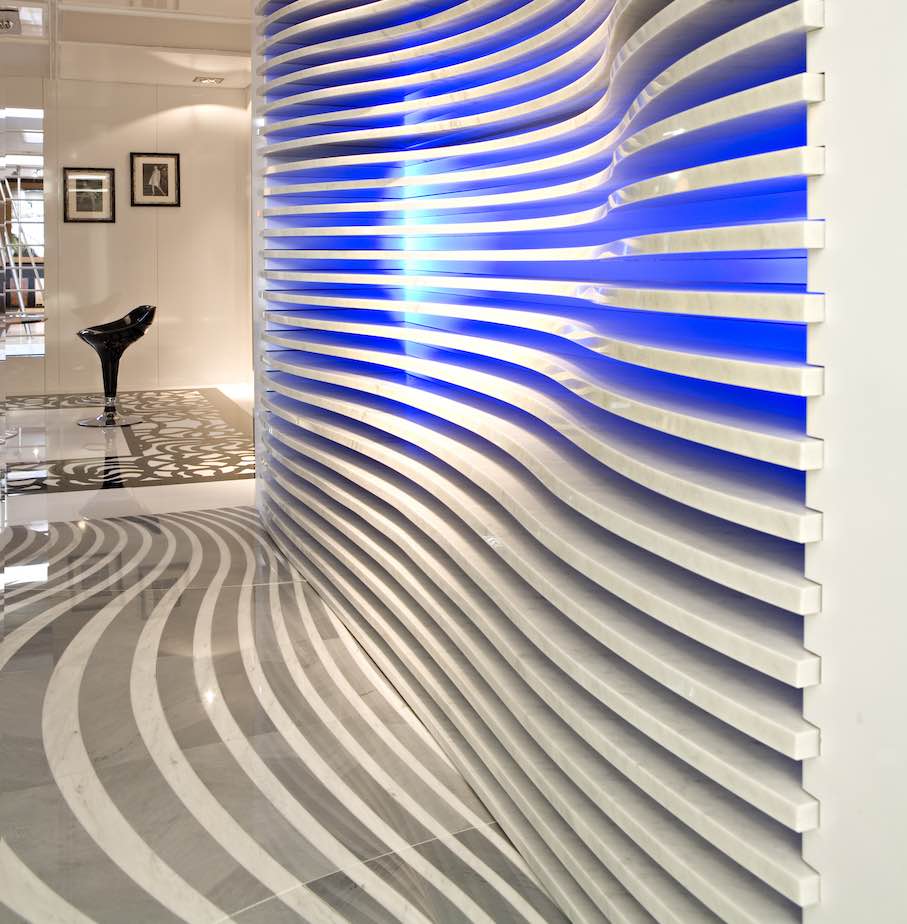
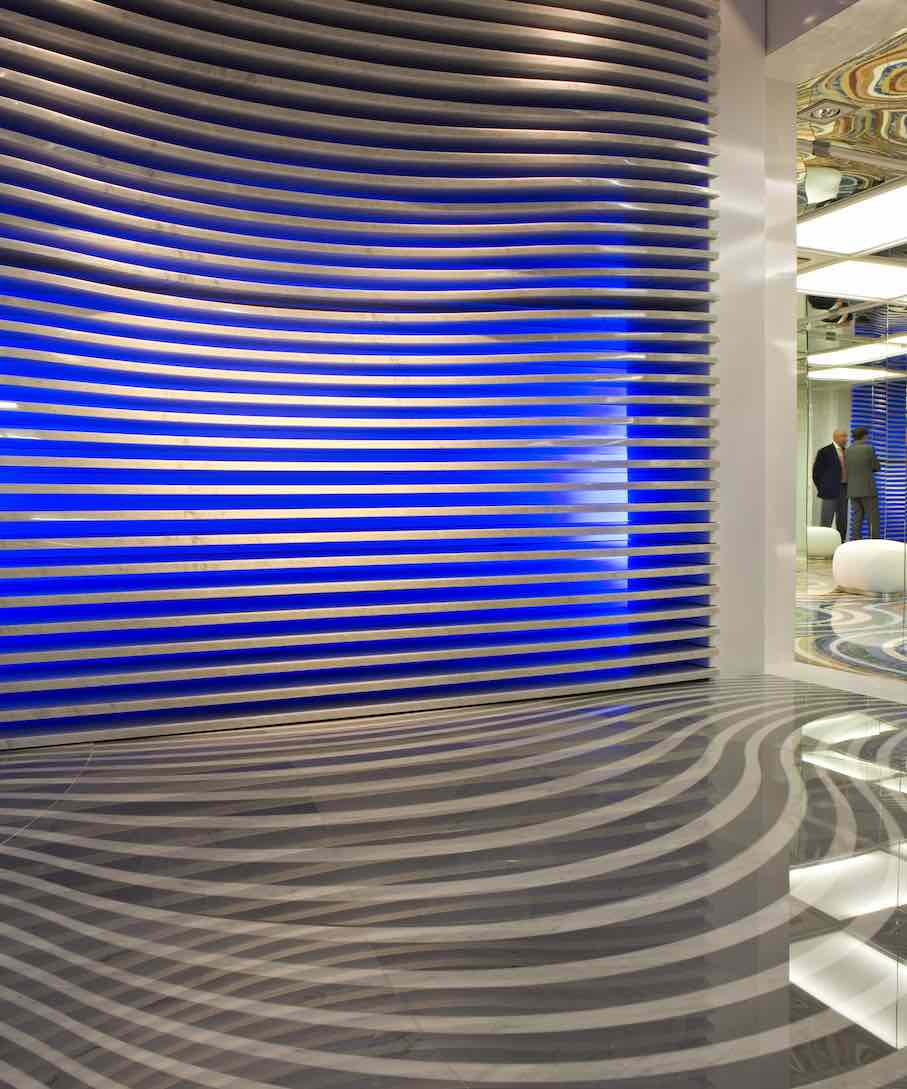 Iosa Ghini for Budri: „This installation investigates the potential of marble processed not as a cladding surface, but rather as a fluid material filling and traversing space. The slabs create a skin that changes in relation to the point of observation to create an intimate and ethereal atmosphere. The light sliding over the marble surface engages the observer at a primordial nucleus at the boundary between materiality and immateriality.“
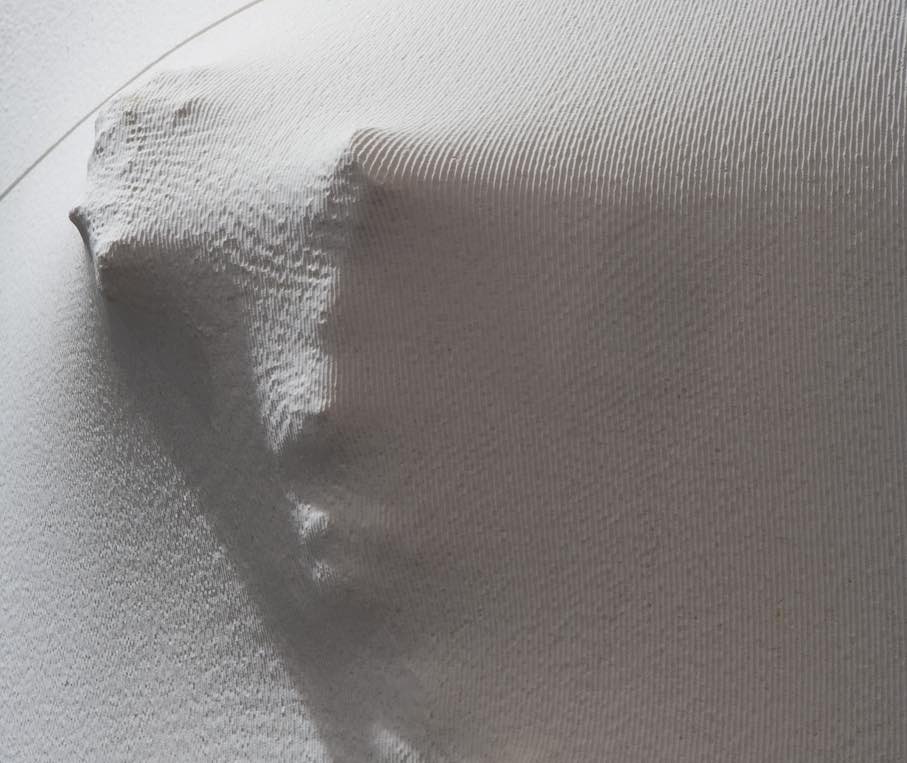
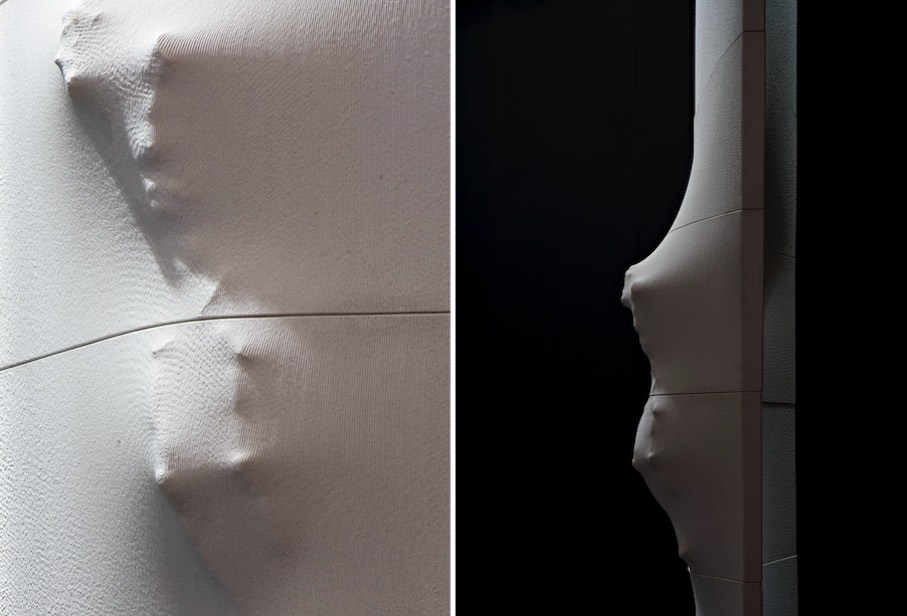 Blumer Riccardo for Scalvini Marmi: „Using marble as a canvas, I reproduced a 1700s Christ figure that ,breaks through’ its skin by using a machine that scans forms and carves marble with impressive precision. The effect, seen from behind, is a negative impression: like a body merging into the earth. The front, on the other hand, has a positive outline that ,protrudes’ from the ,canvas’, as if the body wanted to emerge from its skin. This represents the idea of skin as an extension of ourselves, where we define our identity. Skin is the limit that identifies us as men, the place where our existence becomes public. Why Christ? It is not a provocation. We experimented with different subjects but Christ represents the essence of Man. He is the icon of all our hopes.“
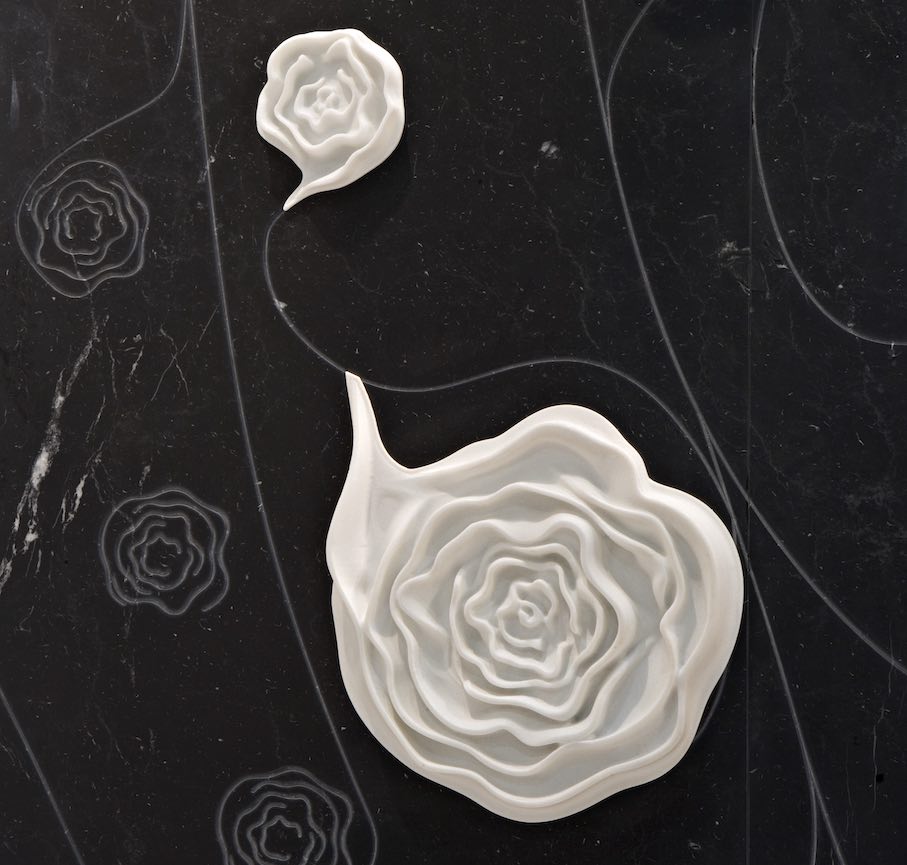
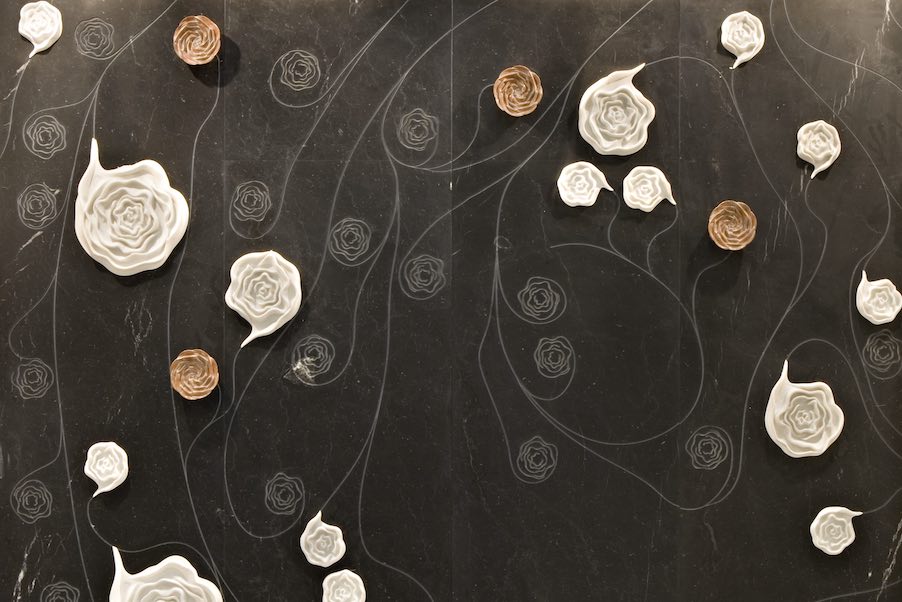 Pongratz Perbellini Architects for Testi Group: „The ,Roses’ project is the result of digital experiments with different cutting, engraving, three-dimensional surface modelling and polishing techniques all applied simultaneously to a specific floral motif. The inter-play of chromatic and sensorial resonances is intensified by the deliberate alternation between ,material removed’ and ,material added’, between stone engraved and stone in relief, between honing and polishing. The abstraction of a rose appears in two specific three-dimensional forms, each processed to different scales and developed using different materials: the white rose, in three formats and in relief, dominates the composition. It stands against a dark background, which in turn highlights the engravings. The extremely thin ,incision’ follows slanted axes that accentuate the vitality of the resulting shaded portions, to intensify the level of perception of a ,deep’ surface. The red rose is softer and smaller, timidly dotting the vertical wall in contrast with its strong chromatic effect. The floral motif and its components continue across vertical and horizontal planes without interruption. The finely-designed polishing of the surface of the engraved roses embellishes – through brightness and reflection – the resonant play between the sinuous reliefs and the intimate grooves.“
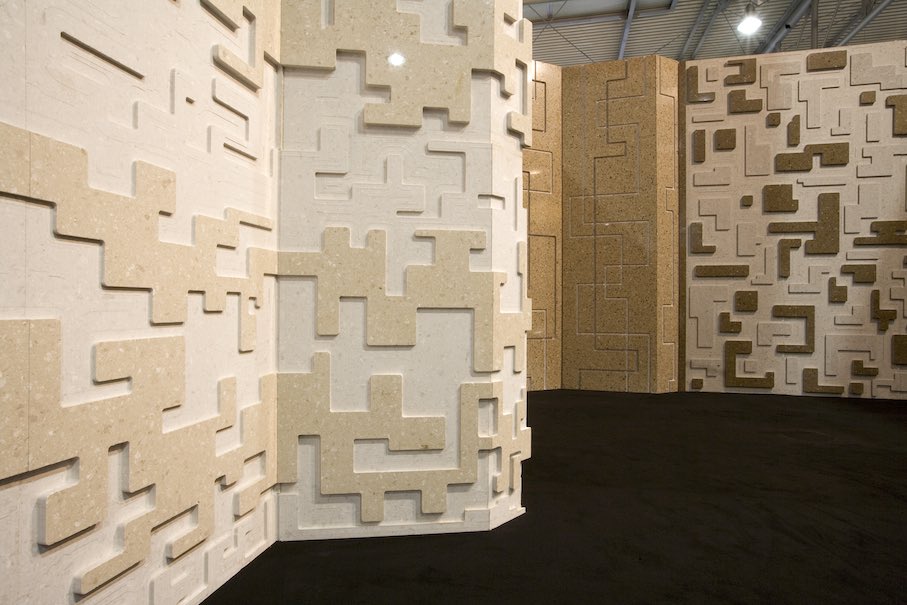
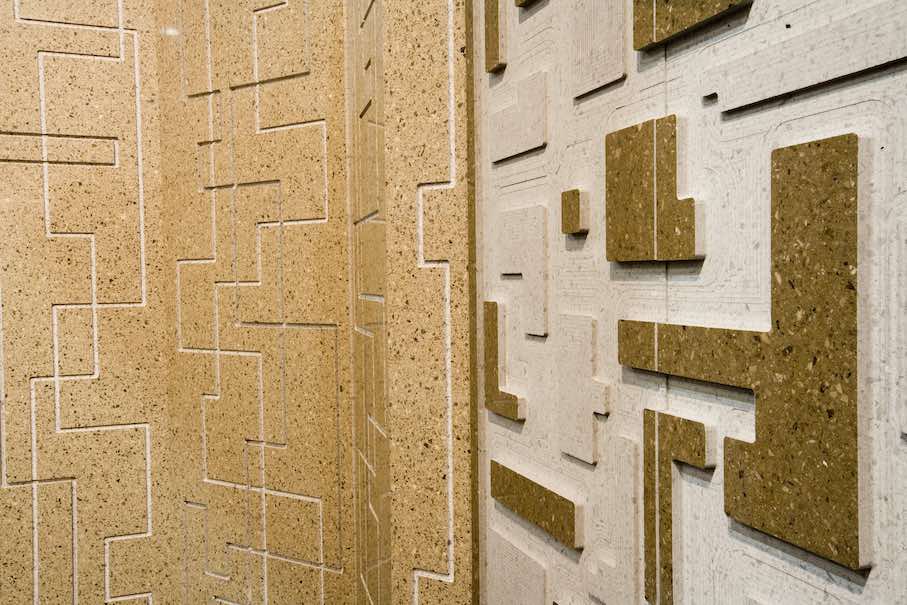 Luca Scacchetti for Santamargherita: „My project is an attempt to turn a smooth and static surface such as a slab of marble into a three-dimensional artefact through light, shade and imperceptible variations of thickness. Thanks to precision laser cutting, ensuring ,shifts in quotas’, transfers of volumes, and finishings, the material takes life: the simple slab becomes architecture, sculpture, movement. Thanks also to clever lighting, it takes on a thousand facets that re-create the optical effect of pixels. Marble has enormous potential yet it has been ignored over the years, and largely exploited simply as a cladding/lining material. Thanks to new machinery, marble has become more ductile and perhaps even more malleable than wood. As a result, design encounters new, fertile ground. Advanced computer technology is certainly part of such fertility, since it means that this precious material can be exploited to its full potential.“
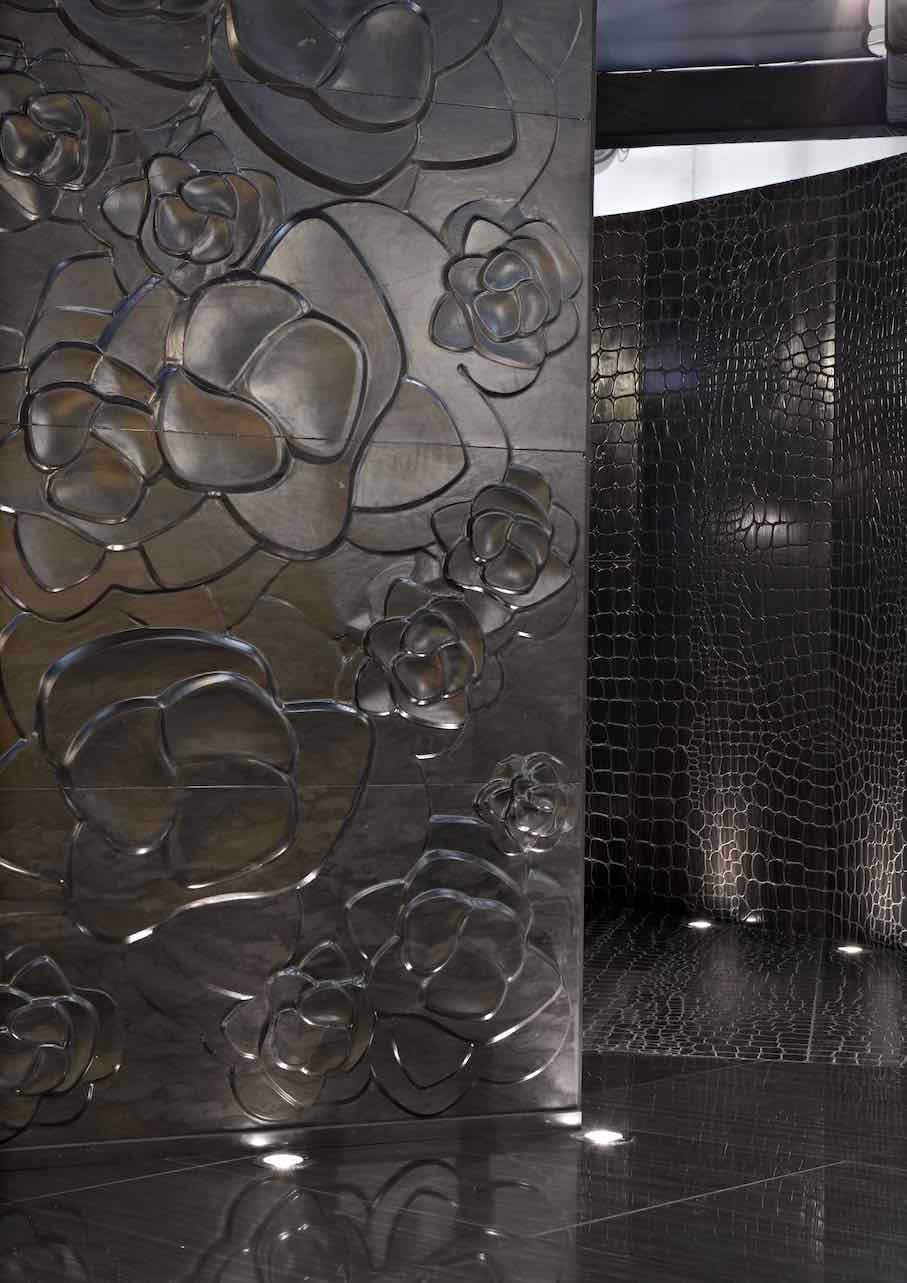
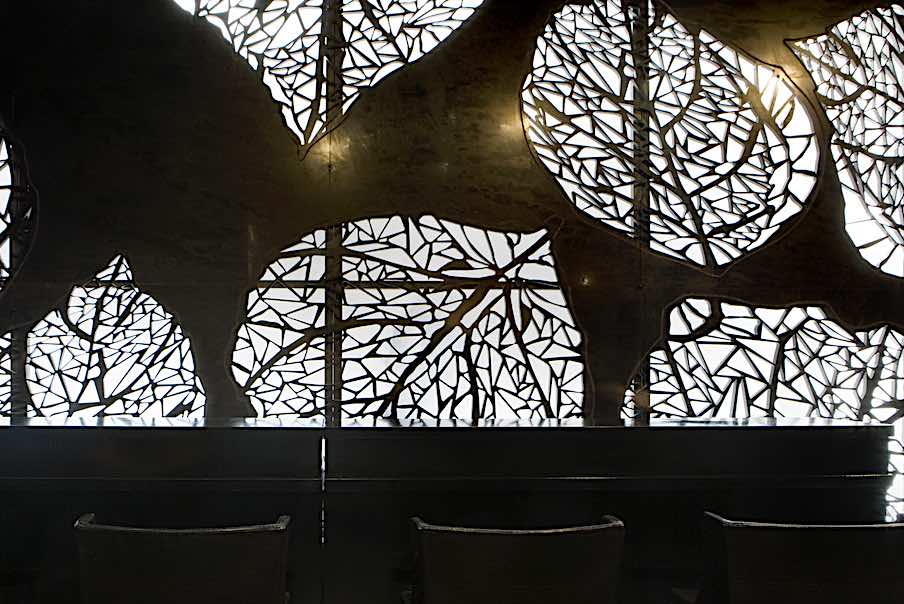 Pietro Ferruccio Laviani for Citco: „I tried to match marble with other materials or new forms that make it more current and interesting. I worked in three dimensions, seeking to create unexpected volumes and tactile effects resembling flower decorations or a ,crocodile macro’, which emphasise two opposing aspects of the material: one is romantic, precisely like the flowers gradually emerging from the smooth slab to become three-dimensional, and the other is more glamorous, with the macro-texture of crocodile skin in black marble.“
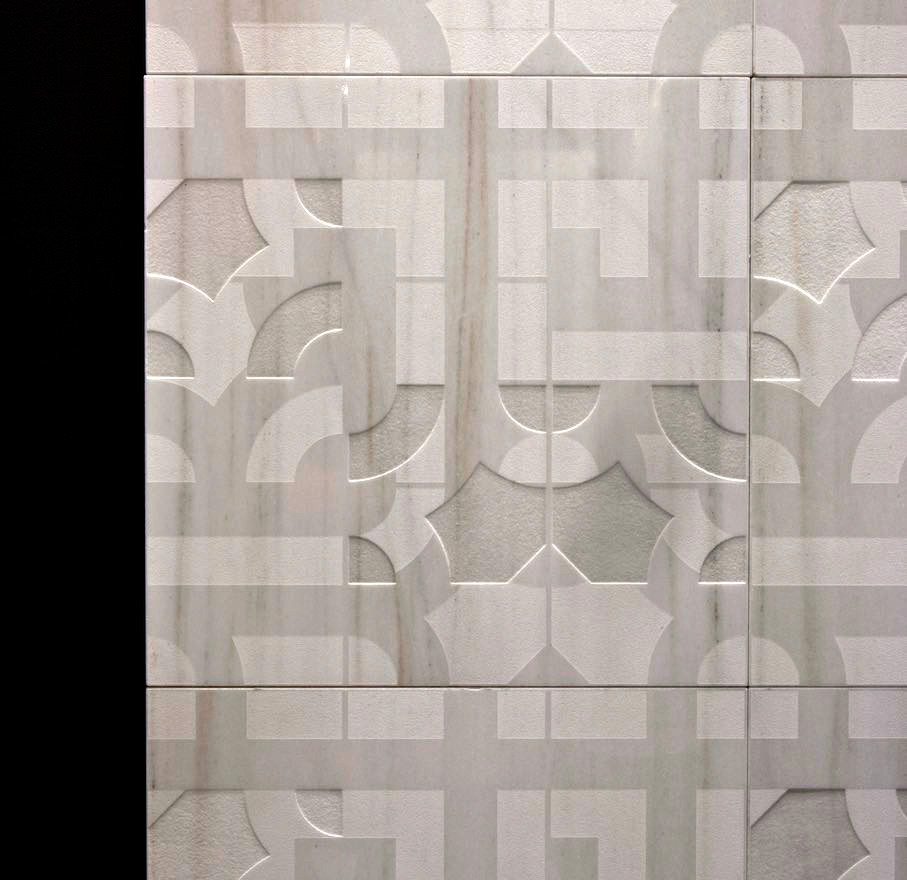
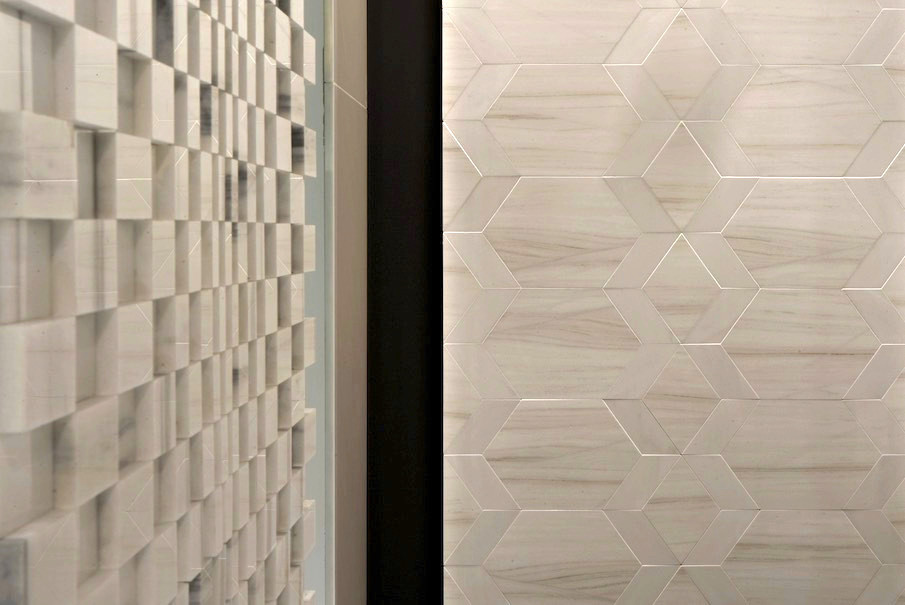 Marco Piva for Lasa Marmi: „My project sought to give new depth to stone material through refined techniques, such as engraving and texturisation using pigments that enhance brightness and opacity. I enjoyed playing with the stone, which is usually seen as an extremely static material. I gave movement to large slabs, processed solely to create the illusion that the material is vibrating, expanding into various dimensions, and let my creativity flow through shiny, opaque or mother-of-pearl textures. Alternatively, I created graphic effects and patterns engraved in-depth, which are not immediately visible at first sight. Yet when these walls are illuminated at a certain angle, such as at 90°, the pattern is revealed. And when the lighting angle is changed from 90° to 180°, the wall reveals yet another pattern, in a game of optical effects and illusions evoking the sensation of surface, the engraving of skin, as suggested by the name of the project: ,Skin deep’.“
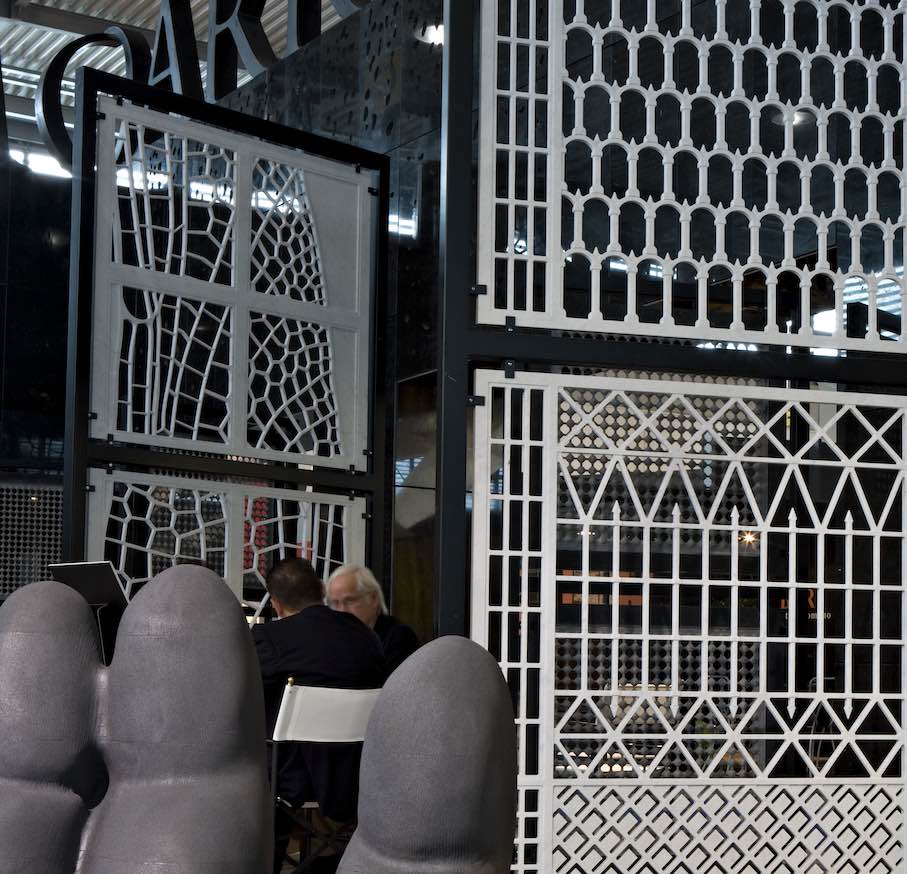 Roberto Canovaro for Marmo Arredo.
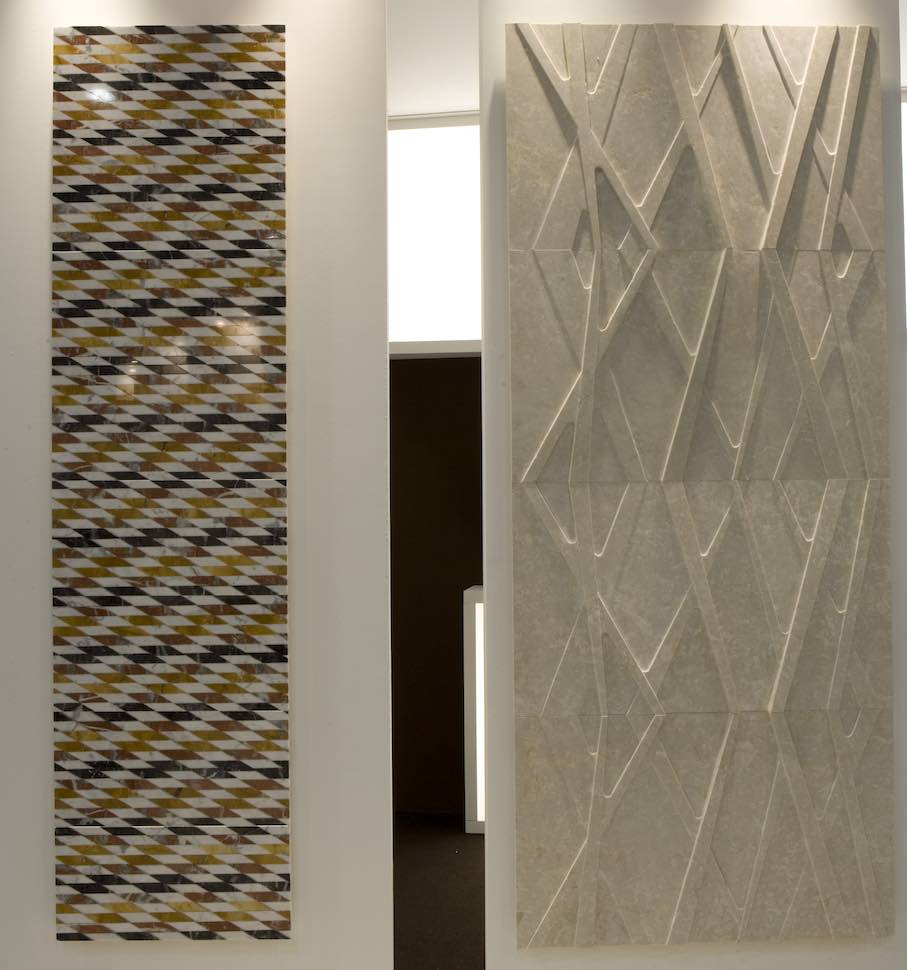 Denis Santachiara for Marmi Ghirardi.
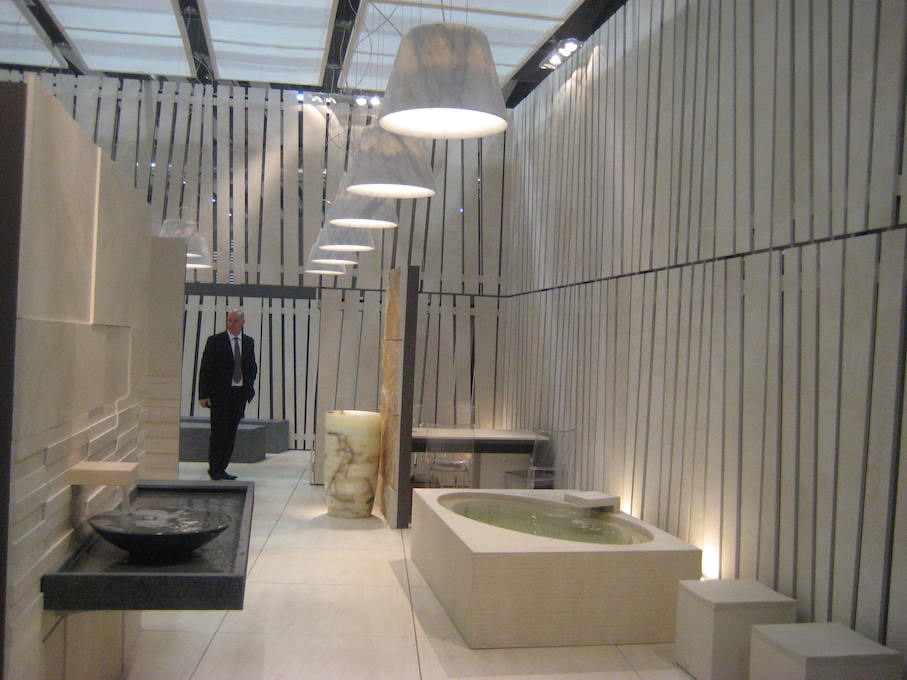
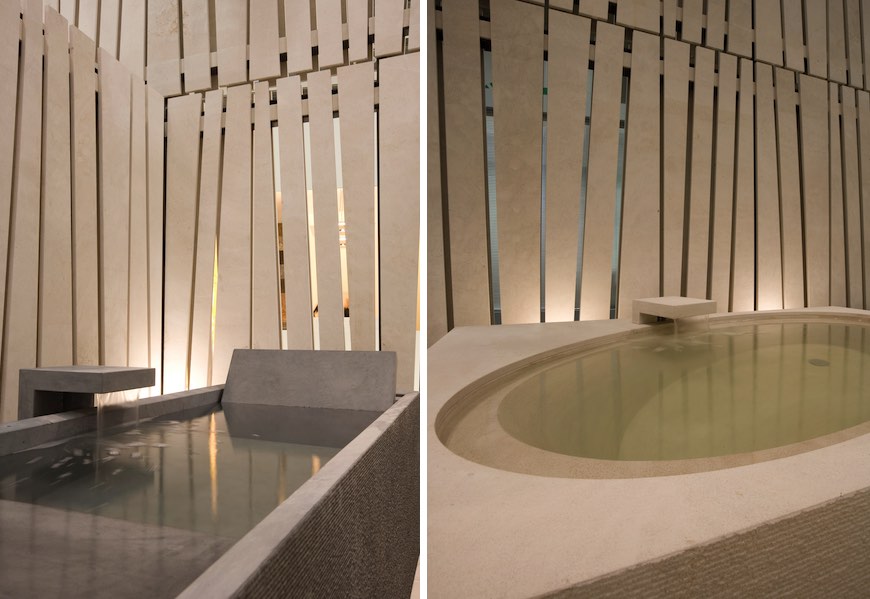 Michele de Lucchi for Pibamarmi.
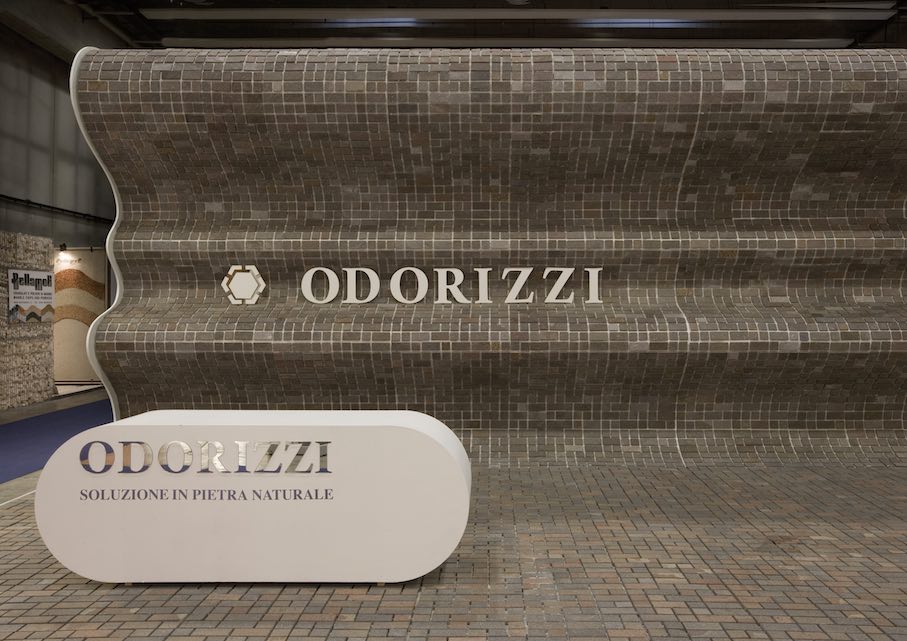 Simone Micheli for Odorizzi Porfidi.
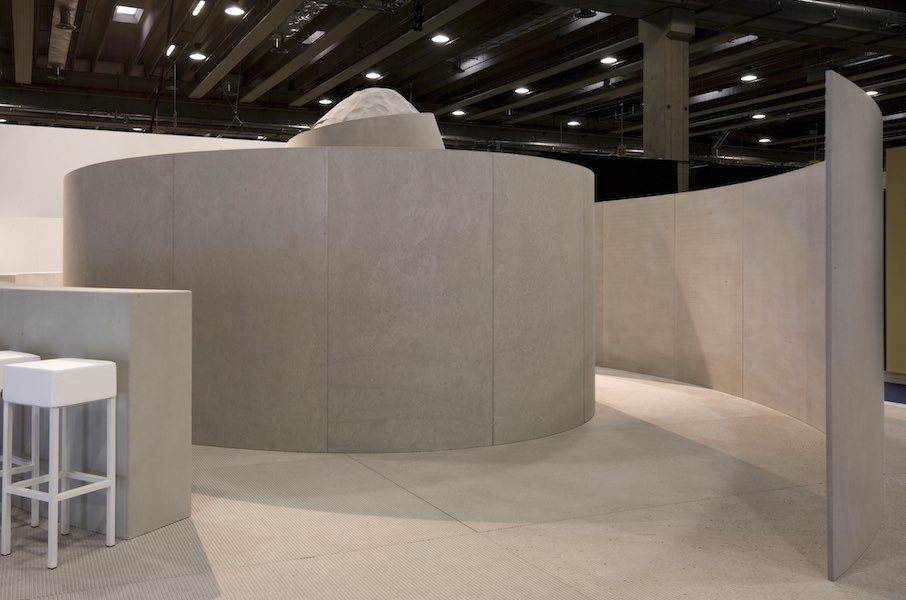
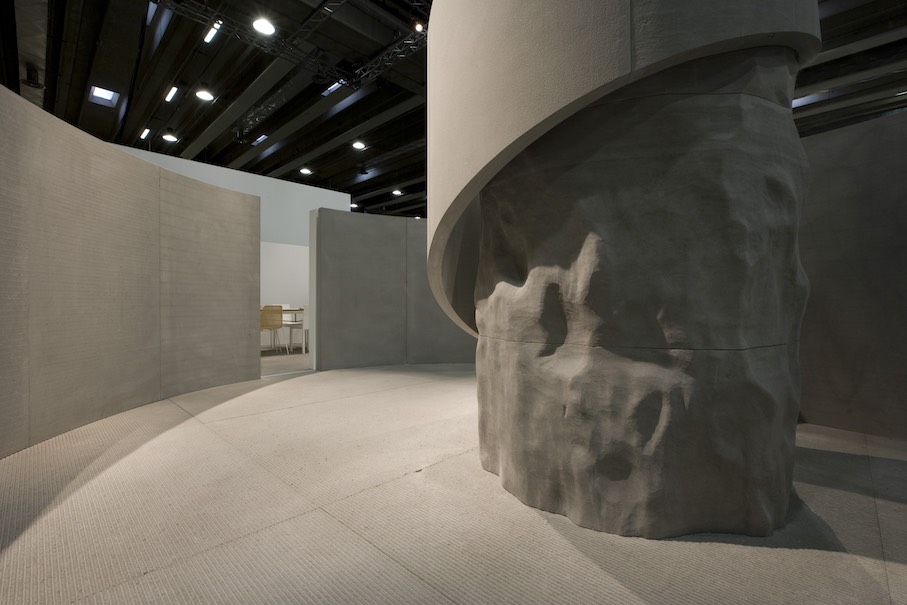 Claudio Silvestrin for Il Casone.
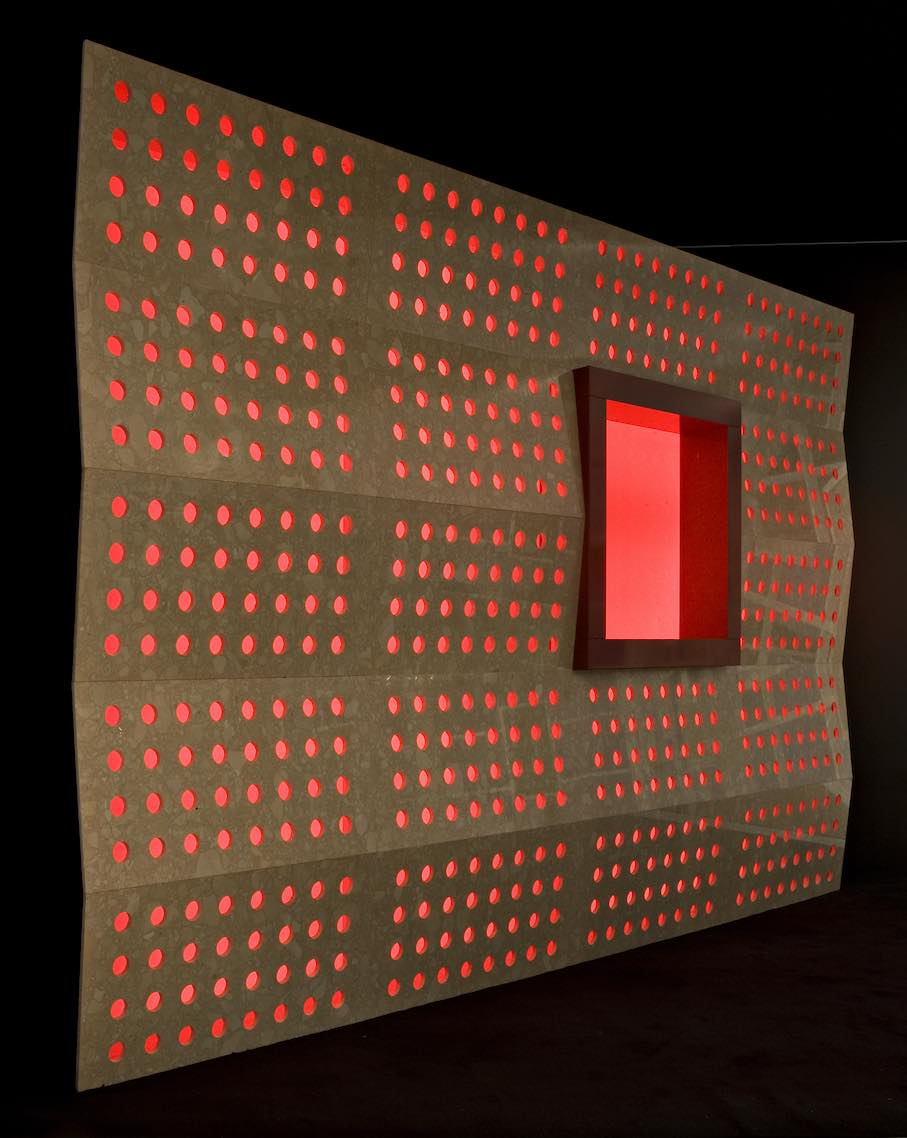 Aldo Cicic for Quarella.
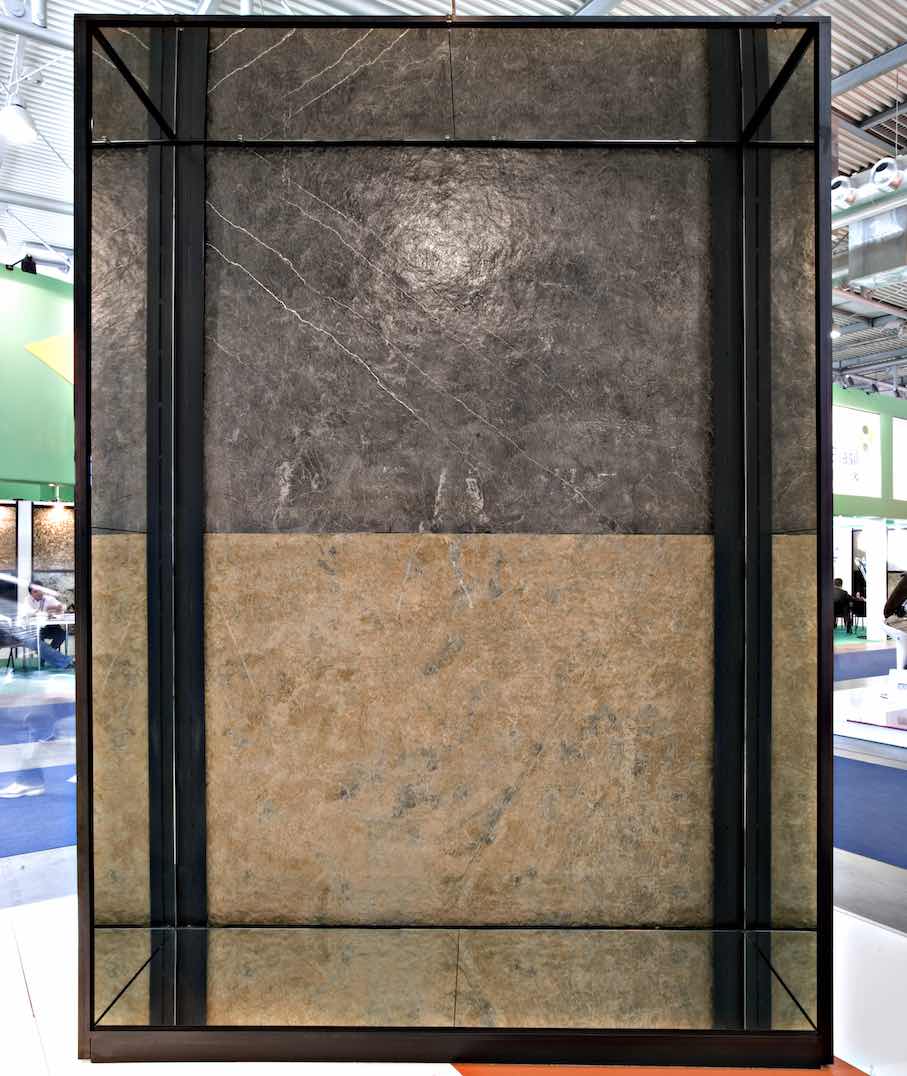 Mario Bellini for Minera Norway.
No photo: James Irvine for Marsotto Edizini.