 Stone-Ideas.com


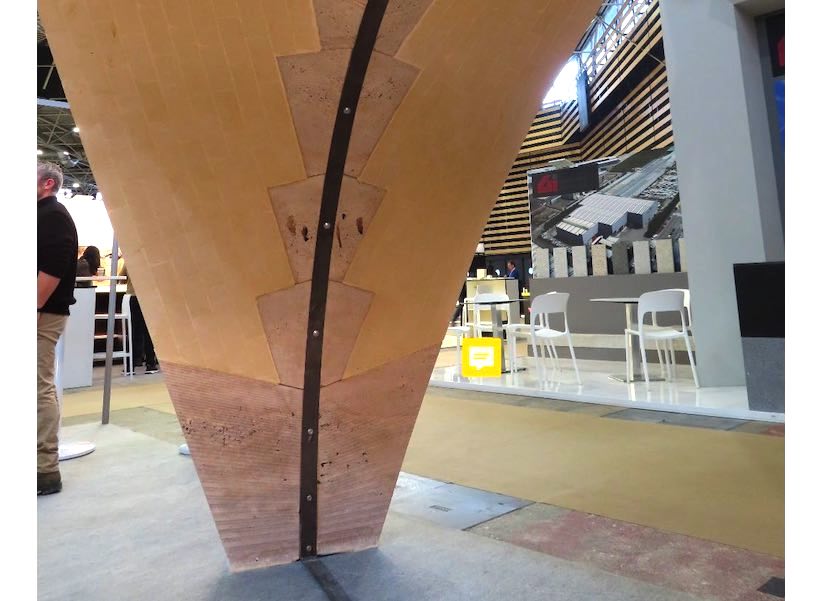
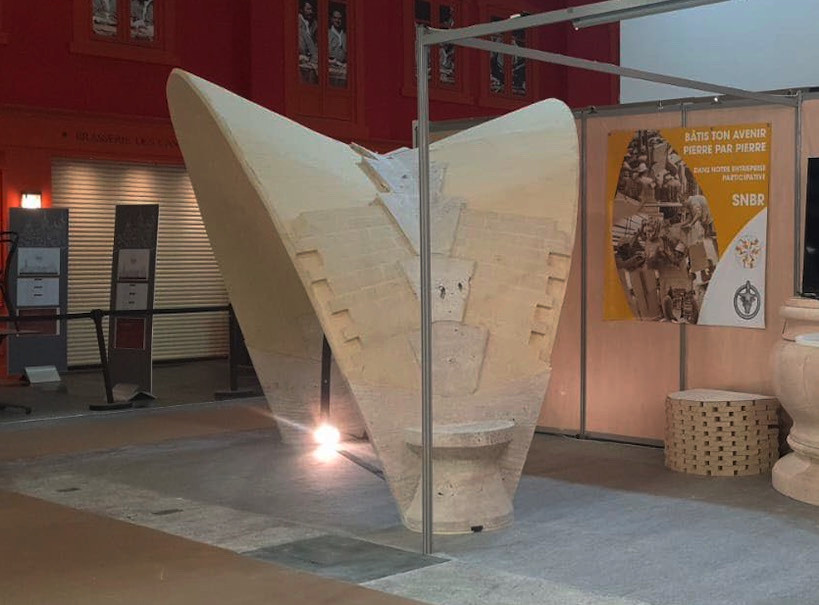
The company SNBR presented the innovations at the Rocalia trade fair in Lyon in December 2023
Stone bricks are a big topic at the moment. The French company SNBR showed a project at the Rocalia stone fair in Lyon in December 2023 that dealt with two types of innovations: on the one hand, it was about a vault made of such small stones, and on the other hand, about building with computer support, i.e. the use of data glasses when bricklaying.
SNBR actually comes from the restoration industry with a focus on bricklaying and stonemasonry as well as sculpture. However, they not only maintain the old craft techniques, but also look to the future and look for further developments for the old expertise.
We have often reported on innovations that SNBR has researched and implemented, for example with Professor Giuseppe Fallacara from the Politecnico in Bari, Italy.
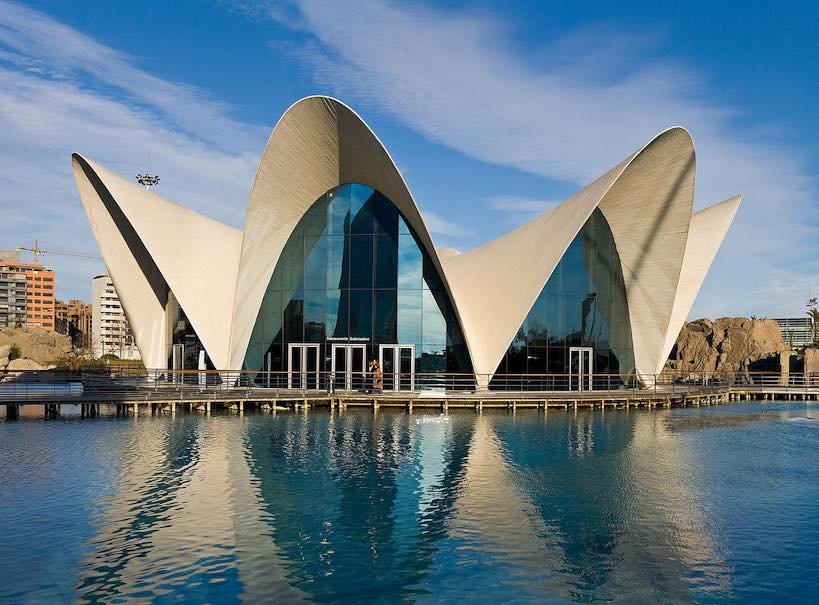
In this case, it was again a vault, namely a hyperbolic paraboloid. Architects like to use such structures for the roofs of large halls. The model here was the Oceanogràfic in Valencia, Spain, whose roof can be understood as an image of large ocean waves.
We had read about the project at Rocalia in the trade magazine Pierre Actual (#1035, March 2024).
Nobody has yet come up with the idea of building such roofs out of small stones. Now SNBR has created such a construction together with the architect Christophe Aubertin (Collectif Studiolada), who has already built numerous buildings out of solid stone.
The planners copied the load-bearing element from nature: it is an arch like the backbone of mammals, where vertebrae are placed on top of each other. For the construction at the trade fair, this basic structure required special security, which was provided by a steel band. Under normal conditions, this is not needed.
The vault is built in the style of a traditional “Catalan vault.“ Two layers of stone bricks were laid – running in different directions.
This is where augmented reality (or more precisely: mixed reality) came into play. The bricks must be placed precisely.


For this purpose, the laying grid of the bricks was displayed in Microsoft’s HoloLens 2 data glasses. Mini cameras in the glasses recorded the bricklayer’s field of vision and transmitted it wirelessly to a computer. The computer can then always adapt the laying pattern to the bricklayer’s angle of vision.
It was important, for example, that the correct laying layer was displayed.
The company’s website points out that the size of the bricks (14 x 7 x 4 cm) was chosen to enable the brickwork to be laid as quickly as possible. Plaster was chosen for the mortar because it promised the best results under trade fair conditions.
Limestone from the company Carrières de Noyant was used. Its director, Emeric De Kervenoael, was also involved in the project.
Magazine “Detail”: Catalan Vault
See also:
(02.08.2024, USA: 08.02.2024)