 Stone-Ideas.com


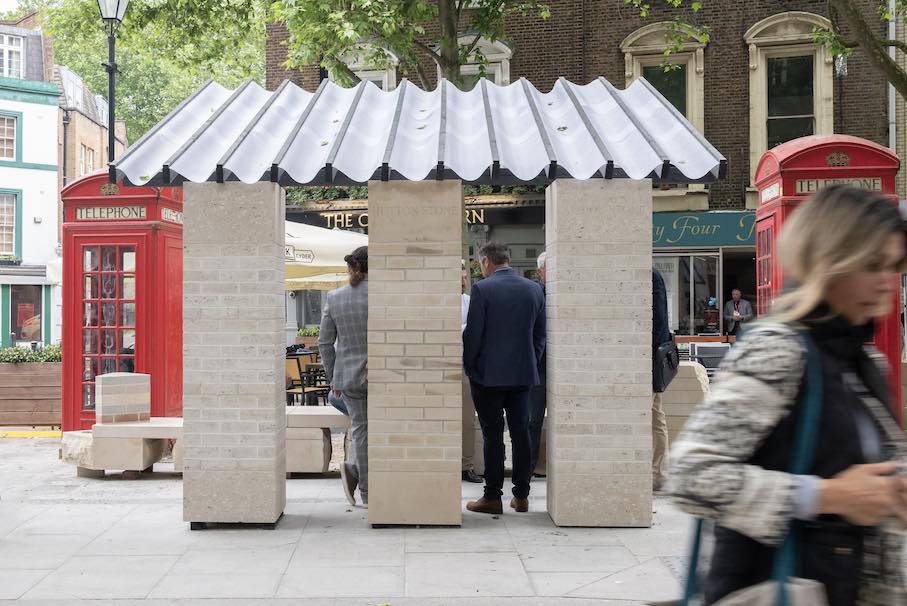
Companies in England, Spain, Canada, and Germany already have such ashlars in their range
New to the product range of natural stone companies are “stone bricks”. They are cut from optically inferior material but are fully functional in terms of their material properties. They attract consumer interest because they conserve natural resources and because they have a very low carbon footprint.
“Unloved Stones” is the lovely term that the companies Albion Stone and Hutton Stone from southern England have coined for the raw material.
The two companies presented their innovation as part of the Clerkenwell Design Week 2024. It was a kind of bus stop, picturesquely placed between two of London’s bright red telephone boxes.

The colors of Albion’s Portland limestone and Hutton’s sandstone were reflected in the colors of the bricks.

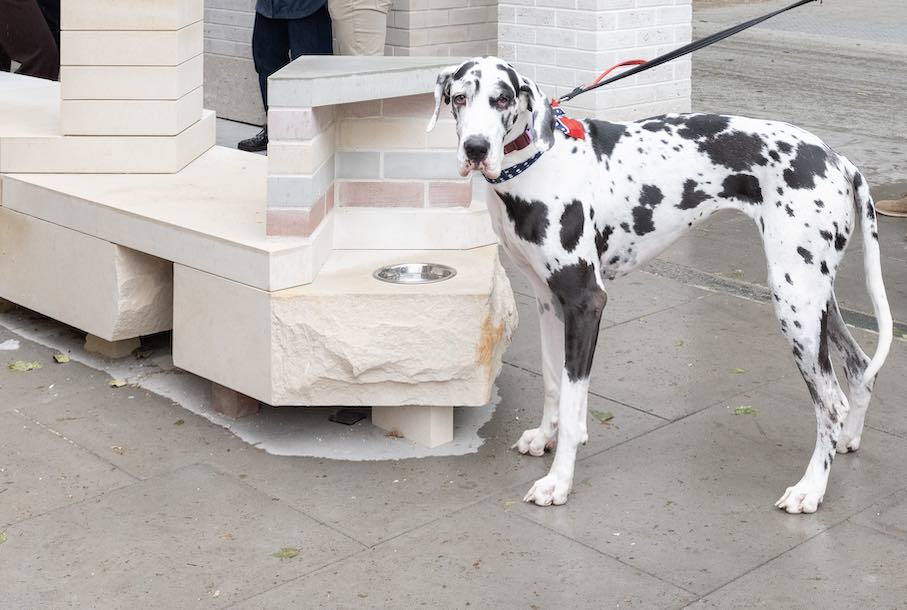 The Artefact architectural studio commissioned to create the installation (title: “Brick from a Stone”) recreated the route to the small stone on the bottom of one page. A lovely little treat: as there used to be a horse trough nearby, the new stop was equipped with a bowl for thirsty dogs, as our photo shows.
Albion’s website states that the company now has a daily production capacity of 4,000 to 4,500 bricks. The enormous amount of raw material available is 20,000 m³.
For the time being, the stone bricks offer the natural stone sector an opportunity to grow without having to open up new quarries.
Unlike industrial bricks, all sizes are possible.
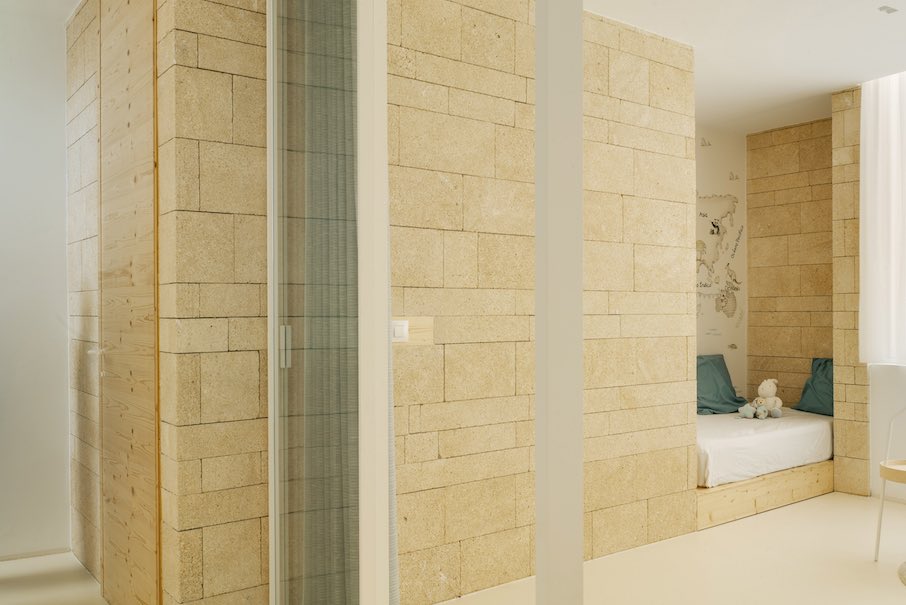 Rosal Stones from Spain was probably the first company to produce such bricks for the market. We reported on a project from 2016 where their Albamiel limestone was used in elongated bricks of various sizes.
The idea came from architect Pepa Diáz when she used material from Rosal Stones to renovate an old fisherman’s house.
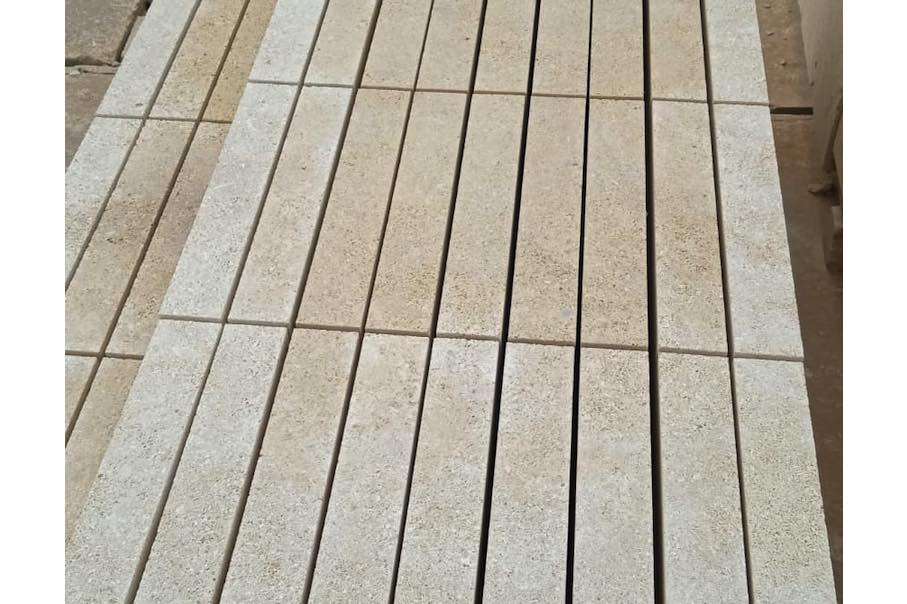
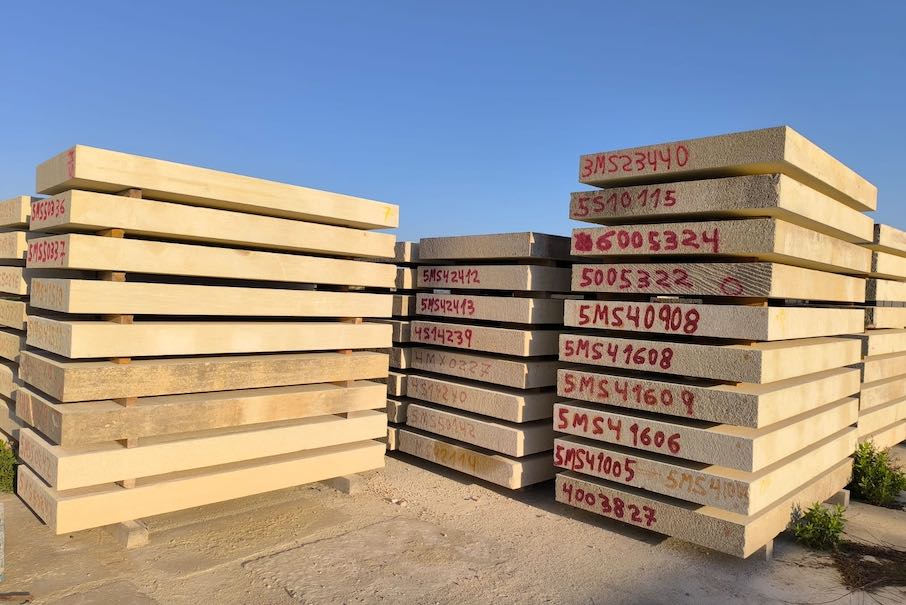
The company uses its existing production line to produce the bricks. The product has been met with a positive response from the market, says company boss Catalina Sánchez: “However, demand in Spain has so far been rather low.”
This is not due to the price, she is sure: “Our bricks made of natural stone are 30% cheaper than industrially produced masonry blocks. Although there is a lot of manual labor involved, the material as such costs practically nothing.”
Polycor, Canada/France: „A Better Brick“
The Canadian-French industry giant Polycor has also been addressing the issue for some time. Its product “A Better Brick” was even awarded one of the Muuuz International Awards (MIAW) 2023 in the Design, Materials and Cladding category. The award goes to the most innovative developments in the fields of architecture, design and decoration.
Franken-Schotter: Dietfurt Brickstone
Small ashlars in various sizes with different faces are new in the Portfolio of Franken-Schotter company from Bavaria, Germany. The material is Dietfurt limestone.
Hofmann Naturstein, Germany: „Stone-Clinker“
The German company Hofmann Naturstein is taking a different approach: its “Naturstein-Klinkern“ (Natural Stone Clinker) focuses on the recycling of actual waste from the stone production, namely the powder or sludge from sawing the raw blocks. As the name suggests, this again requires firing: “Approx. 30 % lower firing temperature compared to classic clinker bricks”, according to a description.” With the Stone Clinker, the usual use of clay from nature is replaced by the recycling of stone residues from the factory.
Hofmann Naturstein (German)
Photos: Ivan Jones, Rosal Stones
(08.07.2024, USA: 07.08.2024)