 Stone-Ideas.com


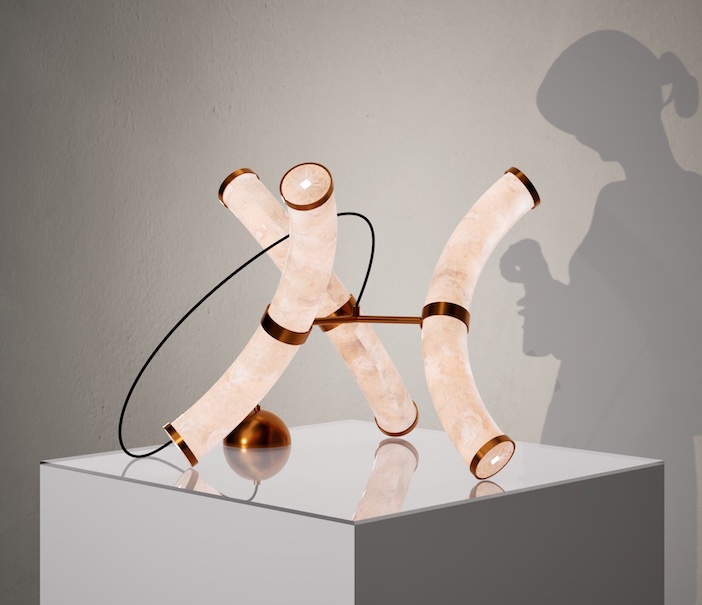
Die Schau von Professor Giuseppe Fallacara in Halle 10 der Messe (24. bis 27. September 2024) spielt mit René Magrittes Surrealismus
Der Titel der diesjährigen Schau Marmomac meets Academies lautet „Ceci nʼest pas un fossile“ (Das ist kein Fossil). Es handelt sich um eine Ausstellung von experimentellen Objekten aus Naturstein und anderen Materialien. Sie findet wie üblich in Halle 10 auf dem Gelände der Veronafiere statt.
Der Titel spielt mit René Magrittes berühmtem Gemälde „Ceci n’est pas une pipe“ (Das ist keine Pfeife) aus dem Jahr 1929, das nichts als eine ganz gewöhnliche Tabakspfeife zeigte. Damals löste es heftige Diskussionen und viel Kopfschütteln aus.
Im Allgemeinen wird das Werk des surrealistischen Künstlers als wegweisend für das Nachdenken über die Medien verstanden. Denn die Pfeife auf dem Gemälde war tatsächlich allenfalls das Abbild einer Pfeife, nicht aber das wirkliche Objekt.
Die Diskussionen gingen in der Folge weiter, denn: Solch ein Foto zeigt zwar das Abbild des Objekts, verschweigt aber das Drumherum, welches das Kameraobjektiv nicht erfassen konnte. Ein Foto und genauso ein Filmdokument zeigt also immer nur einen Teil der Realität am jeweiligen Ort.
Letztendlich führt das zu der Frage der Philosophen, ob ein Baum, der in einem Wald umgefallen ist, auch umgefallen ist, falls kein Zuschauer dabei war und CNN nicht darüber berichtet hat.
Die Schau auf der Marmomac greift das Humorvolle an diesen Fragen auf und leitet sie auf das Material um: Kalkstein zum Beispiel kann unter Druck und Hitze aus Fossilien entstanden sein – sind die Fossilien noch weiterhin in dem Material vorhanden?
Anders gefragt:
* Ist Naturstein nicht selbst ein Fossil, wo er doch Millionen von Jahren alt ist? Die letzten Jahrzehnte pflegten dieses Image des Materials.
* Darf man ihn in Anbetracht dieses Alters überhaupt bearbeiten oder verdient er zumindest Respekt, sodass er nicht bloß ver(sch)wendet wird?
* Und: wie steht es um die Bearbeitung – ist allein das traditionelle Wirken der Steinmetze mit Hammer und Meißel erlaubt, oder können die Könner mit modernen Technologien dem Stein einen neuen Wert geben?
* Schließlich, eine heikle Frage: ist Steinmehl, also ehemaliger Abfall, bei Wiederverwendung wieder Stein?
Die präsentierten Objekte geben die Antworten aus der Sicht der Beteiligten. Es sind junge Kreative von Schulen für Architektur, Industriedesign, Kunst und Ingenieurwesen aus Italien, Frankreich, Portugal, Neuseeland, Argentinien und den USA. Initiator und Kurator der Schau ist Giuseppe Fallacara, Architekt und Professor am Politecnico in Bari. Die Prototypen der Objekte wurden von renommierten Steinfirmen realisiert.
Assistenzkuratoren: Ilaria Cavaliere, Katia Gasparini
Mitwirkende: PhD candidates: Alessandro Angione, Francesco Ciriello, Dario Costantino, Marco Massafra, Adriana Valentini
Studenten: Vincenzo Di Bari, Nicola Lacalamita, Stefania Laterza, Maria Giovanna Pansini, Luca Ranieri
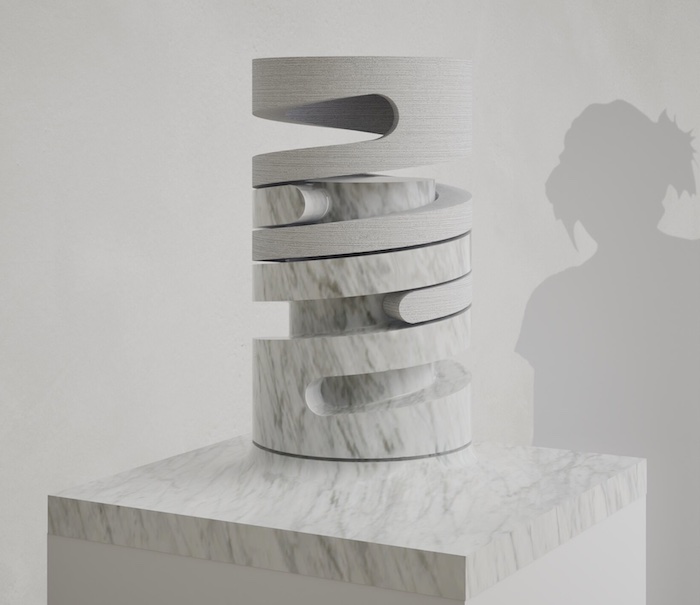 Stonelix. Designer/S: Fabio Tellia. PROFESSIONAL Institution: Foster + Partners (Associate). Affiliated company: MISS Marmi. COLLABORATORS: Teresa Lanzetta, Adriana Valentini. Materials used: Carrara Marble, 3D printing with PLA mixed with marble powder. Stonelix is a cylindrical object composed of a CNC-carved stone screw and a 3D-printed helix from stone powder. These coaxial parts fasten and unfasten like nuts and bolts. Combining additive and subtractive manufacturing, it explores a friction-based dry jointing system inspired by Leonardo da Vinci, symbolizing a cycle of material transformation. *The project Stonelix is a Fabio Tellia’s personal project and it is not linked to Foster + Partners projects.
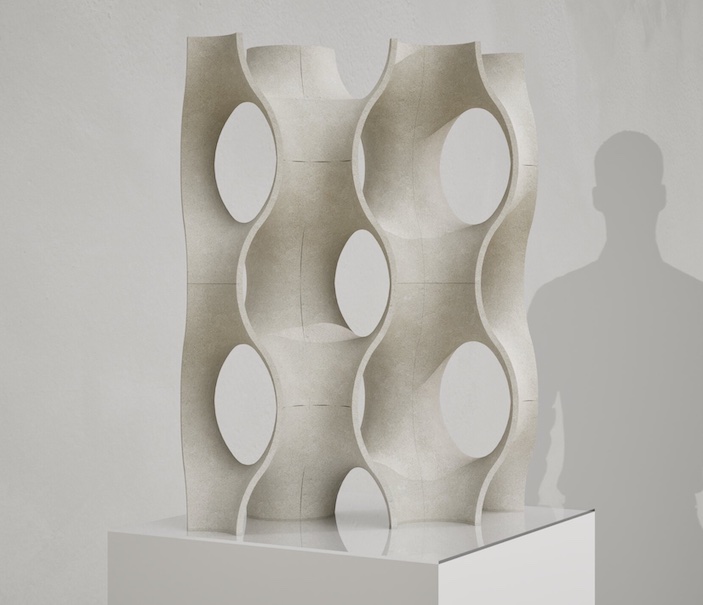 Minimal Wall. Designer/S: Francesco Ciriello, Professor Giuseppe Fallacara. Academic Institution: Polytechnic of Bari.Affiliated companies: B&Y, Tarricone Prefabbricati. Materials used: Stone powder, geopolimero. Minimal Wall consists of modular Minimal Bricks, inspired by Sergio Musmeci’s research on minimal surfaces. These concrete and marble powder ashlars form intricate, repeating patterns, creating walls, columns, and vaults with an organic unity. They boast high compressive strength, supporting 1,000 times their weight, and can be produced in various sizes.
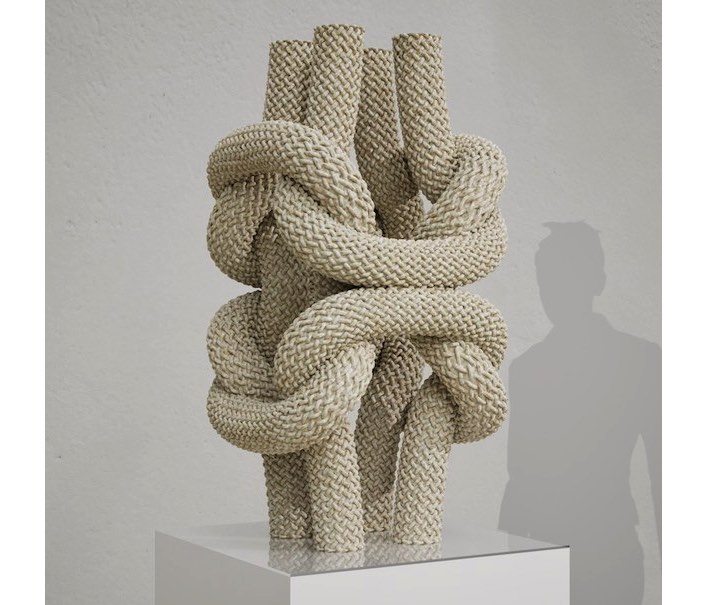 Doppionodo. Designer/S: Marco Massafra, Professor Giuseppe Fallacara. Academic Institution: Polytechnic of Bari. Affiliated companies: Pimar, Concr3de. Materials used: Limestone powder 3D printed. The column, essential in architecture, symbolizes connection and stability, resembling a tree of life. This prototype focuses on the knotted or ophitic column, prevalent in the Romanesque period, characterized by small columns joined by a flat knot. The design represents the dual nature of Christ, it incorporates 3D modeling using recycled Lecce limestone powder.
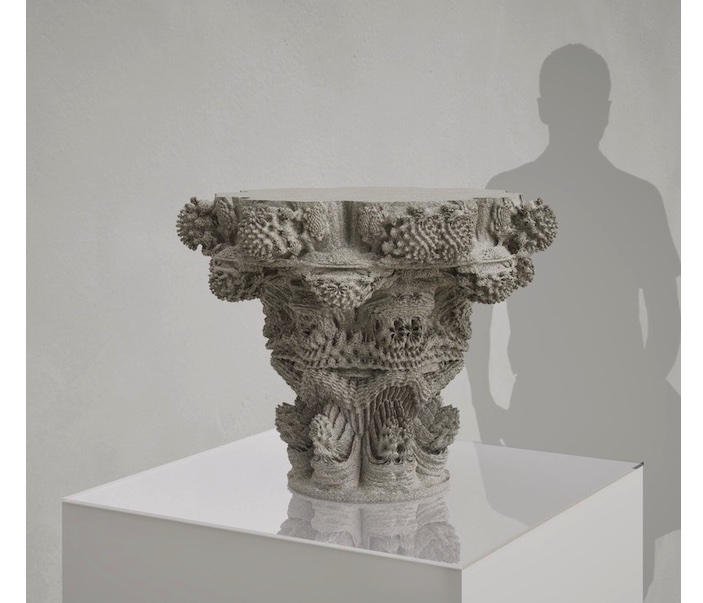 Madelbulb Capital. Designer/S: Angelo Vito Graziano, Francesco Fieni, Professor Nicola Parisi. Academic Institution: Polytechnic of Bari. Affiliated company: FabLab Poliba. Materials used: PVA-PLA (3D printing material) / a mortar composed of recycled
marble waste. This project, inspired by Gaudí’s Sagrada Familia, uses fractal geometry and modern technology to create a capital with both aesthetic and structural functions. Employing mendelbulb patterns, it ensures visual cohesion and structural stability. Digital fabrication with PVA molds and recycled marble waste exemplifies sustainable, innovative design, blending past and future seamlessly.
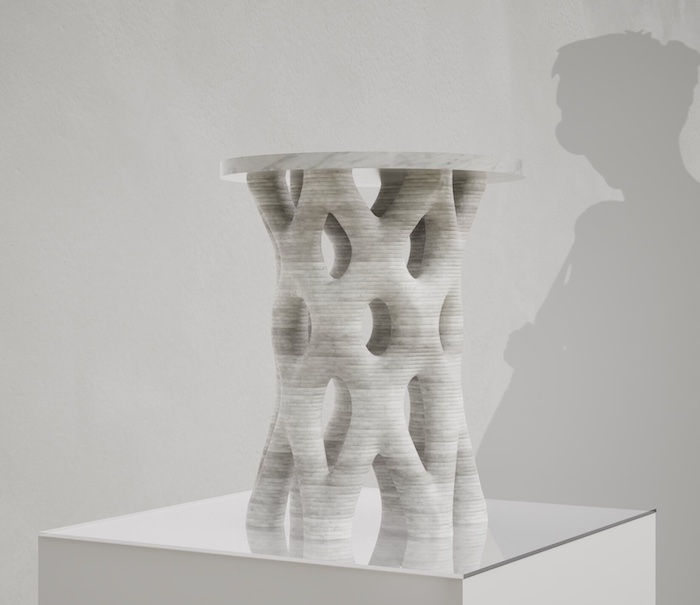 Gala. Designer/S: Francesco Ciriello, Angelo Vito Graziano. ACADEMIC Institution: Polytechnic of Bari. Affiliated company: B&Y. Materials used: Carrara White Marble, white cement and marble powder. Gala is a stool from startup B&Y and the Polytechnic of Bari, using digital manufacturing and marble waste. Its hyperboloid base, made with 3D-printed white cement and marble powder, supports a Carrara marble seat. The modular design combines modern and traditional techniques, creating a functional, sculptural piece.
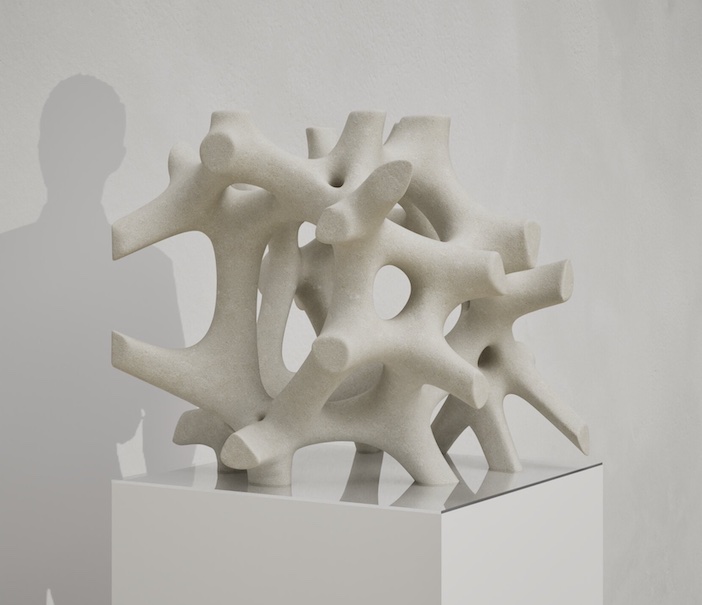 Particle-Trail 2.0. DESIGNERS: Professors Michael Davis, Alessandro Premier, Sarosh Mulla. ACADEMIC INSTITUTION: The University of Auckland, Future Cities Research Centre. FABRICATION: ETH Zurich – Digital Building Technologies (DBT). COLLABORATORS: Davis Wu (UoA), Pietro Odaglia (ETH Zurich – DBT), Magda Posani (ETH Zurich – Sustainable Construction). MATERIALS USED: Recycled white marble aggregates (Lasa Marmo), geopolymer binder (ETH Zurich). Particle-Trail 2.0 builds on research into human bone structure to create scalable, modular elements for furniture and architecture. Using waste from stone fabrication and Binder Jetting Technology, it forms indoor partitions and architectural components. This approach enhances material efficiency, promotes upcycling, and reduces carbon emissions by up to 70%.
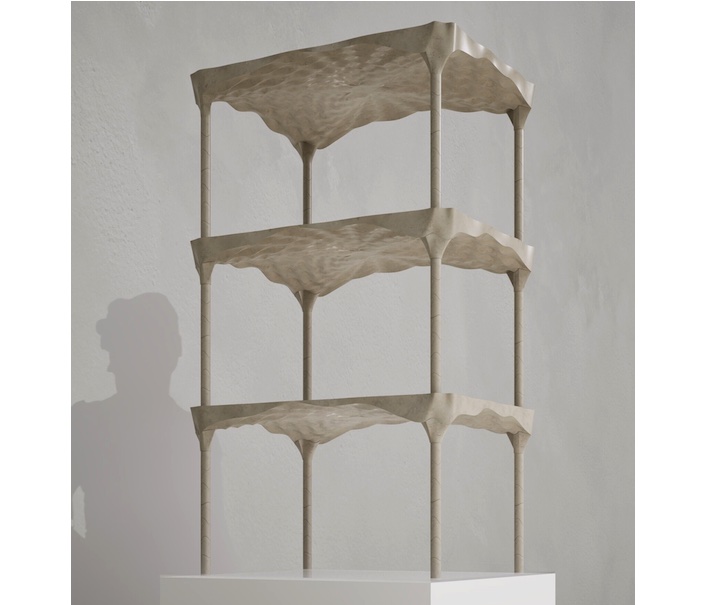 Stone matters. Designer/S: Elias and Yousef Anastas. Academic Institution: GSA laboratory (Professor Roberta Zarcone), ENSA Paris-Malaquais, University PS. Affiliated company: AAU ANASTAS architect. Material used: Limestone from Palestine. Stone Matters explores innovative uses of structural stone in contemporary architecture by blending traditional craftsmanship with modern techniques. Inspired by historical paradigms, it aims to reduce the building industry’s carbon footprint. At Marmomac, a model showcases a hybrid stone structure combining Gothic, stereotomy, and modern ribbed systems for enhanced architectural possibilities.
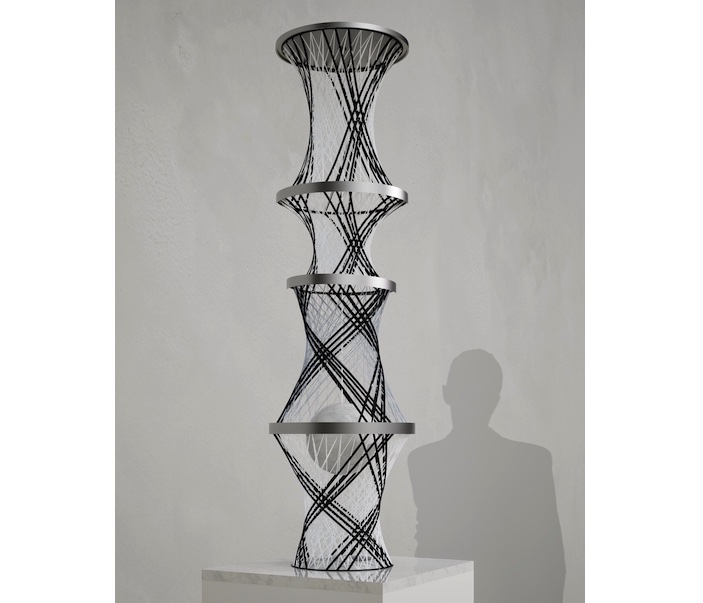 Fiber Column. Designer/S: Alessandro Angione, Professor Giuseppe Fallacara. Academic Institution: Polytechnic of Bari. Affiliated company: Petruzzelli Marmi. Materials used: Glass and carbon fibers, resin, White Statuario Marble. Politecnico di Bari’s New Fundamentals Research Group explores combining textile design and stereotomy in the Fiber Column. Inspired by Munari’s Falkland lamp, the column uses fiber winding with composite materials to create strong yet lightweight structures. Featuring a marble sphere for compression, it integrates light and innovative geometries.
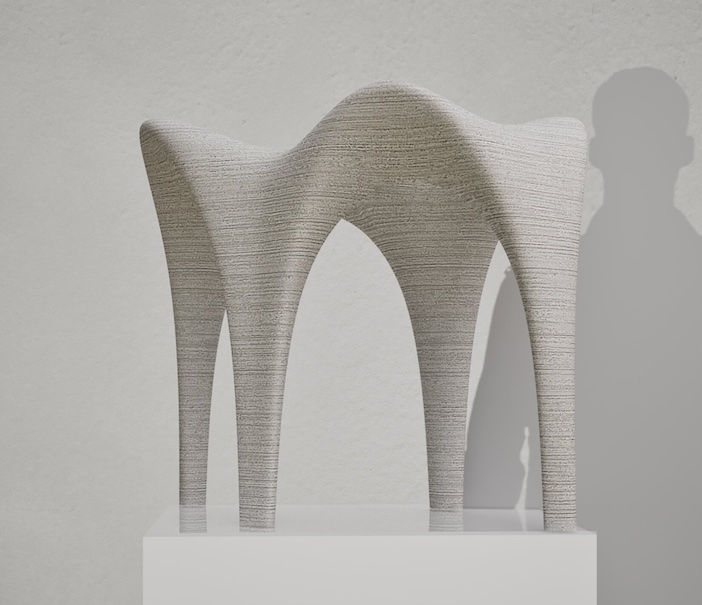 Aetherius. Designer/S: Maurizio Barberio, Micaela Colella.. Academic Institution: Polytechnic of Bari. Affiliated companies: B&Y, Barberio Colella Architetti. Materials used: 3D printed mortar composed of naturally derived marble, stone and aggregate powders. Aetherius is a modular pavilion with fluid, organic shapes, created through extrusion 3D printing using sustainable materials like recycled marble and stone powders. It blends technology and nature, featuring large openings for natural light and integrated trees. The pavilion’s textured surface and light shade enhance its dynamic, eco-friendly design.
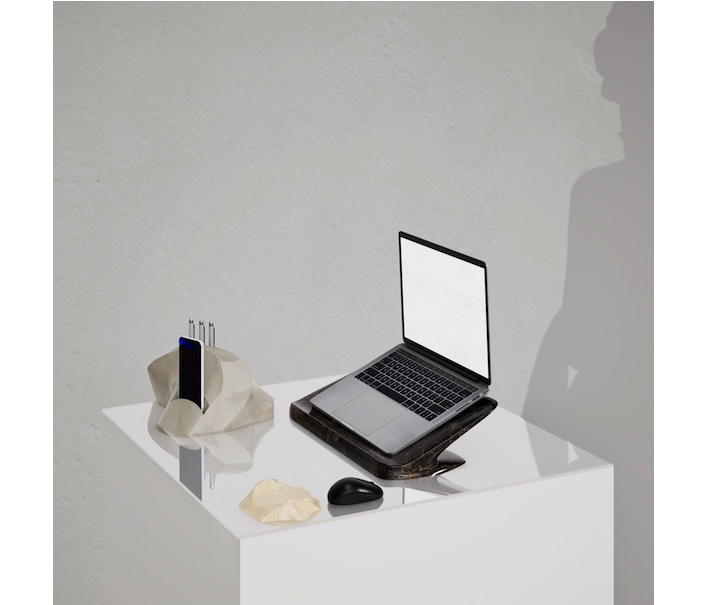
 Organica. Designer/S: Italo Boccuto, Andrea Sgherza, Giuseppe Tota, Adriana Valentini, Professor Giuseppe Fallacara ACADEMIC Institution: Polytechnic of Bari. Affiliated company: L.V.C. Stone. Materials used: Black Emperador Marble, Botticino Marble, Apricena Stone. The Organica line offers modern, functional office accessories: a cell phone and pen holder, an elevated laptop stand, and an ergonomic wrist rest. Created with advanced 3D modeling and CNC cutting technology, it blends aesthetics with precision. Made from repurposed stone slabs, it embodies sustainable innovation for evolving work environments.
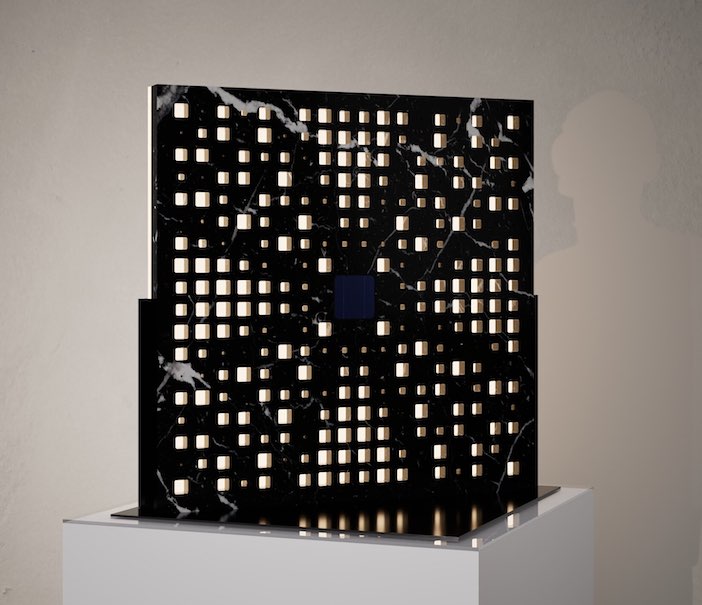
 Nuralith. Designer/S: Italo Boccuto, Andrea Sgherza, Giuseppe Tota, Adriana Valentini, Professor Giuseppe Fallacara. Academic Institution: Polytechnic of Bari. Affiliated company: Gioia Marmi. Materials used: Stone/marble, plexiglass, solar panel. NuraLith is a solar-powered stone cladding system with 60×60 tiles that light up at night. Inspired by Arabic architecture, it features a parametric design resembling mashrabiya. The panels consist of dark marble and onyx slabs with integrated solar panels and LEDs, offering sustainable lighting and heat reduction for buildings in desert areas.
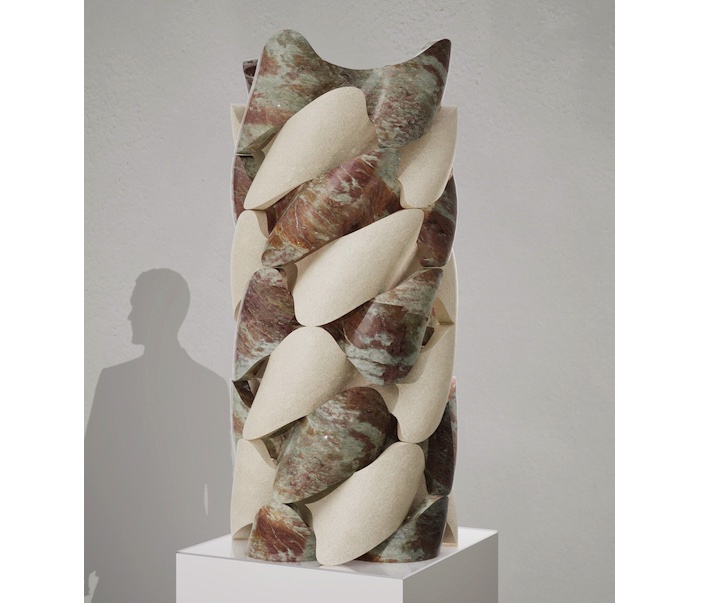 Tango Rising: Spired QI-Stone. Designer/S: John Doria, Professor Anthony Caradonna. Academic Institution: New York Institute of Technology School of Architecture and Design. Affiliated companies: OPUS PRJX NYC, Lanzetta Francesco & Figli. COLLABORATORS: Teresa Lanzetta, Adriana Valentini. Materials used: Minervino Murge Stone, Poggiorsini Melange Marble. The Tango Rising: Spired Qi-Stone is a columnar lattice of illuminated Pietra di Minervino limestone and Rosso Poggiorsini marble. It spirals skyward, embodying Taoist life force energy (Qi). The structure’s outer helix of stone rings rises like a Solomonic column, channeling the anima akin to ancient Egyptian Ka’ statues.
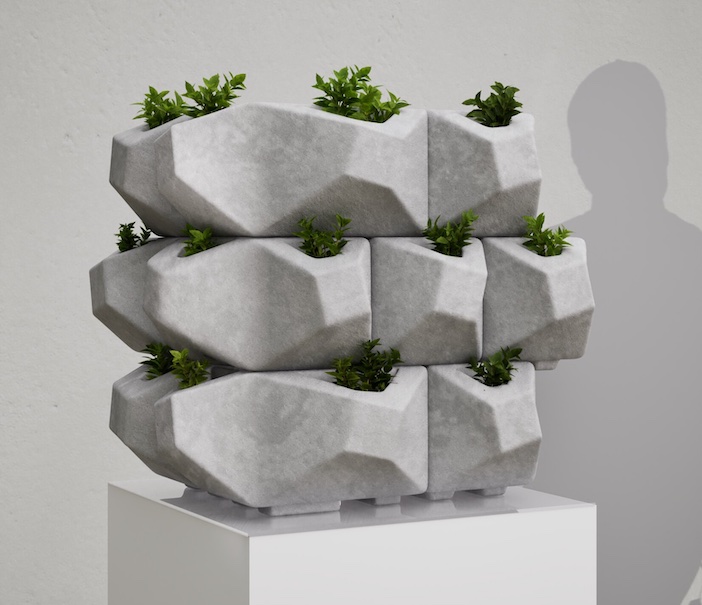 Green Wall. Designer/S: Ilaria Cavaliere, Dario Costantino. ACADEMIC Institution: Polytechnic of Bari. Affiliated company: D-Shape. Materials used: 3D printed stone powder with binder. The Green Wall is a 3D-printed stone bearing wall prototype with interlocking joints for stability and a geometric pattern creating cavities for vegetation. It can serve as green façades or underwater as artificial coral reefs. 3D printing optimizes fabrication, reducing waste compared to subtractive manufacturing.
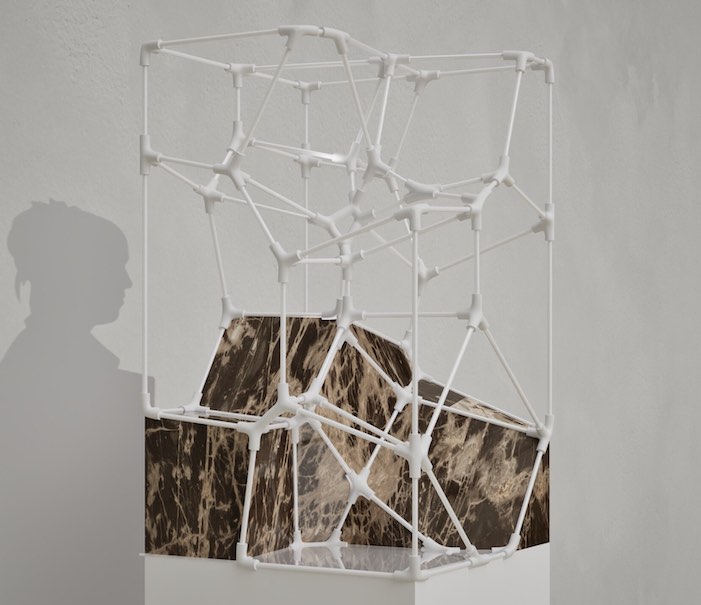 The stone that was once a rock. Designer/S: Matias Dalla Costa, Martín Veizaga, Professor Mauro Chiarella. Academic Institution: National University of Littoral (Ideation and Digital Materiality. Faculty of Architecture, Design and Urbanism. National University of Littoral). Affiliated companies: Archimed, Màrlux Marmi. COLLABORATOR: Francesco Ciriello. Materials used: Arboris marble, plexiglass, ABS. The assemblable structural prototype for a mountain viewpoint features a Voronoi modulation, mimicking natural stone fragments. It has 45 nodes and 94 bars forming a self-supporting mesh, with the top three cells convertible into living spaces. Lightweight and easy to assemble, it innovates through computational geometry and low-cost, adaptable design.
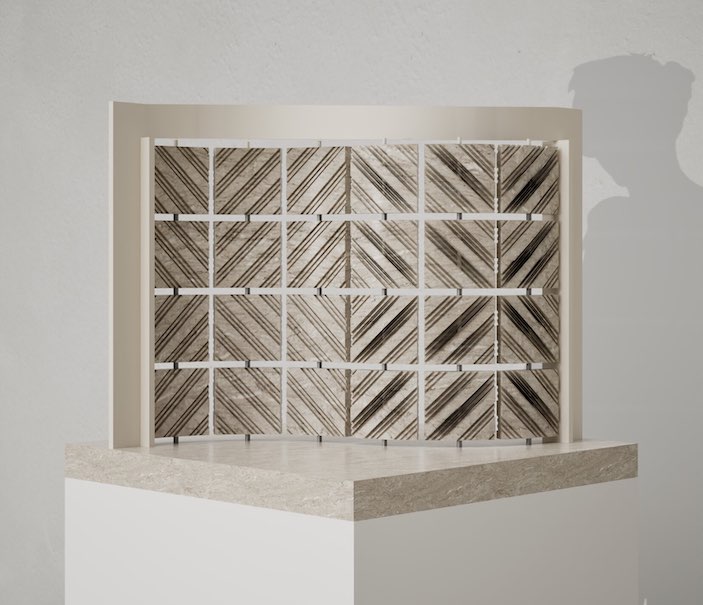 Trame. Kinetic Stone Carpet. Designer/S: Miriam Manca, Francesco Capula, Professor Katia Gasparini. Academic Institution: University of Sassari. Affiliated companies: Oscar Sandri Scultore, Marmi Scancella, Sider Color Veneta. Material used: Orosei Marble. The Trame project by the University of Sassari team features a kinetic stone surface inspired by Sardinian craftsmanship. Using Orosei marble, it creates a wall that undulates like fabric, blending tradition and innovation. The stone “pixels” rotate to interact with light and shadow, supported by steel profiles, promoting a circular production approach.
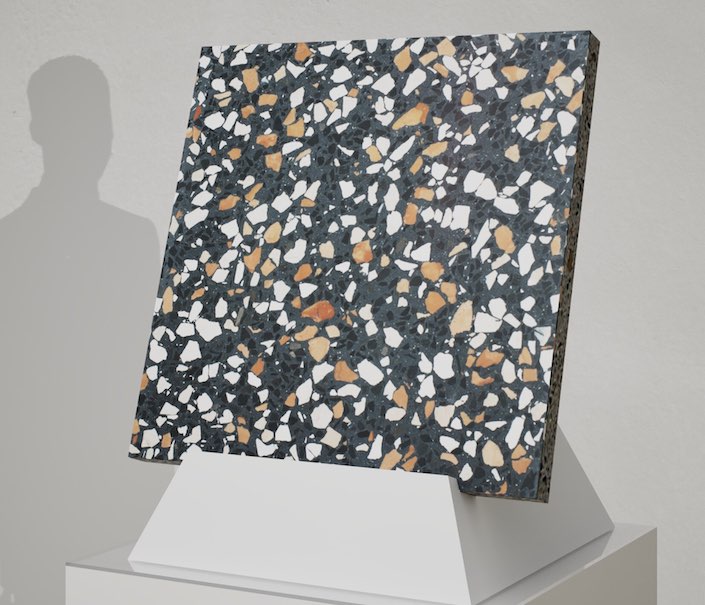 Teknicomfort. Designer/S: Stefano Chiocchini. Academic Institution: Istituto Italiano design. Affiliated companies: Monotile Trading, Stefano Chiocchini architect & designer. Materials used: Concrete, limestone, marble. Teknicomfort by Monotile is an innovative floating floor system featuring 600×600 mm modules made from natural stone, marble, and concrete. It includes an ABS containment tank with a hydraulic cooling and heating system. The high-density, fire-resistant modules offer acoustic absorption and stability, adhering to European standards, and support green building principles through material reuse.
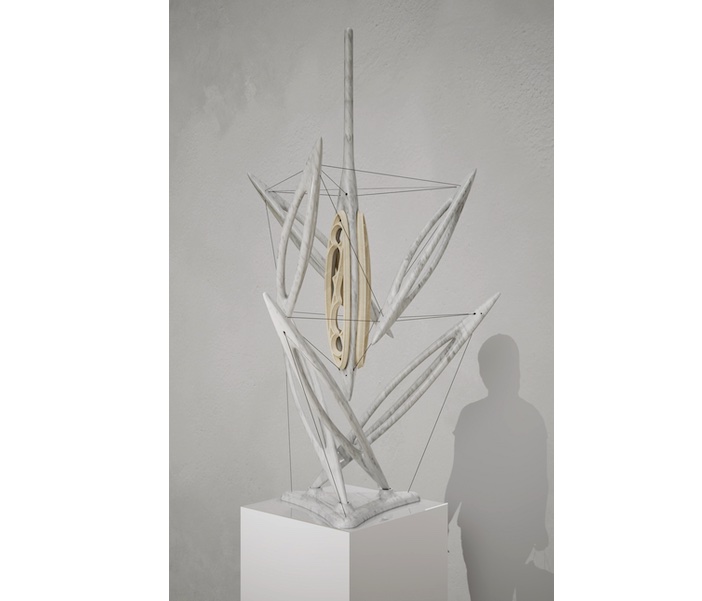 Simplex. Designer/S: Guillaume Laurent & Nicolas Didier Niquet. Academic Institution: ARUP London. Affiliated company: SNBR. COLLABORATORS: Liam Duff, Tom Clewlow, Steve McKechnie, Jean-Baptiste Theret. Materials used: Carrara Marble, Lens Limestone, stainless steel ropes. Islands of Compression in a Sea of Tension, reinvents a gothic spire using a tensegrity system, merging structural and decorative elements. Collaborating with architects and masons, it explores dynamic shapes and challenges traditional archetypes. The design aims to bridge conservation and creation, echoing historical precedents in architectural innovation.
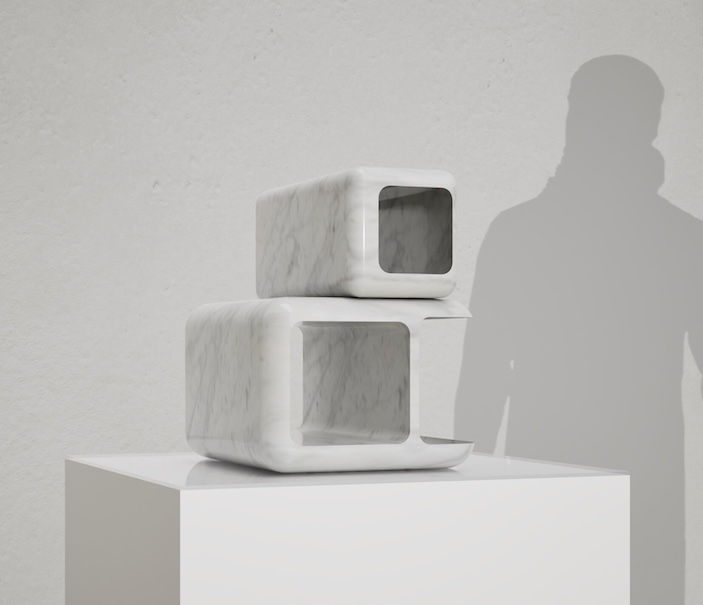 Libra. Designer/S: Andrea Bertoletti, Leonardo Ceriani, Matteo Gaiga, Marco Mazzali, Simone Mercante, Professor Sotirios Papadopoulos. Academic Institution: Accademia di Belle Arti Statale di Verona. Affiliated company: Donatoni Macchine. Material used: Lasa Marble. Libra is a modular sunblind that combines beauty and functionality, protecting buildings from overheating while creating soft, harmonious shadows. Inspired by ancient stone cairns, it uses marble to balance solidity and lightness. Libra enhances spaces with dynamic light effects, improving comfort and reducing artificial cooling needs
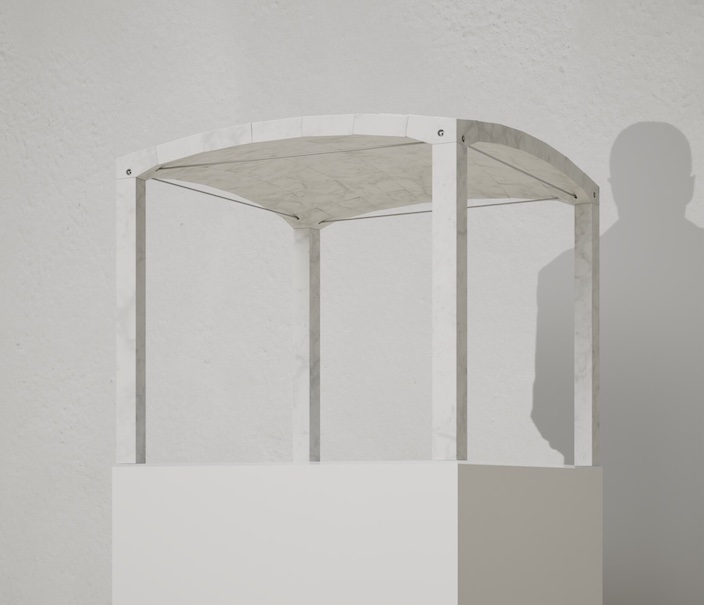 Stereotomic Marble Slab. Designer/S: Professor Pedro de Azambuja Varela. Academic Institution: University of Porto. Affiliated companies: SOLUBEMA+ETMA. FABRICATION: ETMA, DFL – Digital Fabrication Laboratory. COLLABORATORS: Nuno Costa, António Janota. Materials used: Vigária Marble, steel rods. Facing today’s energetic and environmental challenges, the proposal of structural stone slabs offers an alternative to reinforced concrete. Inspired by stereotomy, this prototype uses space-filling shapes and fast-cutting procedures. Incorporating a post-tension system for anti-seismic properties, it merges historical knowledge with modern technology for durable and aesthetic vaulted ceilings.
This work is supported by national funds through FCT – Fundação para a Ciência e a Tecnologia, I.P., under the project UIDB/00145/2020.
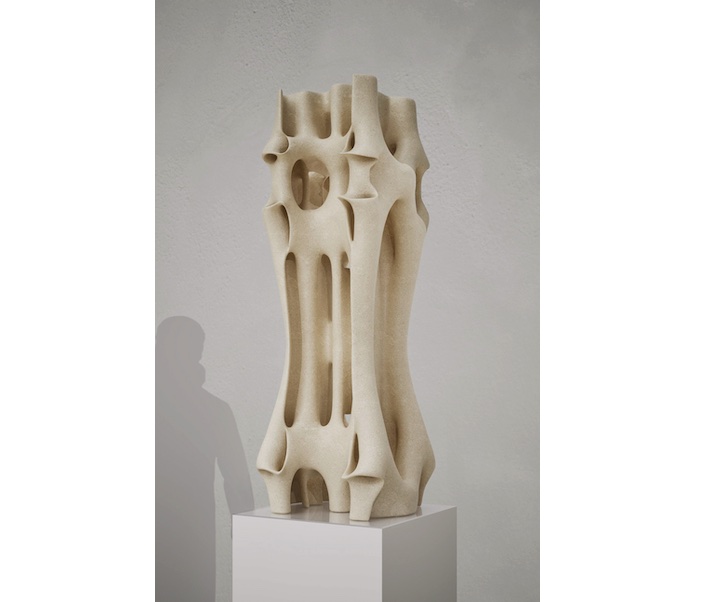 Lithic Mirage. Designer/S: Professor Dustin White. Academic Institution: Florida Atlantic University (FAU) School of Architecture. Affiliated companies: Concr3de, Pimar. Material used: Limestone. Lithic Mirage is a 3D-printed column that uses illusionary effects to evoke a mirage, blurring the lines between reality and illusion. Utilizing generative AI and upcycled limestone powder, it mimics natural stone, challenging perceptions of traditional sculpture and encouraging viewers to explore the boundaries between tangible and intangible.
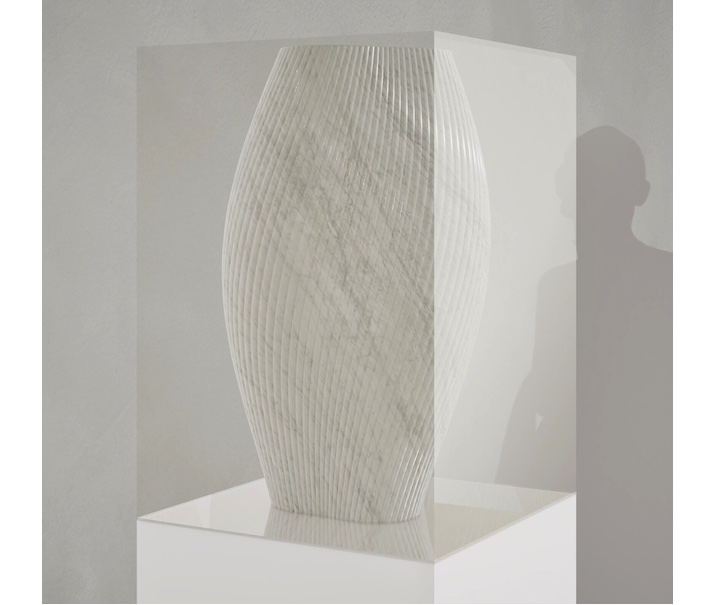 Dynamic Torsions. Designer/S: Massimo Russo. Academic Institution: Polytechnic of Bari. Affiliated companies: Helios Automazioni and Luxstone – Italian Marble Manufacture. Material used: Carrara Marble. Dynamic Torsions explores a potential column design inspired by ancient twisted columns. Combining modern technology and traditional craftsmanship, it features a twisted stone element with fine lines creating a dynamic bas-relief. This project bridges ancient and contemporary techniques, encouraging reflection on past values while generating new forms and aesthetics.
See also:
(02.09.2024)