 Stone-Ideas.com



We discuss the question how natural stone exporting countries can adapt to this
Consumers are prepared to pay a price premium for products manufactured with zero CO2 emissions. This is the result of a study by the Boston Consulting Group (BCG). We give it in brief and add how global natural stone exporters can react to this consumer attitude. Because the CO2 emissions from their transport cannot be avoided – according to the current state of shipping technology – and therefore remain a heavy ecological burden for the the exported products. At best, they can be compensated.
The study, entitled “Green Awakening: Are Consumers Open to Paying More for Decarbonized Products?“, dates back to the third quarter of 2023. This is important for interpreting the data because at the time consumer sentiment was extremely negative with regard to price increases: Inflation was high worldwide and there was a fear of an economic recession.
The BCG market researchers conducted their consumer survey on two products, namely cars and washing machines.
The key finding of the study: “Product Across the product categories, respondents’ willingness to pay trends were similar in the US and Western Europe, but much higher in China, Japan, and Poland for cars and in China for washing machines. Country- and product-specific differences emerged: Roughly 47% of car consumers tend to cap their willingness to pay at 3% in the US (lowest) and 9% in China (highest).”
The findings can be applied to buyers of natural stone, who are found in the upper middle class and above.
The CO2 balance is tricky, however, with imported stone. This creates a problem for global exporters that at first glance seems insoluble: the negative balance of transport must be added to the positive balance of the material. This is entirely independent of how much they are involved in solar power, saving water or using waste.
The only way out is compensation. We know it from airlines: passengers can pay a surcharge on the ticket price and the money is used to plant trees elsewhere.
However, such compensations make more sense at home with the exporters themselves than such measures abroad. After all, it is not just about planting the trees, but also about how they grow.
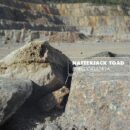
A special issue in this context is protecting nature at home in an ACTIVE quarry. This does not bring any CO2 points, but it is effective in terms of publicity and also benefits nature.
The effort for the companies is minimal.
However, and here we come back to the BCG study: The willingness of the consumer to pay a price premium depends on the credibility of the measure. The market researchers name three key points for achieving credibility:
* Transparency inside and outside the company,
* instruction of employees,
* communication with consumers.
The best thing for a company that wants to dedicate itself to nature in its own quarry is to do so in cooperation with a non-governmental environmental organization, or even better: a university should investigate the situation in the quarry and develop a protection strategy.
The BCG study has a stong warning ainst greenwashing, one can read between the lines. The price premium must not be used to allow a company to increase its profit margin.
The price premium may only be used to pass on the costs of environmentally friendly production to the customer.
Boston Consulting Group: “Green Awakening“
See also:

(03.09.2024, USA: 09.03.2024)