Stone-Ideas.com


* Double-digit growth in Chinese foreign trade
* Product design and interior architecture as key topics of the fair
* Forum “Educational Sessions“
* Trendy national and regional exhibitors
* Neighboring countries coming up
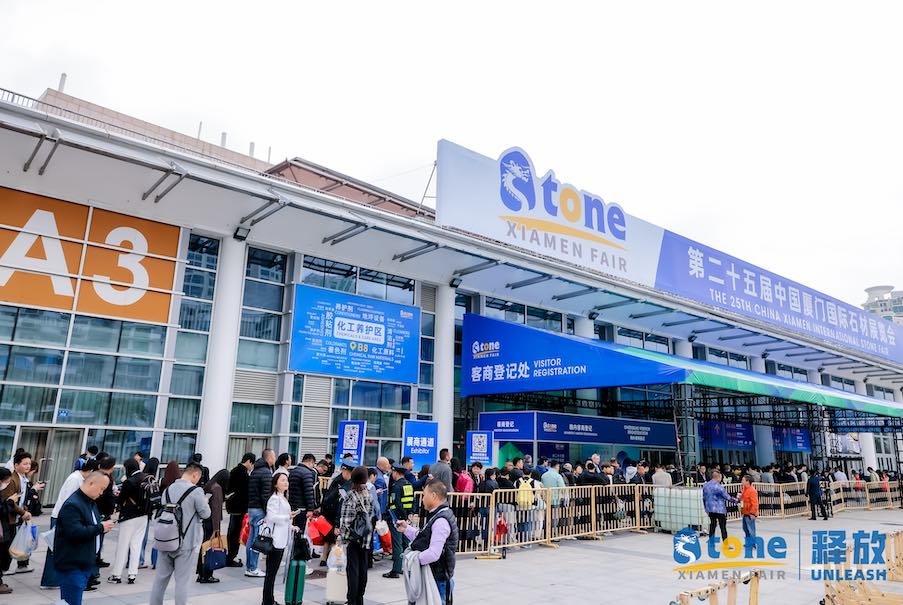
As huge as the Asian geography itself, the 25th Xiamen International Natural Stone Fair, from March 16 to 19, 2025, featured a significant number of booths, with approximately 1,000 medium and large stands and nearly 600 small ones (about 10 square meters or less). Spread over 24 halls, the event covered a total area of 191,000 square meters, hosted approximately 2,000 exhibitors from 40 countries and registered 153,294 visits from 122 countries.
While there are other general trend considerations to be developed here, from a business perspective, the most significant perspective was that of a more robust growth in China’s Gross Domestic Product (GDP) in the relatively short term. After reviewing the consolidated Chinese figures for 2024, there is cause for optimism in various sectors of the natural stone business. This is particularly encouraging in light of the potential impact of an international tariff conflict on the sector.
Following the principle of first things first, the projection of a resumption of double-digit growth in Chinese foreign trade has been signaled by various Chinese, US and British publications for the second half of this year.
We recently reported on the Chinese side’s expectation for the overall economy in 2025 of +5 % (see link below).
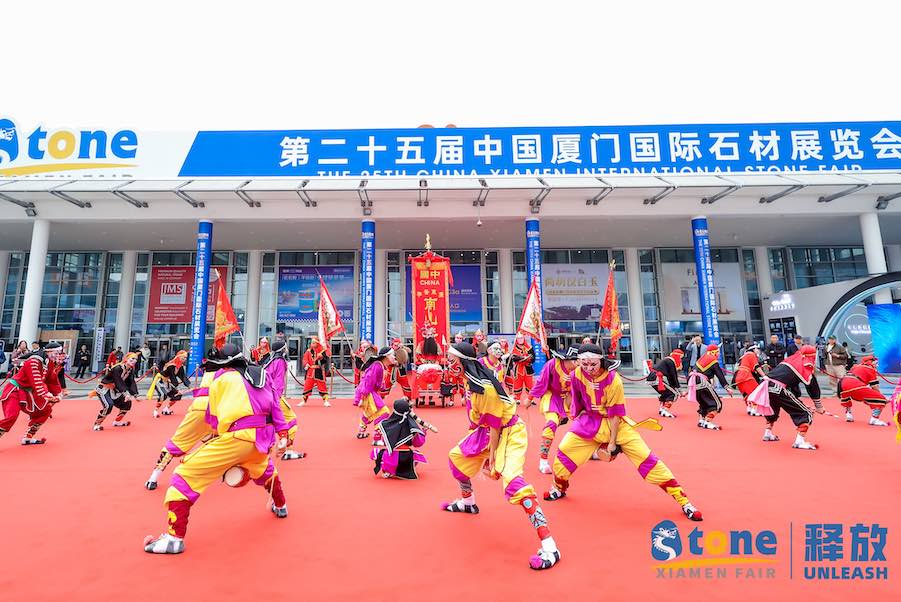
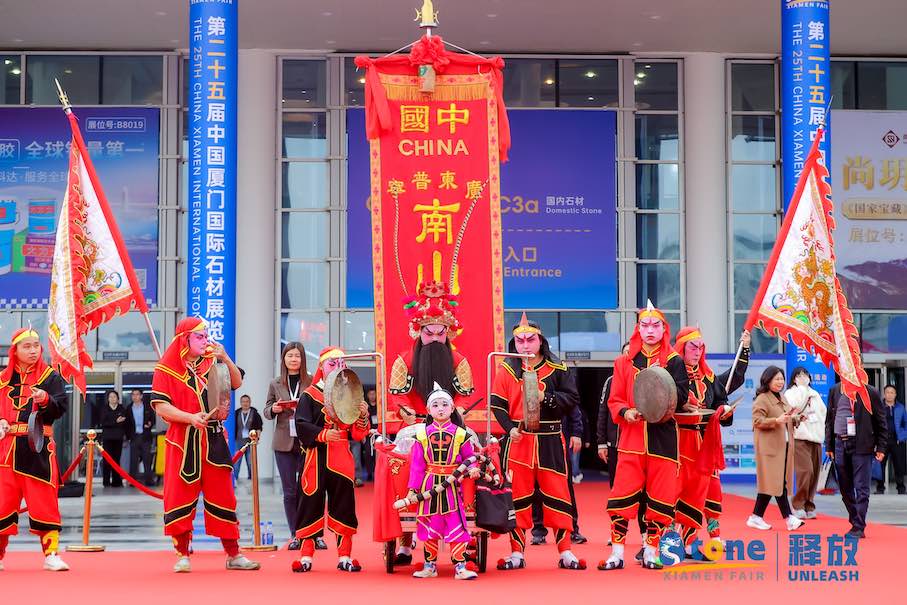
At the kickoff of the 25th Xiamen Stone Fair, during an event showcasing the guest country of honor (Brazil, which with 20 companies occupied the main part of the international area), the Brazilian Consul General in Guangzhou, Alan Coêlho de Séllos, also provided insights on the previously stated projection of double-digit growth, but attributing this figure to the Chinese GDP within a time frame of approximately two years.
In limestone, for example, which is naturally more associated with large-scale projects, Daniel Carpinteiro, sales representative for the Portuguese company Filstone Natural, couldn’t hide his disappointment with the volume of business with China in recent years. “Things are improving, but slowly. We’d like to see this panorama change more quickly,“ he said during a meeting with Chinese architects as part of a series of visits organized by the China Stone Material Association.
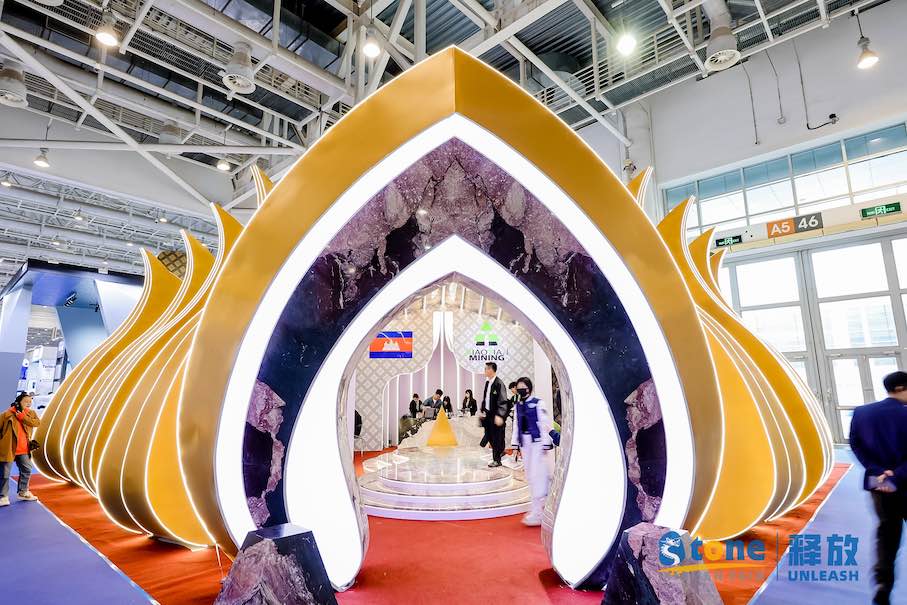
In terms of policies for the sector as a whole, and without losing sight of the differences in size, the Xiamen Stone Fair seems to be in line with what was seen last month at Marmomac Brazil in São Paulo: a greater number of stands with refined design; a greater focus on the composition of complete environments, with furniture and objects in natural stone; a conference program focused on training young people – significantly more present than in previous editions attended by this reporter – with the central attraction being the design of objects, interiors and conceptual art installations. Curiosity: if the booths dedicated to a more industrial trade seemed to explore more colorful and exotic stones, those dedicated to design and art seemed to opt for the opposite, with a lot of use of homogeneous dark tones.
Product design and interior architecture as key topics
Around the so-called Design Forum and its stage with around 300 chairs, 16 rooms or installations, divided into two sections, offered the audience of the very popular lectures a taste of the ideas of the creative people who designed these spaces.
One section was the “Habitat Design Festival“ (with works of the artists and/or designers Peng Zheng, Ray Chuang, Danny Cheng, Steve Leung, TT Tang, Ray Wong, Xie Ke and Wang Peng), the other one was “Stone Infinite“ (titled “Product Design: The Narrative of Stone,“ with works of the architects and designers Jianlong Zeng, Bin Ju, Ye Meng, Jianhua Sun, Quan Huang, Xi Pang, Kun Dai and Jianguo Liang).
We will soon present the works in detail.
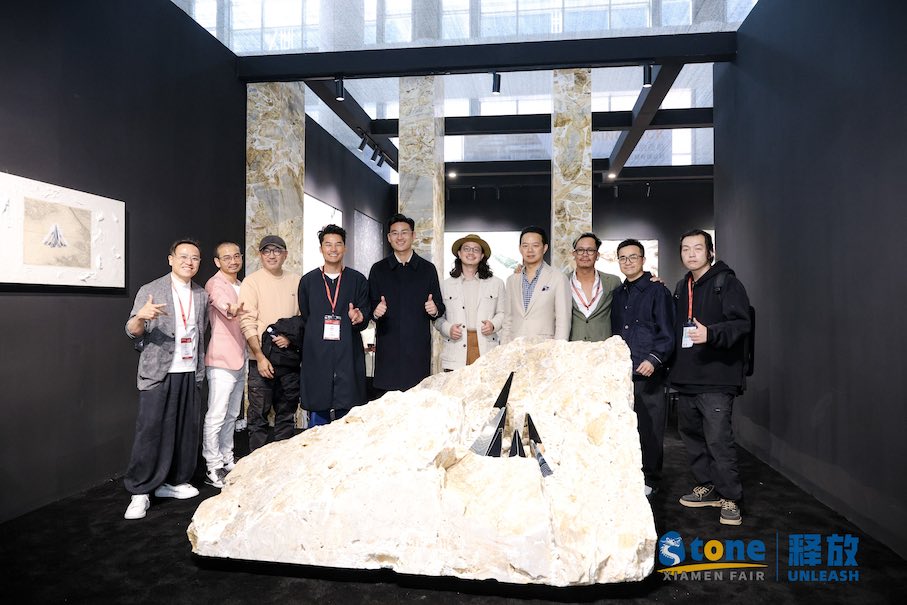
Chinese company Stonewhite took part in both sections and also showcased its creativity with stone at its booth. Based on the work of artist Liuhao, the stand was titled “Entrance to the Earth’s Core.“ Chic uniqueness: At none of the three locations were there any salespeople, catalogs, meeting tables or promotional materials typical of a trade show. On request, young monitors simply guided visitors around. If desired, they introduced them to the artist or to CEO Nick Lyu.
Forum “Educational Sessions“
Complementing the total of 26 presentations at the fair, a second forum entitled “Educational Sessions,“ with some 200 seats, mixed senior professionals with students, with half of the topics focused on foreign markets. Of particular note was the panel “Present and Future: Green Development in the Stone Sector,“ which was attended by leaders of various Chinese stone associations, as well as the Natural Stone Institute (NSI) of the United States. We’ll talk more about this event in another article, but for now it’s worth noting the expression of a welcome desire to bring the institutions involved closer together.
Before summarizing the first quarter-century of the Fair, let us take a brief excursion.
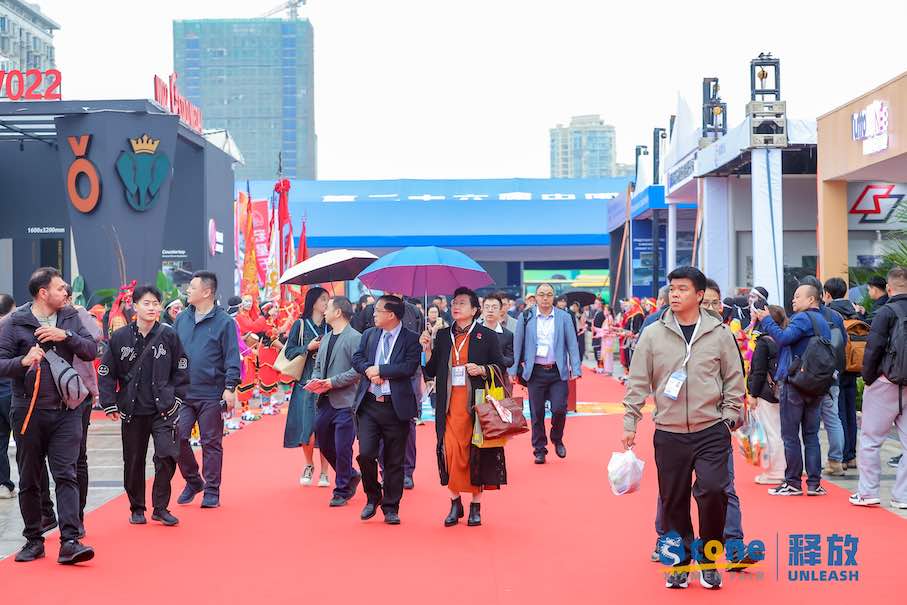
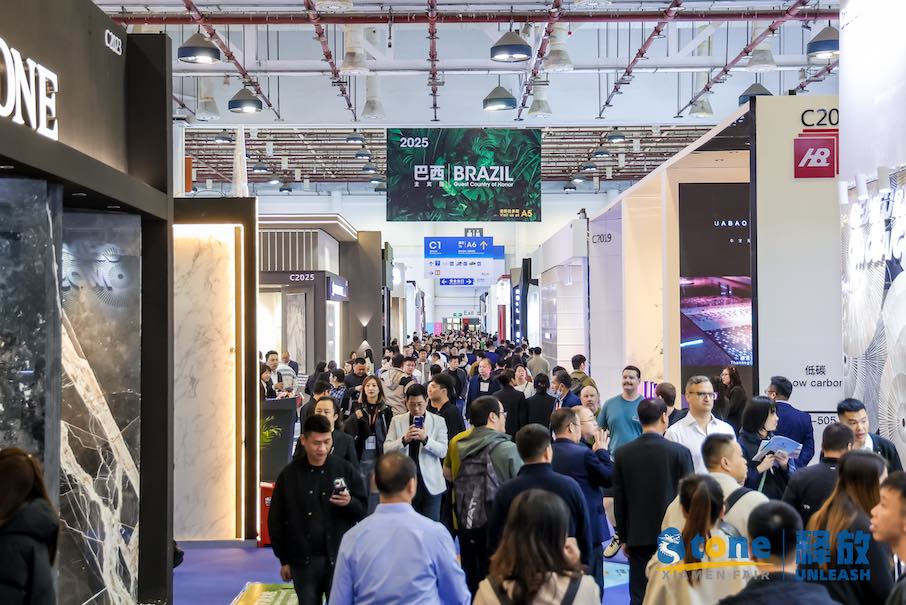
The indigenous people of the Americas used to say that to really see the forest, you have to get out of it. That’s what this reporter did for no less than eleven years. The first impact came at the very moment when the vehicle that took us to the fairground made its final turn and offered the first panoramic view of the fairground and its surroundings. Pleasantly located by the sea, the site was somewhat isolated from the city back then, as if it were one of the last (or first) urbanized bastions of a seaside resort, something even environmentally intrusive.
Today, all the side streets of this exhibition center are not only urbanized, but already occupied by family-run service businesses such as bakeries, pharmacies, stationery shops, etc. And where once there was basically a picturesque coastal horizontality, today the word that comes to mind when looking at the place is actually “towering“: a large number of skyscrapers in contemporary international style now impose a clear metropolitan verticality, suddenly interrupted by the sea.
Trendy national and regional exhibitors
Within the fair, aesthetically, the roles seem to have been reversed, at least in part. The reporter had the impression that in the past, the booths in the international area were the ones that seemed to centralize something that could be called avant-garde, while the national or regional halls (from neighboring nations) remained within the functional predictability typical of any fair. Occasional exceptions could, at most, offer an “exotic“ element – and here I must reveal my place of speech, or the limitation of my Western point of view on what aesthetics is.
Today, the locational advantage of local exhibitors over foreign exhibitors has been restored. In other words, with occasional exceptions, the international wing is now more characterized by functional predictability, and the local wings are in charge of signaling and anticipating aesthetic trends. And without the rough edge that characterizes the concept of “exoticism.“
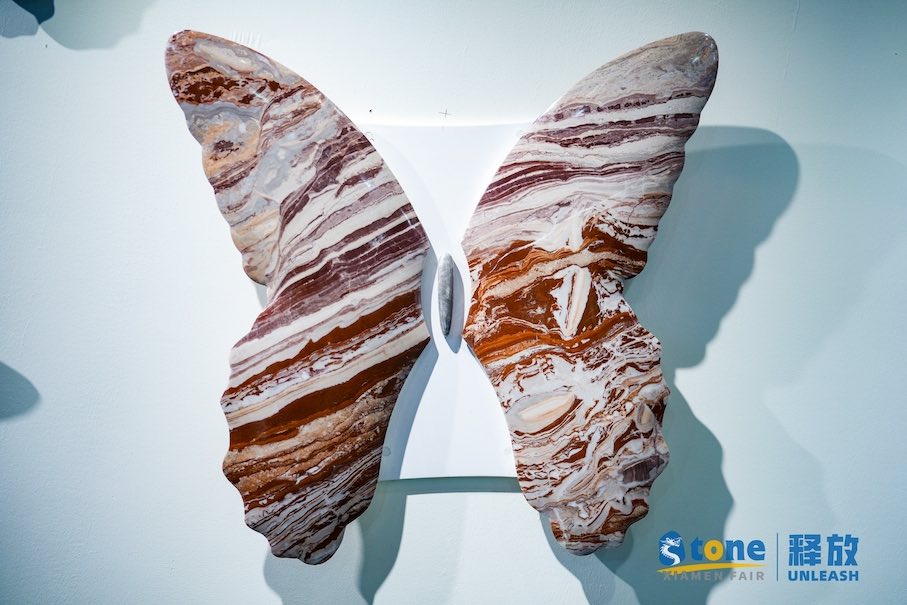
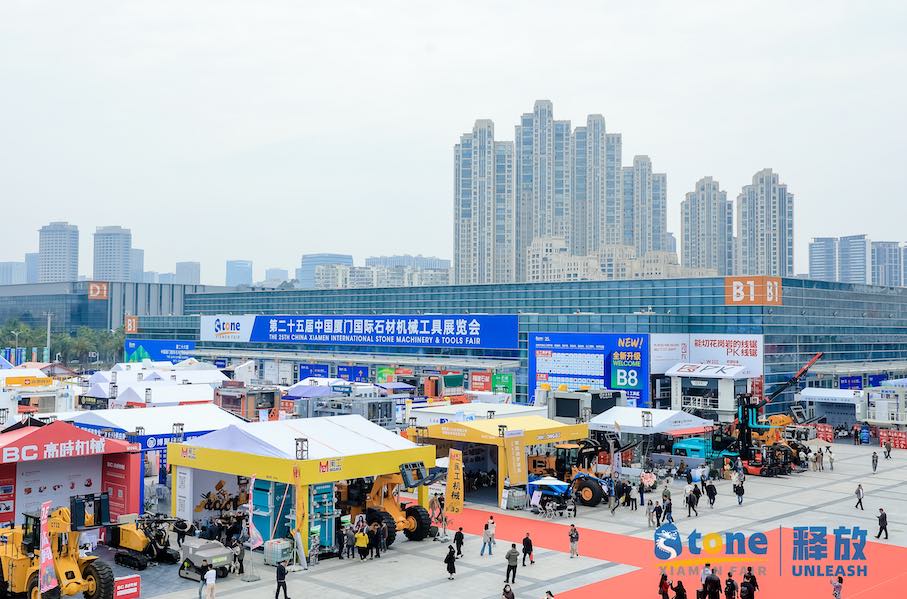
It’s worth noting that I’m talking about the fancier halls, or those more populated by large and medium-sized companies, and this certainly does not include the natural stone machinery, tools and maintenance (chemical) sectors. (In this respect, less obvious than other initiatives at the Xiamen Fair, there were 55 launches in these areas related to new natural stone and quarries, machinery and tools, and stone maintenance). But even with regard to the so-called “factory floor,“ or the entrepreneurs identified more with the dominant blue collar in the quarries and less with the white collar of engineers, architects and designers, there is something worth saying.
Neighboring countries as future cometitors
Though still struggling to communicate in English (where they are assisted by partner architects, for example), entrepreneurs from China’s neighboring countries are beginning to enjoy the game and master the first cornerstone of this race: price. Yeqing Cao, a Chinese born architect working with Guangdong Jinnuode Mining, which quarries the elegant Ventiane Gray marble in Laos, offers an important clue as to who the next players in this market might be: “China is a huge center of gravity for the whole region, not least because of its network of contacts and distribution capacity. But in terms of price and product quality, Laos, Cambodia and others are now better.“
26th Xiamen Stone Fair 2026, March 16-19
See also: