 Stone-Ideas.com


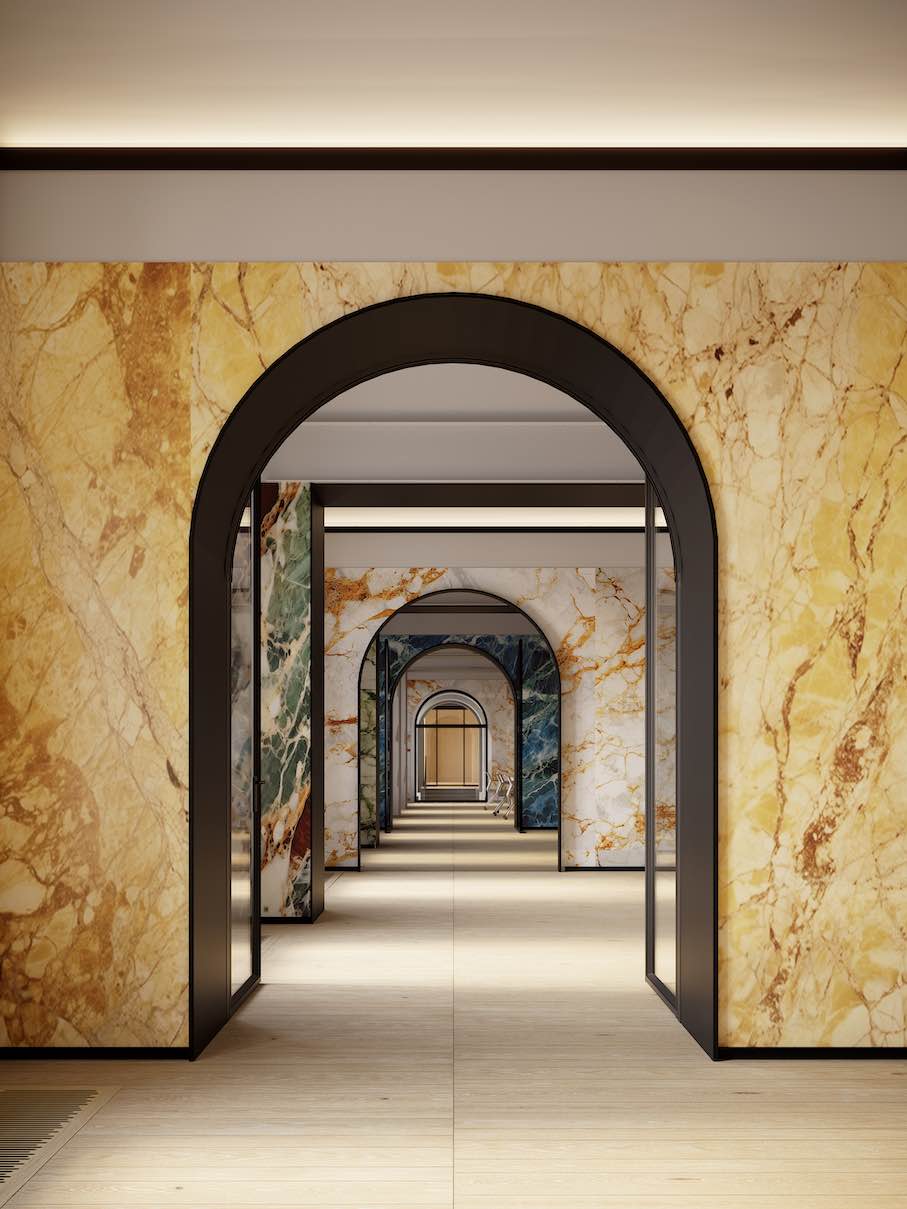
The only thing that is really new about this product is the name, which, however, represents part of the production process: As part of Milan Design Week 2025, the Italian ceramics company showcased its “New AI Generation Marble,“ whose appearance was created using artificial intelligence. The fact that this is bringing a potentially new stone design to market is nothing new; we observed and reported on the trend toward the free invention of new types of stone several years ago at the Cersaie trade fair in Bologna (see below).
Until now, however, such designs were created by humans using graphics programs. Or, if you simply wanted to copy the original natural stone, a high-resolution photo of an original stone was enhanced using image processing and then printed onto the clay layer of the ceramic.
Now AI comes into play, meaning: A programmer has written an algorithm on the basis of which the machine independently designs a surface and, if necessary, develops it further.
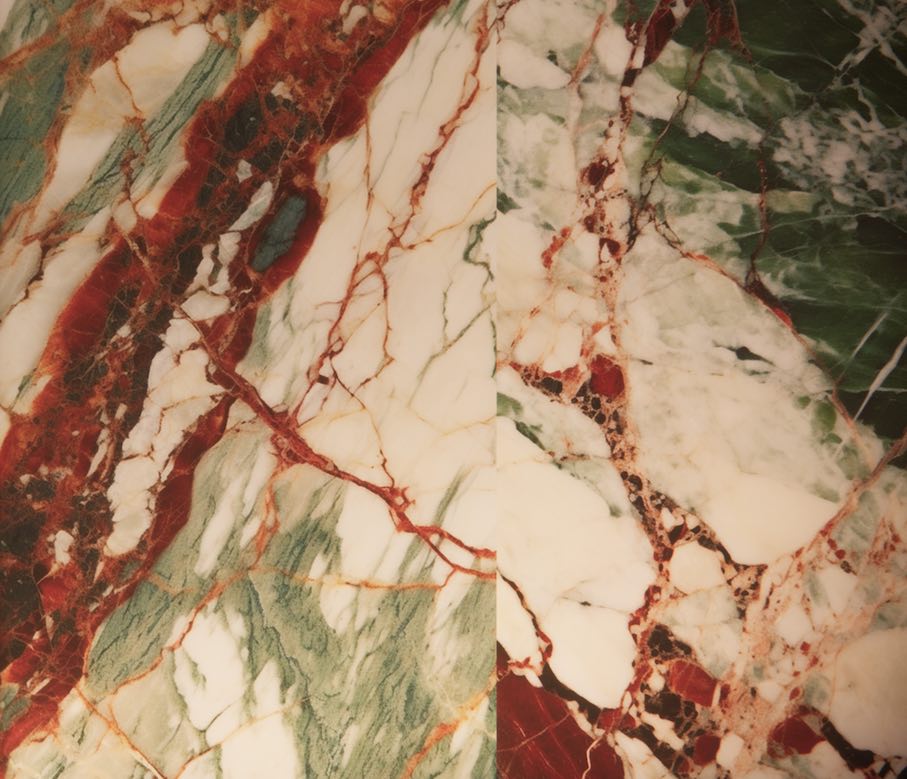
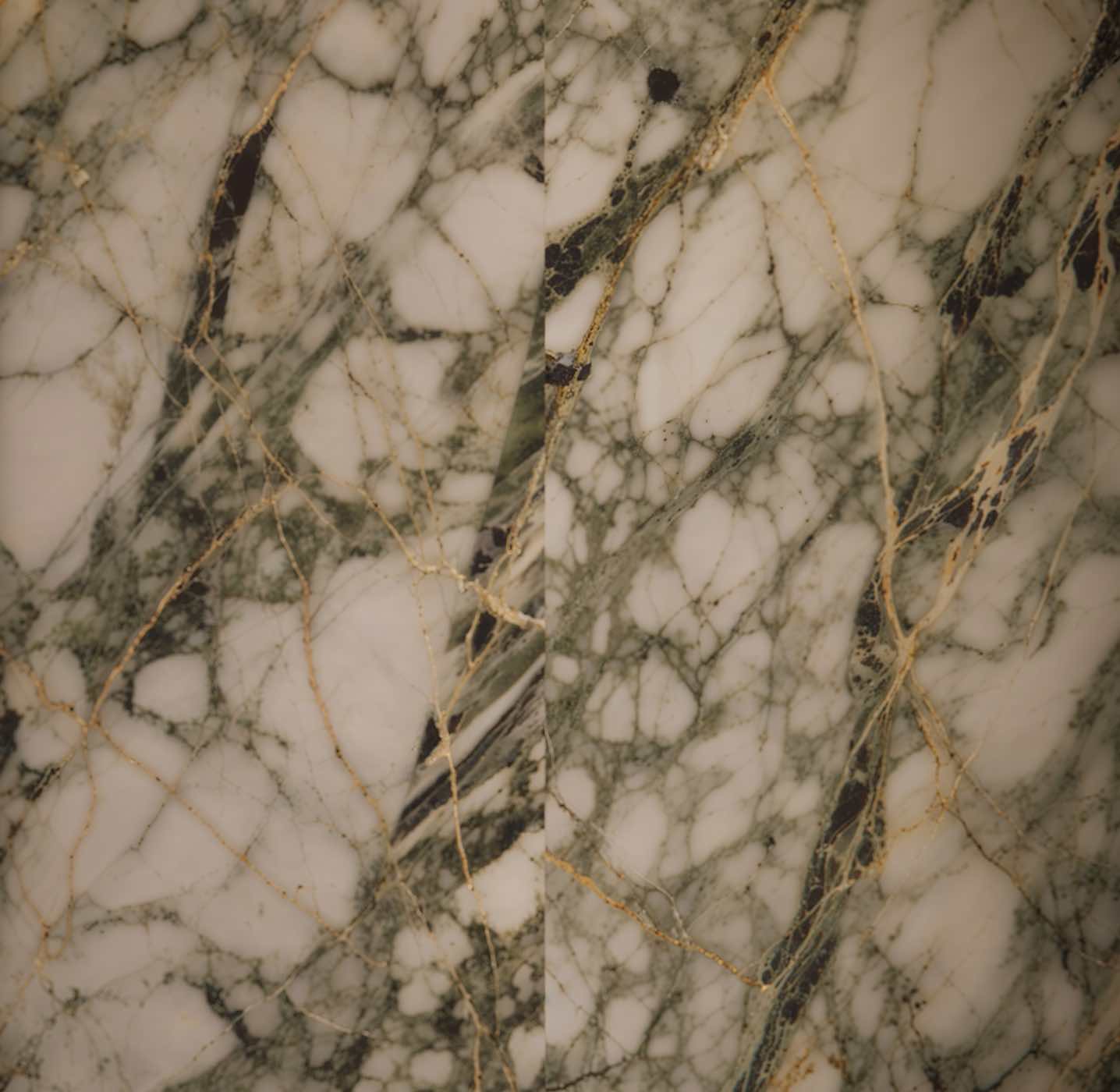
Marazzi, together with digital technology specialist Reply and the architects from ACPV ARCHITECTS, commissioned the AI programmers to design new marble types. They were presented to the public as large-format ceramic pieces measuring 3.2 m in height during Milan Design Week. Development began in 2023.
The press materials touted the innovation with the statement that it would conserve natural stone resources.
We found one side note particularly interesting: Marazzi has large-format ceramic slabs without “optical hallucination effect and maintaining realistic effectiveness,“ the documents state.
This points to the weaknesses of previous fictitious stones: While they are initially surprising and interesting, they soon seem like fantasies that could vanish into thin air at any moment.
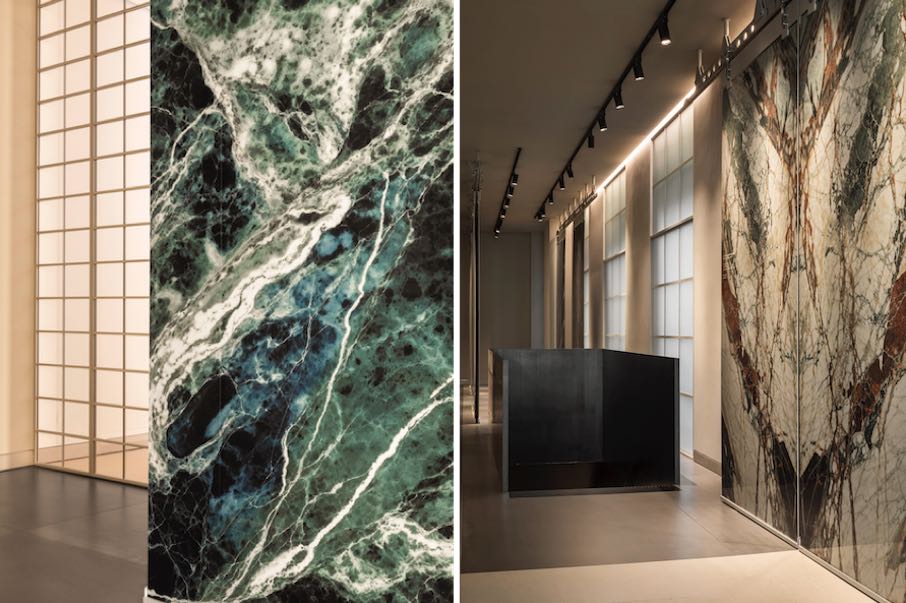
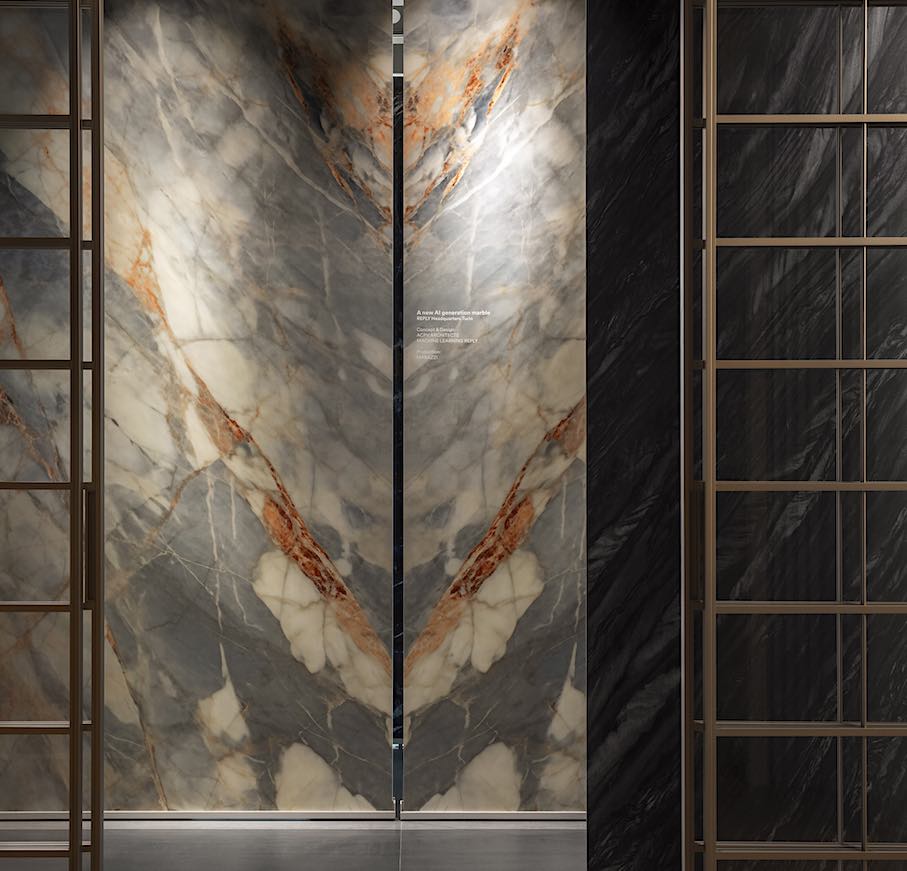
This is probably due less to their appearance than to the fact that they are only thin slices and lack the materiality of the natural world.
But materiality is also recognizable to the observer on the surface, not just at the edges and corners.
It is emphasized that Marazzi does not want to copy natural stone, but rather “reinterpret“ it.
The magazine “Ceramic Review” shows some artistic examples of AI ceramic design.
Photos: Marazzi
