Stone-Ideas.com


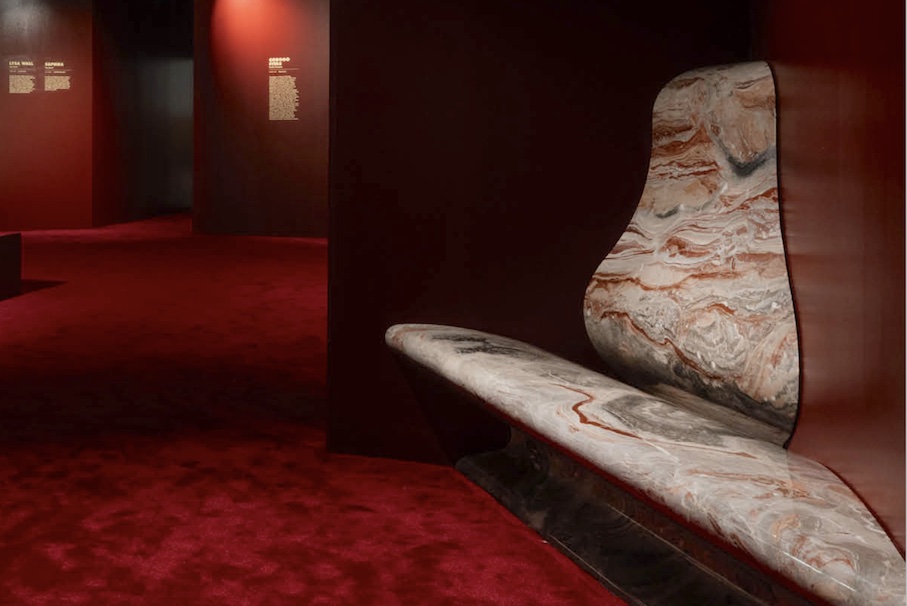
The Italian company Citco, based in Rivoli Veronese, not far from Verona, is known for its artistic installations in natural stone, which it uses to showcase its employees’ skills and thus promote its products. This year, the title of its presentation at the Salone del Mobile in Milan was “Eterea – Shaping the Unseen.“ As usual, well-known architects and designers were invited to implement the theme with their own ideas.
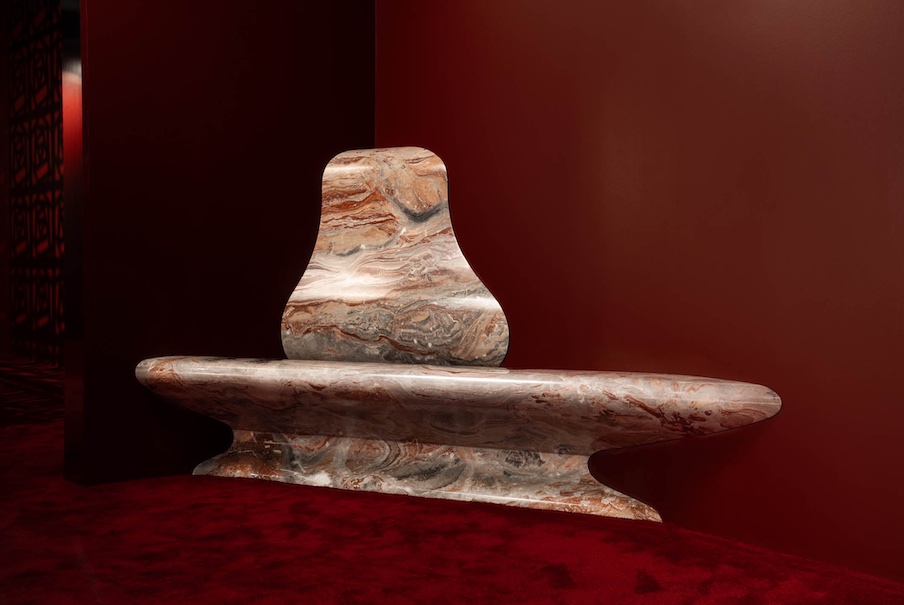
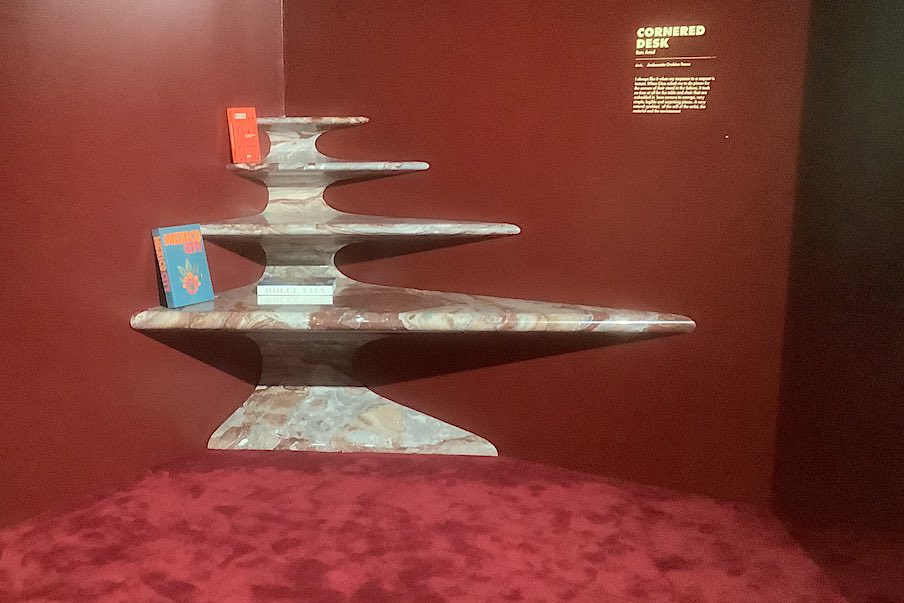 Ron Arad chose two areas from everyday life: the corner and the light. In fact, you never really see the corner in a room as such, and, under normal circonstances, you’re always moving around a corner. So, in a sense, it’s a disruption of linearity – with his “Cornered Seat“ and “Cornered Desk, Ron Arad took the corner out of the corner, so to speak.
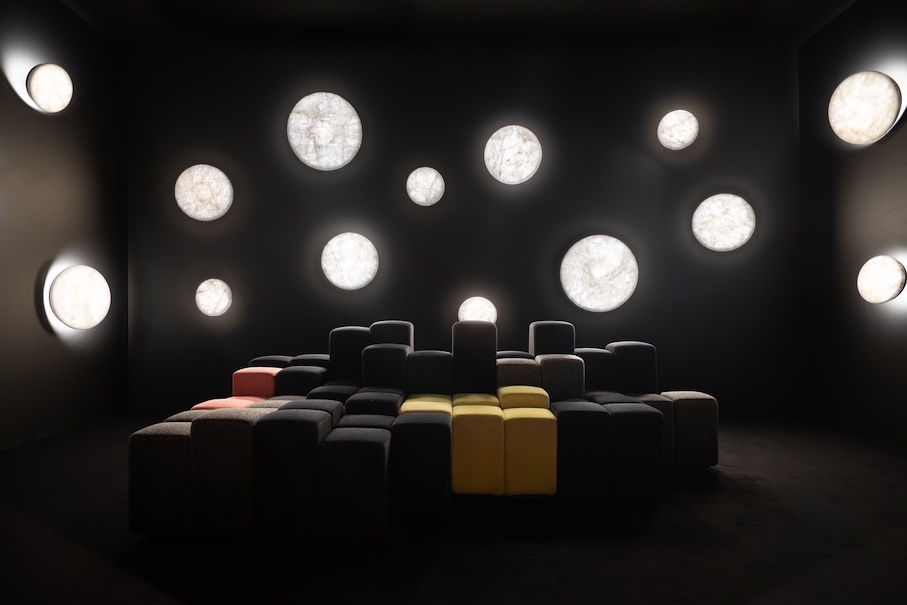
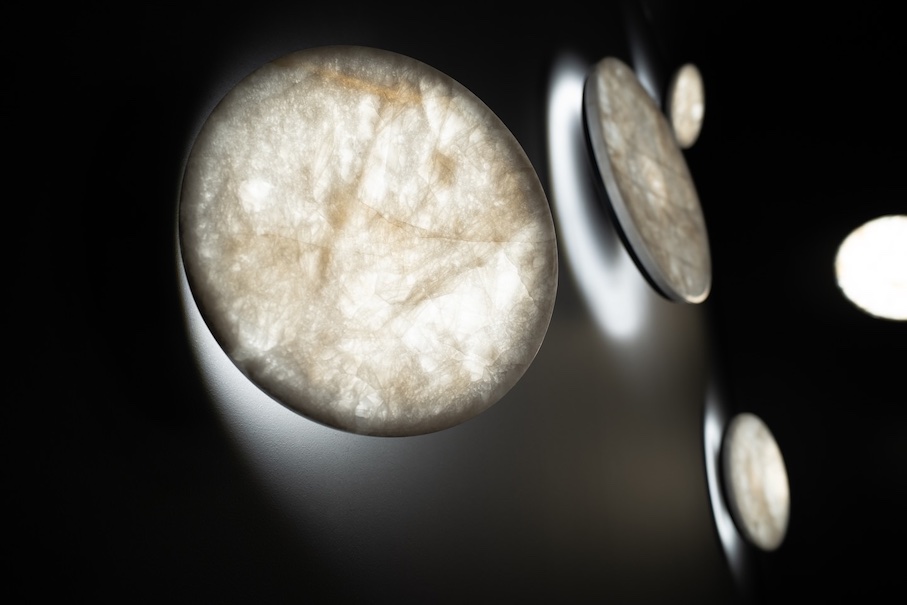 Ron Arad’s second theme was light. Like a product designer, he designed wall lamps called “Marblelite. “ They had two functions in one: On the one hand, they could project their light forward, thus providing a focal point in a room; on the other, they could also project it backward onto the wall, thus creating a halo of light around the lamp. He chose a translucent quartzite from the Brazilian company Pettrus for the lampshade.
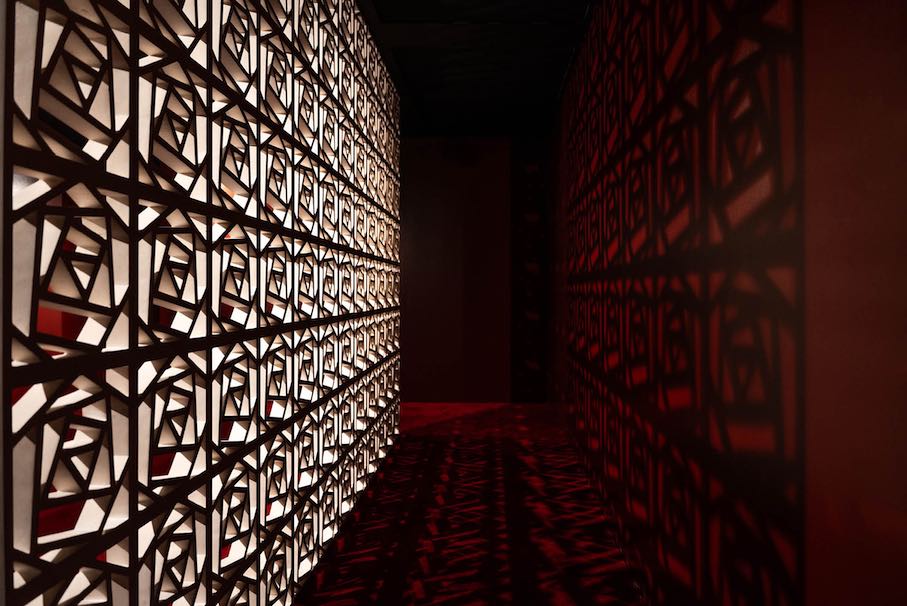
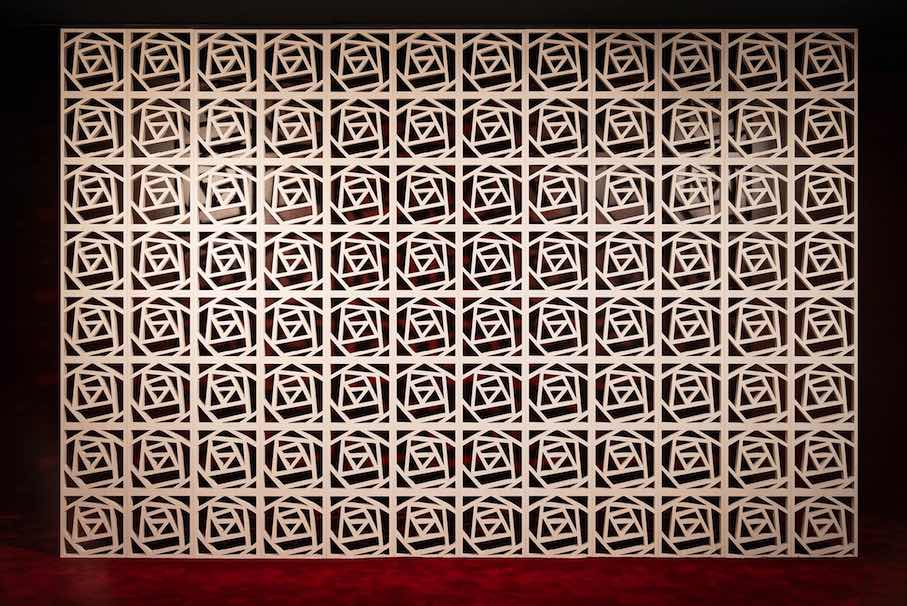 Estúdio Campana played with light and shadow, with the shadow created by a wall made of Moca Cream limestone. The installation was titled “Cobogó“: It goes back to the Brazilian engineers Amadeu Oliveira Coimbra, Ernest August Boeckmann, and Antônio de Góis, who created walls out of concrete in the 1920s and named them after the initials of their names. The designers from Estúdio Campana took up the idea of their fellow countrymen in 2016 and developed “Cobogó Mão“ from it. These were building blocks that could be used to build such walls.
The principle of perforated walls is ubiquitous in countries with tropical climates. In the Arab world, they are called Mashrabiya, in India, Jali. Their primary purpose is to create airflow through rooms while simultaneously providing privacy.
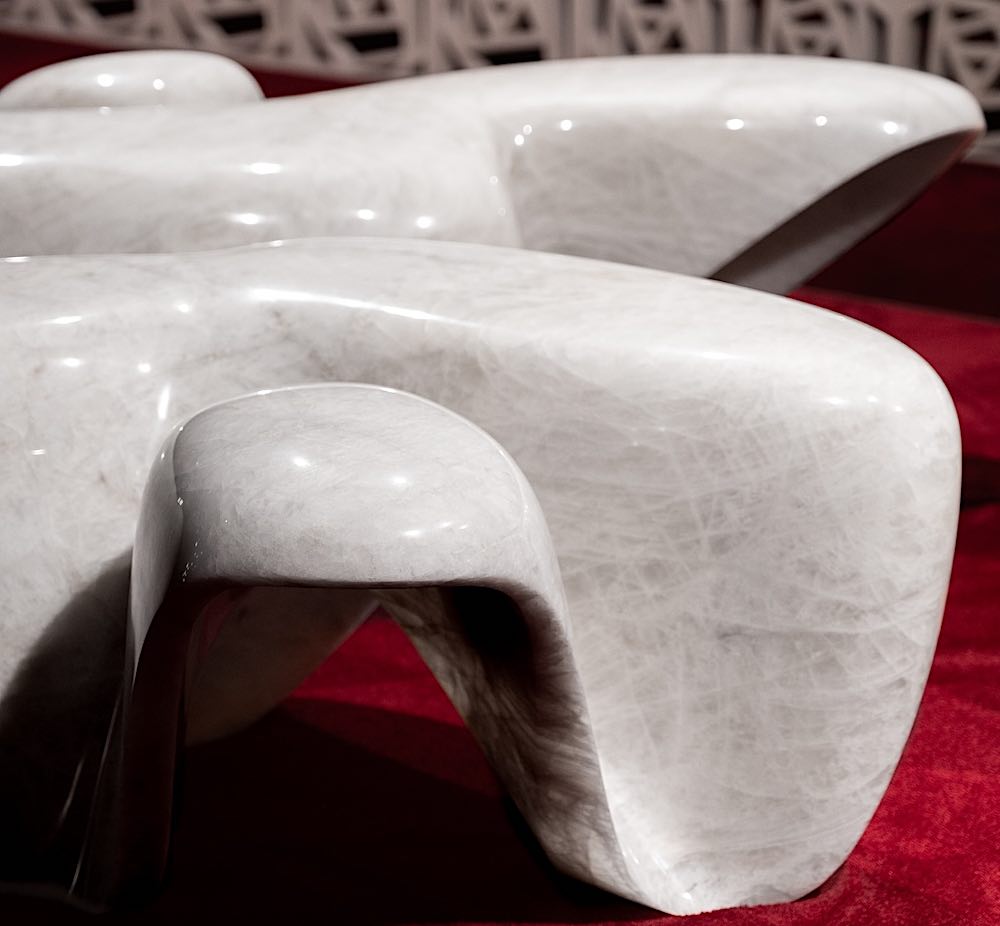
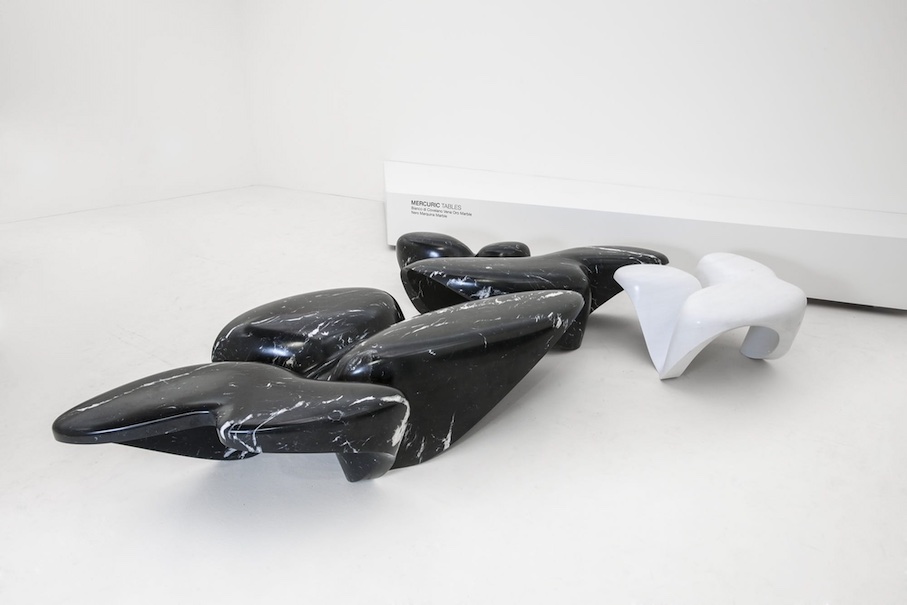 Zaha Hadid Design relied entirely on the effect of backlit quartzite to approach the theme. The shapes of the objects came from the 2013 “Mercuric“ collection. Back then, the designers deliberately gave the name to their white and black marble side tables a nod to objects from a distant planet. This time, the material was Brazilian Cristallo quartzite. These stone types have been enjoying great popularity for several years due to their resemblance to glass and the fact that they sometimes feature bold veins in many colors. The material is extremely hard and also difficult to work with.
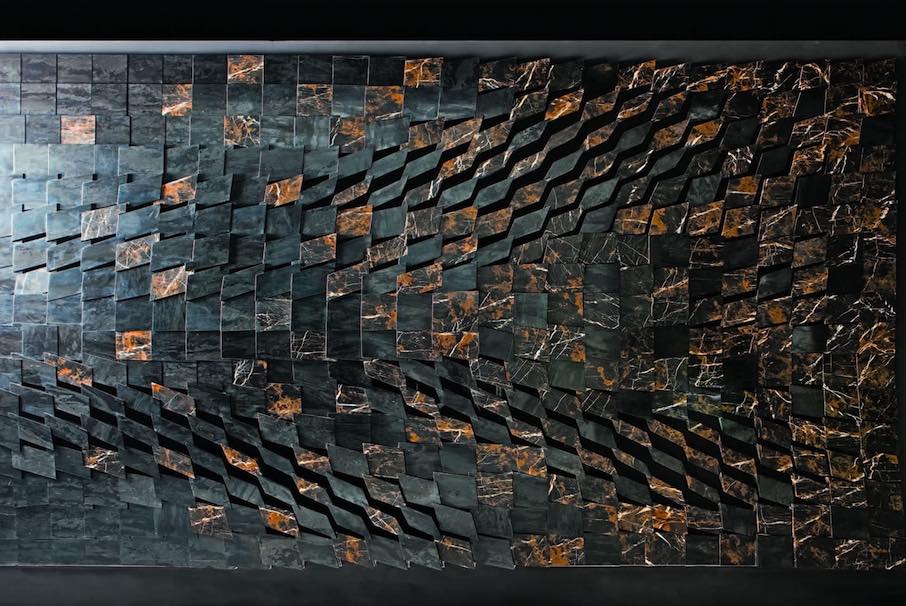
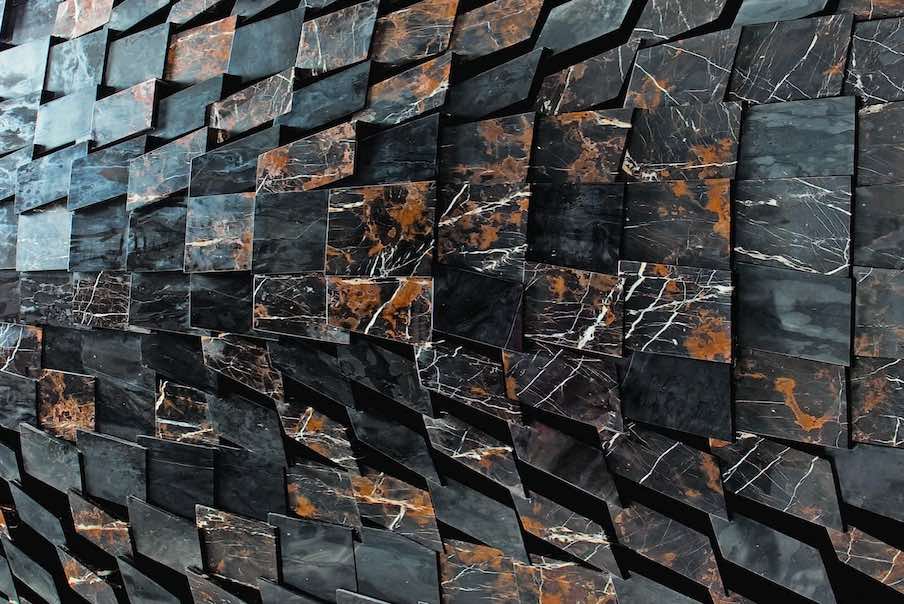 “Matrix” is an older work by Zaha Hadid Design that seems out of this world with its striking stones, sharp shapes and the rhythm of its individual elements.
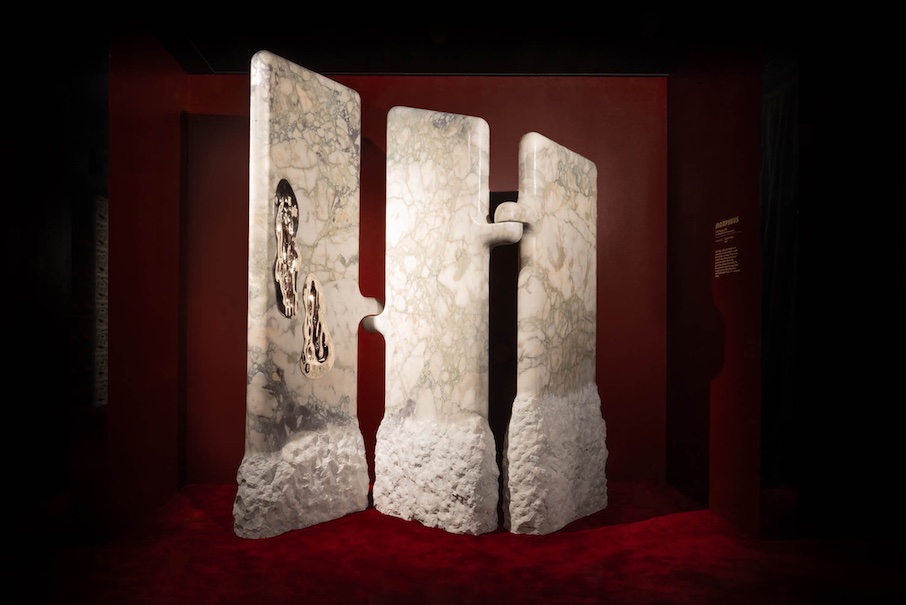
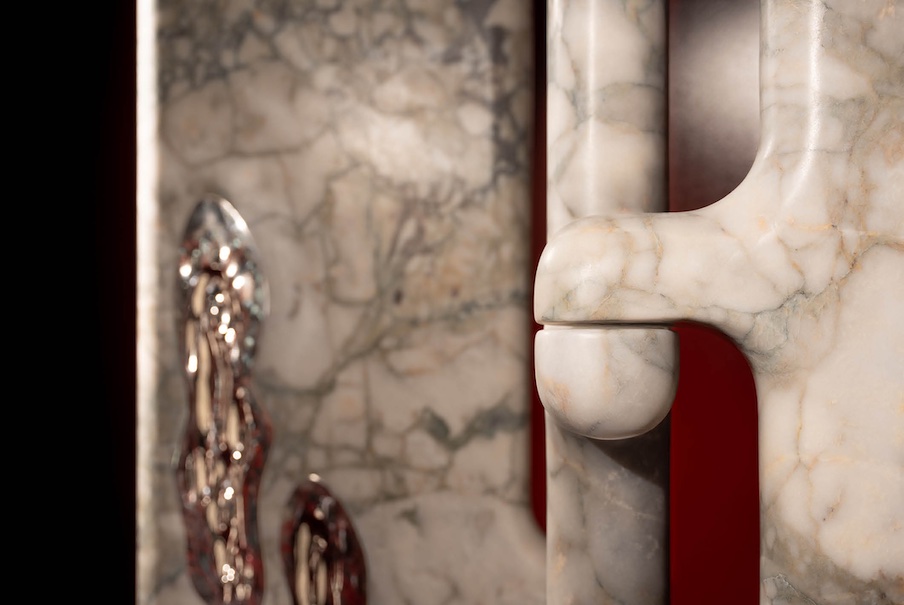 Kelly Hoppen, originally from South Africa and now living in Great Britain, completely detached herself from the usability of her object in her work. “Morpheus“ was a privacy screen consisting of three parts connected by hinges. She called her installation a “poetic fusion of nature and design.“ The material for the solid walls was Calacatta Monet marble, which resembles natural rock.
Photos: Nicola Fiorentino