Stone-Ideas.com


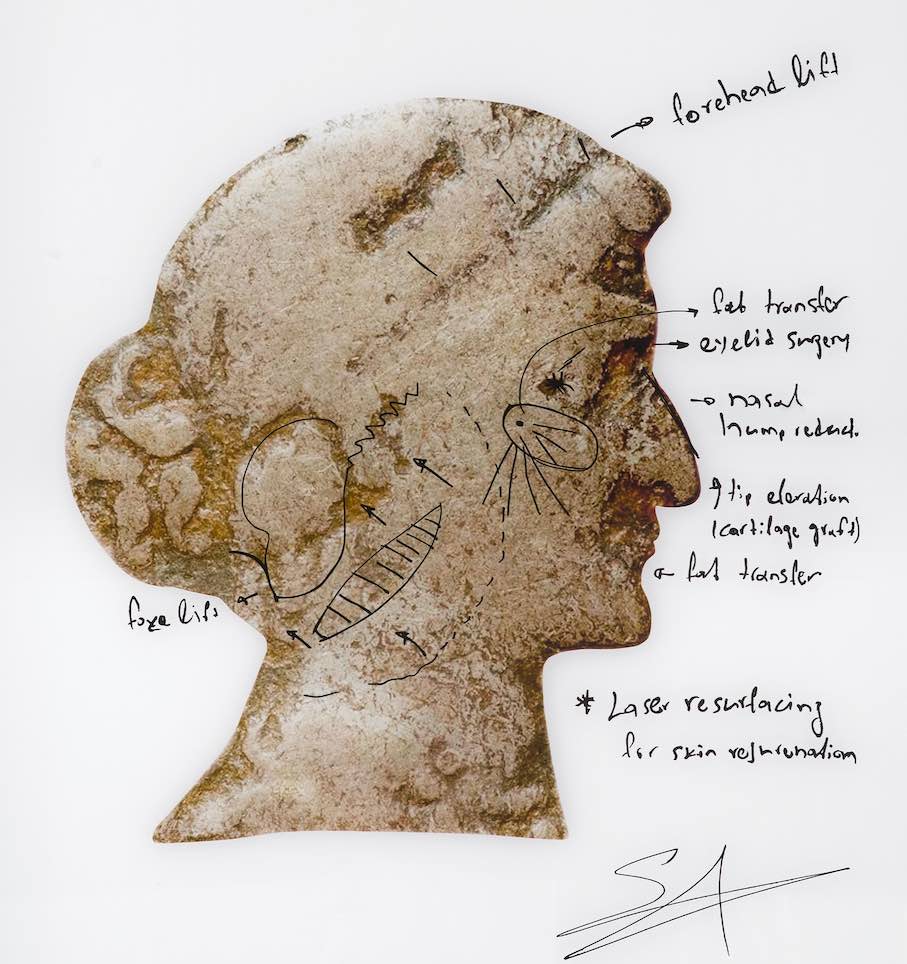
“Le Mystère Cléopâtre“ (The Mystery Cleopatra) is the focus of an exhibition at the Institut du Monde Arabe (IMA) in Paris, on view until January 11, 2026. Among its many themes, it inevitably revisits the famous question of Cleopatra’s nose, immortalized by the French philosopher Blaise Pascal. In his Pensées, Pascal mused: “Had Cleopatra’s nose been shorter, the whole face of the world would have been changed.” With this remark, he captured the enduring fascination with Cleopatra’s legendary beauty and her sway over the most powerful Romans of her time.
He presumably wanted to express that the course of world history can be triggered by seemingly trivial circumstances.

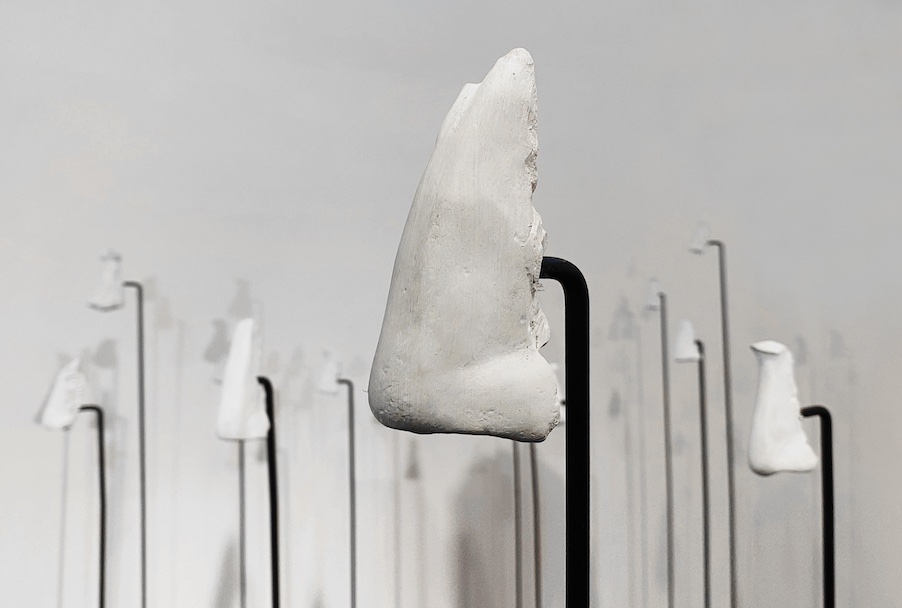
At the exhibition in Paris, the Greek-French artist Esmeralda Kosmatopoulos appropriately presents her “Nasotheque“: Under the title “Approximately five centimeters long,“ she has recreated marble noses based on many artistic depictions of Cleopatra.
The copies are made of marble and are presented on simple wire holders.
She has also edited texts by the Roman historians Plutarch, Flavius Josephus, and Cassius Dio. At one point, where an author writes about Cleopatra’s “beauty,“ she offers the word “intelligence“ as an improvement and replacement.
Cleopatra’s myth is thus a matter of the spirit of the times. One question for the exhibition is how it came about and why it still fascinates so much today.


The answer is obvious: Oriental exoticism and the luxury of the world on the Nile have always been an important part of the myth.
The exhibition in Paris also addresses the theme artistically: Esmeralda Kosmatopoulos’s marble noses are enhanced by three new fragrances created specifically for this purpose by perfumer Antoine Maisondieu.
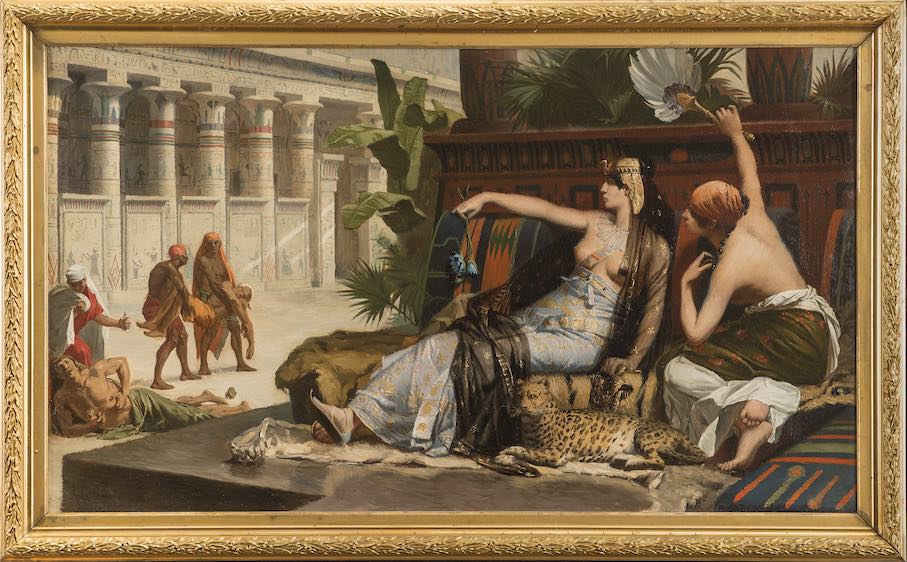
We are showing some exhibits from the exhibition and simply recounting the historical facts based on the IMA press release:
“Born in Alexandria in 69 BCE, Cleopatra VII was the last ruler of the Ptolemies. Inheriting a kingdom under Roman influence, she imposed herself as a shrewd diplomat to preserve her power. An ally of Julius Caesar and then of Marc Antony, she eliminated her rivals and associated her son Caesarion with the throne. Defeated at the battle of Actium by Octavian, Cleopatra committed suicide in August of 30 BCE, bringing the Pharaonic dynasty to an end. Her death, however, did not close the book of her history; rather, it marked the beginning of a legend.
“While the Egyptians and Greeks worshiped her as a goddess, Roman propaganda presented her as a ‘prostitute queen.’ In the Middle Ages, Arab writers described her as a motherly figure, protector of her people, erudite and learned.
“Since the 16th century, the West has been reinventing her in literature and art. The fantasized representation of her death spanned the centuries, work after work producing new Cleopatras.
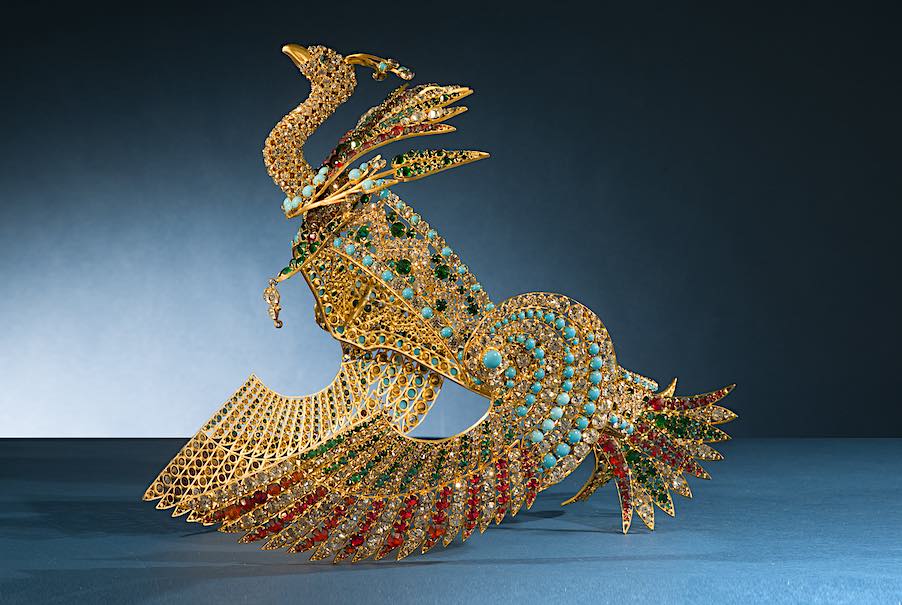
“Shakespeare’s tragedy Antony and Cleopatra popularized Cleopatra’s “mythistory” on the stage. Great actresses, from Sarah Bernhardt to Liz Taylor, spread the story of her fate in the media age. Now on her own at the top of the bill, she still embodied a fantastical orientalizing “elsewhere”.
“With the proliferation of images and mass culture, Cleopatra became a consumer object: beauty queen, fashion muse, advertising brand. Her modern figure was everywhere, but the myth ended up overshadowing the historical reality of the head of state. That is why voices are being raised to rediscover the truth buried beneath the myth.
“Alongside her popular and glamorous image, there appeared a characterization of Cleopatra as head of state and erudite queen. Her refusal to submit in a male-dominated world, preferring to die rather than surrender, made her an icon of the struggle for identity and emancipation.
“In Egypt, she symbolized resistance to British colonialism (1882-1956), while in the United States, she was a source of pride for the African-American community, notably in the anti-slavery struggle during the American Civil War (1861-1865).
“Feminist movements rehabilitated her role as a woman of power, denouncing her erasure (shaped by the male gaze) from that role, and making her a timeless symbol.
“All these images reinforce or reveal the mystery surrounding history’s most famous woman.”