Stone-Ideas.com


In a separate report from our Stone Insight series, we describe the presentation of Tutankhamun’s tomb treasures https://www.stone-ideas.com/118336/grand-egyptian-museum-tutankhamuns-tomb-treasures/.
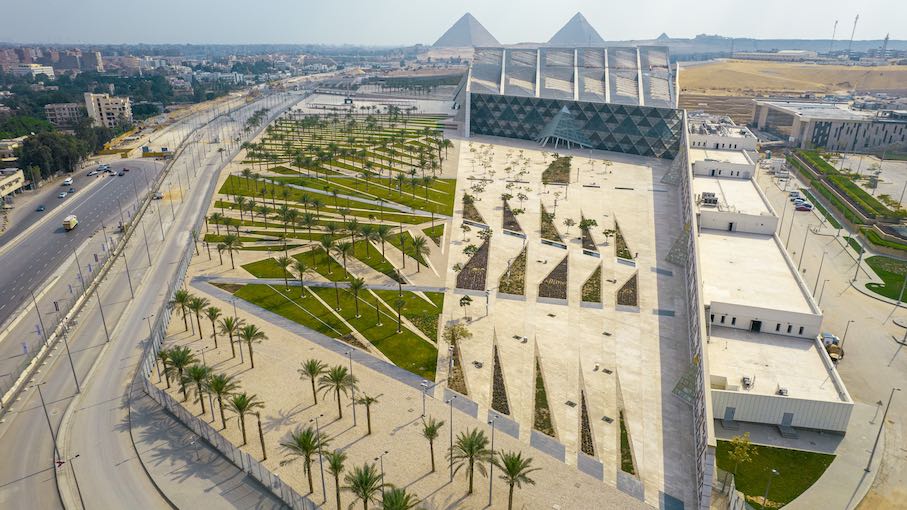
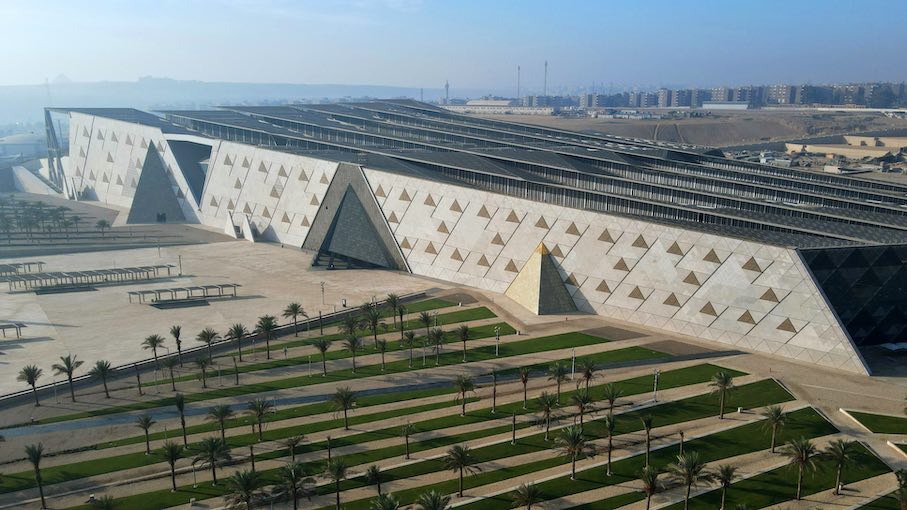
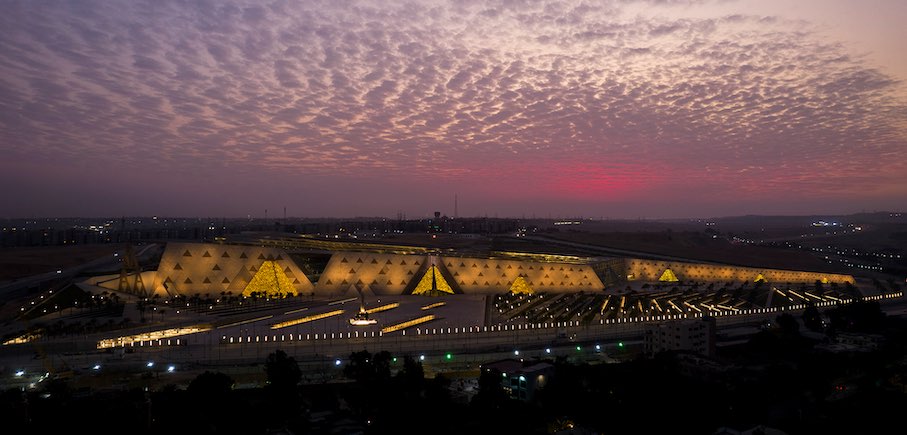
Triangles in seemingly endless numbers are distributed across the façades of the new Grand Egyptian Museum (GEM) in Cairo. This was almost to be expected, as the Pyramids of Giza are just under two kilometers away and within sight, their boundless masses of stone arranged as the sides of tall triangles.
In designing the museum, the Irish architects at heneghan peng, commissioned by the Egyptian government, focused on the myth of the ancient cultures along the Nile, and they have masterfully staged the purpose of their super-museum not only in the façade: It aims to be the central presentation venue for the vast number of art treasures from ancient Egypt and to bring them closer to the present day.
The promise of the entrances with their translucent alabaster panels is that visitors inside the museum will experience the full splendor of the era 5,000 years ago – unlike the nearby pyramids, the museum doesn’t remain closed off from the present but speaks directly to people.
In the early plans, the entire museum façade was even to be adorned with translucent alabaster triangles.
The GEM is enormous and is described as either the largest museum dedicated to a single culture or even the largest museum overall.
It is approximately 800 meters long, reaches a height of 25 meters, and, according to the architects, together with the convention center, has a total area of about 100,000 square meters spread across several floors.

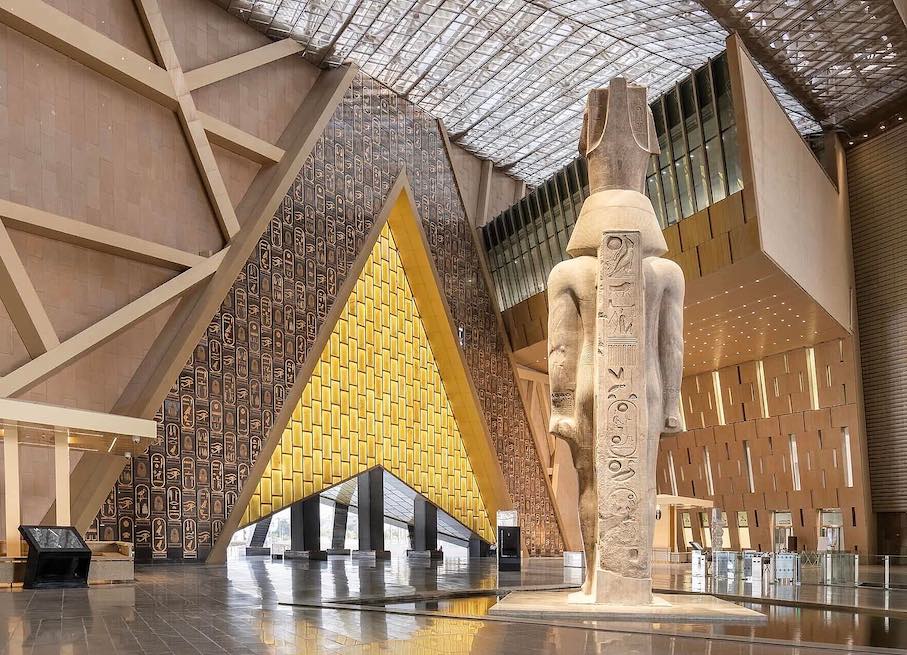
The entrance hall alone is breathtaking. There stands the statue of Pharaoh Ramses II, a granite colossus 11 meters high and weighing 83 tons. The piece is so enormous that it was the first thing brought to the construction site – then the hall was built around the ruler’s statue.
Around 100,000 exhibits from the ancient Nile cultures are on display. They are presented and illuminated using state-of-the-art technology.
Anyone who knew the predecessor museum in downtown Cairo will be grateful to the Egyptians for finally creating a fitting presentation of their history.
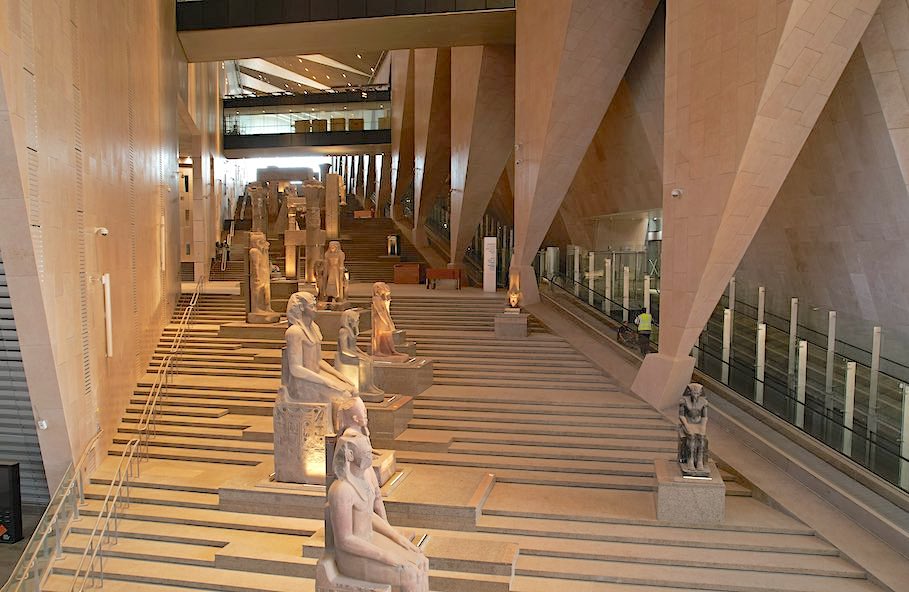
The different floors can be reached from the entrance hall via a central staircase, on which 90 large sculptures from the entire Nile region accompany the visitor upwards over six floors.

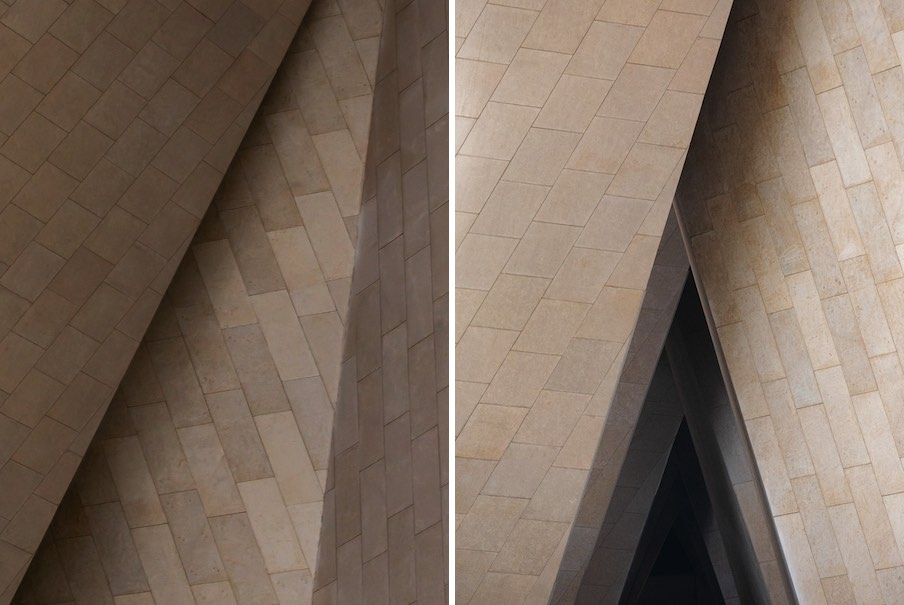
An architectural highlight along the staircase are the “Stilettos”: 26 m high structures that descend like arrows from above and flank the ascent.
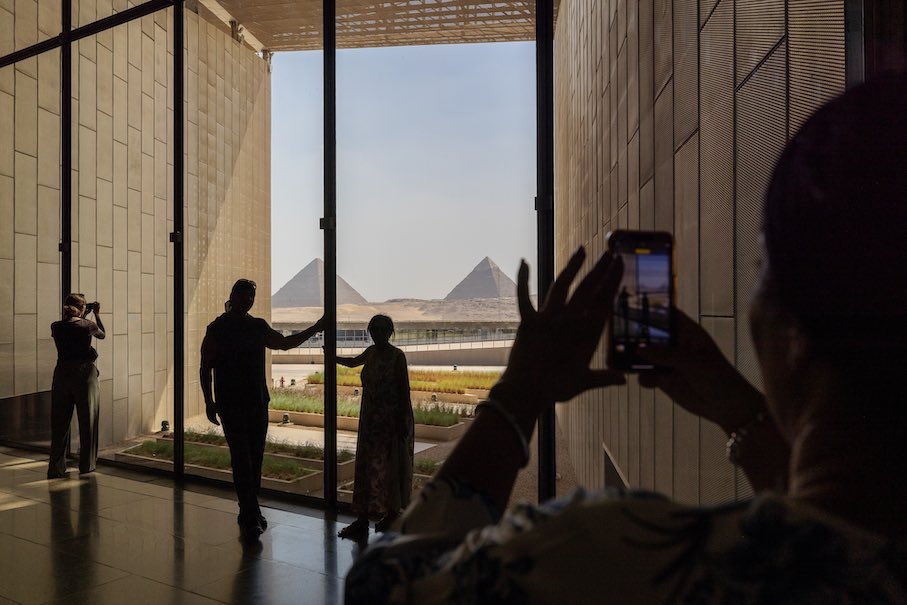
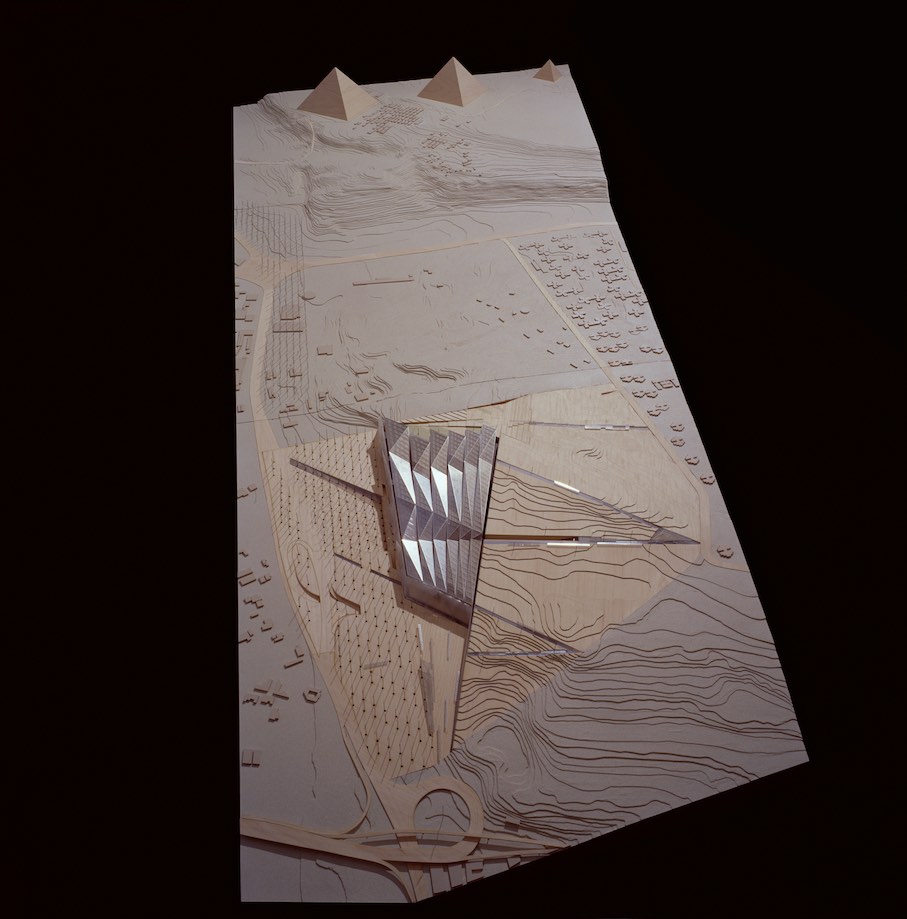
On the next floor, a panoramic view of the pyramids unfolds. This visual connection is enhanced by the fact that the museum’s interior walls are aligned with the three monumental structures of Giza. The triangular concept is echoed in the landscaping.
The spectacular Tutankhamun exhibition is located on the second floor.
The building’s load-bearing structures are made of concrete and steel. Approximately 210,000 square meters of natural stone were used for its cladding and flooring.
The museum is explicitly intended to be embraced by the residents of Cairo and the Egyptian people.
To this end, there is a five-hectare outdoor area with a large park planted with local vegetation such as date palms. A themed garden commemorates the reliably seasonal Nile floods that provided fertile ground for ancient cultures.
The GEM also includes a research center for the preservation of the art treasures. Its 17 laboratories are accessible via a tunnel. Here, experts are dedicated to securing the treasures, whose materials range from papyrus and textiles to pottery and stonework, and even human remains.
Grand Egyptian Museum: Tickets
Photos: GEM, heneghan peng architects, Georges & Samuel Mohsen – The GS Studio
• Architect: heneghan peng architects
• Museology: Cultural Innovations
• Structural/Civic/Traffic, Façade Engineering: Arup
• Building Services, IT/Security/Fire/Acoustics: Buro Happold
• Landscape, Public Space and Masterplanning: West 8
• Exhibition Masterplanning: Metaphor
• Local Architect: Raafat Millier Consulting
• Local Structural/Civil Traffic: Arab Consulting Engineers
• Local Building Services: Shaker Consulting Engineers
• Local Landscape: SITES International Egypt
• Design Team Management, QS: Davis Langdon
• Specialist Lighting: Bartenbach Lichlabor
• Signage & Wayfinding: Bruce Mau Design