Stone-Ideas.com


In a separate report, we describe the concept for the new Grand Egyptian Museum by the Irish architects at heneghan peng https://www.stone-ideas.com/118323/grand-egyptian-museum-translucent-alabaster/.
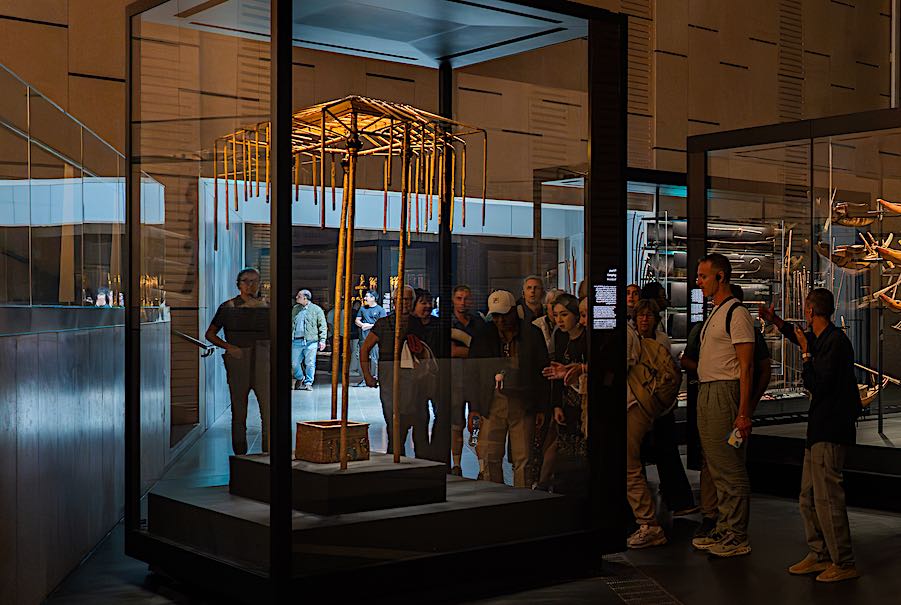
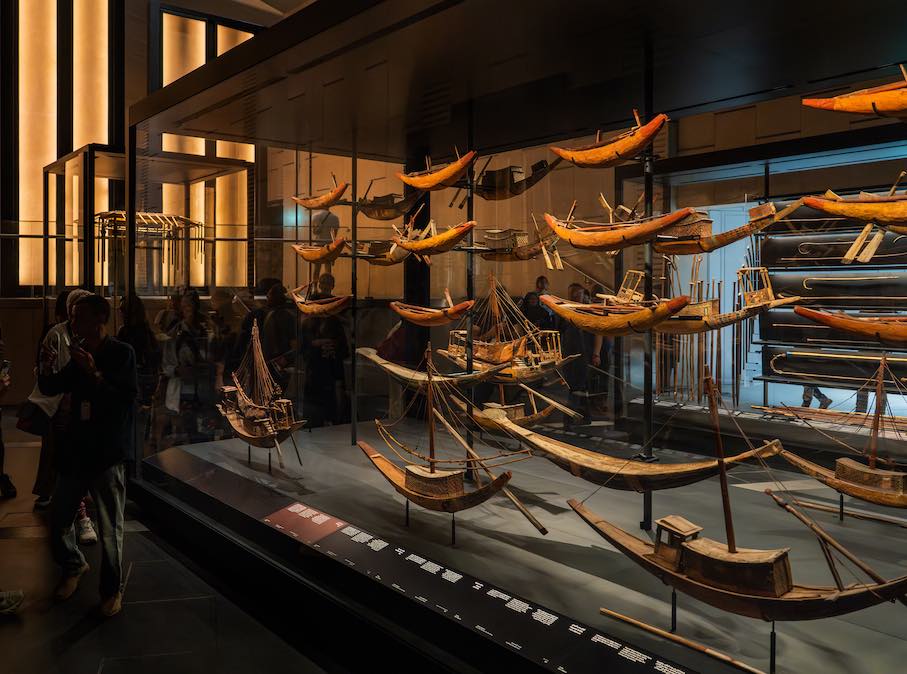
On the second floor of the Grand Egyptian Museum, visitors encounter the tomb treasures of Tutankhamun. Discovered in November 1922 in the Valley of the Kings by the British archaeologist Howard Carter, the 35-square-meter tomb comprised four chambers and was filled with approximately 5,600 well-preserved grave goods, many of them made of gold.
The design of this area of the GEM, as well as other parts such as the entrance hall, was the responsibility of Atelier Brückner from Stuttgart, Germany. We present an abridged description of this world-renowned exhibition design studio:
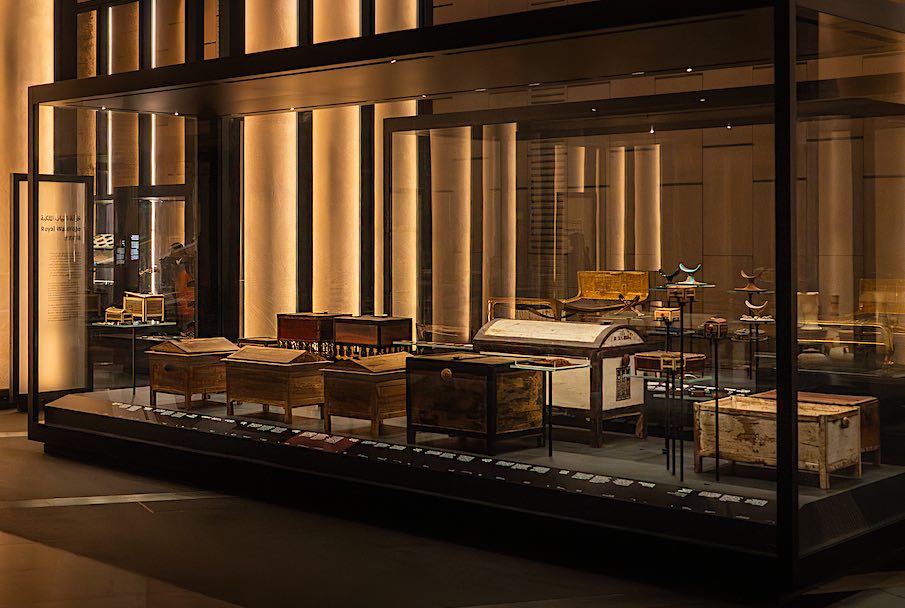
For the first time, all the objects from the burial chamber of the boy pharaoh (reigned approximately 1332 to 1323 BC) are on display at the GEM. The presentation is complete once again, just as Carter found it, or as it was 3,000 years earlier after the pharaoh’s burial.
However, the burial chamber has not been reconstructed at the GEM. Rather, the focus is on understanding the exhibits within their historical context, not simply on admiration.
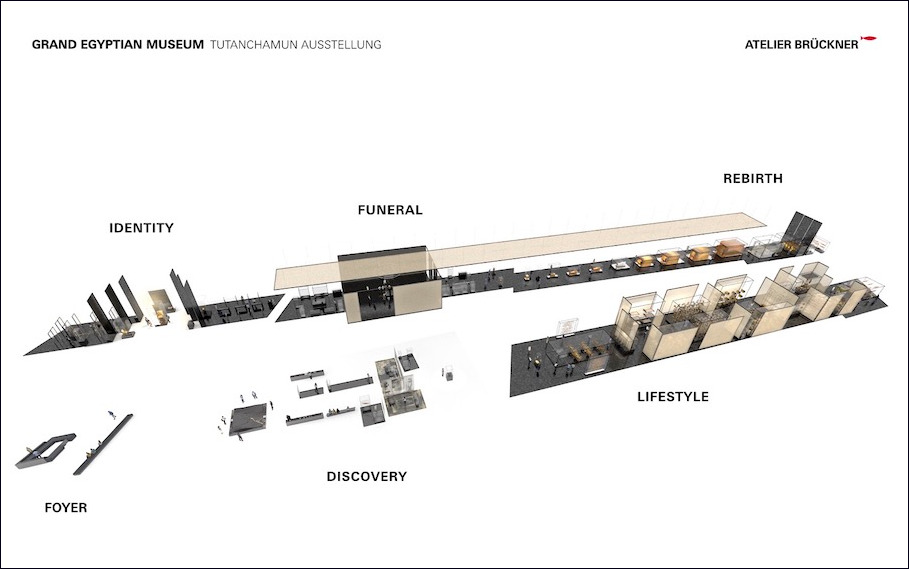
The history and stories surrounding the pharaoh are told through two central themes:
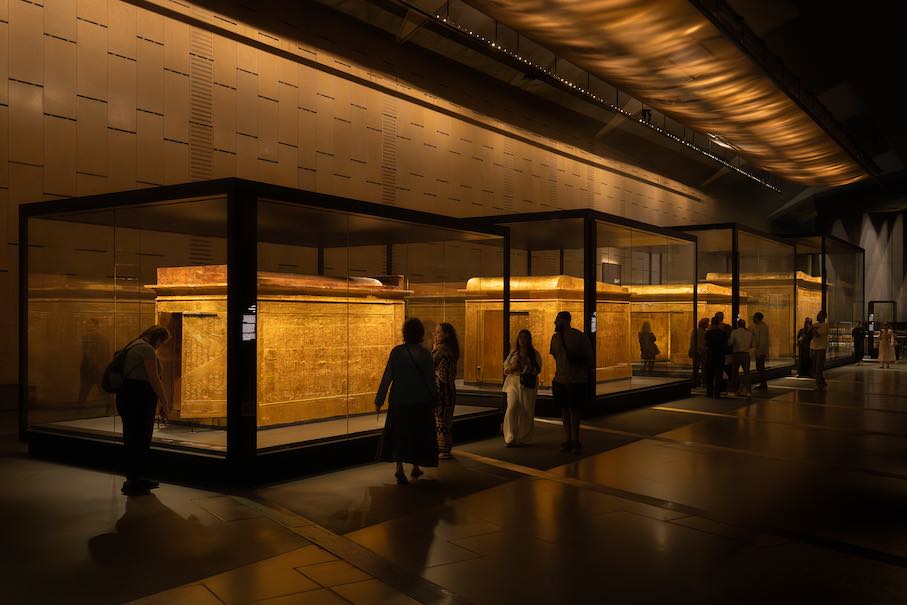
* The Curatorial Path is an eight-meter-wide, continuous black floor panel on which all the objects are arranged;
* suspended from the ceiling at a height of nine meters is the Path of the Sun, a bronze structure with light effects. Symbolically, it represents the Egyptian belief that by day the world follows the sun’s path across the sky, and in darkness it returns via the Nile to the next morning.
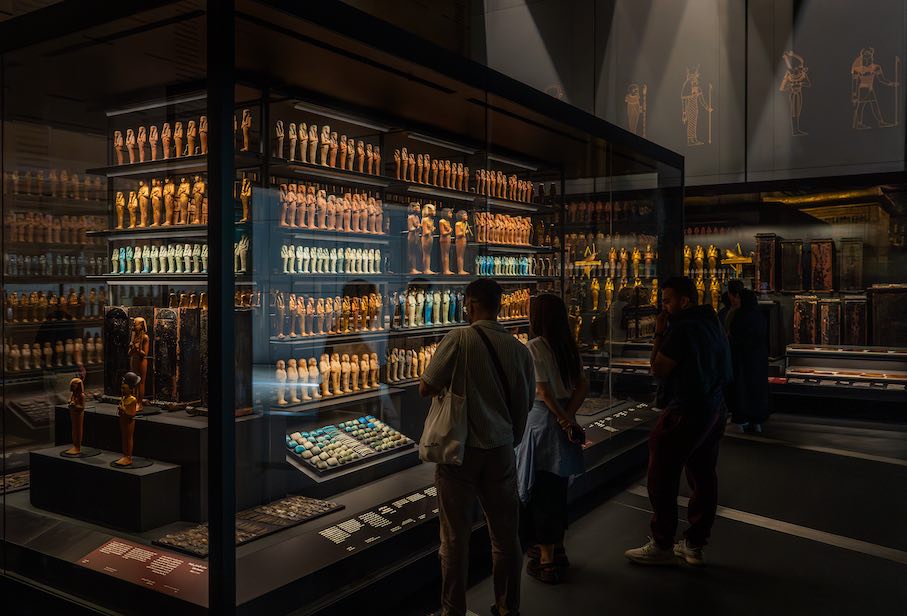
* The exhibition explores five central themes: Tutankhamun the person, his daily life, his burial, the journey of the deceased to the afterlife, and the discovery of the tomb. On display are, for example, the gilded throne and everyday objects such as musical instruments, hunting equipment, and jewelry.
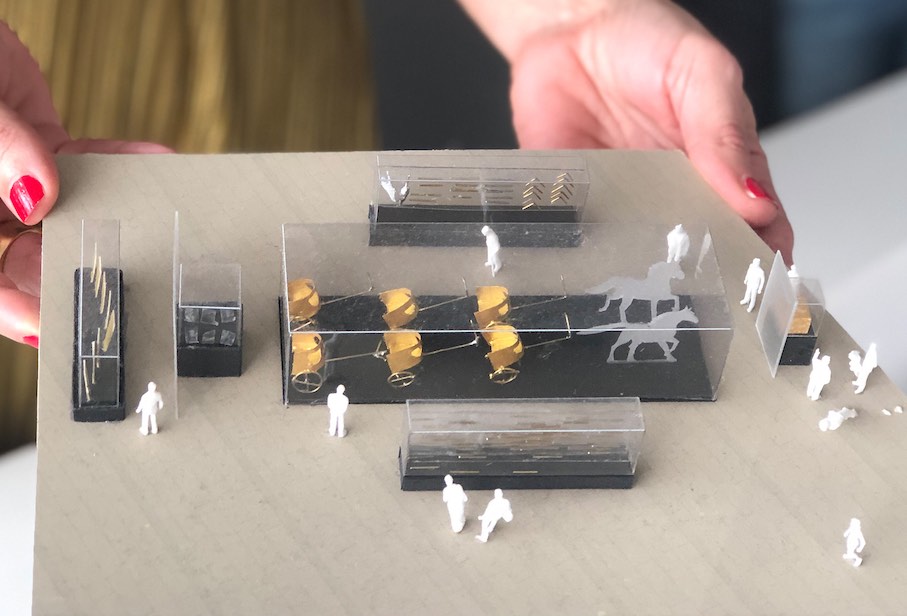
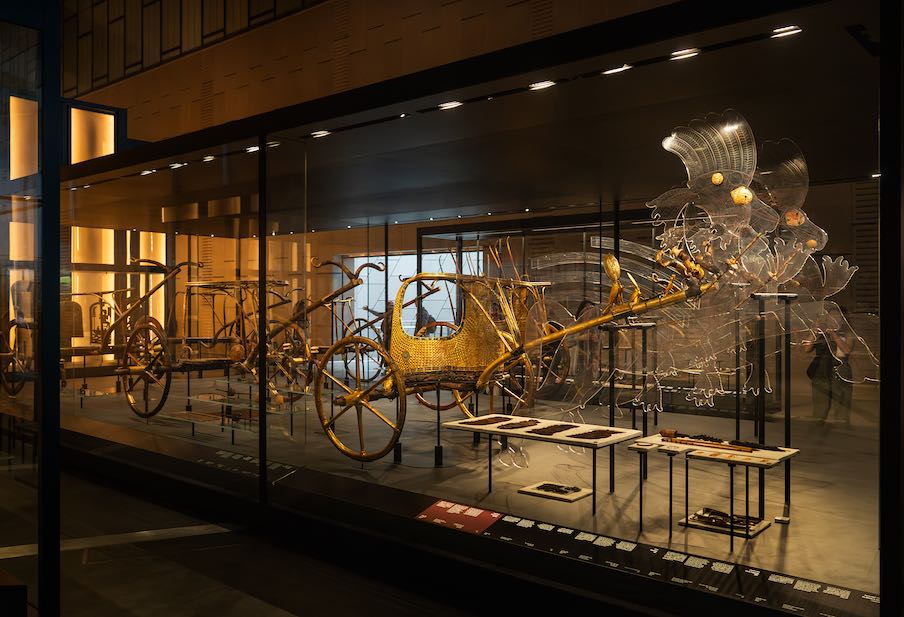
The largest of the 120 display cases showcases the six chariots from the burial chamber.
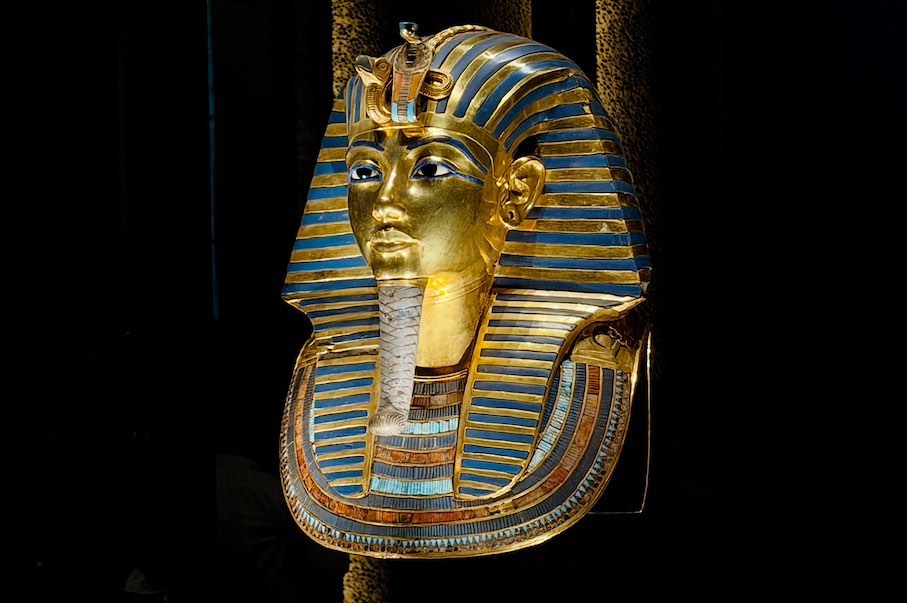
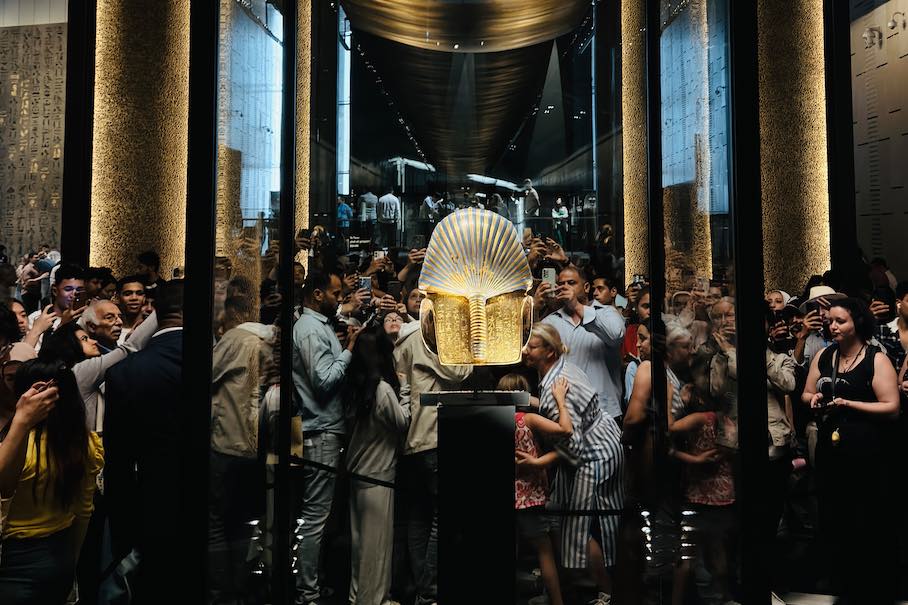
The highlight of the exhibition is the famous death mask, which has its own dedicated room.
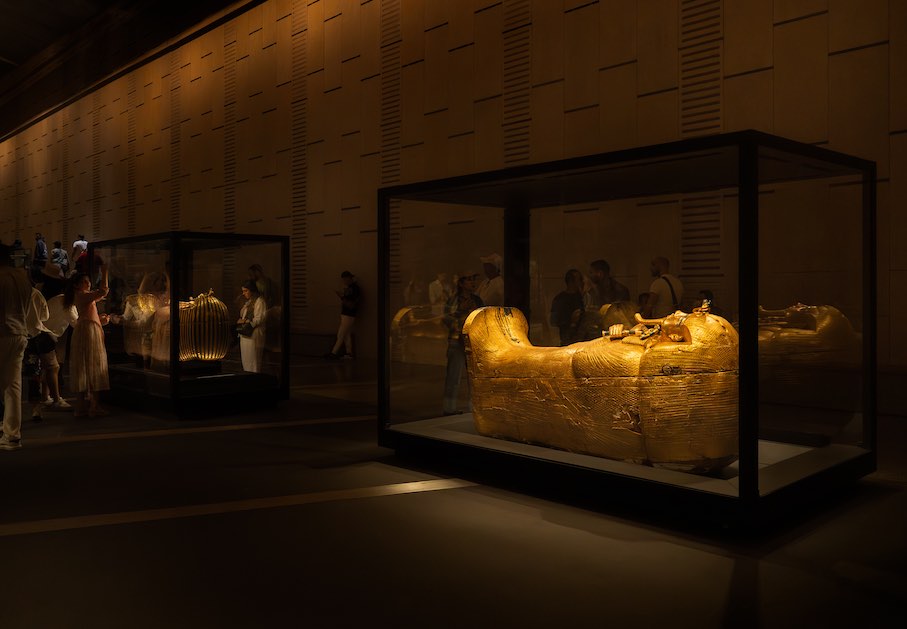
In the burial chamber, the mask was concealed within a sarcophagus made of yellowish quartzite, inside of which were three further sarcophagi made of gold-covered wood, culminating in the innermost sarcophagus of gold (110 kg) containing the mummy and the death mask. The death mask is made of gold and copper and features lapis lazuli around the eyes and for the eyebrows, a material whose value was once comparable to that of gold. The blue stripes are made of glass.
The exhibition’s design aims not only to showcase these extraordinary artifacts but also to immerse visitors in the worldview of ancient Egypt.
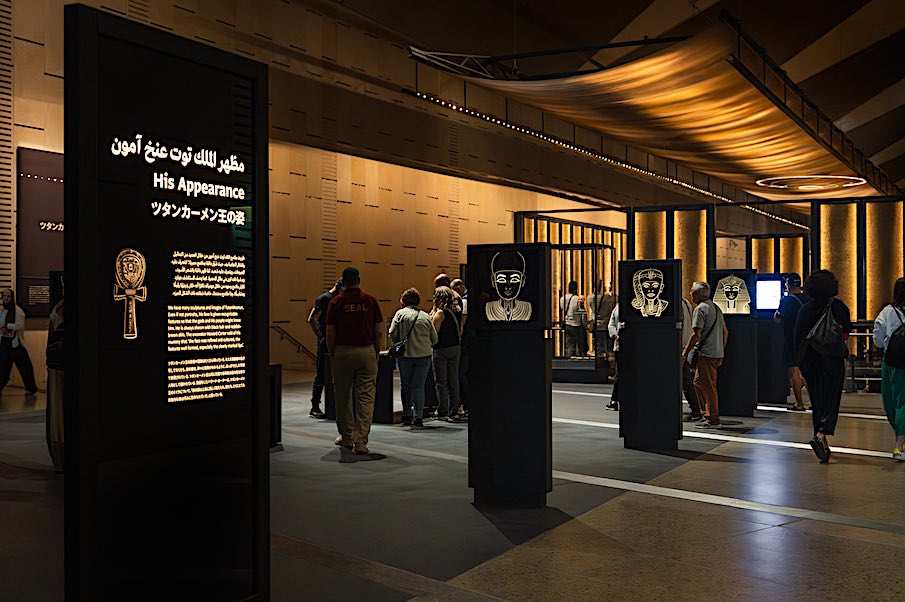
One of the particular challenges of the presentation is the anticipated daily attendance of 15,000 visitors. One solution for visitor flow was to create an exhibition route accessible from two ends: visitors can individually choose their starting point for their exploration.
All labels are in Arabic, English, and Japanese. The rich illustrations also aim to recreate the visual heritage of ancient Egypt.
“Another very important requirement was that all exhibition elements have to be sufficiently protected against vandalism and that the hardware and software be aligned to the large number of expected visitors while remaining intuitively usable by different cultures and groups of visitors,” write the exhibition organizers.