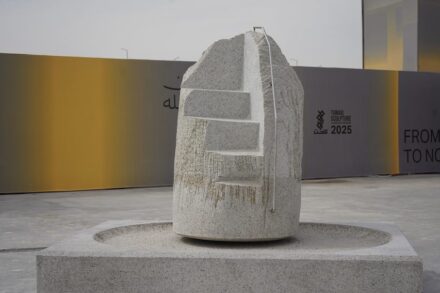
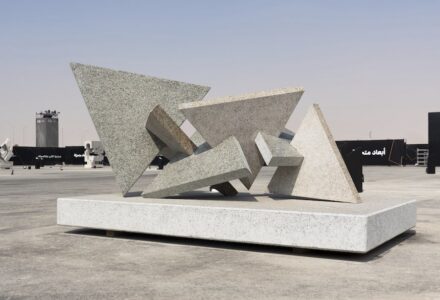
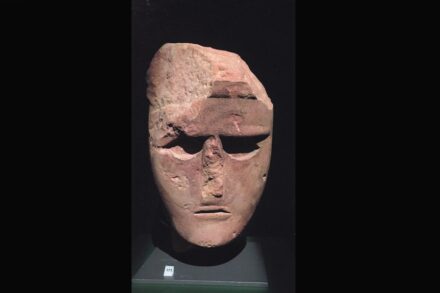
Stone-Ideas.com


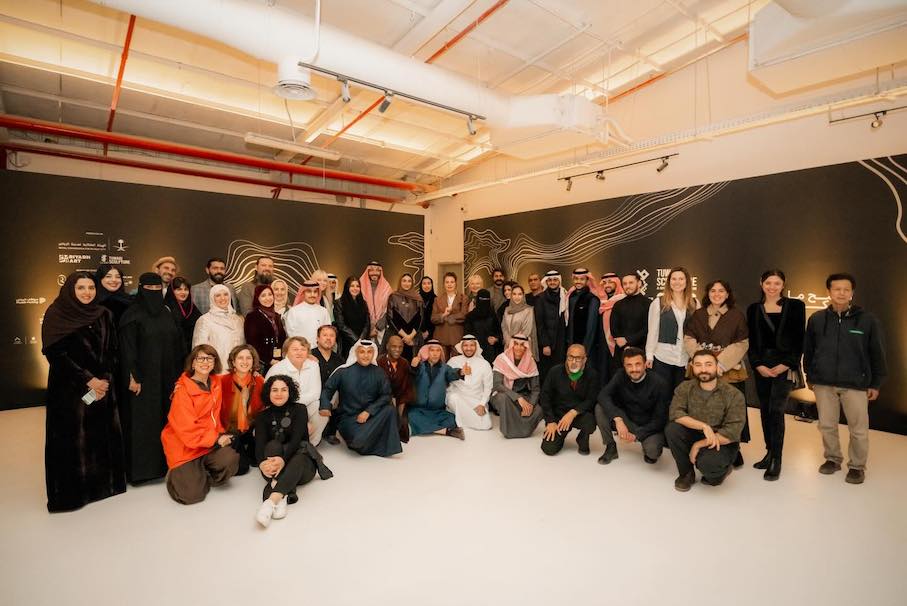
We display the sculptures created during the symposium
“Traces of What Will Be” was the theme of the 7th Tuwaiq Sculpture Symposium (January 10 – February 05, 2026) in the Saudi capital, Riyadh. It referred to the rapid development the Kingdom has undergone, not only since the launch of Crown Prince and Prime Minister Mohammed bin Salman’s “Vision 2030”.
The Royal Commission for Riyadh City (RCRC) had invited 25 artists from 18 countries to this edition of the symposium. The conditions offered to them – from accommodation to remuneration – were generous compared to other symposia. A particular feature of the event is that each artist is paired with a stonemason from Egypt, who not only works alongside them but also provides expert guidance.
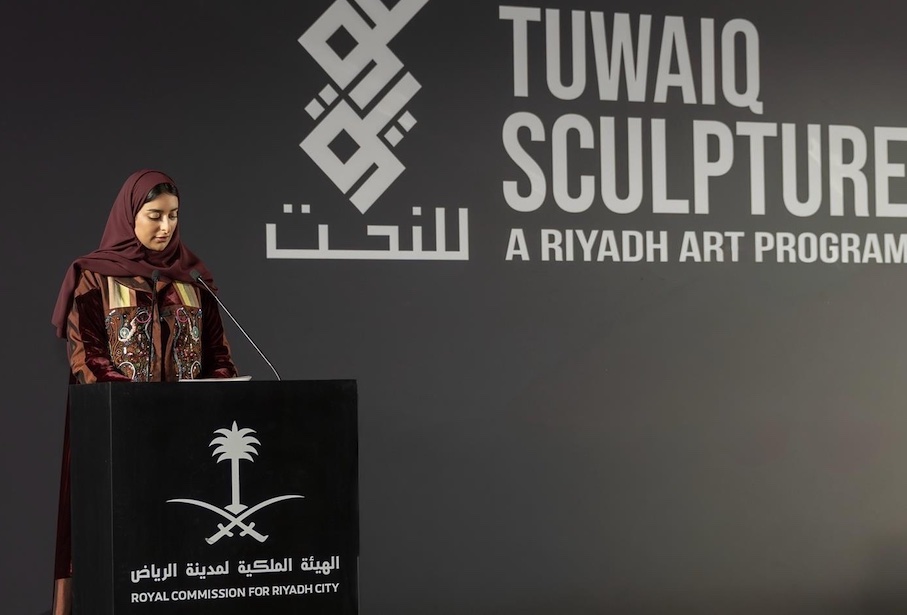
Whilst the symposium had previously been held in the outskirts of the city (which has a population of around 7.8 million), this time it took place in the Tahlia district. There, along Prince Mohammed bin Abdulaziz Street, are many luxury shops selling international brands.
It should be noted that Riyadh should not be imagined as a densely built-up city modelled on old metropolises in Asia or Europe. It is, rather, comparable to Los Angeles – residential districts fade into the distance along multi-lane thoroughfares. The financial district is an exception.
The name of the Tahlia district derives from the Arabic word for ‘desalination’, according to the press materials: Saudi Arabia has been practising this method of supplying the precious liquid since 1907 – the chronicles tell the story of the port city of Jeddah, where the Saudis learnt the procedure.
With Tahlia, the narrative shifts to the centre of the Arabian Peninsula, where Riyadh stands today, and where there was presumably once a large oasis with brackish water.
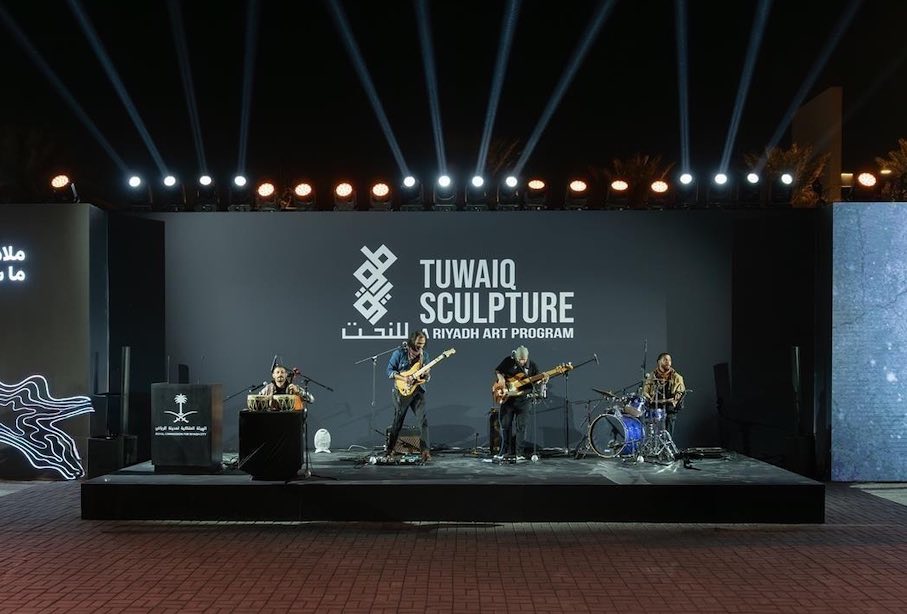
Saudi Arabia now converts vast quantities of seawater into fresh water, primarily in plants along the Red Sea. The Saudi Water Authority’s website cites the unimaginable figure of eleven million cubic metres of drinking water produced daily in the country!
There is some news to report regarding the symposium:
* This time, it was also open to artists who work with metal or use metals as a complement to stone;
* the spirit of the times was reflected here in that the metal used was explicitly required to come from recycling;
* the number of invited artists was reduced from 30 to 25;
* Dr Manal Murshid Al-Harbi, a researcher at Princess Nourah University, an artist herself and former Tuwaiq curator, has published ideas for the further development of the symposium in the Saudi Journal of Art and Design (2025, Vol. 5, Issue 2, 281–326).
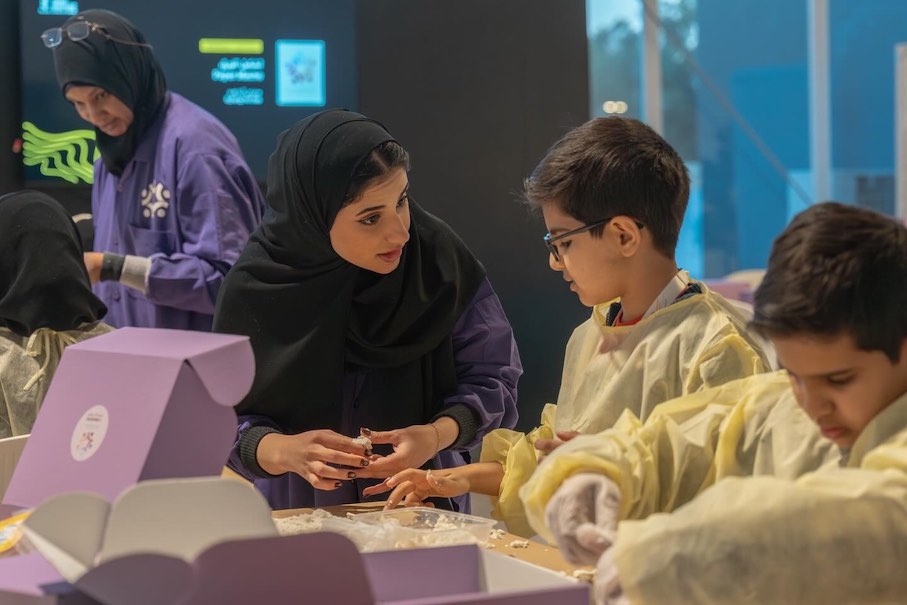
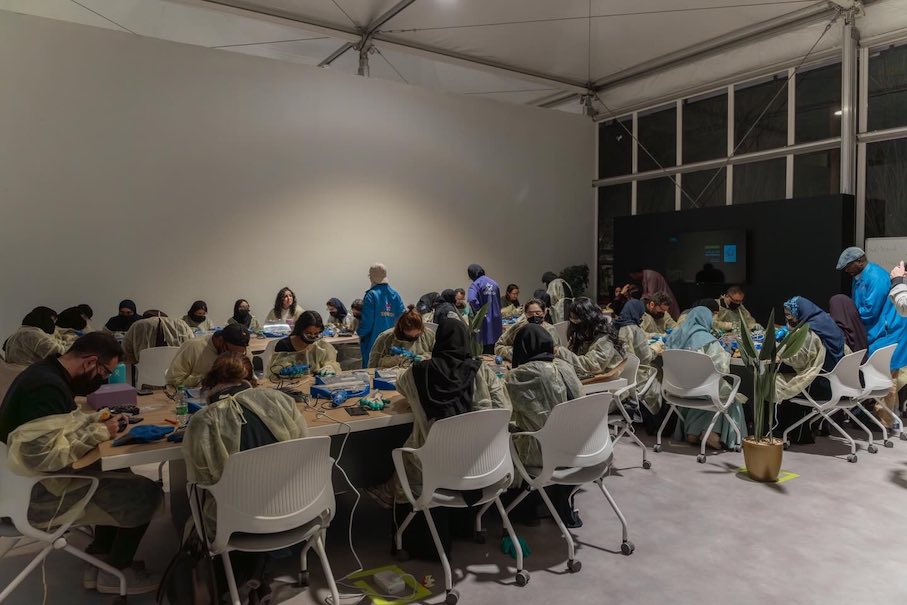
The section of the programme involving the public in the symposium was expanded. This includes the “apprenticeship programme,” for which young people could apply. It has become a well-established tradition at Tuwaiq for school classes to visit.
The works from the symposium will be distributed throughout the city and exhibited there.
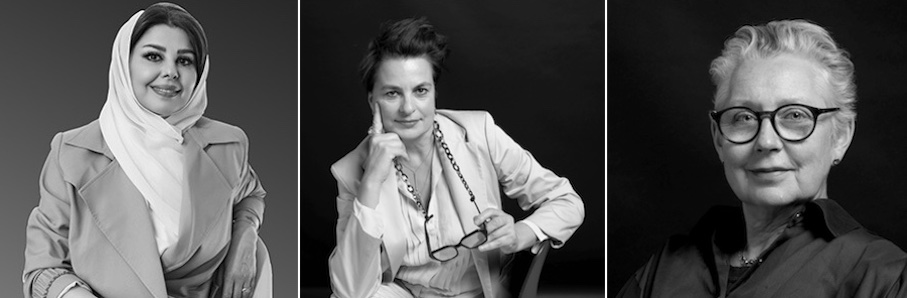 This year’s curators were:
* Lulwah Al Homoud, an award-winning curator, artist, and visual communication expert with a global portfolio of curatorial consultancy and artistic collaborations;
* Rut Blees Luxemburg, an artist whose photographic and public practice investigates the poetics and politics of the contemporary city;
* Sarah Staton, a visual artist, educator, and curator whose multidisciplinary practice engages with the social and spatial dimensions of art in public space.
By the way: the name Tuwaiq refers to the mountain range that can be seen on the horizon from the capital.
Royal Commission for Riyadh City (RCRC)
Saudi Journal of Art and Design (Arab)
Photos: Royal Commission for Riyadh City