Stone-Ideas.com


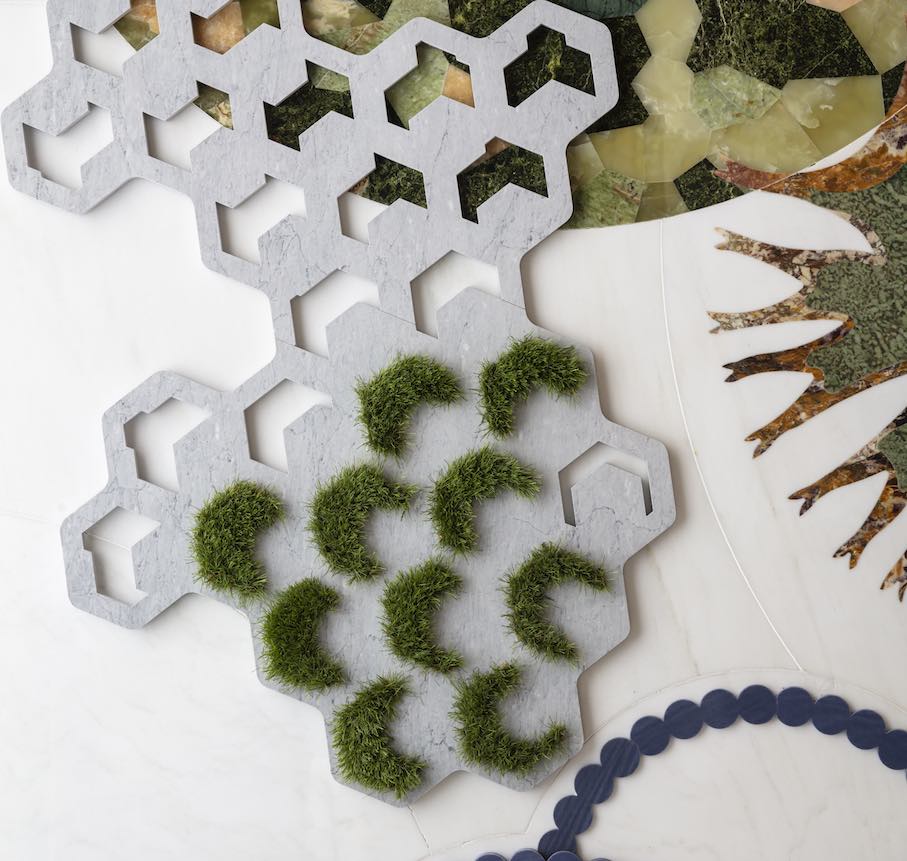
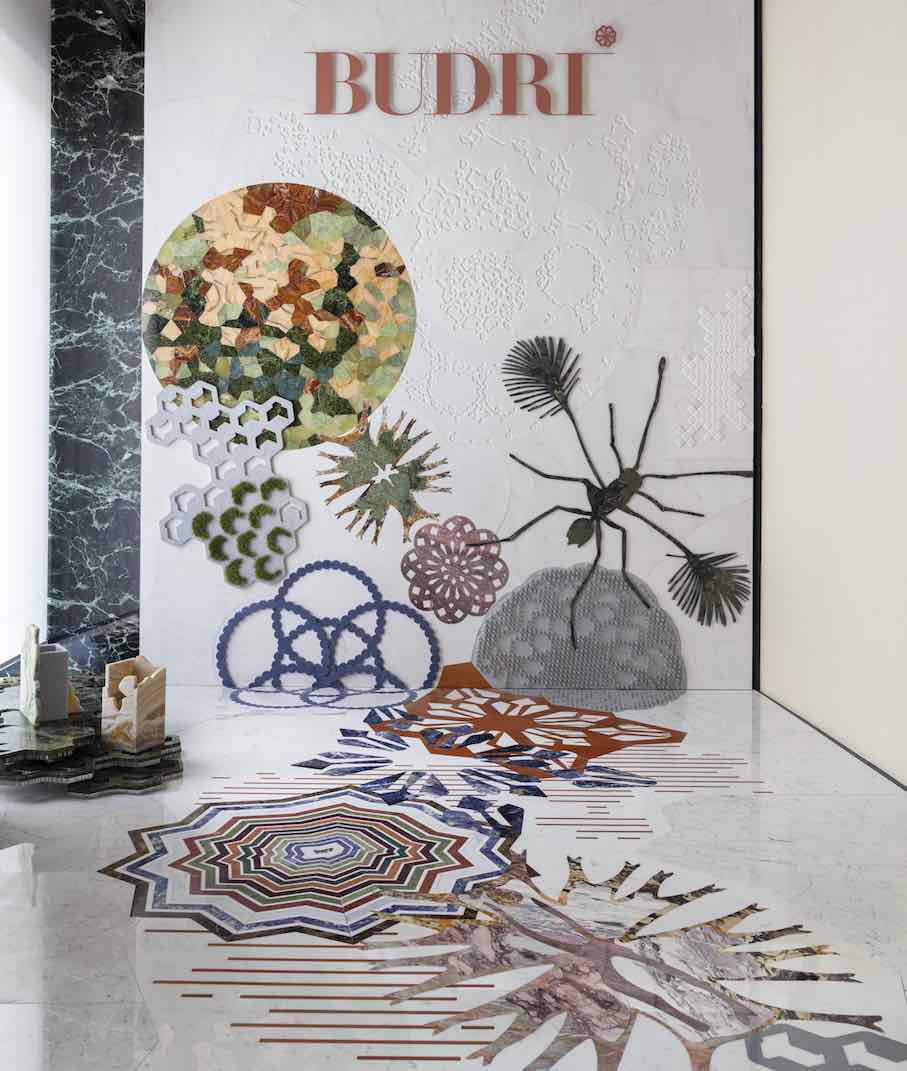
Die italienische Firma Budri in den vergangenen 20 Jahren zusammen mit ihren Designern viele der großen Themen der Welt in die künstlerischen Arbeiten einfließen lassen: Ein solches Thema waren Umweltaspekte, etwa der schonende Umgang mit dem Material Stein oder die Verwertung von Abfall aus der Produktion.
Aktuell stellt sich für uns damit die Frage: Was eigentlich ist mit der Künstlichen Intelligenz, die doch im Moment und überall das große Thema ist – hat Budri mit seinen Steinen nichts dazu zu sagen?
Die Antwort auf unsere Frage findet sich in den Presseunterlagen zur aktuellen Kollektion „Arc-Hive“, die erstmals zur Milan Design Week im April 2026 der Öffentlichkeit präsentiert wurde: Dort taucht der Begriff „Slow Creativity“ (Langsame Kreativität) auf, den Alessandra Malagoli Budri, Kreativdirektorin der Firma, benutzt. Was sie damit meint, ist: „Wir laufen Gefahr, Dinge nur noch flüchtig wahrzunehmen, ohne sie wirklich zu betrachten, und ihren Wert, ihre Kreativität, ihre Details und ihre Sprache nicht mehr zu erkennen.“
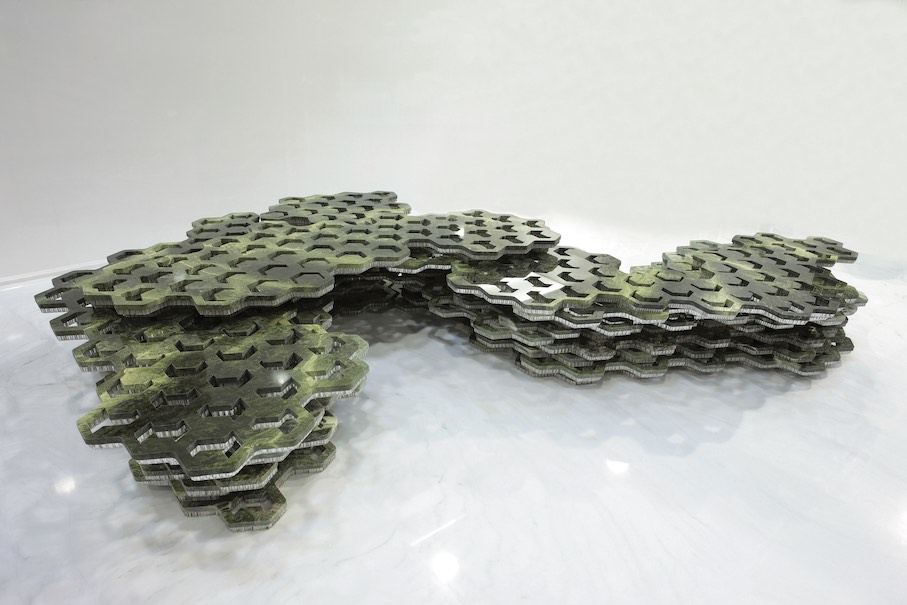 2009: Algae Benches from the Macrosterias collection. Benches made with inlaid honeycomb structures in Verde Bowenite marble, stacked on multiple levels. The visible combination with the aluminum support is intentional.
Budris Antwort auf die zunehmende Bedeutung der Algorithmen ist, einen Moment innezuhalten und die Ideen von Menschenhand wirklich wertzuschätzen – anders als die Programme der KI, die nach der Maßgabe der Gewinnmaximierung einen permanenten Ausstoß produzieren, der in Wirklichkeit nur das schon Vorhandene in neuen Zusammenstellungen reproduziert.
Wirklich neue Gedanken kann die KI nicht schaffen – zumindest bisher, wohlgemerkt. Was da noch kommt, weiß man nicht.
„Arc-Hive“ blickt zurück auf 17 Jahre Kooperation von Budri mit der spanischstämmigen Designerin Patricia Urquiola. Im Showroom der Firma im Foro Buonaparte 60 in Mailand sind 20 Objekte aus den Kollektionen dieser Zeitspanne ausgestellt.
Die Präsentation beginnt mit „Macrosterias“ aus dem Jahr 2009, einem Meilenstein in der Entwicklung der Firma, als sie eine fiktive Biologie in ihre Inlays aufnahm. „Der Marmor wurde zu einem Teppich, zu einer tropischen Matte, zu einer vertikalen Verkleidung, die durch ihre Tiefe und optische Leichtigkeit zu überraschen vermag,“ blickt die Firma in den Presseunterlagen zurück.
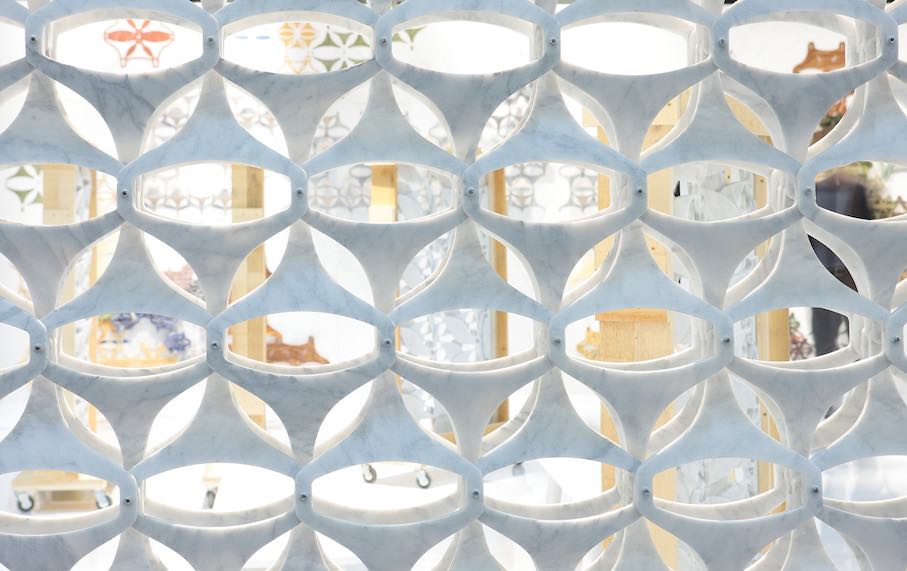
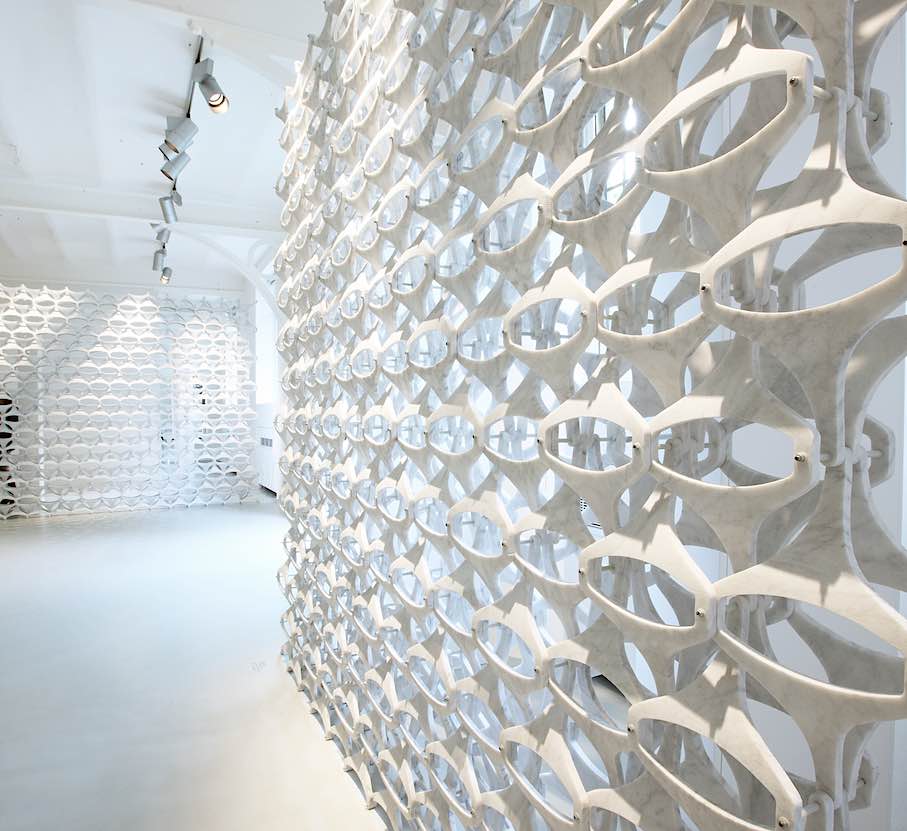 2010: Lace Screen from the Marblelace collection. A large, highly complex perforated wall in Bianco Carrara, created with concave and convex elements that create a jalousie-effect texture.
Und weiter ging es mit ehemals ganz innovativen Denkansätzen: „Von diesem Moment an wurde das Experimentieren zu einem Markenzeichen von Budri: Onyx, der wie Aquarellfarben behandelt wurde, Marmor in Kombination mit Holz, Harz und Glas, Quarz und Geoden, die zu skulpturalen Möbelstücken verwandelt wurden, sowie mit Intarsien verzierte Oberflächen, die an weiche Textilien erinnern, und schwebende Treppen, die der Schwerkraft trotzen. Der Marmor, der traditionell mit Starrheit und Klassizismus assoziiert wird, befreite sich nach und nach von seinen eigenen Klischees und wurde zu einem erzählerischen Material – flexibel und dynamisch.“
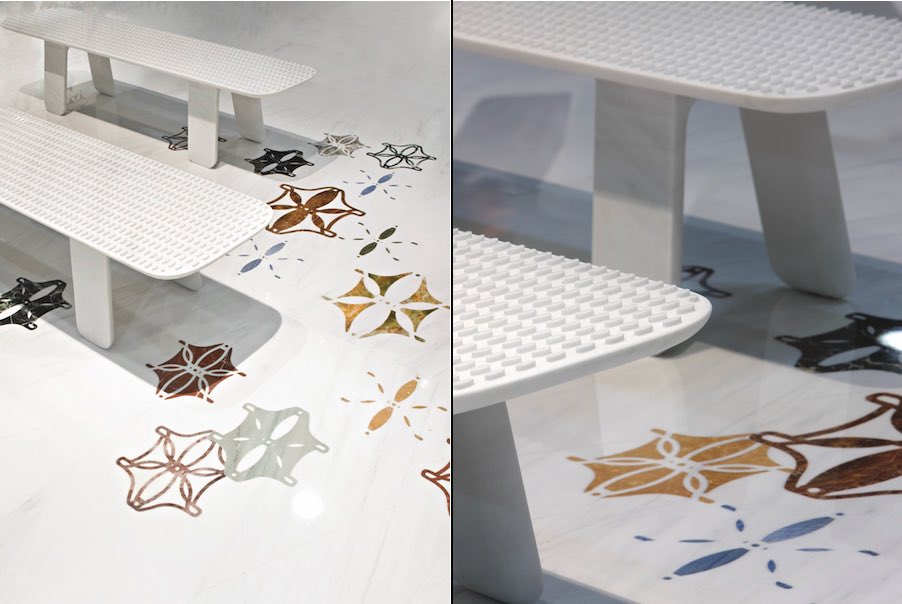 2010: Fachiro Benches from the Marblelace collection. Benches made of polished Bianco Carrara marble, with “biscuit“ legs. The iconic “pixel“ texture gives the seats a unique look. Available in two sizes.
Kritiker mögen vermuten, dass Budri mit dem Blick zurück bloß dem permanenten Druck zu jährlich neuen Kollektionen ausweichen wollte. In Wirklichkeit aber hat die Firma nicht einfach ein paar alte Objekte aus dem Keller geholt, sondern sogar die Designerin Francesca Renai als Kuratorin von „Arc-Hive“ verpflichtet.
Wir zeigen einige der Objekte aus der Schau mit den Beschreibungen der Firma und laden unsere Leser ein, in aller Ruhe das ehemals Neue in den jeweiligen Objekten zu suchen – während derweil draußen die KI rast.
Fotos: Budri
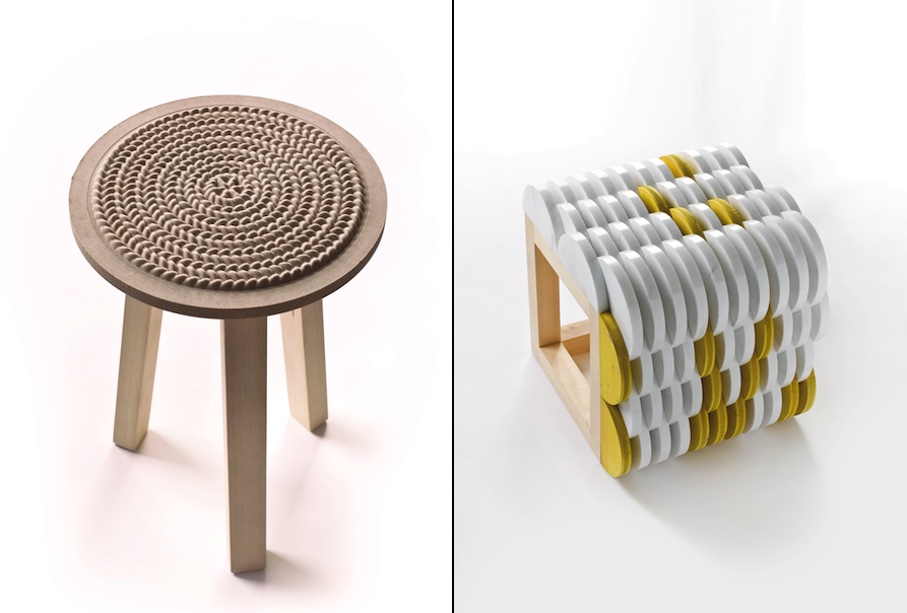 2012: (Left) Nat|F|Use Coffee Table. Coffee table with a knitted texture, made of gray limestone with a concentric tricot pattern.
(Right) Semicircles Bench from the Nat|F|Use collection.
Semicircle bench in Bianco Lasa marble and spruce wood with a neon yellow finish. Internal frame in spruce wood.
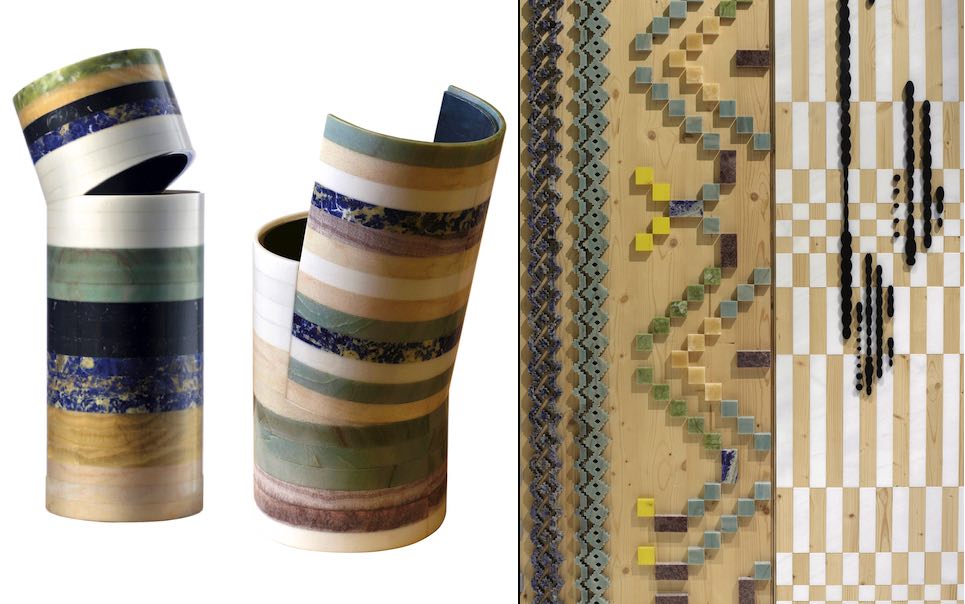 2012: (Left) Y-Tube Vases from the Nat|F|Use collection. Vases inspired by the joints between hydraulic pipes, composed of a regular alternation of thin marble and onyx rings of varying widths and colors. A second cylinder, positioned at an angle, forms a Y with two slanted openings.
(Right) Nat|F|Use Paravent. Screen inlaid with glass, wood, and polychrome marbles and onyxes, enclosed in neon yellow wooden frames.
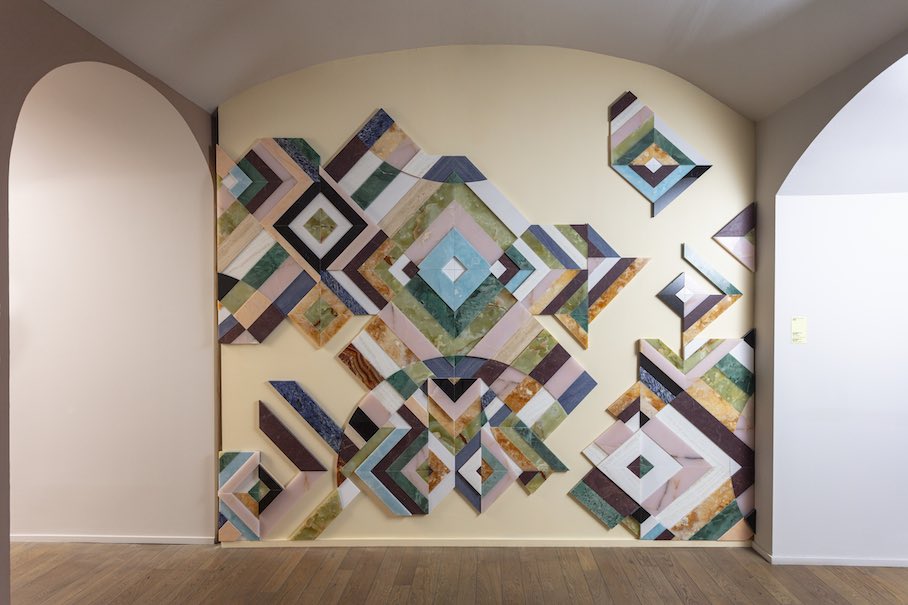 2013: Earthquake Artwork. Fragments of marble and semi-precious stones, sourced from the stunning and precious slabs that survived the 2012 Emilia-Romagna earthquake, are “reborn“ in the expansive and majestic Earthquake 5.9 artwork. Precious marbles and onyxes are juxtaposed with “color-block effect“ areas. The large lenticular-effect decoration covers the wall in alternating backgrounds.
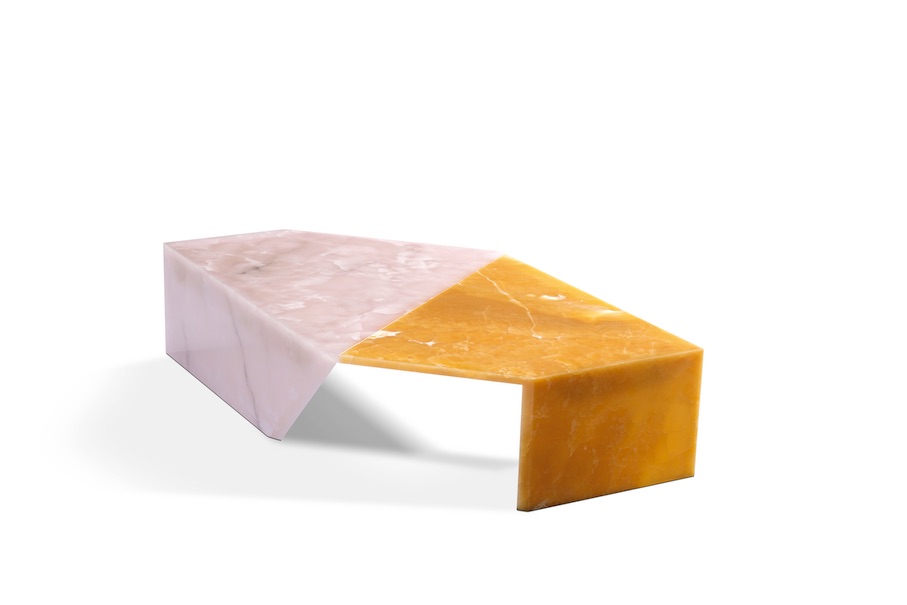 2013: Origami Bicolor Coffee Table from the Earthquake 5.9 Collection. As if marble were paper, the Origami Coffee Table collection is inspired by Japanese origami. The two-tone variant, in Honey Onyx and Pink Onyx, offers a combination of delicate pastel tones.
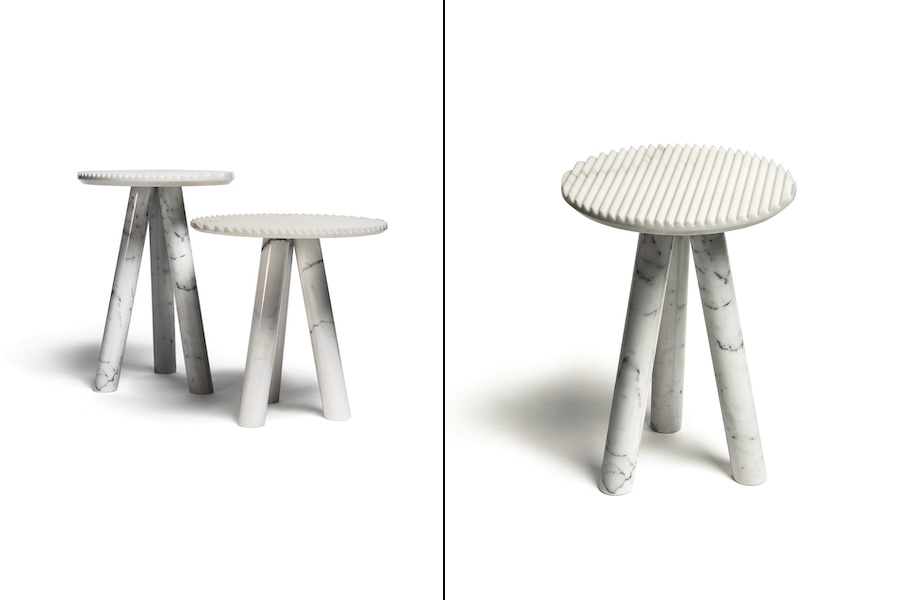 2014: Rabbet Coffee Tables available in Calacatta marble. The comb-textured tops feature sloping, beveled edges. The straw-shaped legs enhance the geometric design and highlight the natural veining of the marble.
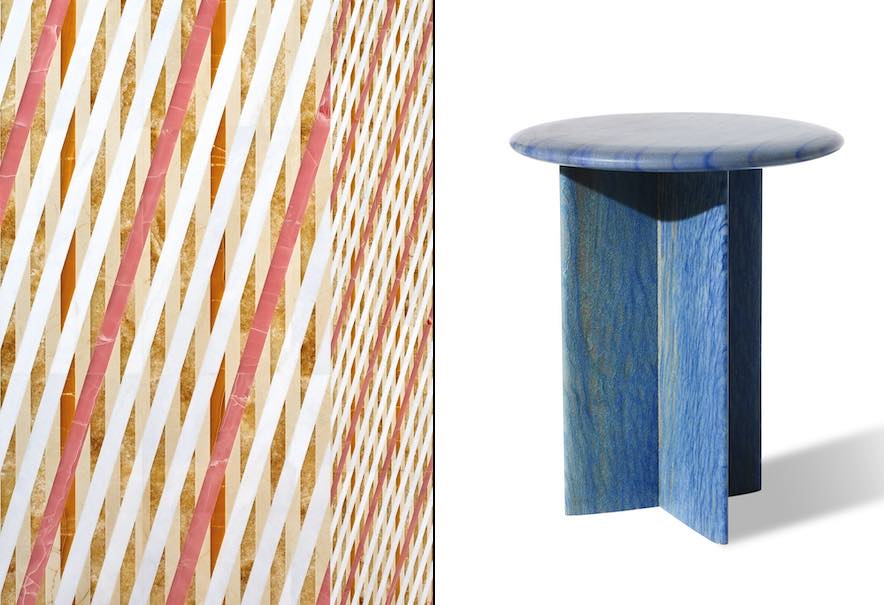 2015: (Left) Papiro Bonbon Wall Inlay. Wall inlay with a Bonbon motif, from the Papiro collection. Made of polychrome marble and onyx: Bianco Sivec, Pink Onyx, Rosa Portogallo Estremoz, Honey Onyx.
(Right) Papiro Coffee Table. Coffee Table made of Azul Macaubas, a precious quartzite extracted from the Brazilian Macauba quarry. The circular, solid wood “button“ top, with a polished finish, rests on a T-shaped base, highlighting the longitudinal grain.
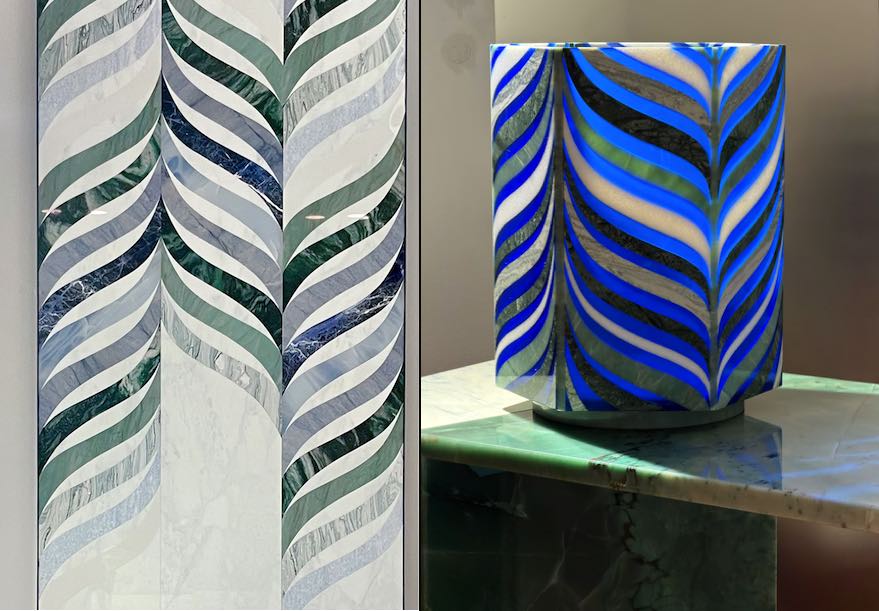 2018: (Left) Algas Wall Inlay from the Agua collection. Modular wall covering with artistic inlay that reproduces the algae of the Algas vase on a larger scale. Sinuous and elegant inlays in Verde Cipollino, Lapis Lazuli, Bianco Sivec, Verde Lapponia, Verde Acquamarina, Azul Macaubas, and Onice Bianco, on a Calacatta Caldìa base.
(Right) Algas Vase from the Agua Collection. Algas Vase, focus of the Agua Collection, is an astonishing hexagonal vase which evokes the sinuous, fluctuating strand of seaweeds. It features a marble inlay in delicate shades contrasting with sections of blue resin. The inlays in Verde Cipollino, Bianco Sivec, Lapis Lazuli, Verde Acquamarina, Verde Lapponia, White Onyx, Azul Macaubas and Verde Guatemala match the bottom of the vase in Verde Acquamarina.
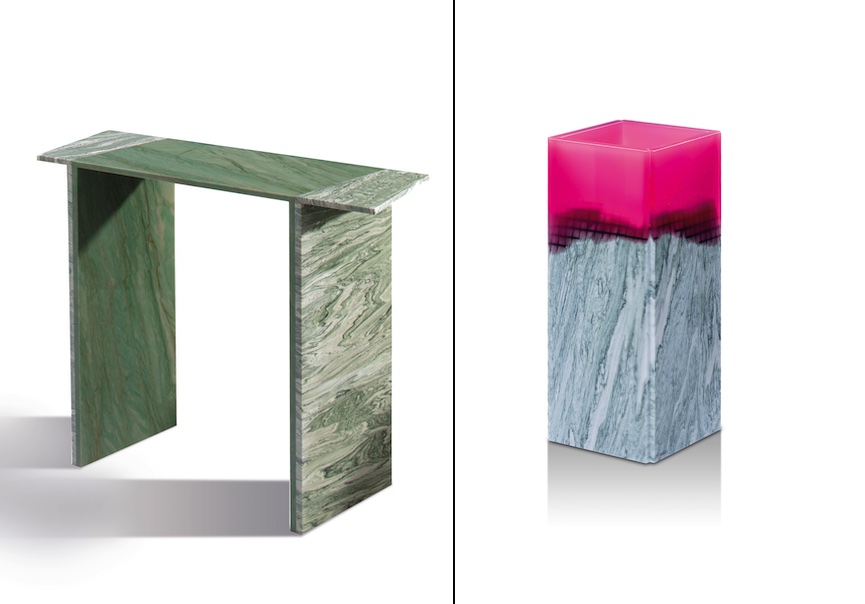 2018: (Left) Orilla Console Table from the Agua Collection. With a strong graphic connotation, the Orilla Consolle is made of Verde Cipollino and Verde Acquamarina. The top features a graphic continuity with the diagonally placed legs.
(Right) Orilla Onyx & Cipollino Vases from the Agua Collection. The Orilla vases, meaning “shore“ in Spanish, are inspired by the seashore and the clarity of marine waters. They are crafted from precious Iranian White Onyx and Verde Cipollino, combined with colored resins. The materials are “contaminated“ by a black mesh, a scar from the original slab from which they are carved. The colored resins —emerald green, indigo blue, coral red, and neon pink— create a striking contrast, a play of light and transparency that overlaps in different perspectives.
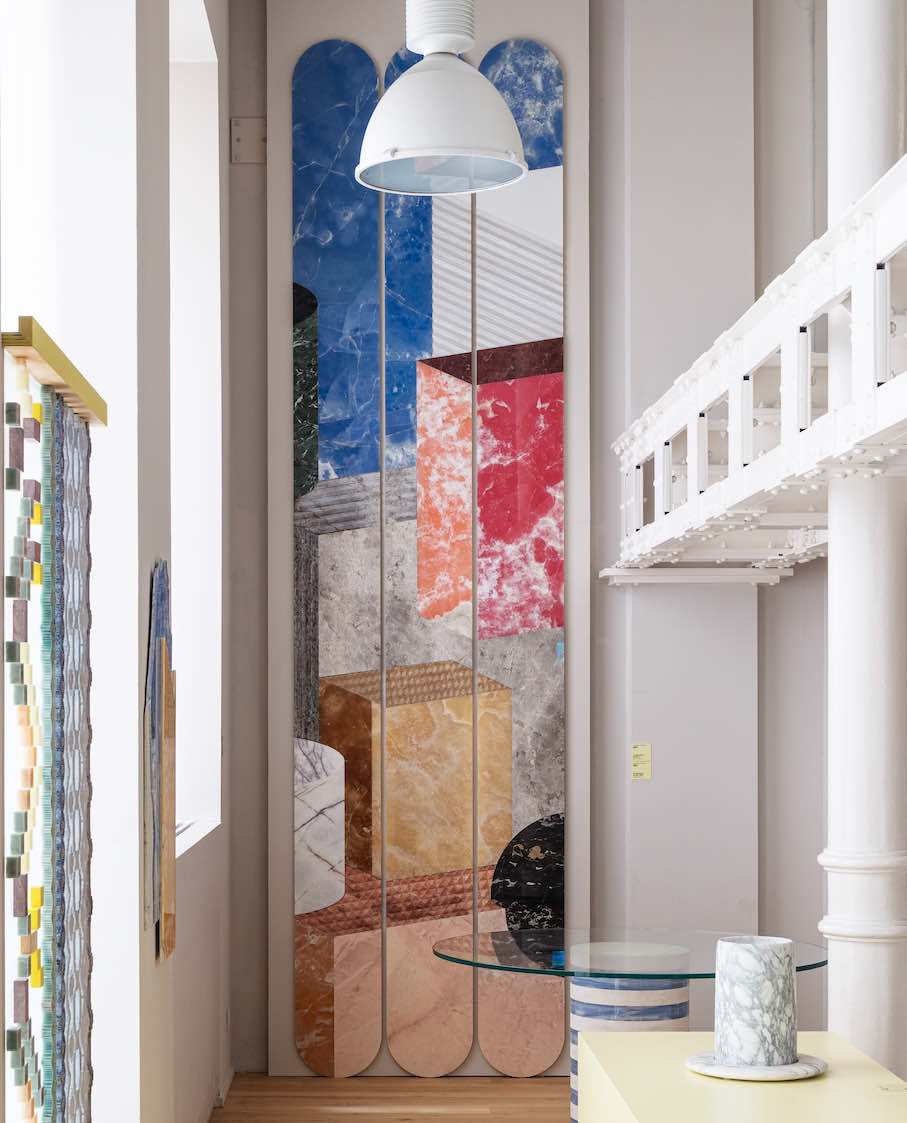 2021: Architexture Artwork. The Architexture Artwork creates a dialogue with space through architectural volumes and depth plays. Geometric shapes and nuanced colors enhance the stone’s veining, while a sky in Aquarel Iranian Onyx dominates an imaginary city. The relief textures, inspired by Italian architecture, enrich the work, intertwining material and history.
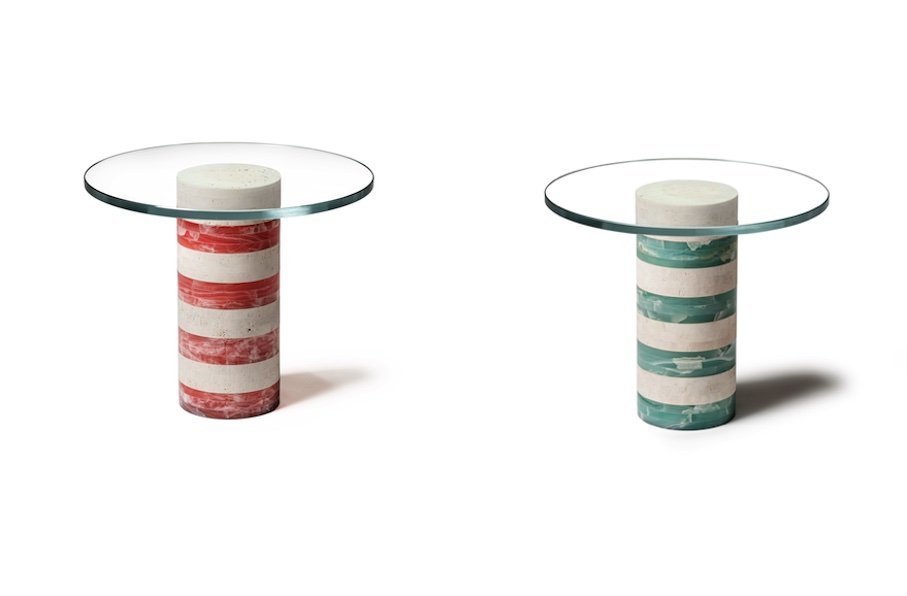 2021: Architexture Side Tables. Side tables with a circular top in extra-clear glass and striped column legs composed of alternating travertine, a rough and textured material, and Iranian onyx.
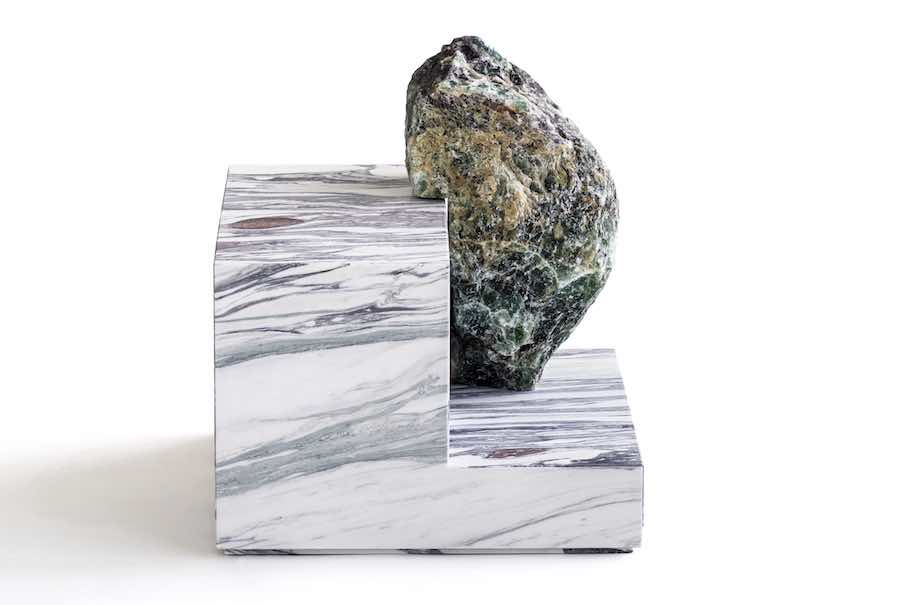 2024: Mass Rocas Fluorite Coffee Table from the Geodies collection. The one-of-a-kind Mass Rocas Fluorite coffee table takes its name from the presence of a primordial Fluorite stone. The Fantastico Arni marble, Vena Viola, with its pictorial veining, forms a perfect match with the fluorite’s hue. The table, with its rigorous form, houses the large stone with its imperfect forms, typical of rocks in their natural state. The fusion of smooth material, the rough matrix of the stone, the sheen of the marble, and the matte colors of the stones is the recurring theme of this precious, one-of-a-kind coffee table.
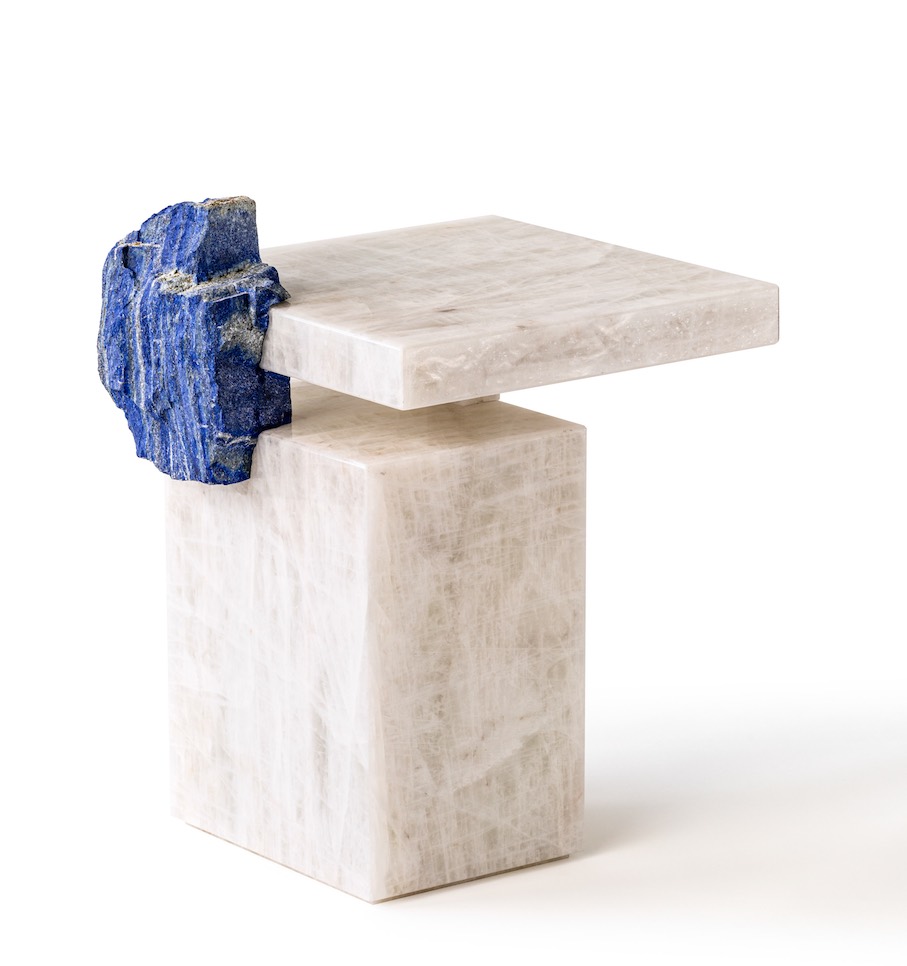 2024: Mass Rocas Sodalite Side Table from the Geodies Collection. Mass Rocas Sodalite – Side Table takes its name from the extraordinary presence of a primordial Sodalite stone. The boulder, in its purity, becomes an integral part of the tabletop. The white quartzite that composes the piece, with its delicate streaks, forms a perfect combination with the blue hue of the Sodalite. The tabletop appears suspended from the base.