Stone-Ideas.com


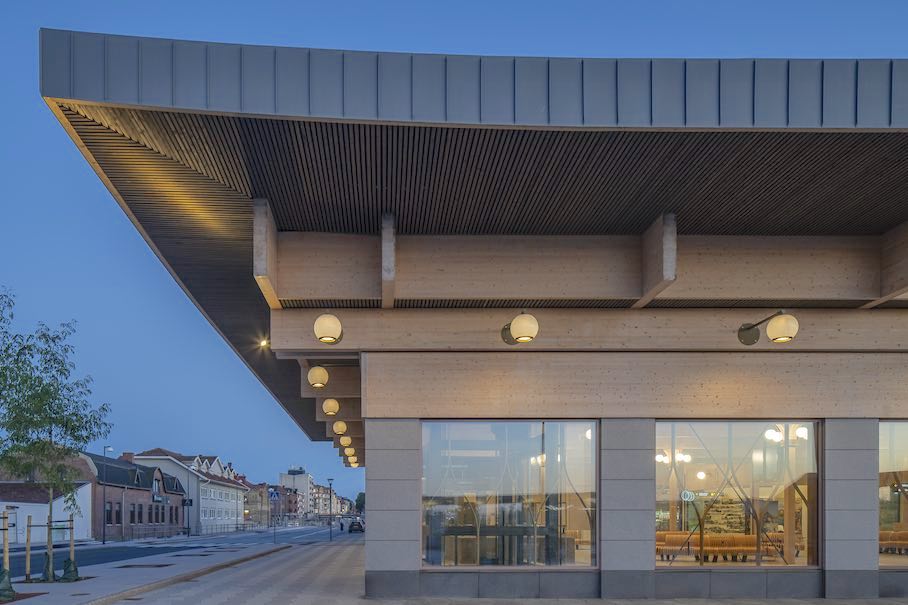
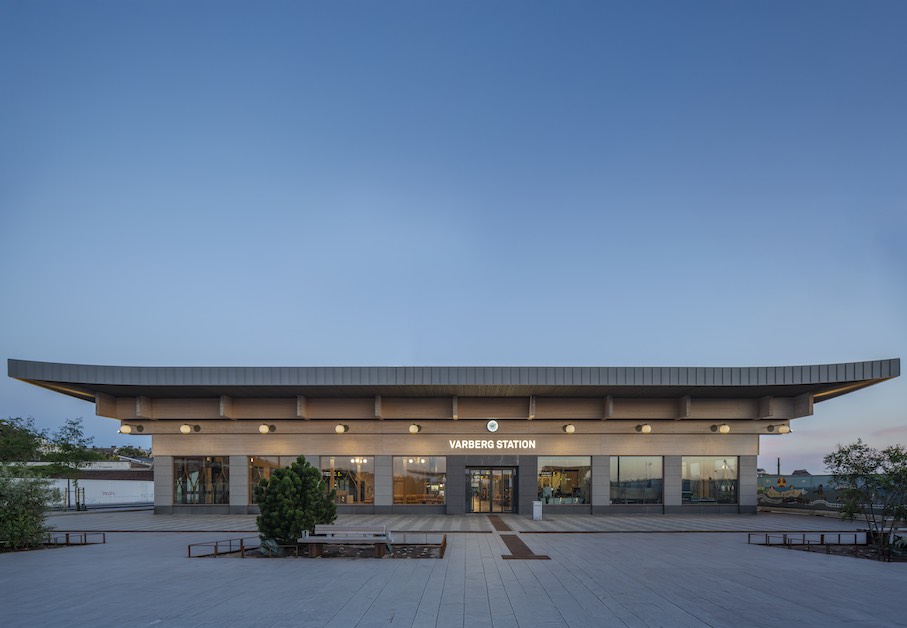
Readers might wonder why the building in Varberg, Sweden, has a roof with upturned corners. Is this meant to allude to the building’s function – after all, it’s a train station, and the appearance of a flying carpet wouldn’t be entirely out of place? Rickard Stark of the architectural firm Okidoki explains the real reason in a report in the magazine “Sten” (3/25) of the Swedish Natural Stone Association: “The proximity to the sea makes the station unique. It was the starting point for the design.”
Because the town of Varberg was a well-known seaside resort, the roof evokes the scene of a strong wind on the beach, causing beach towels to flutter.
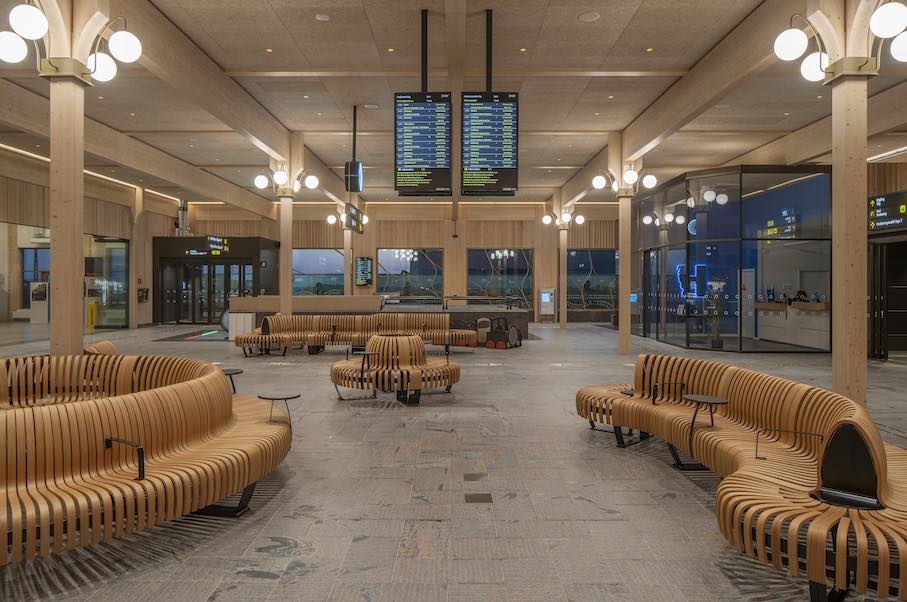
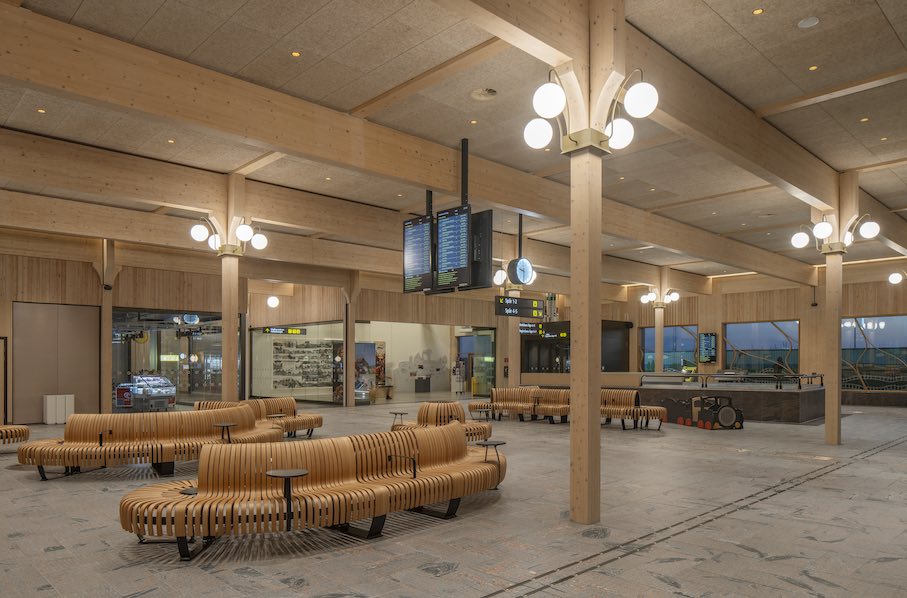
The architects incorporated even more of the local character into the new train station:
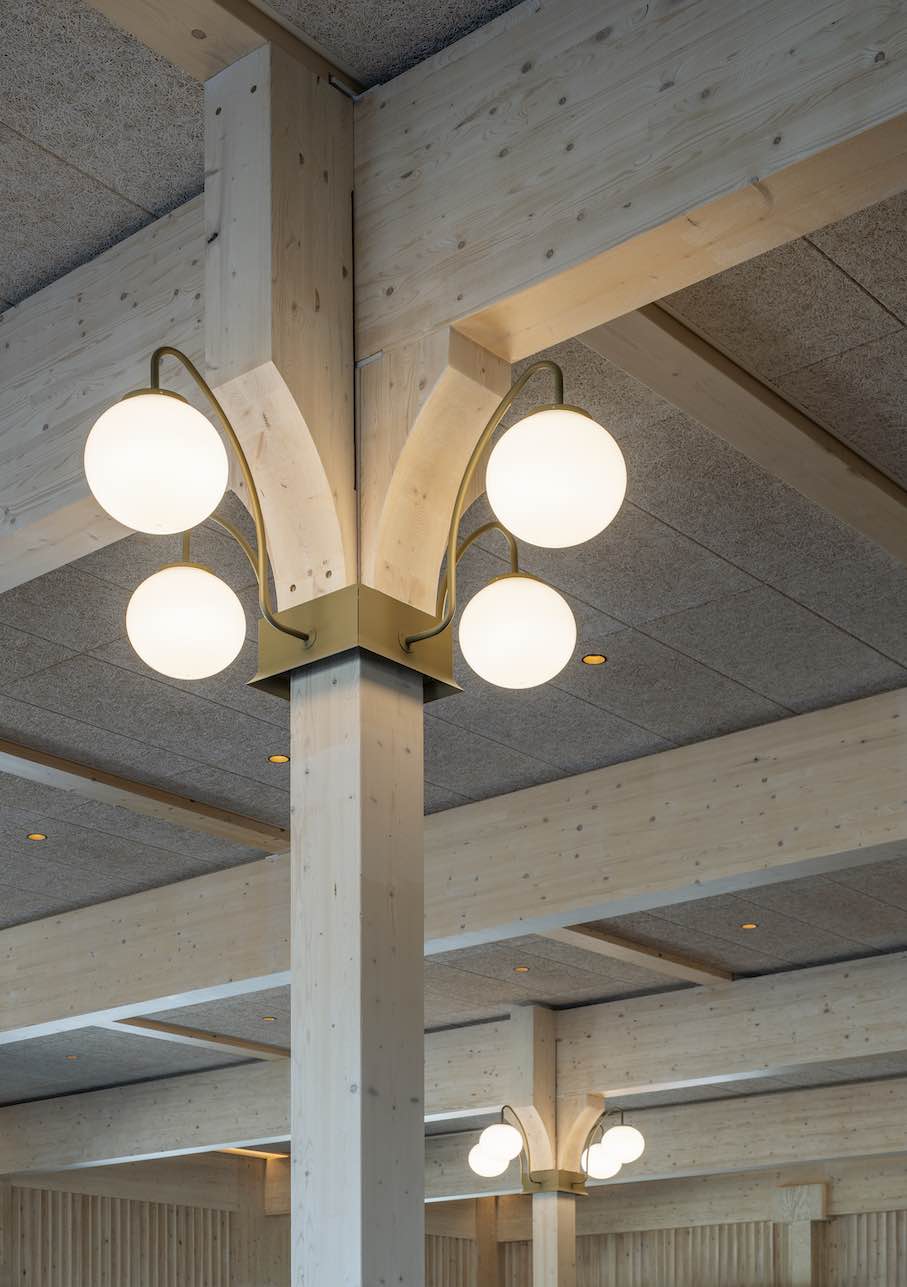
* The supporting structure is made of wood, reflecting the fact that a significant amount of timber was exported via the port of Varberg;
* the floor and the base of the exterior walls are clad in local Halland gneiss – a reference to the nearby fortress and the work of the stonemasons there. The surface of the floor tiles echoes the pattern of ocean waves, an idea conceived by the architects at 02Landskap.
* Around the train station, Tossene Grå Bohus granite and Halland gneis have been laid.
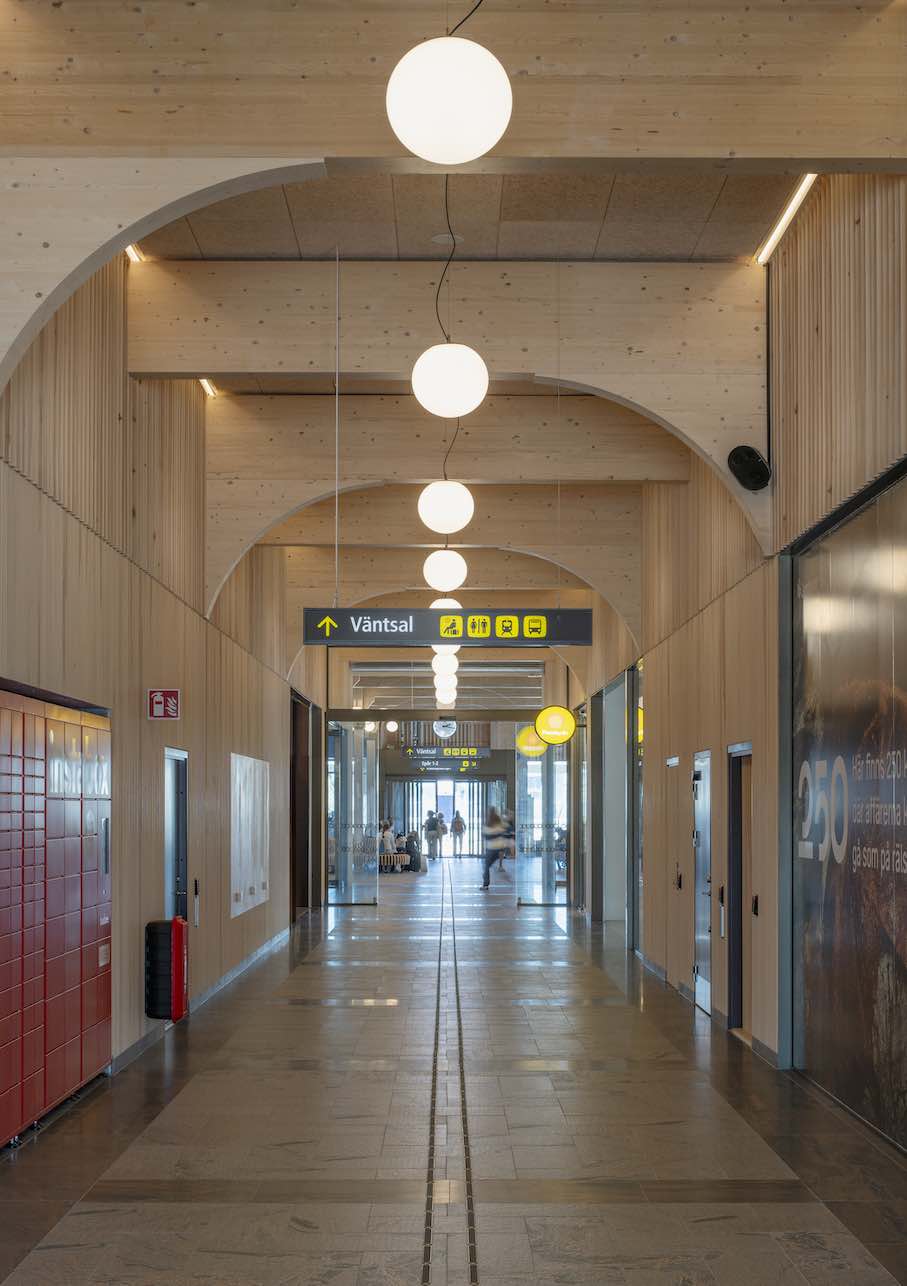
The decision to use natural stone and wood was also made to ensure the building had a minimal ecological footprint. The Recoma panels used for the interior cladding, which are made from waste materials and can replace plywood boards, for example, also contributed to this. In addition, the roof is greened and equipped with solar panels.
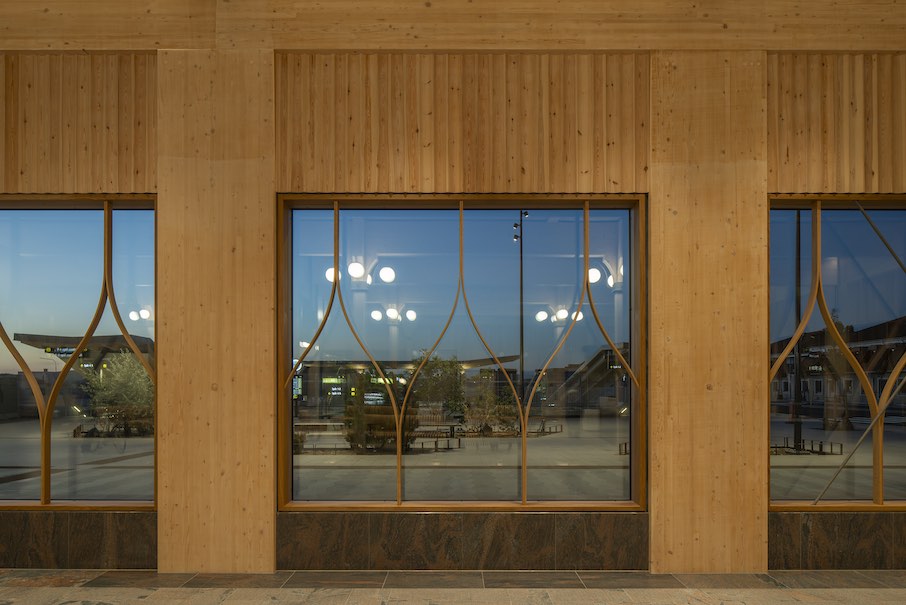
Another detail: The Varberg cold bath was built in 1903 in an oriental style. Its oriental design is reflected in the windows.
Sten (3/25) (Swedish)
Fotos: Åke E:Son Lindman