 Stone-Ideas.com


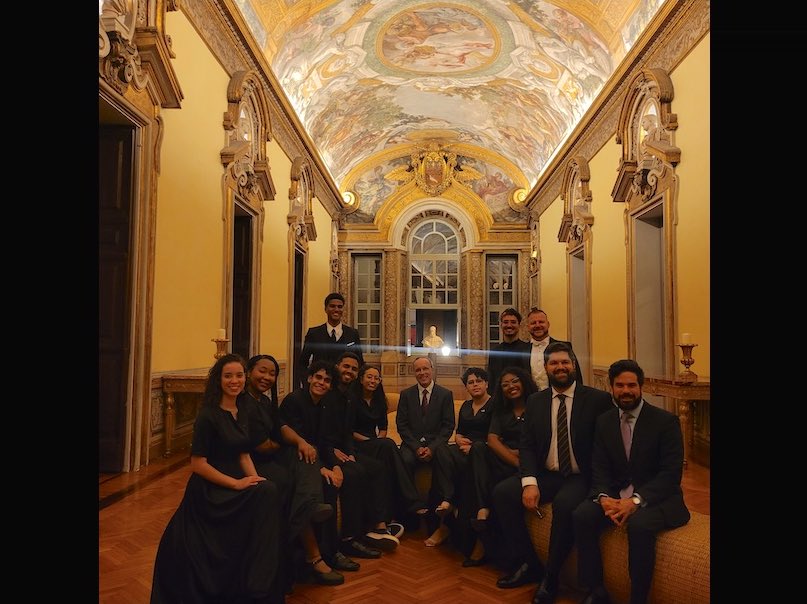
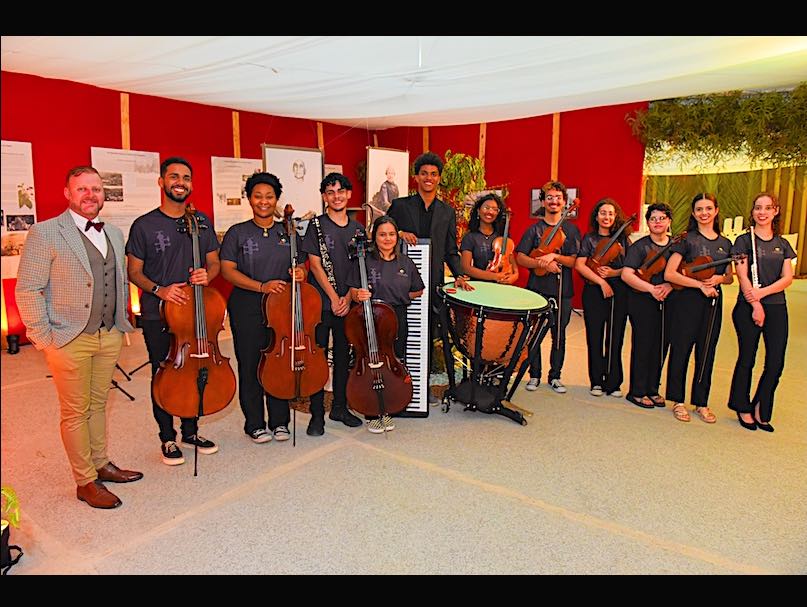
Pope Francis was perhaps reminded of his youth and his homeland Argentina when the young people from Brazil played the folk song “Merica, Merica“ for him. It was the tune of the Italian emigrants to South America, and the Camerata Jovem Rochativa group wanted to commemorate their journey to the other side of the world with the serenade.
The Pope (born in 1936) in a wheelchair followed the three-quarter time of the song with his hands, the television station O Globo reported on the event, which took place after the general audience in St. Peter’s Square on September 18, 2024.
Cell-phone recording of the concert for the Pope.
The recording we found in the net was a bit “out of tune”, but that emphasized even more the professionality of the young people in the improvised situation.
Jump back in time 150 years: On January 03, 1874, the sailing ship “La Sofia” set off from Genoa towards the west and the Atlantic, and on February 21 it reached the port of what is now Vitória in the state of Espírito Santo in the very south of Brazil. On board were 386 Italians who had literally left everything behind given the miserable situation at home.
“Another 15 years later, in 1889, among the families on board another immigrant’s transporter, Pietro Scaramuzza, his wife Giuseppa Bracheschi, and their children Luigi, Giuseppe, and Ângelo also reached the Port of Vitória,” writes Araciene Scaramuzza Pessin, natural stone entrepreneur and designer, in a report in Stone-Ideas.com about the history of her family and the beginnings of Brazil’s stone industry.
She has invested a lot of time in securing the remaining documents and presenting them to the public in an exhibition.
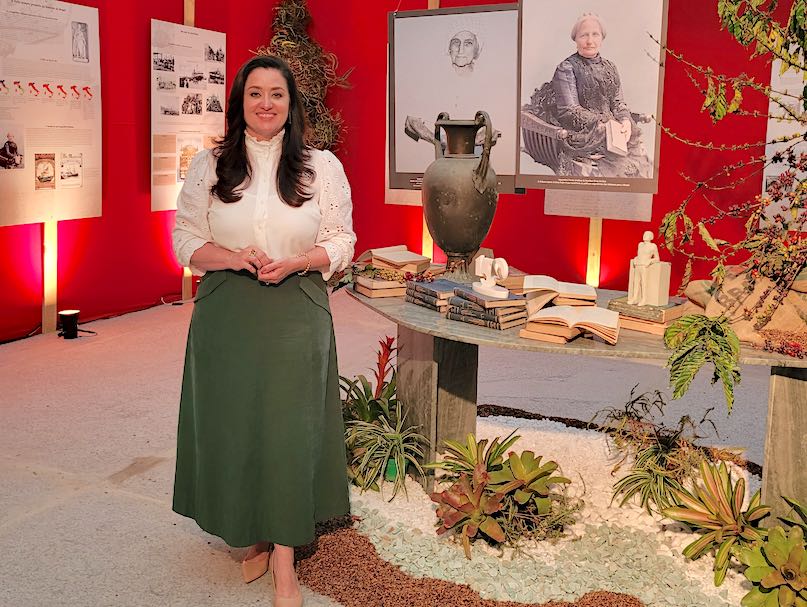
Historians estimate that by the end of that century, half a million Italians had landed in Brazil.
Either way, the Camerata Jovem Rochativa, the group of young Brazilian musicians, has its roots in these immigrants. The name is a combination of the Portuguese words for “stone” and “active,” and is part of a social initiative run by today’s stone companies in Espírito Santo.
This brings us to the present day: in 2007, women from stone companies founded Rochativa. The aim was to bring together the social activities of the companies that had long existed separately and to do more with them.
Rochativa is now known and respected throughout Brazil. The activities are varied, but always socially oriented: sometimes they look after company employees who are in need, sometimes they look after the poor who actually have nothing to do with a company, or they offer school and art for young people and also education.
For example, the Camerata Jovem, from the meaning of the word “camerata” actually a night camp for young people.
The band had a special event to mark the anniversary of immigration. They were sent to Italy on the “Força dos Raízes” (The Power of the Roots) trip, first to Marmomac and then to various performances in a really packed program. The young people also visited numerous historical sites, for example where Brazilian volunteers in World War II are commemorated.
This “Turnê” (tour), as it was called, was made possible by the help and sponsorship of many people and organizations, including the Brazilian embassy in Italy.
The music for the performances varied from old to modern: in addition to “Merica, Merica,” which plays on the name of the immigrants’ dream destination, there were also world-famous pieces from today’s Brazilian music culture, such as the Bossa Novas “Águas de Março” or “Garota de Ipanema” from the 1960s.
Brazil at Marmomac 2024
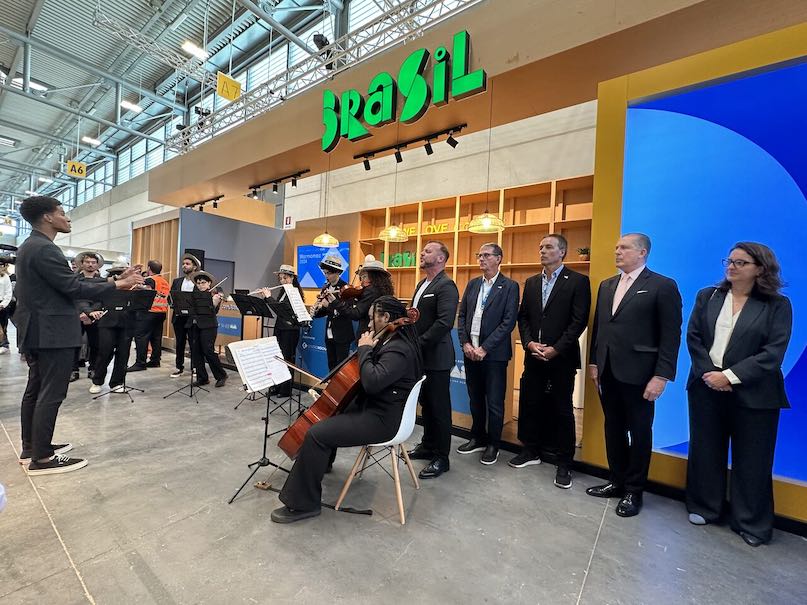
The Brazilian pavilion featured 37 companies from the sector and generated US$ 359.27 million in immediate business and contracts for the next 12 months. “Such a positive result is the outcome of actions like these, participating in major international fairs, and projects developed in partnership with entities in the natural stone sector,“ said Maria Paula Velloso, Industry and Services Manager at ApexBrasil, adding that innovation and sustainability are among the guiding principles of these projects.
According to Tales Machado, president of Centrorochas, “The event in Verona was a great success, with 37 Brazilian companies exhibiting and leaving very satisfied, with both sales and numerous contacts and partnerships established.” Referring to the performance of the young musicians, he said: “This week reinforced Brazil’s position on the international stage and raised expectations for the launch of Marmomac Brazil next year, which will be a grand fair, befitting the potential of our country, bringing even more business and export opportunities for Brazilian companies.”
Camerata Jovem Rochativa (Portuguese)
Photos: Centrorochas (Portuguese)
Merica, Merica
Aguas de Março
Garota de Ipanema