Stone-Ideas.com


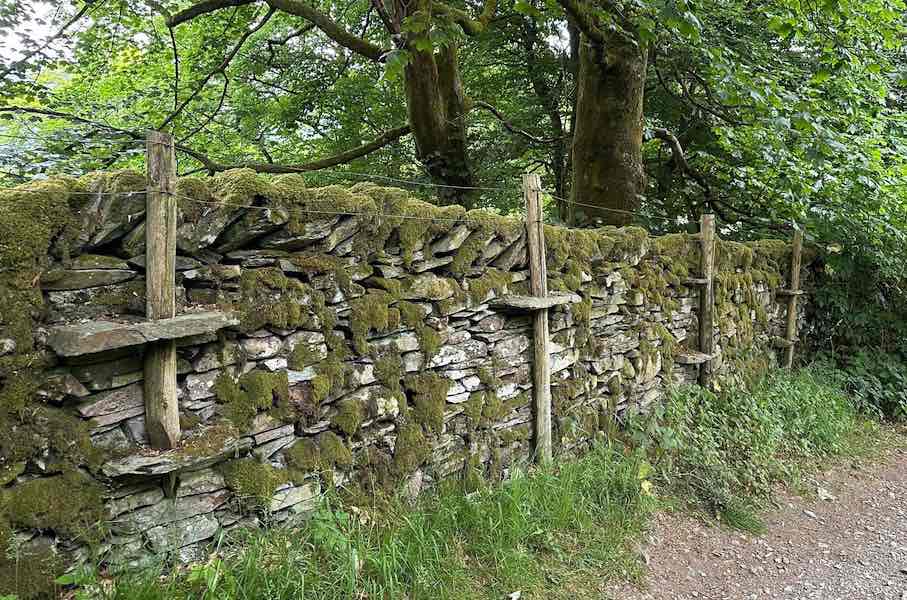
The art of building drystone walls has been added to the Unesco List of Intangible Cultural Heritage (Representative List of the Intangible Cultural Heritage of Humanity). It dates back to the formerly widespread use of mostly roughly hewn field stones, stacked by hand and without any binding agent. Numerous countries advocated for this at the 17th Unesco Assembly in Paraguay in December 2024.
Such walls have been and are being built in many places, sometimes in the form of long lines across land, for example, demarcating fields from one another or serving as windbreaks. National and supranational associations for drystone walls exist in numerous countries.
A video shows beautiful images and commentary in numerous languages on the topic. One of the interviewees gives a succinct definition: “A natural stone wall consists of stones, air, and the art of building it.“ This refers to the expertise about which shapes have the greatest stability and how, for example, to achieve height with as little material as possible.

A drystone wall appears to be characterized by several features:
* The material comes from the surrounding area and remains there;
* If a wall is damaged or destroyed, it can be immediately repaired or rebuilt with the material;
* The interior of the wall is filled with small stones;
* The principle is suitable not only for walls, but also for domes or entire floors;
* Drystone walls are a habitat for many animal and plant species; settlement is brought by the wind or arrives with migratory species.

In the video, one person says: “I’m particularly pleased that drystone walls have become popular again in the digital age. There’s a young generation that practices this ancient craft with great enthusiasm and passion.“
Someone philosophizes: “ It’s very satisfying to be able to say: I did it like I used to, for now and for later.“
Unesco Intangible Cultural Heritage
See also: