Stone-Ideas.com


Representing cloths in stone has been a challenge for sculptors since ancient times. Famous are the garments seemingly blowing in the wind on ancient sculptures, or the folds in the fabric that reveal a person’s body without revealing their nudity, or hint at their facial features and even their current mood.
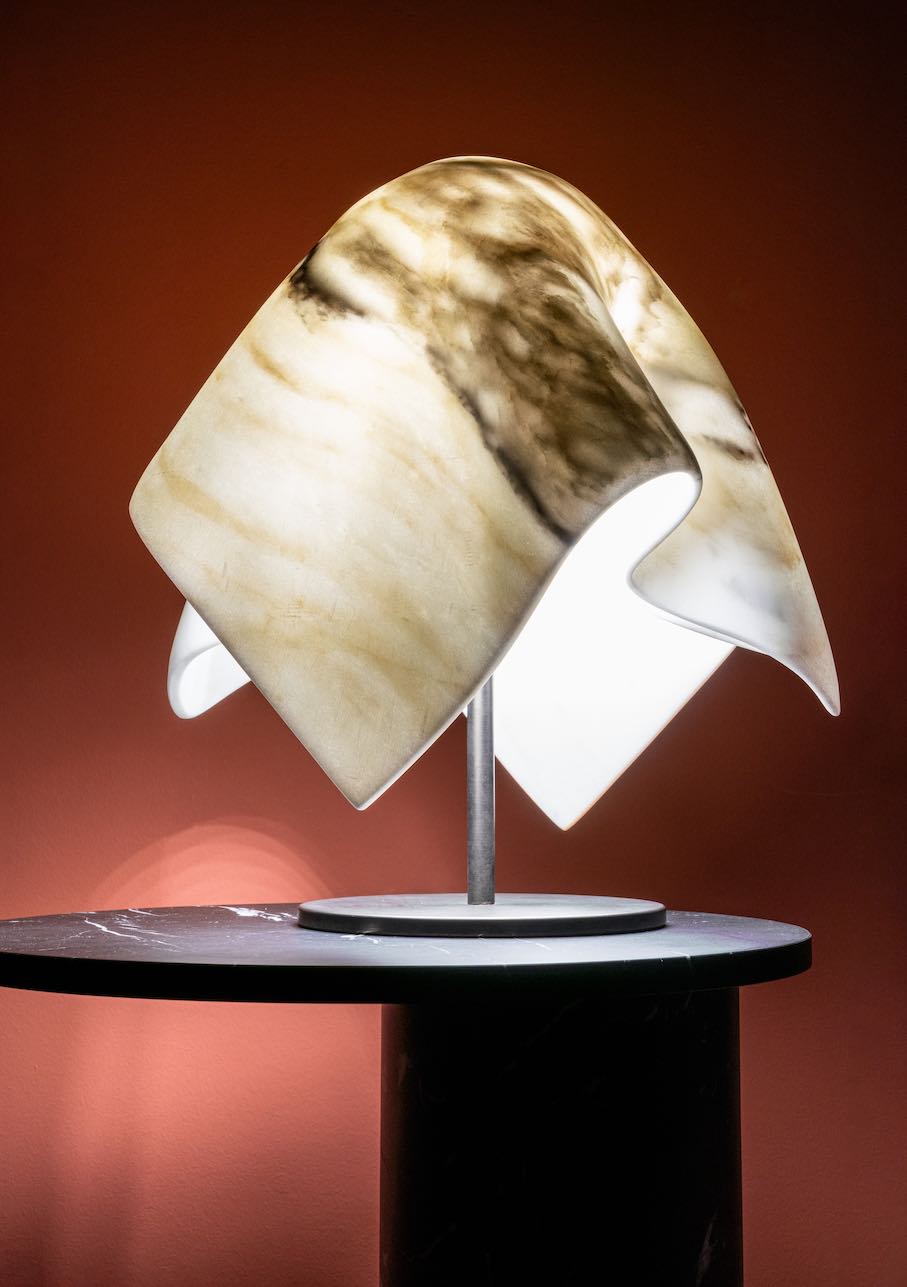
Designer Bruno Tarabella was born in Pietrasanta, not far from Carrara, and has adapted the theme for a new Budri product. The result is the “Velo” (Veil) table lamp, which depicts an everyday gesture: For example, someone might feel disturbed by the bright light in their bedroom and not want to bother fiddling with the controls, so they simply throw a cloth over the lamp.
At least, the description the designer sent suggests this.
What would be a piece of cloth elsewhere is a white marble here, which can become translucent when it becomes thinner. What would be a print or embroidery on a textile are the veins on a stone.
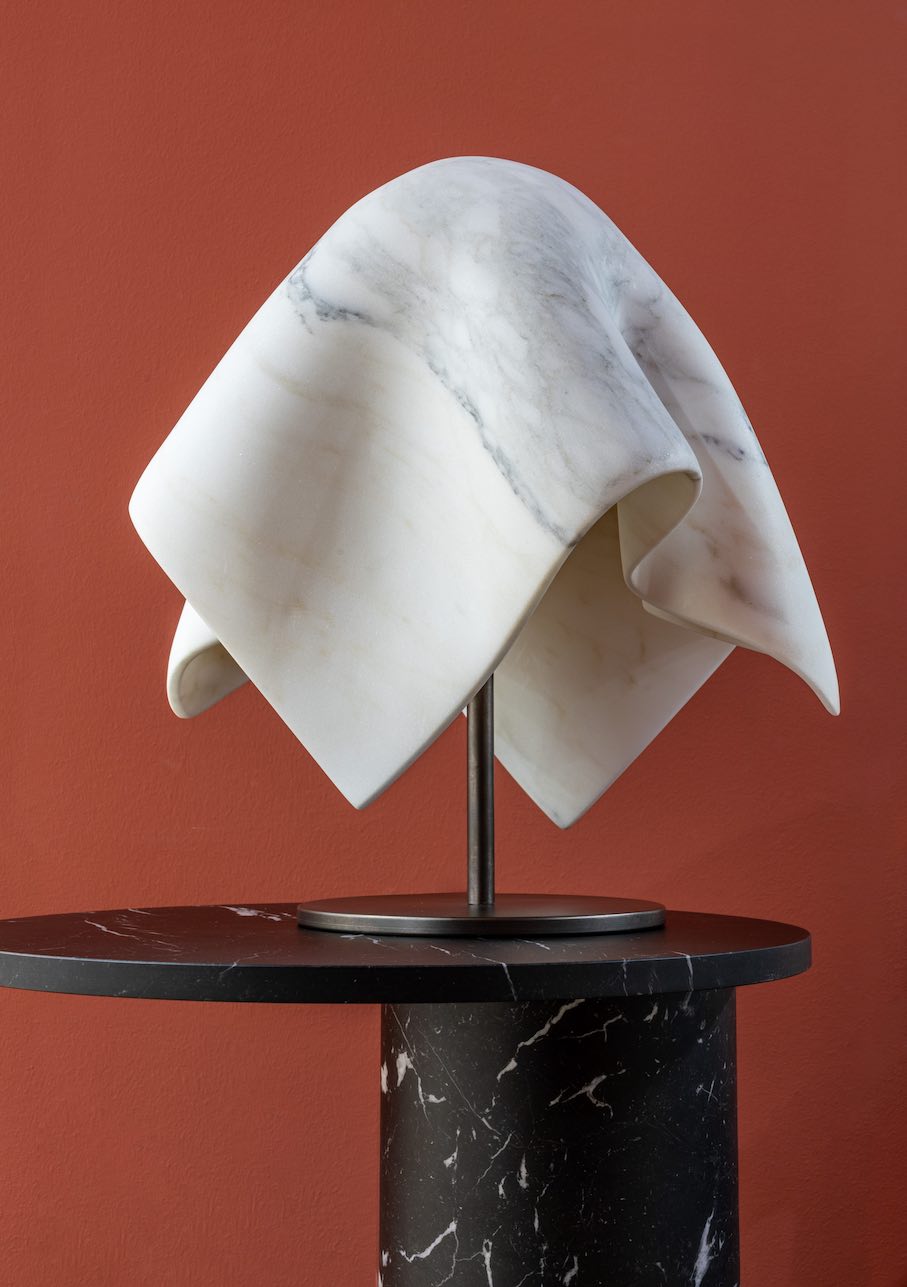
The challenge lies in the details: The stone lampshade has its weight and needs a frame on which it can rest securely. However, none of this is visible because Tarabella played with the thickness of the stone, so that while there is a support for the lampshade, it is not visible even in the light.
Placing the lampshade on the frame, however, opens up another possibility: The stone drapery can be removed again with a simple movement of the hand.
The presentation in Budri’s showroom gave us some practical ideas:
* On the one hand, a customer could, for example, purchase a differently shaped lampshade for each day of the week;
* On the other hand, the lampshades could also be made of stones of different colors, perhaps conveying messages.
Photos: Budri
Budri: CV von Bruno Tarabella