Stone-Ideas.com


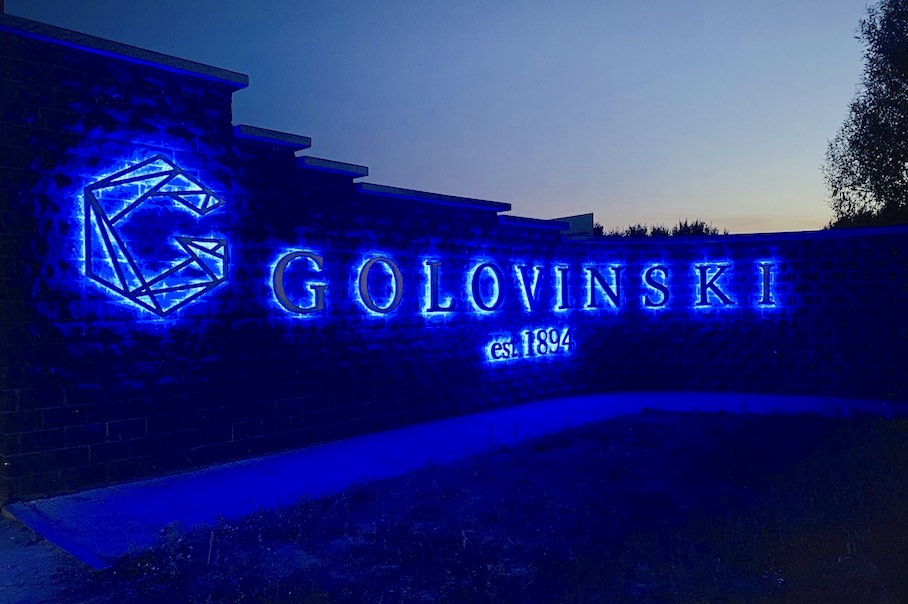
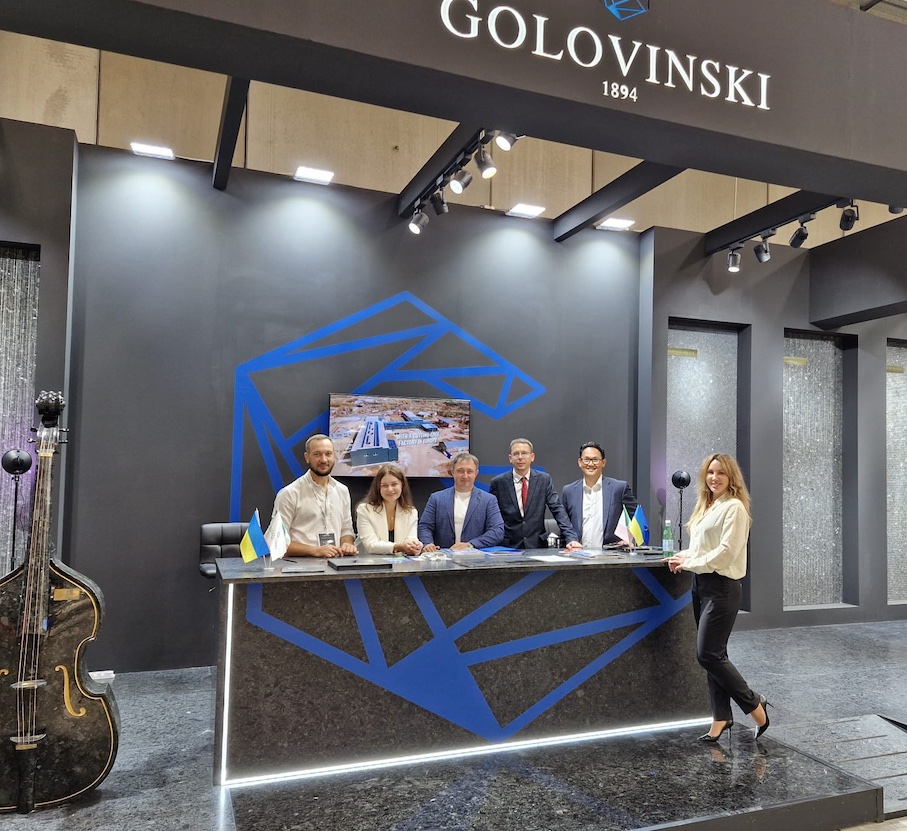
Ukraine is fighting against Russia since the beginning of the Russian invasion on February 24, 2022. Part of its resistance is the production routine in many factories despite the ongoing war. One is Golovinski Stone with its famous GOLOVINSKI LABRADORITE (before: Volga Blue). Asked how quarrying and processing are feasible in these times, the company’s CEO, Alexandr Somak, responds briefly: “We adapted logistics routes, installed backup power systems, and reinforced safety protocols.” The energy backup is 500 kW of solar panels and Caterpillar diesel generators, among other technologies. The result is: “Despite the challenges, our production remains stable and efficient.” Oleg Majewski, a specialist in the country’s stone sector, provides details on Golovinski’s history and today’s equipment.
By Oleg Majewski
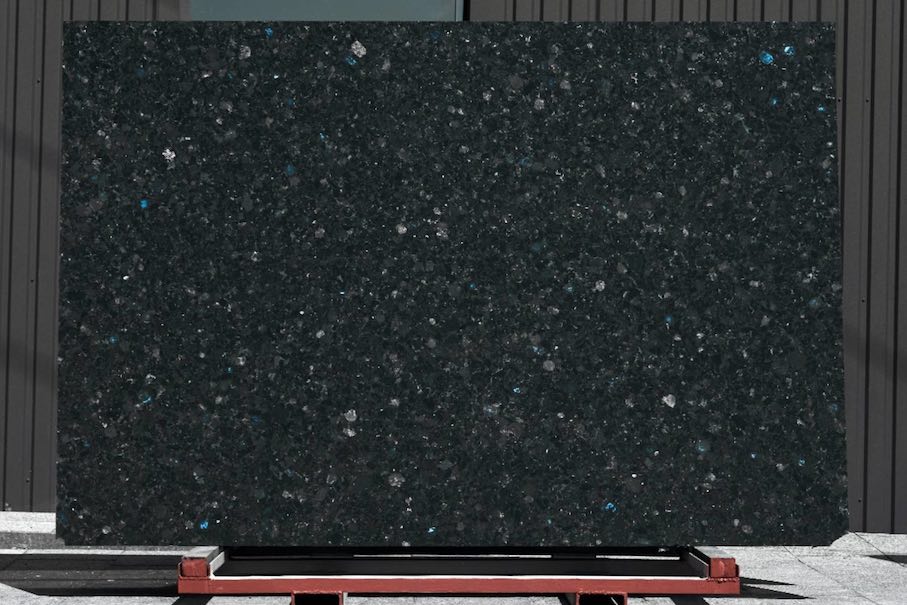
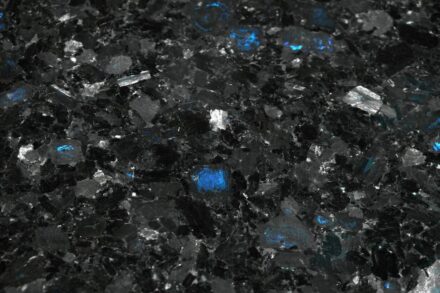
At Marmomac in Verona in September 2025, the Golovinski Labradorite drew considerable attention for its deep blue iridescence and exceptional beauty. It is brought to the market in huge slabs.
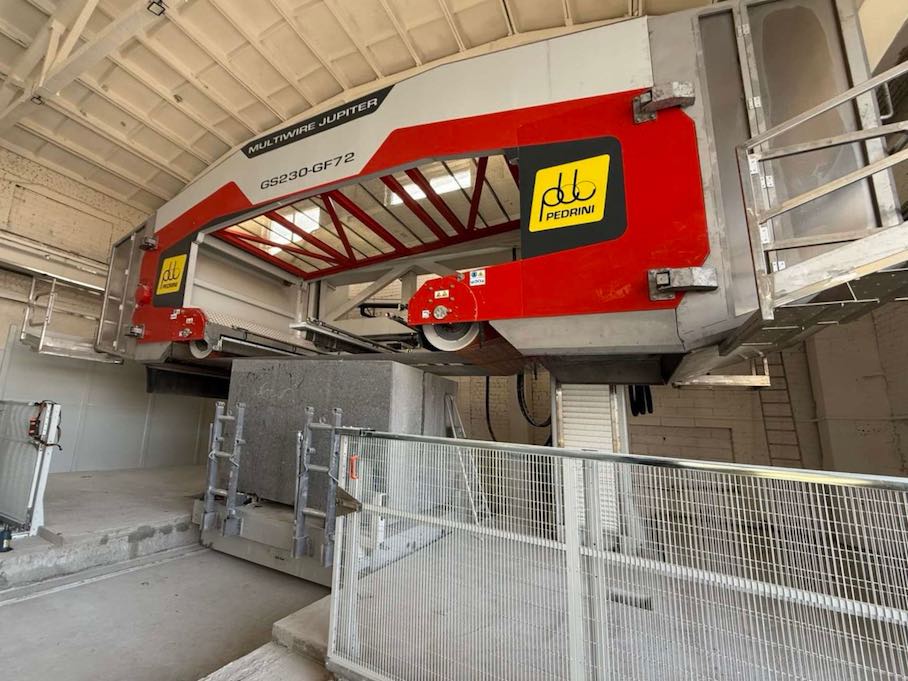
Modernization of the processing plant started in 2021. The technology was provided by the Italian Pedrini company. The facility comprises multi-wire and single-wire saws, an automated resin treatment line, a 20-head polishing system, slab scanners, and advanced quality control. Its monthly capacity reaches 15,000 m² of slabs, operating in a two-shift mode. All systems are networked online, enabling continuous 24/7 monitoring and remote maintenance by Pedrini engineers.

Today, Golovinski produces slabs with standard thicknesses of 20 mm and 30 mm, as well as custom orders. Standard formats are 3000 × 2000 mm. Surface finishes include polished, matte (silk) and brushed (leather).
In the quarry, since 2021, extraction efficiency and block integrity was brought to the highest level with blocks reaching over 40 tonnes. As of 2025, the quarry produces between 1,200 and 1,500 m³ of commercial blocks per month.
Golovinski company from the village of Golovine
Golovinki’s history goes back to the 1880s, when farmers in the village of Golovine, in the Zhytomyr region (oblast), discovered striking stones along the Bystriyivka River. Landowner M. Salis sent samples to the Russian Geographical Society. Following expert evaluation, Salis, together with a neighboring landowner, established the partnership Dushynski & Salis in 1894 and commissioned a geological survey confirming the presence of significant reserves suitable for extraction and commercial use.
Two years later, near the quarry, a polishing factory was opened, equipped with Swedish polishing machines. From then on, tiles and decorative stone products were supplied from Golovine to Zhytomyr, Kyiv, and St Petersburg, and later exported abroad.
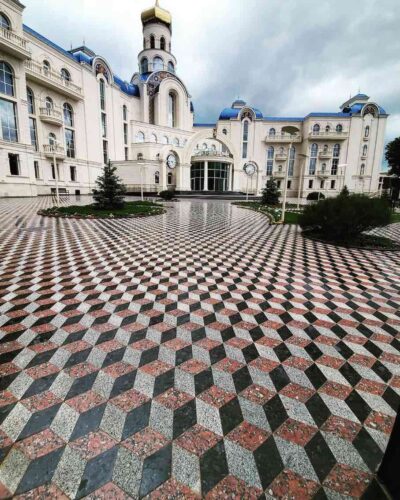
In the 1920s, now in the Soviet era, demand for Ukrainian granites and labradorites increased rapidly, as they became widely used in monumental Soviet construction. In 1926, the Golovine quarry and stone-processing plant were subordinated to the Moscow trust Mineral Raw Materials. The stone was used in the construction of the Lenin Mausoleum, as well as monuments and public buildings in Kyiv, Kharkiv, and Moscow.
In 1930, the School of Stone Professionals was established in Golovine, becoming a key training center for Ukrainian stonecraft and industry. Another wave of modernization followed in the 1960s, with new workshops, production lines, and equipment. Quarrying operations relied on drilling and blasting, while granite blocks were separated and shaped using pneumatic drills and manual splitting.
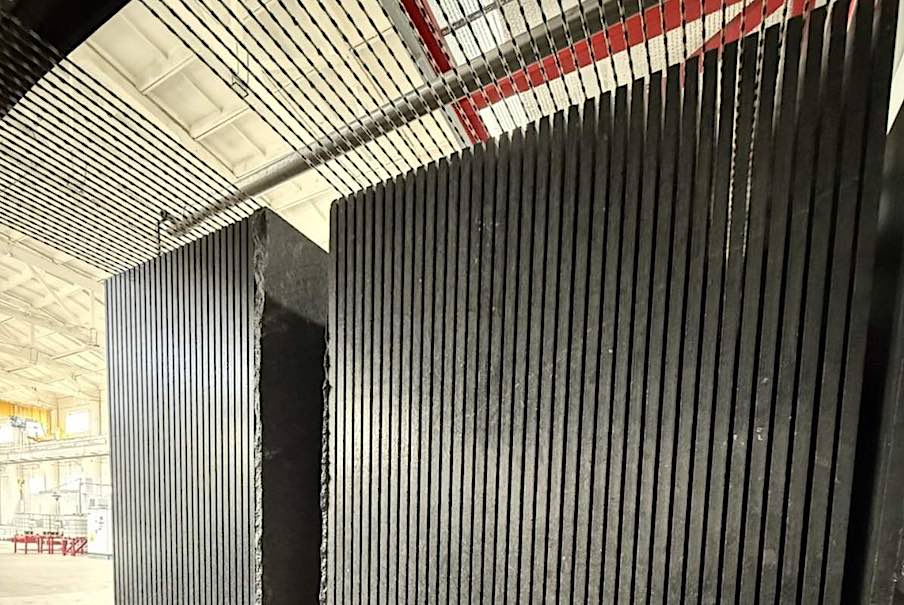
In the late 1980s, as the Soviet Union began liberalizing foreign trade, Ukrainian labradorite entered international markets through Moscow. Exhibited at the fair in Carrara, the stone caused a sensation.
After the collapse of the USSR, the Golovinski Granite Quarry gradually lost its production capacity. Yet, interest in the stone continued worldwide. Due to state ownership and a lack of capital, modernization was stalled, and the company exported raw blocks rather than processed materials. On an international level, mostly Italian factories cut the blocks into slabs, polished them to a mirror finish, and sold them worldwide as premium decorative stone.
This situation lasted until 2019, when a Ukrainian private investment group acquired the quarry company. The new firm, Golovinski Stone, conducted a full audit, consolidated the assets, and developed a modernization strategy. “Our goal was to enhance competitiveness, expand the product range, and move from exporting raw blocks to manufacturing finished slabs using advanced international technologies,” CEO Alexandr Somak states, looking back.
Investments began in 2021
Investments began in 2021 with the renewal of quarry machinery. Within a year, the site was equipped with extraction machinery and heavy transport equipment from globally leading manufacturers. Simultaneously, the company designed new production workshops in collaboration with specialists from Italy and Portugal.
By early 2024, the company introduced its first batches of premium-quality Golovinski Labradorite slabs to the international market and launched a comprehensive marketing campaign.
To ensure the highest durability, slabs undergo resination and mesh reinforcement, enhancing their mechanical properties and protecting them from external environmental factors.
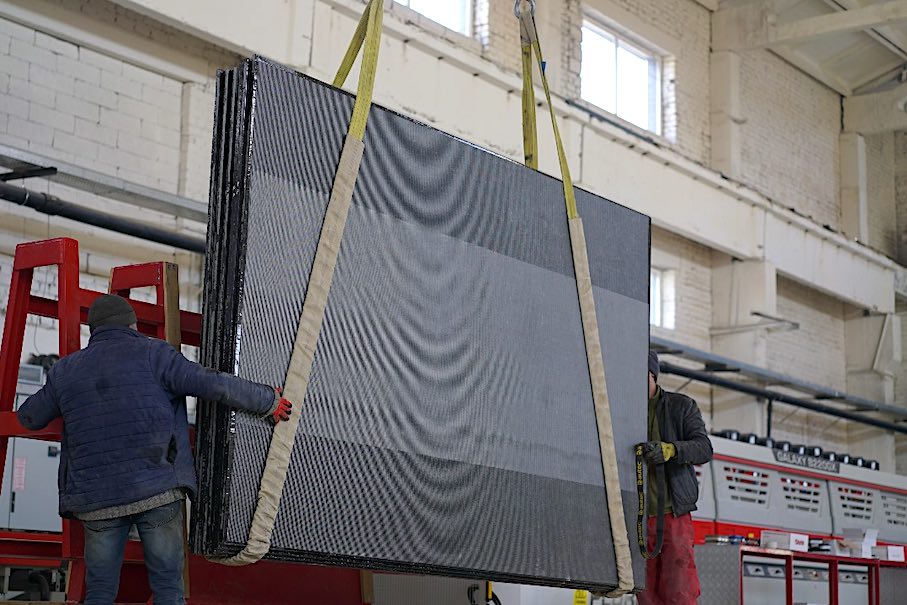
Production relies exclusively on premium consumables from Boart & Wire, Tenax, and Abra Iride, ensuring stable quality across every stage. Finished slabs are loaded into 20-ft cargo containers using specialized equipment and shipped directly to customers worldwide.
Soon, the company plans to introduce additional waterjet-textured finishes. These new textures will offer architects a wide range of possibilities — from exterior façades to luxury interiors.
Today, the Golovinski Labradorite is exported to Europe, the United States, Canada and the UAE. The company’s philosophy focuses on maintaining premium quality. “Our priority is the manufacturing and supply of large-format slabs of the highest grade,” explains Marketing Director Maria Sitak. “Our clients are stone distributors, installers, architectural studios, developers, and interior designers. We are open to cooperation with everyone who values the quality and uniqueness of Ukrainian Golovinski Labradorite.“
Oleg Majewski (Mail)