Stone-Ideas.com



The Arabian Peninsula, likely the region with the highest economic growth rates in the world in the coming decades, attracted special attention twice at Marmomac 2025:
* The Sultanate of Oman, small in terms of population (4.8 million, of which around half are Indian immigrants, according to Wikipedia) and territory (309,500 km²), presented itself as a new natural stone supplier for the global market;
* Saudi Arabia, the largest country on the Arabian Peninsula (36.7 million inhabitants, 2.147 million km²), was the subject of a study commissioned by Marmomac and Veronafiere that examined the country’s market potential for the supply of high-quality natural stone products.
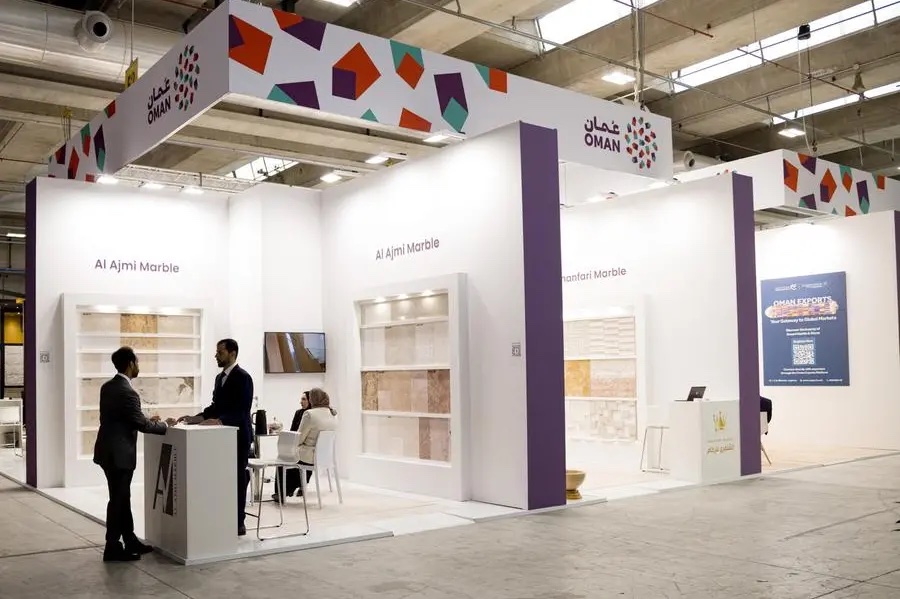
Oman’s ambitions were evident in the fact that its inconspicuous booth at the Verona trade fair was sponsored by four government organizations, including the Ministry of Economy and Industry and the Ministry of Energy and Mining. Khalid Al Salehi, Director General of the Madayn Industrial Development Authority, which also participated, gave a presentation in Hall 10 of the trade fair and presented figures on the country’s potential. We quote from a report by the state news agency Oman News:
* Overall, the Sultanate offers a trade potential of 4.6 billion Omani Rial (approximately USD 11.96 billion) this year. In the natural stone sector alone, his authority is currently developing 69 projects with a potential of 71 million OMR (USD 184.65 million): “Our aim at Marmomac is to attract and localise new investments in the Sultanate of Oman, build strategic partnerships with international companies seeking expansion, and capitalise on Oman’s strategic location,” according to Khalid Al Salehi.
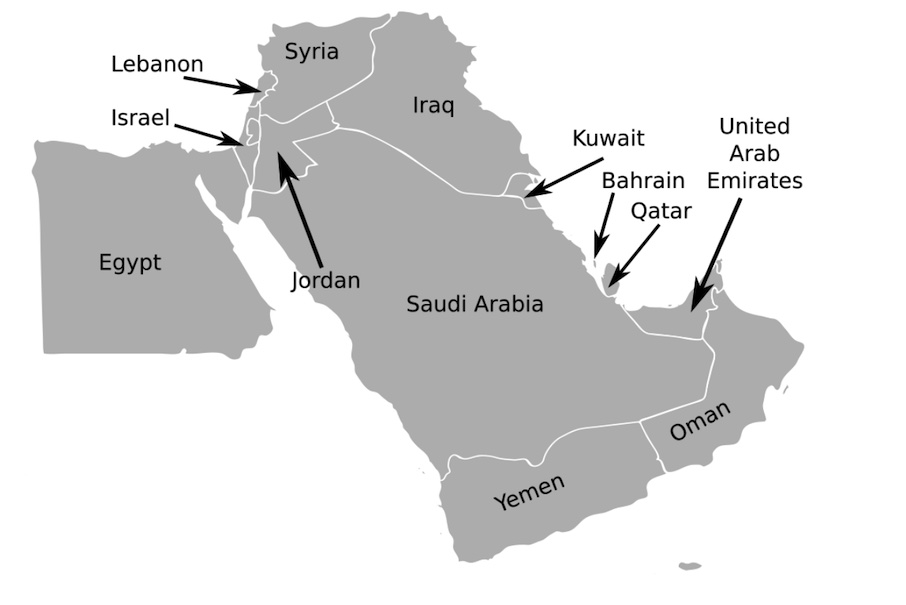
The country lies on the southeastern edge of the Arabian Peninsula and has a long coastline on the Indian Ocean, from which shipping routes to Asia, Southeast Asia (Indonesia, Malaysia, Singapore), and Australia/New Zealand are accessible.
The Director of the Export Development Director at the Ministry of Commerce, Lubna Al Harthi, also emphasized the importance the country attaches to its colored and decorative marble varieties. Six leading companies were represented at the exhibition booth: Al Nasr Marble, Al Ajmi Marble, Al Shanfari Marble, Al Asriyah Marble, Al Hilal Marble, and Muscat Leading Marble.
The Sultanate is also a destination for deliveries of machinery and tools for natural stone extraction and processing.
Italy’s stone industry is focusing more on Saudi Arabia and the UAE
In 2024, in the run-up to Marmomac, market researchers at Nomisma generally examined the market opportunities for Made in Italy products in the USA and Canada. The current study on the Arabian Peninsula focused exclusively on natural stone – with Saudi Arabia and the United Arab Emirates (UAE) as target countries. This is because: “Although Italian stone exports go primarily to the countries of the European Union and North America, the share of the Middle East has increased by 30% over the past five years, with the Arabian Peninsula now confirming itself as an absolutely strategic market,“ as the study states. A short excerpt in Italian can be found on the market research institute’s website.
Reference is made to the “sustained growth and high per capita income there.“ This applies not only to the two countries mentioned, but also to Bahrain, Kuwait, Oman, Qatar, and Yemen. This is leading to “steadily increasing demand, especially in the high-end segment.“
Among Saudis, this private consumption is being boosted by current government projects such as the Expo 2030 World Expo, the 2034 FIFA World Cup, and megaprojects such as NEOM and Qiddiya.
According to the study, the countries of the Arabian Peninsula imported natural stone products “worth €1.3 billion“ in 2024. The Saudis purchased the lion’s share (47%), followed by the UAE (33%). The share of capital goods (10%) and machinery (7%) was relatively small; three-quarters were “products from natural processing.“ This likely refers primarily to natural stone.
The import of raw blocks was “marginal.“
Emanuele Di Faustino, department head at Nomisma, concludes: The factors mentioned above on the Arabian Peninsula, combined with continued population growth, are “boosting demand for high-quality materials,“ and the Made in Italy could “play a leading role“ there.
Speaking of population growth: In Saudi Arabia, 5-10 children per woman were normal in today’s grandparents’ generation. Today, it is 2-5.
Nomisma (Italian)