 Stone-Ideas.com


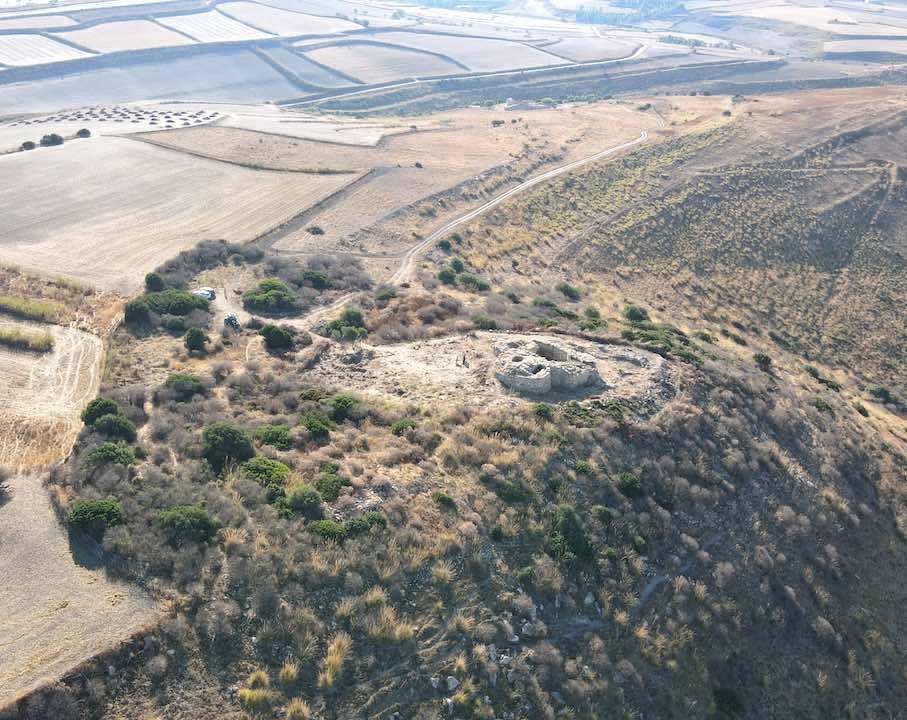
An international team of researchers has shed new light on how Sardinia’s “Nuraghi“ – iconic stone towers constructed more than 3200 years ago – continued to play an important social and spiritual role centuries later, even as religious practices changed in prehistory. A votive sword and ceremonial vessels found at the Nuraghe Barru site in central-southern Sardinia show that the Bronze Age site retained its significance well into the Iron Age.
Sardinia is famous for its nearly 7000 nuraghi, built during the Bronze Age. “Whether they were used as defensive structures, elite residences, or ritual monuments is still a matter of debate,” says Silvia Amicone. “They dominated the island’s landscape for centuries.” She is from the Department of Archaeometry at the University of Tübingen and worked, together with her team, with the local archaeological authority, the Soprintendenza Archeologia, Belle Arti e Paesaggio per la Città Metropolitana di Cagliari e le Province di Oristano e Sud Sardegna,
At the end of the Bronze Age and in the early Iron Age between 1200 and 800 BC, Sardinian society changed. Sanctuaries and sacred wells were built on the island. “In the light of this transformation, we wanted to investigate whether the ancient towers had lost their significance,” Amicone says.
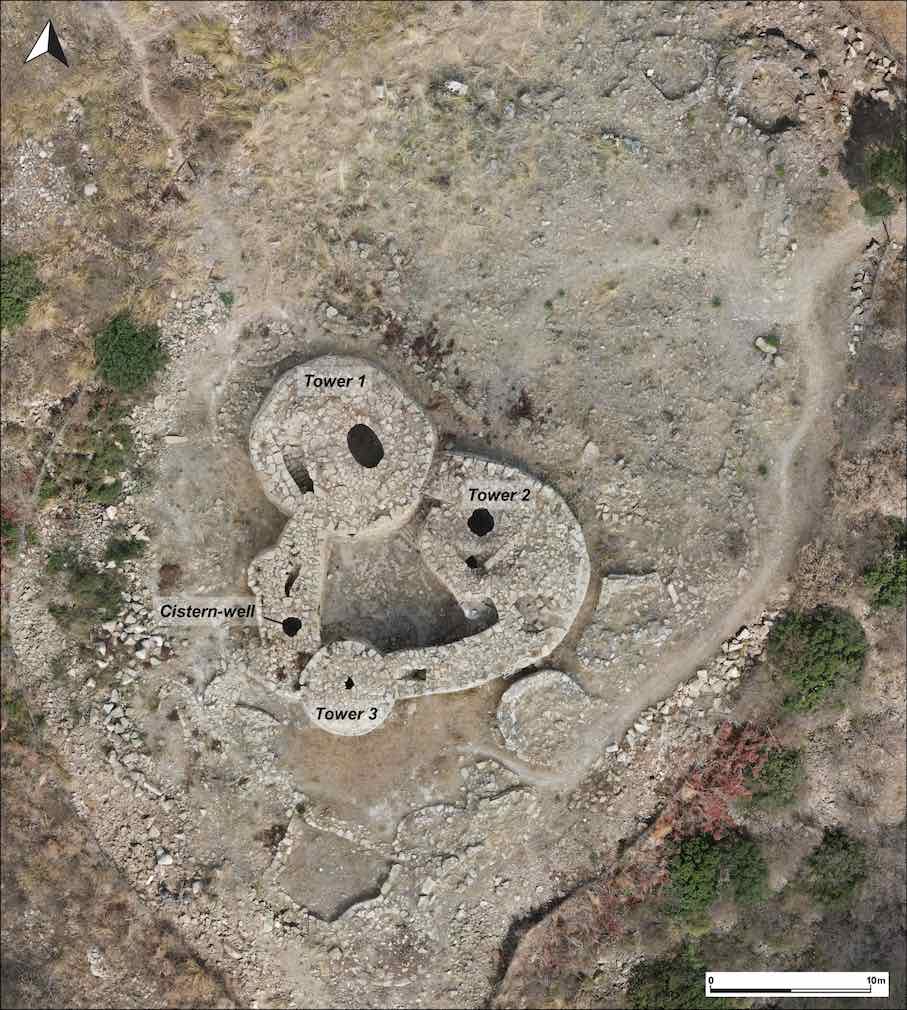
During excavations at Nuraghe Barru, the research team directed by Dr Chiara Pilo from the Soprintendenza uncovered a carefully sealed cistern-well inside the tower complex. “At the bottom of it were various deliberately smashed ceramic vessels, including what were clearly jugs, a miniature amphora, and a rare ceremonial vessel with four handles,” Pilo says. “We also found animal and human remains.” After the objects were deposited, the well had been closed with limestone slabs.
Nearby, archaeologists found votive offerings deposited along a staircase. They included a 94 cm long bronze sword, three razor-like bronze objects, and a lump of copper. The staircase was then blocked, permanently sealing access to the upper floor. “Overall, the finds suggest an episode of ritual activity rather than randomly discarded objects,” says Pilo. “The building itself was also changed by this.”
Amicone, S., Tiezzi, V., Broisch-Höhner, M., Freund, K. P, Heinze, L., Morandi, L. F., Salis, G., Pilo, C.: Ritual and connectivity in Nuragic Sardinia: an interdisciplinary study of ceramics and metalwork from Nuraghe Barru. Open Archaeology, https://doi.org/10.1515/opar-2025-0078
Source: University of Tübingen