Stone-Ideas.com


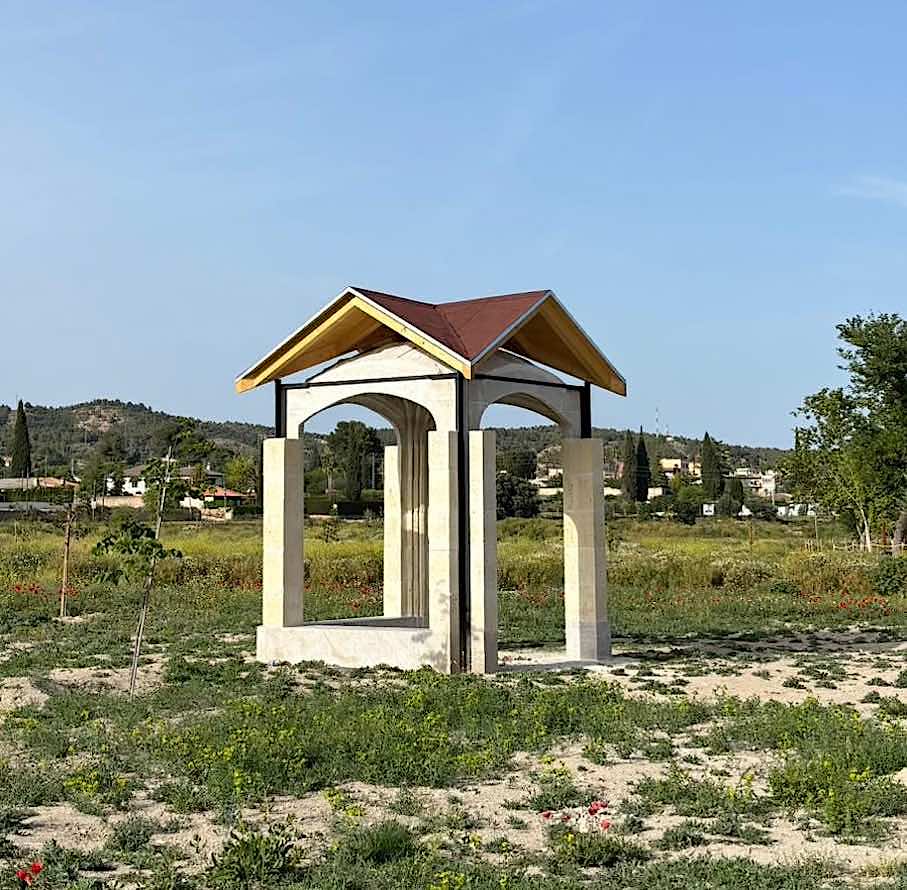
Since the beginning of 2026, a small structure has stood in the Parque de Mayrena in the Spanish town of Caravasca de la Cruz in the province of Murcia. It stands out from the modern residential buildings in the surrounding area yet still blends in: an open vault supported by four pillars, unmistakably built in the Gothic style. It was constructed by stonemasons from Spain, France, and Germany, with the participation of professors and experts from these countries.
“La Primera Morada de la Santa Teresa de Avila” is the name of the structure, which translates roughly as: the first residence of Saint Teresa of Avila. It serves not a religious purpose, but rather a place of rest and shade for visitors to the nearby Las Fuentes del Marqués National Park.
The initiative for the construction came from the organization Mass Piedra. This is a collective of architects, civil engineers, and scientists who, together with the natural stone company Rosal Stones, promote the use of natural stone as a load-bearing building material.
The underlying reason is the minimal ecological footprint of this natural material.
Those involved are looking to old structures, such as the self-supporting and wide-span vaults of European cathedrals. They want to revive this expertise and adapt it to modern conditions.
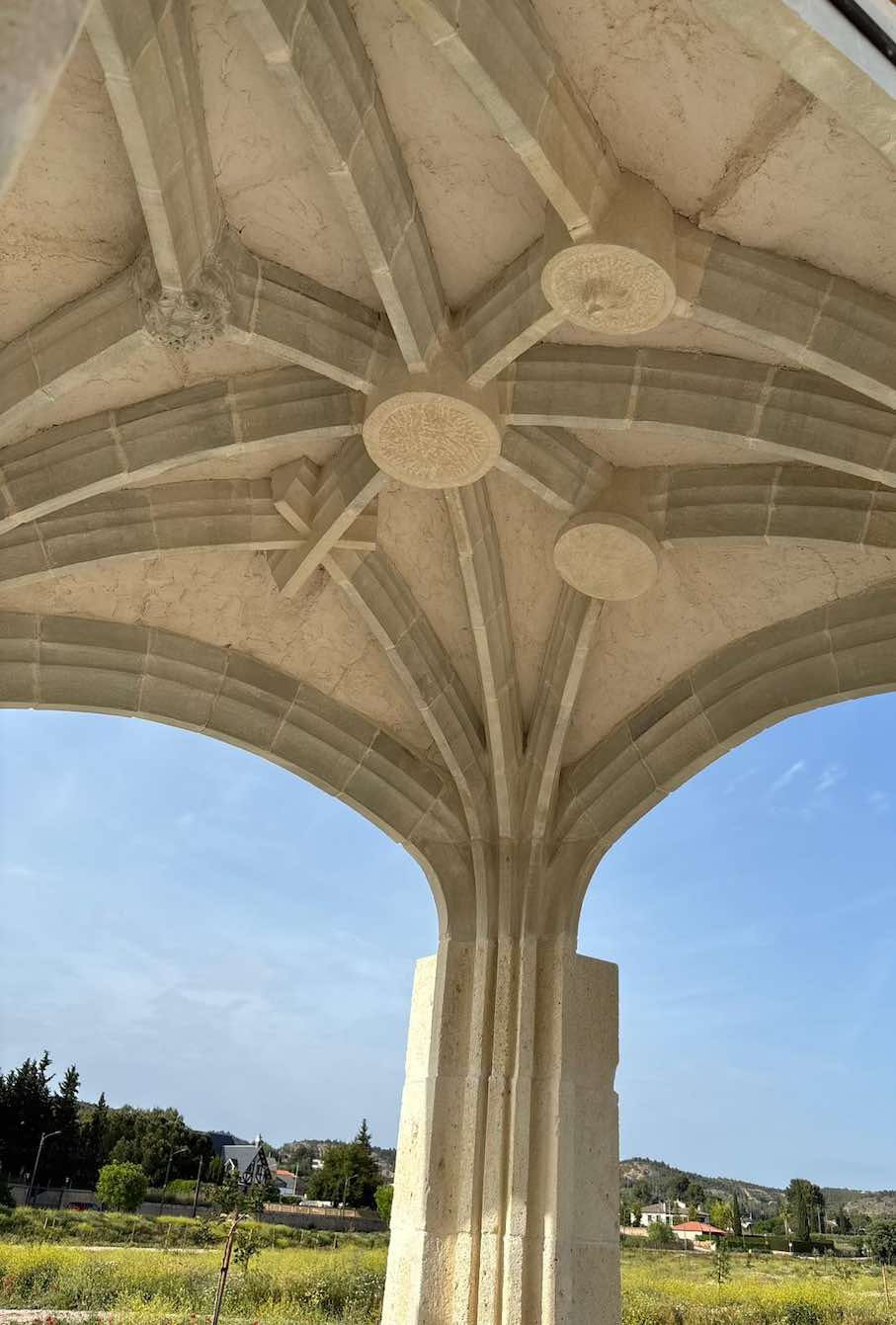
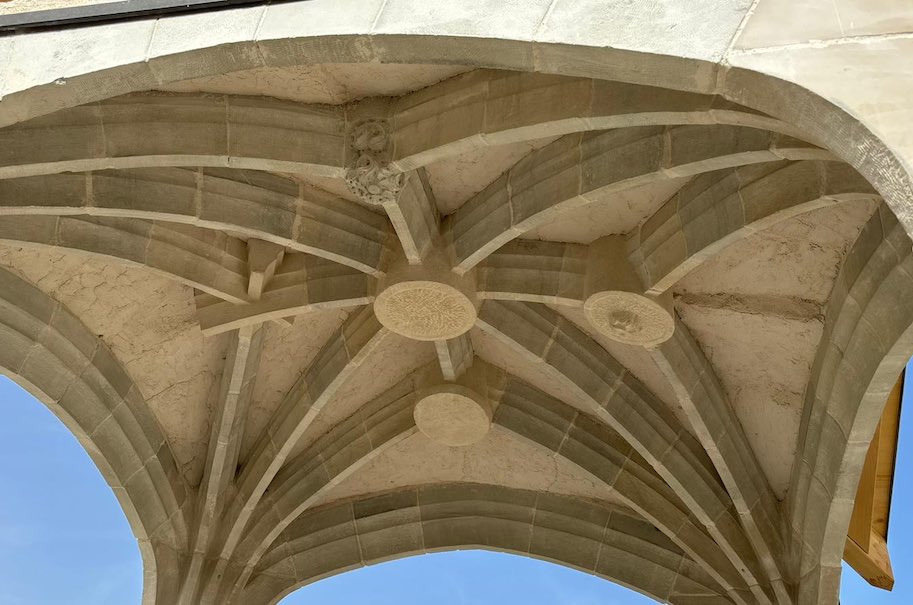
Furthermore, the gathering of these young builders aims to cultivate and embody the idea of European unity.
The stone used for the vault of Saint Teresa came from the Hellín and Caravasca quarries of Rosal Stones, whose employees, like guardian angels, supported the project on numerous occasions. The lower sections of the structure were made of Abadía limestone, while the columns were constructed from Albamiel limestone.
The precise cutting of the elements was carried out by stonemasons from France. They had been sent to Rosal Stones in Spain by the organization Compagnons du Devoir.
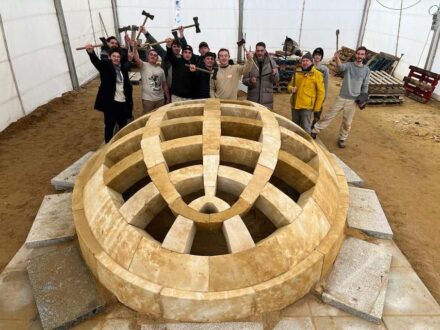
Master students from the Munich School of Stone Technology in Germany assembled these individual components over a two-week period in Caravasca.
In addition to the practical work, the project also included theoretical instruction. Professor Enrique Rabasa from the Escuela Técnica Superior de Arquitectura (ETSAM) provided this through seminars on Gothic vault construction.
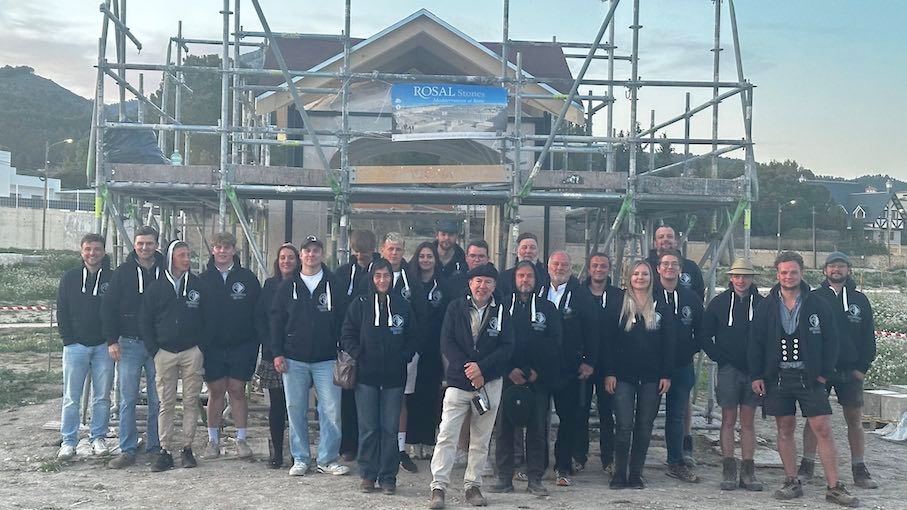
After the vault’s completion, the project was presented to the public: Under the title “The Stone Evolution,” a day of lectures and networking opportunities was offered to interested parties in Caravasca de la Cruz. Speakers were the Director of Cultural Heritage of Murcia, architect Christophe Aubertin from the French firm Studiolada and other architects and civil engineers from the University of Dresden in Germany.
The vault of Saint Teresa was constructed as part of the 4th edition of Mass Piedra. We have reported on previous editions. The initiative’s Instagram page states: “The 2027 edition is already being planned.”
Mass Piedra (Spanisch)
Photos: Catalina Sánchez / Rosal Stones