Stone-Ideas.com


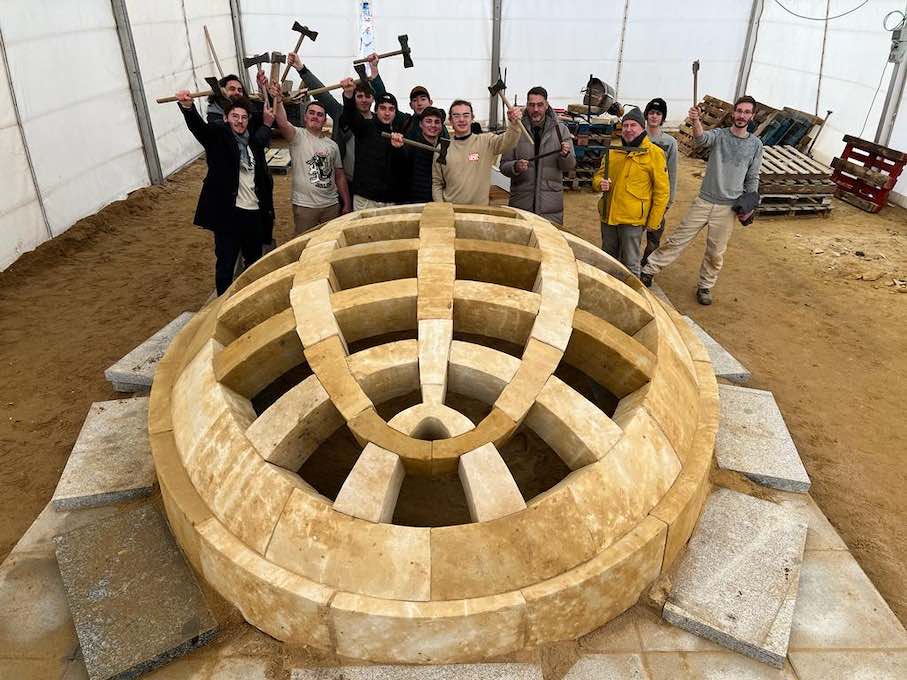
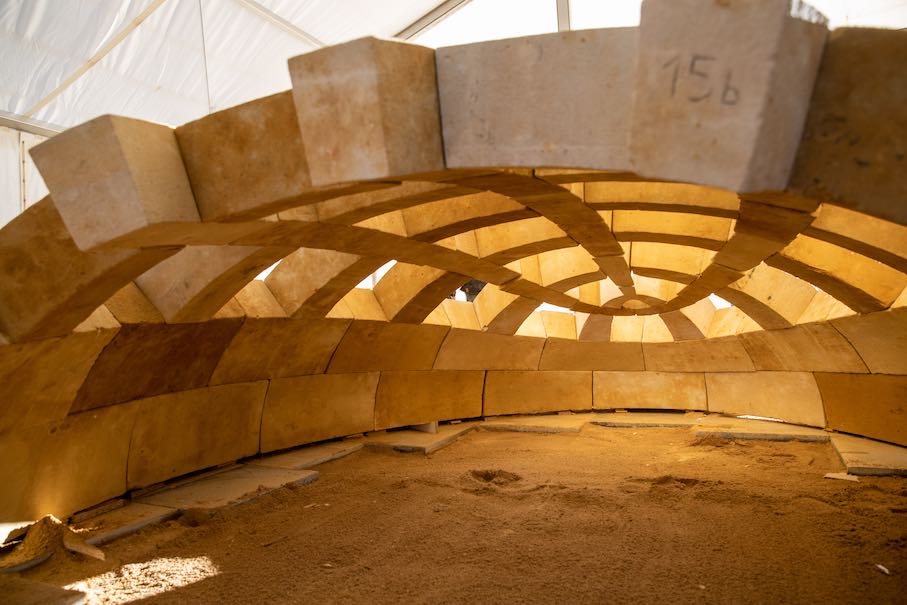
It is about skill and knowledge, and also about ensuring that our craftsmanship and intellectual heritage are not lost. As part of a project “Mass Piedra” funded by the EU under the Erasmus+ programme, vocational education and training (VET) is offered to French stonemason apprentices in Spain. There they created extraordinary works based on centuries-old construction principles. In the age of reinforced concrete and modern building methods, this expertise had been lost or at least pushed into the background.
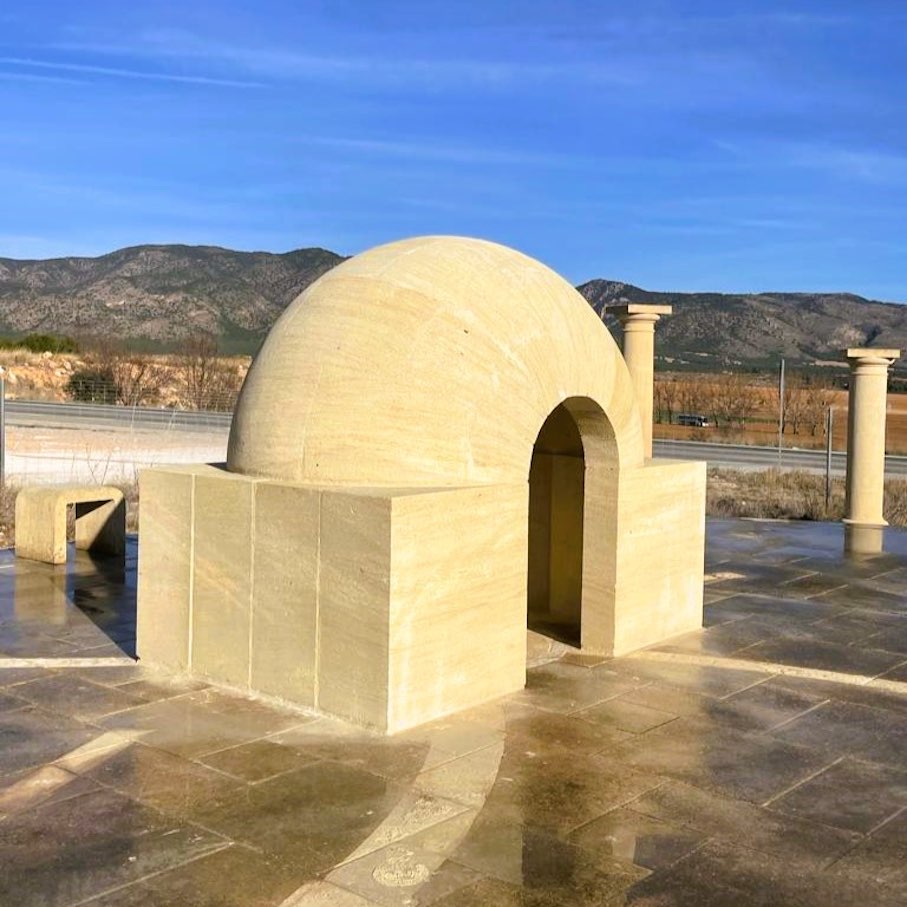
The magic word is stereotomy: this refers to the process of cutting small stone blocks to such a precision that they can be fitted together perfectly to construct, for example, a self-supporting vault. Spectacular buildings have been erected using this method since ancient times – the cathedrals of Europe provide examples of how builders often pushed the boundaries of what was possible.
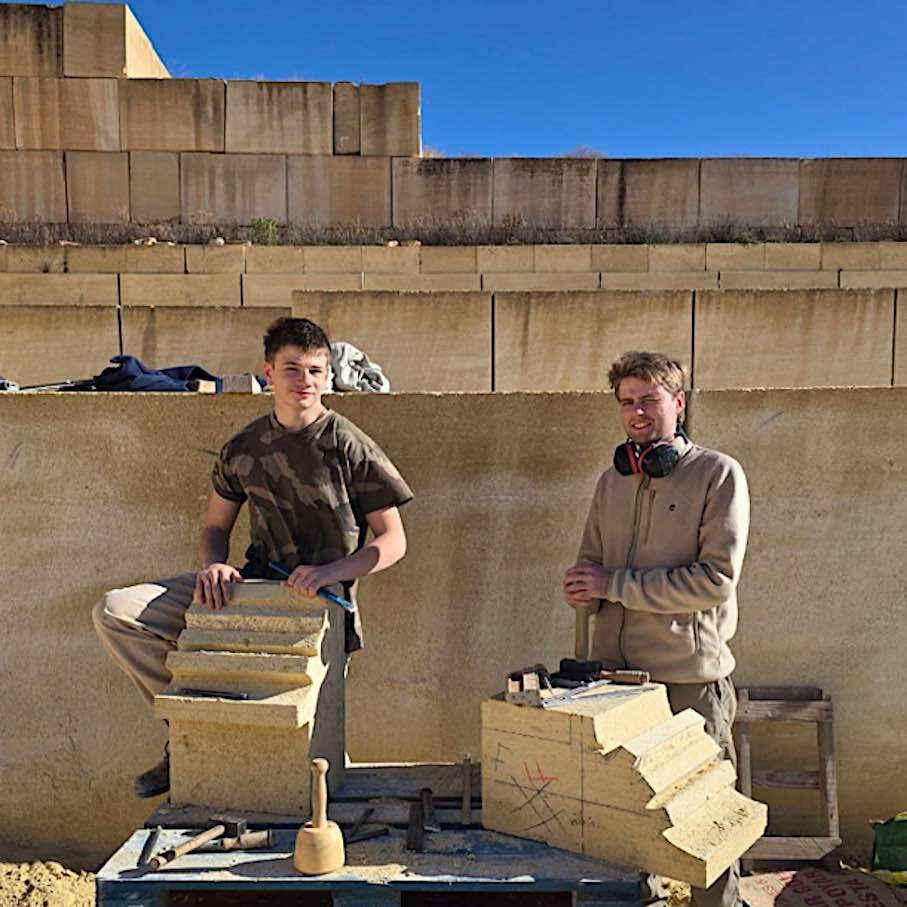
Paul Vergonjeanne, organiser and initiator of the project, explains why young French stonemasons aged between 16 and 20 travelled to Spain to try out the ancient techniques: “When it comes to stereotomy, we no longer have the highest standard in France.”
By this he means both the craftsmanship in this field and the academic knowledge.
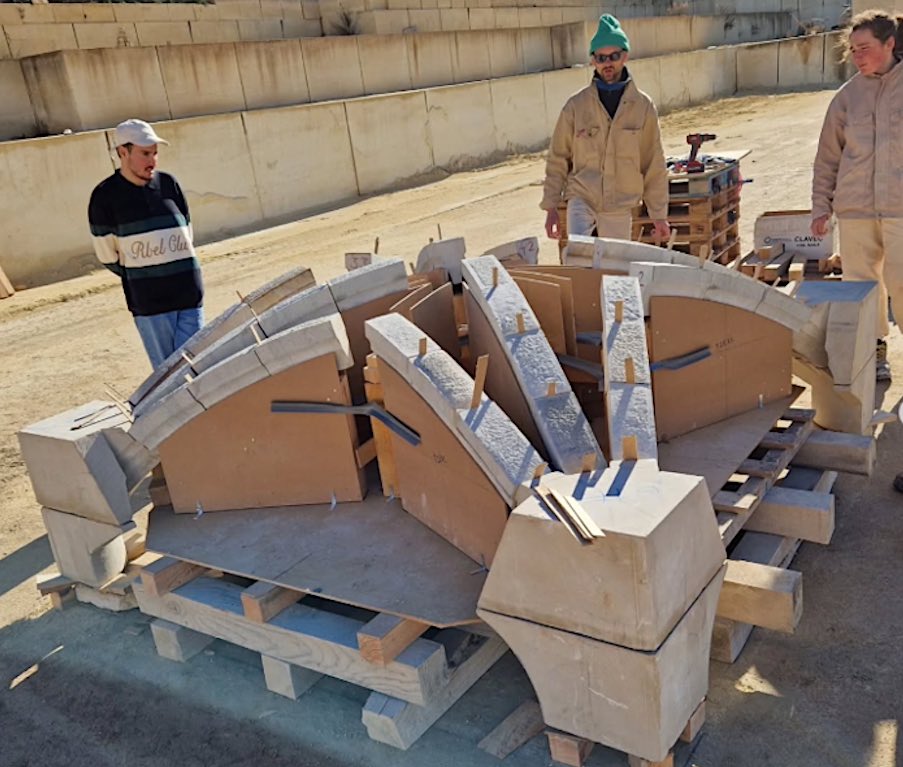
Over the course of four phases of the project, the young French participants stayed in Spain for three weeks at a time. The programme was demanding:
* In the first week, they received a theoretical introduction to the subject at the Escuela Técnica Superior de Arquitectura (ETSAM) in Madrid;
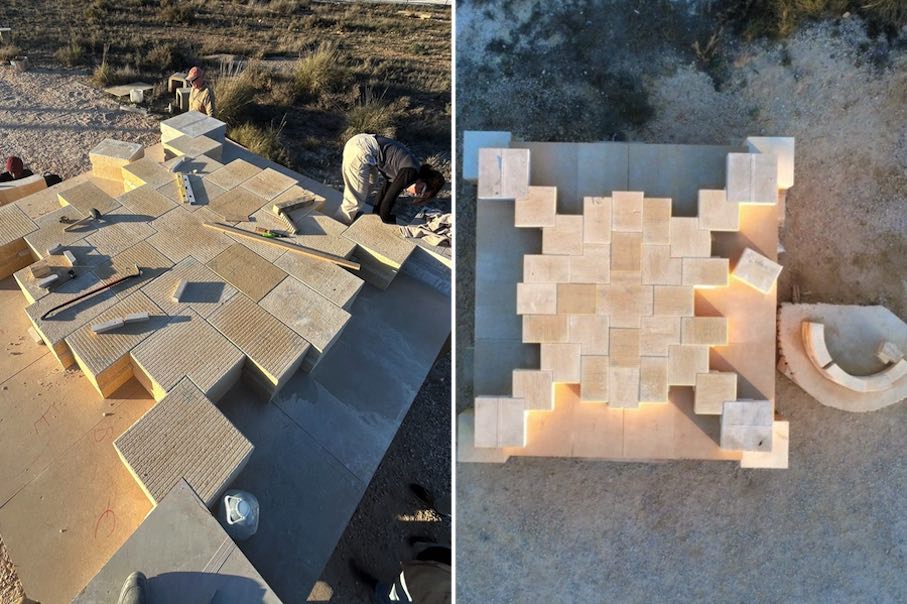
* in the second and third weeks, they applied what they had learnt to a practical task.
The work took place on the premises of Rosal Stones company, which provided the stones and other materials. The programme also included visits to the company’s quarry. The cost for the French participants was €400 per person.
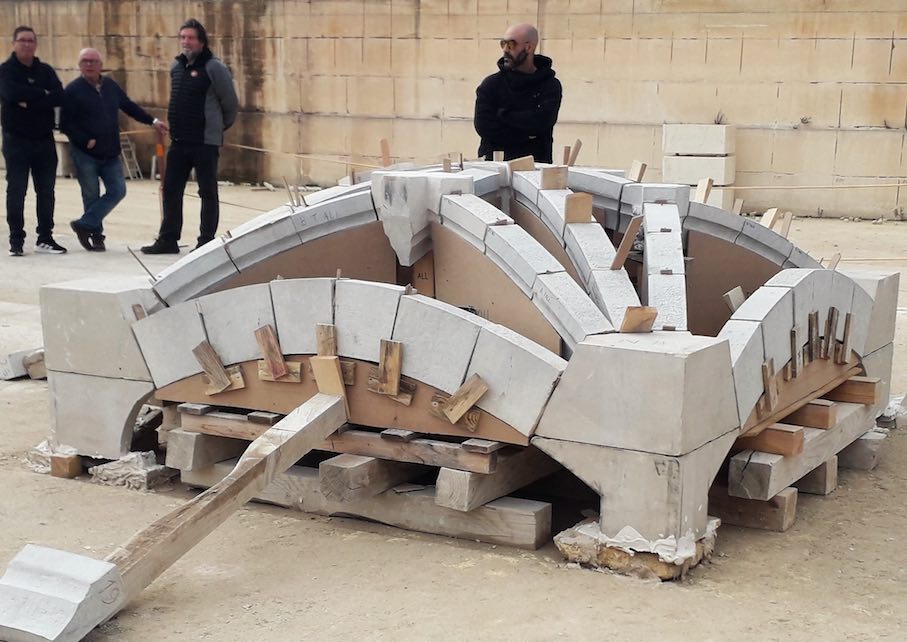
The concept for the knowledge transfer was developed by Enrique Rabasa from ETSAM.
The individual work stages included planning a structure, erecting the necessary scaffolding, creating the profiles for the stone elements, fabricating the elements and, finally, assembling the structure.
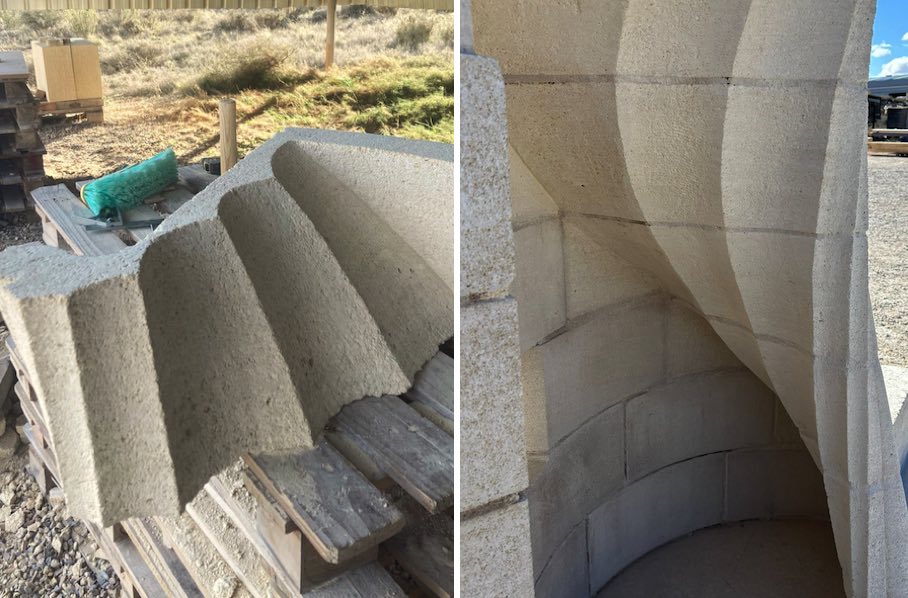
Examples of this can be found, among other places, in Murcia Cathedral. In some cases, they have fascinated generations of experts and inspired analysis and interpretation.
Another aim of the project was to raise the profile of the stonemasonry trade and make it more attractive to young people.
Project organiser Vergonjeanne is an example of a stonemason with qualifications that go beyond the norm: as a Frenchman, he completed his stonemasonry training in Madrid and subsequently studied at the Ecole d’architecture Paris-Malaquais – PSL in Paris, graduating with a doctorate. He now works as a trainer for stonemasons on behalf of the Compagnons du Devoir.
The Compagnons du Devoir is an association of stonemasons in France that upholds professional standards and the traditions of the stonemasonry trade. It likes to send its members on the ‘Tour de France,’ a kind of journey from workshop to workshop.
One example of a project supported by the Compagnons is the cycling tour undertaken by Orianne Pieragnolo and Louis Dutrieux, which takes the stonemason couple from France to Asia to visit their professional colleagues.
Compagnons du Devoir (French)