 Stone-Ideas.com


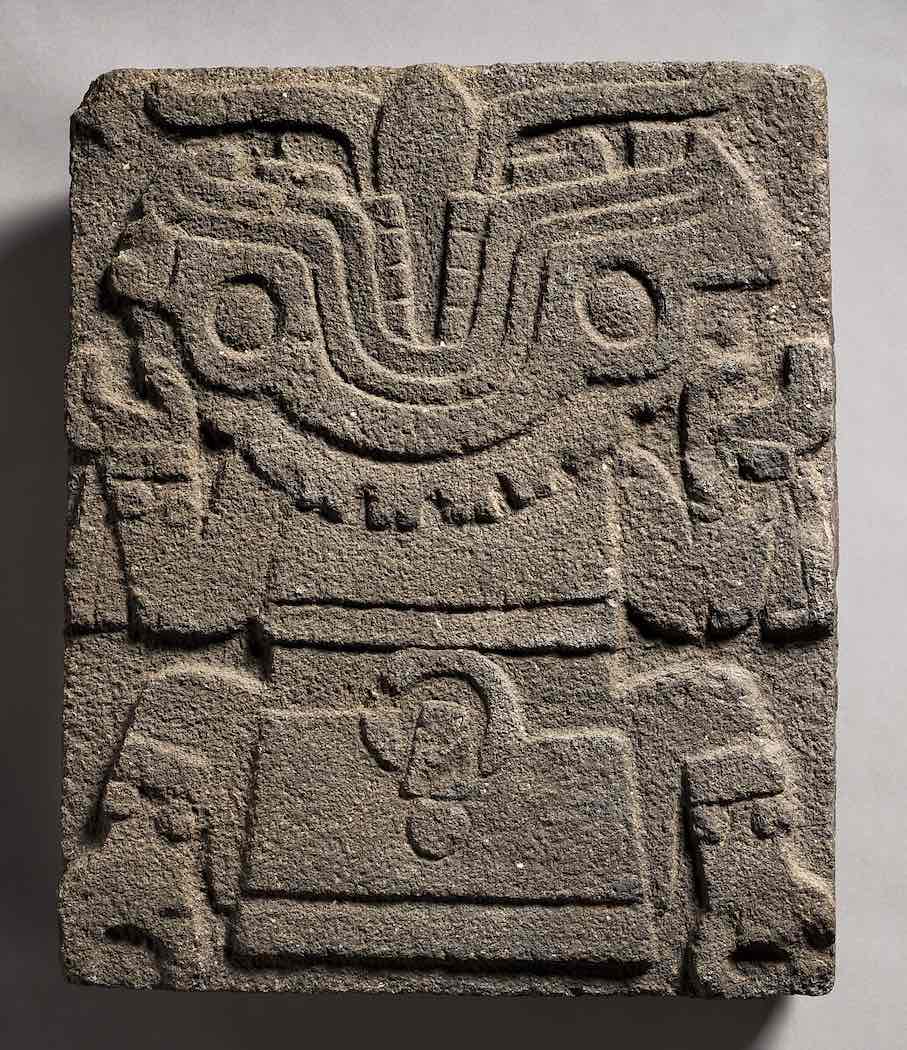
For as long as humans have told stories, we’ve imagined creatures that transcend the natural world. Fantastical beings combining the features of animals, humans, and even plants appear across cultures, emerging in the most ancient myths and enduring in contemporary epics. The widespread presence of these supernatural beings, possessing the power to transform and be transformed, reflects a global impulse to make sense of both known and unknown worlds. Visual artists have given form to these imaginary creatures, resulting in some of the most fearsome, beloved, and extraordinary works of art ever made.
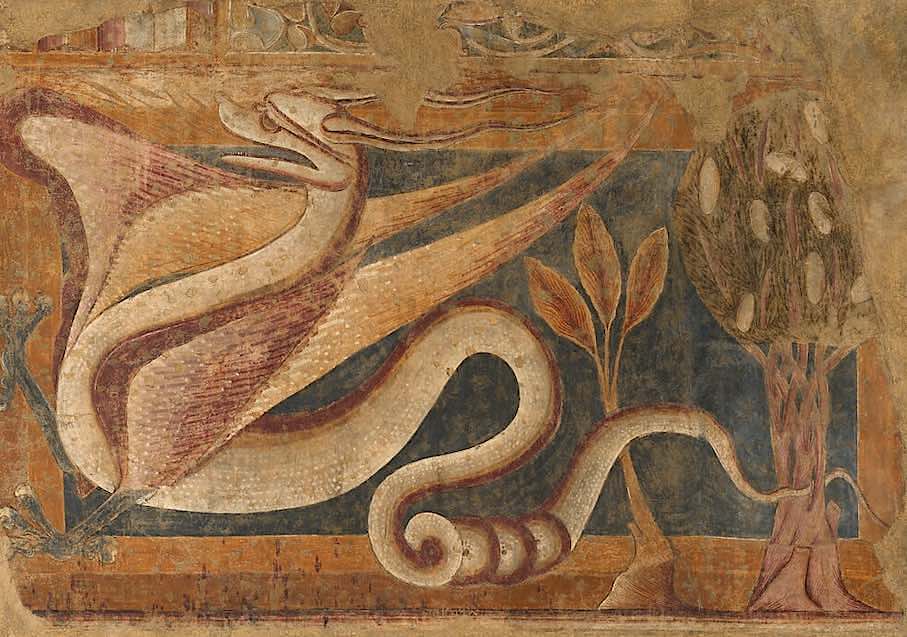 Dragon. Spanish. after 1200. Fresco, mounted on canvas (detail). Medieval beasts, whether real or imaginary, were often imbued with symbolic meaning, as they are in animal fables today. It is not always possible, however, to reconstruct their specific intention in a given monument, and such beasts could be for “aesthetic delight,” as one thirteenth-century archbishop commented. The monastery from which this fresco comes was abandoned in 1841.
Set in the evocative atmosphere of The Met Cloisters, the exhibition “Creatures of Myth and Imagination: Europe and the Americas” sheds light on a selection of works created on either side of the Atlantic Ocean between 500 and 1500 CE. The exhibition’s exploration of hybrid creatures deepens our understanding of their apparent necessity among diverse peoples.
In the Americas, a complex gold pendant by a Tairona artist of northern Colombia, depicting a confrontational figure with hands on hips, a crocodile-like head, and an enormous headdress, would have reflected and expressed the wearer’s status and power.
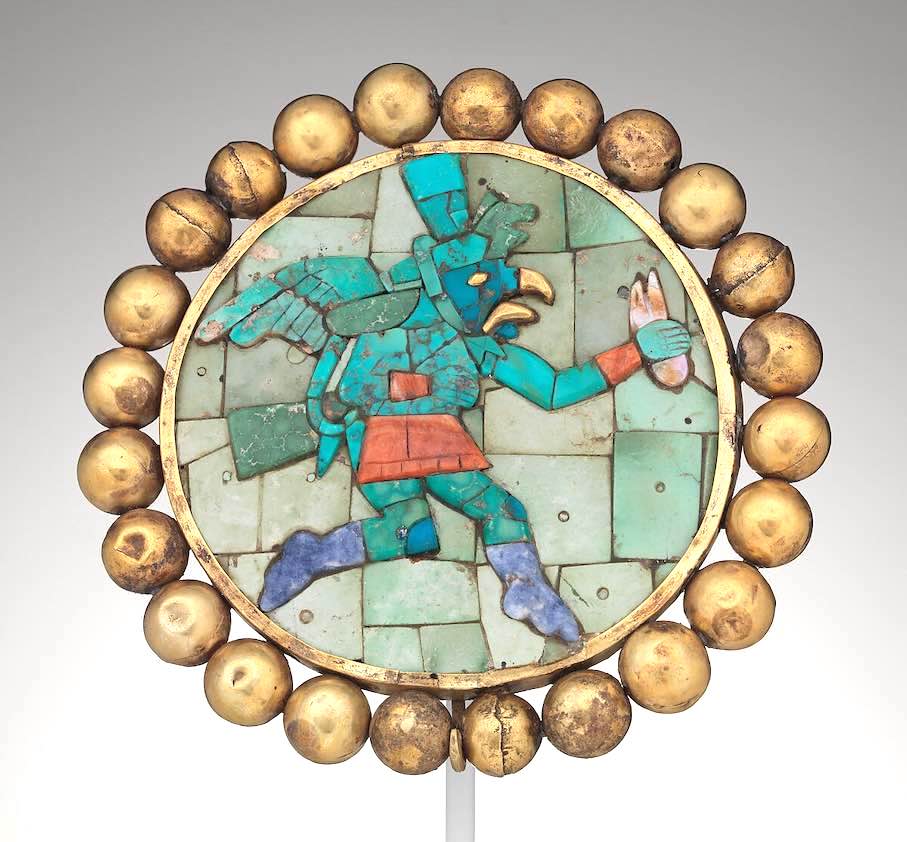 Ear ornament with winged runner. Gold, turquoise, sodalite, shell. This ear ornament, one of a pair, depicts a winged runner clutching a small cloth bag. Although it has been suggested that this figure may represent a human in a bird costume, it is more likely to portray an anthropomorphized bird, perhaps a hawk. The Moche (also known as the Mochicas) flourished on Peru’s North Coast from 200-850 CE, centuries before the rise of the Inca.
In Europe, ferocious dragons such as the one depicted on a monumental fresco from the monastery of San Pedro de Arlanza, Spain, took center stage to convey a multiplicity of meanings both sacred and profane.
With these and over 50 other objects, including sculpture, ceramics, ivories, textiles, paintings, and metalwork, the exhibition looks beyond a specific story, time, and place to explore larger questions about who we are and what connects us.
Until October 18, 2026, on view at The Met Cloisters in Gallery 001, Gallery 010, and Gallery 016.
The exhibition is made possible by the Michel David-Weill Fund.
Metropolitan Museum of Art, New York City
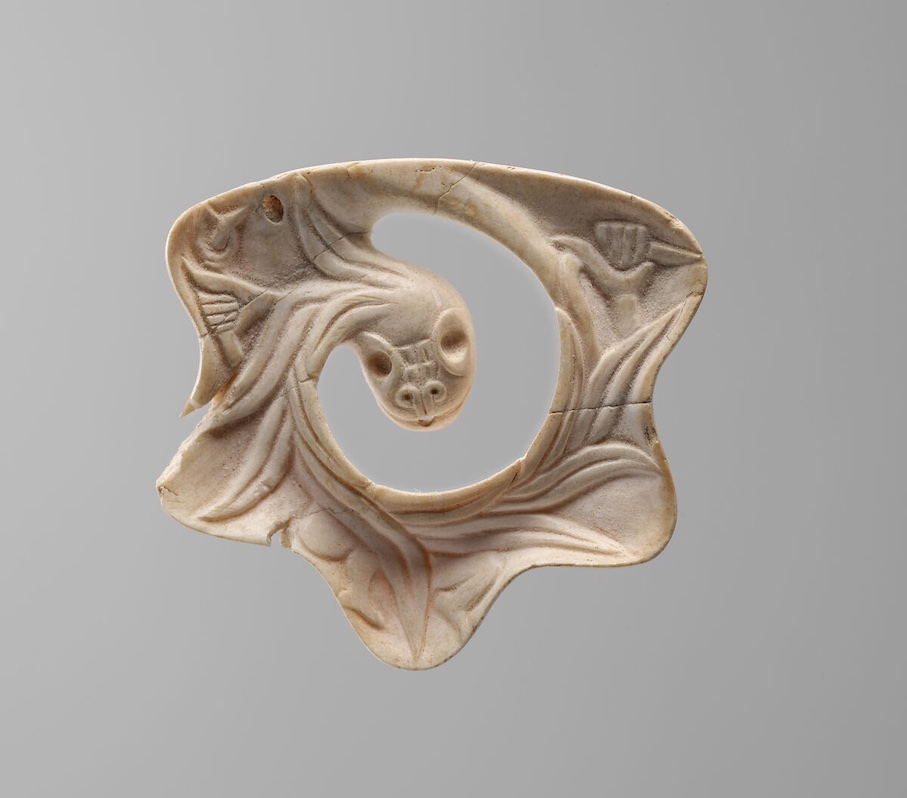 Feathered serpent pendant. Mexica artist(s). 1325–1521 CE. Material: Shell. This pendant, which retains the shape of a cross-section of a conch shell, features delicately incised imagery of a feathered serpent on one side, and its coiled, rattlesnake-like tail on the other. The head of the serpent, at the center of the ornament, is seen in a dorsal view, with two eyes drilled on either side of the creature’s feathered snout.
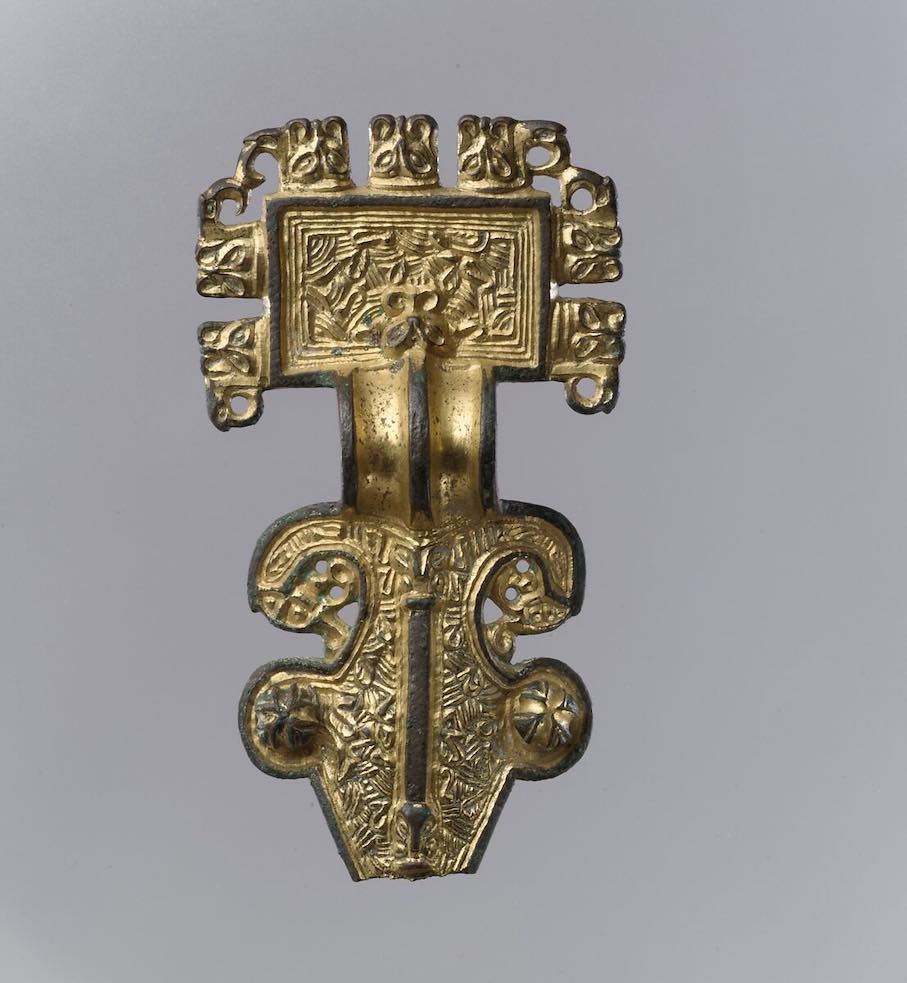 Square-Headed Bow Brooch. Anglo-Saxon. 500–600. Gilded copper alloy inlaid with niello. This brooch displays the Anglo-Saxon preference for lavish decoration, with a particular emphasis on fantastic animal forms. Dividing the foot is a strip of niello (a black substance containing silver, copper, lead, and sulphur) terminating in an animal’s head, and above the foot is a pair of stylized animal heads with gaping jaws.
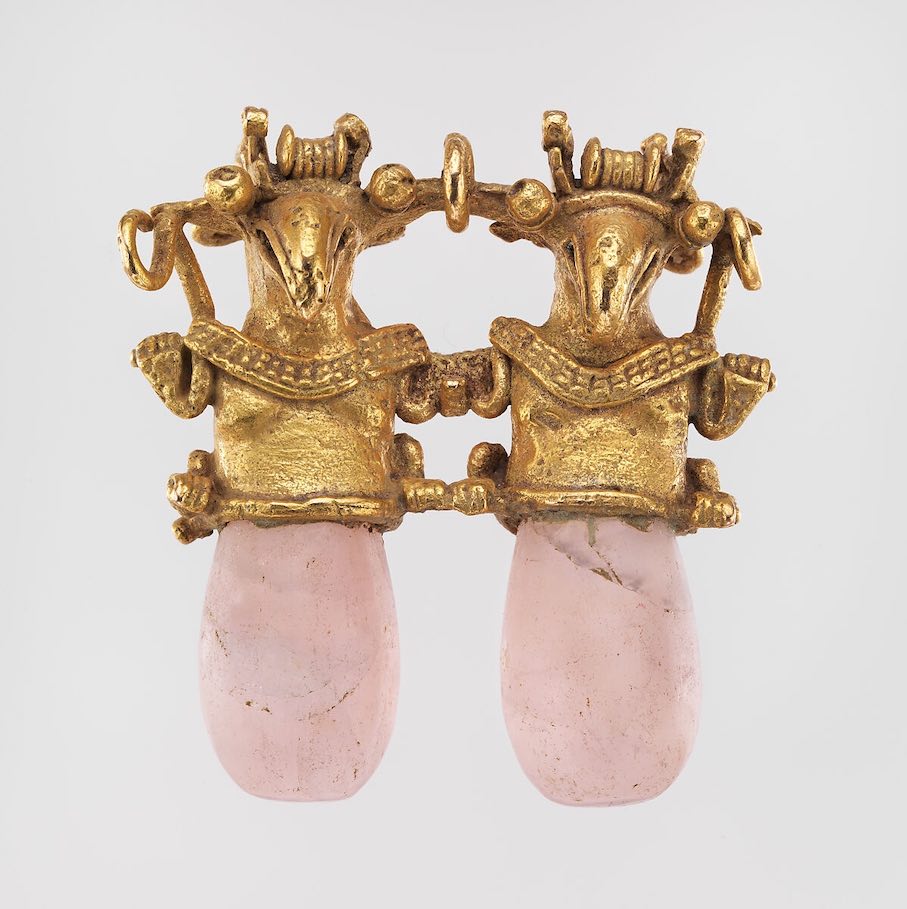 Double bird pendant. Coclé (Macaracas). 950-1100 CE. Gold, rose quartz. Artists in ancient Panama created delicate ornaments using the lost-wax technique, sometimes incorporating other materials such as semiprecious stones or shell, which may have conveyed additional concepts or imbued the beings with additional powers. On this pendant, avian beaks are joined with the bodies of quadrupeds, complete with rose quartz tails. The loops at the creatures’ claws allowed them to be suspended from a cord.
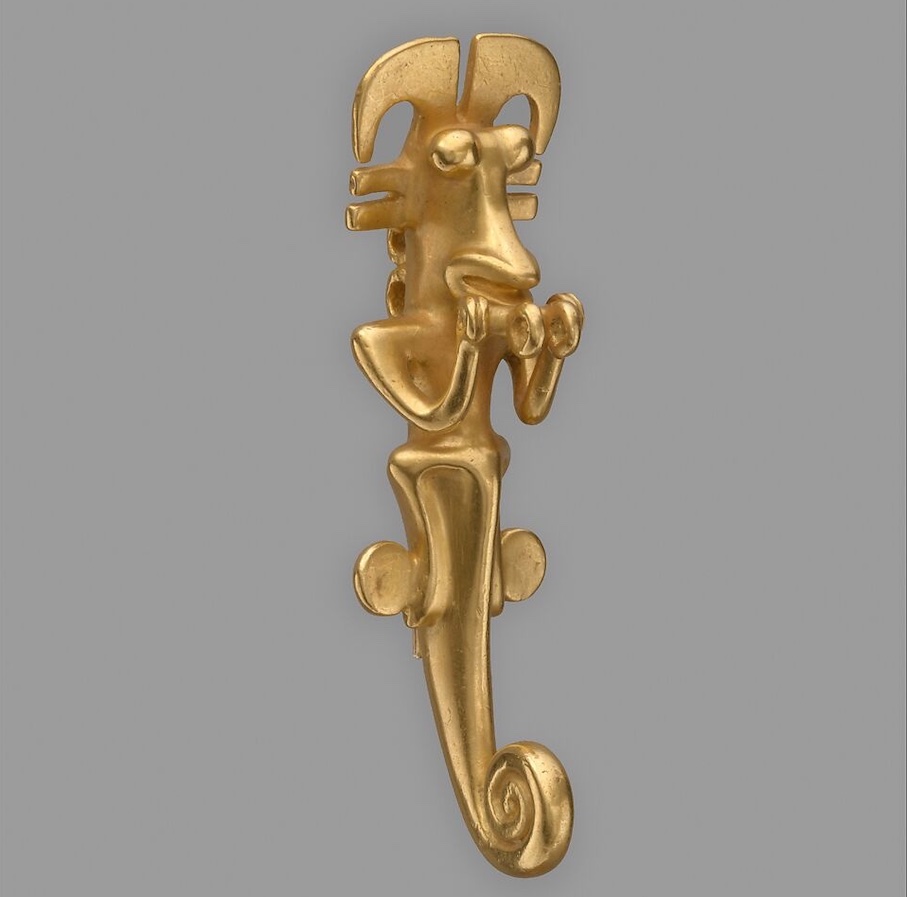 Seahorse pendant. International Style artist(s). 400–900 CE. Gold. Artists in ancient Colombia, Panama, and Costa Rica shared an early common goldwork tradition, with certain local stylistic adaptations. Using the lost-wax technique, metalsmiths made ornaments depicting frogs, crocodiles, and birds, as well as hybrid beings. This pendant, for example, combines the form of a seahorse with human characteristics.
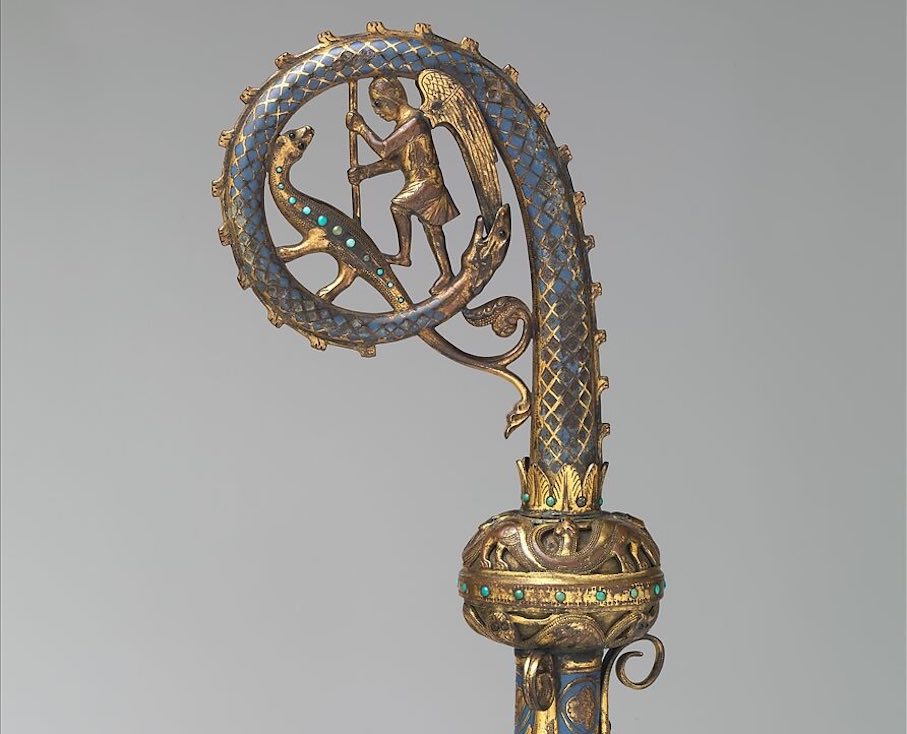 Head of a Crozier with Saint Michael Slaying the Dragon (detail). French. 1220–30. Gilded copper with champlevé enamel and glass paste. At the center of this decoration for a ceremonial staff, the Archangel Michael spears a wingless dragon with a foliate tail. In the Bible’s Book of Revelation, Michael battles a fearsome dragon representing the Devil, expressing the struggle and eventual triumph of good over evil. The rest of the object is crawling with reptilian creatures: a large serpentine dragon attempts to devour the archangel, wings first, while smaller lizard-like beasts adorn the knop and handle.