Stone-Ideas.com


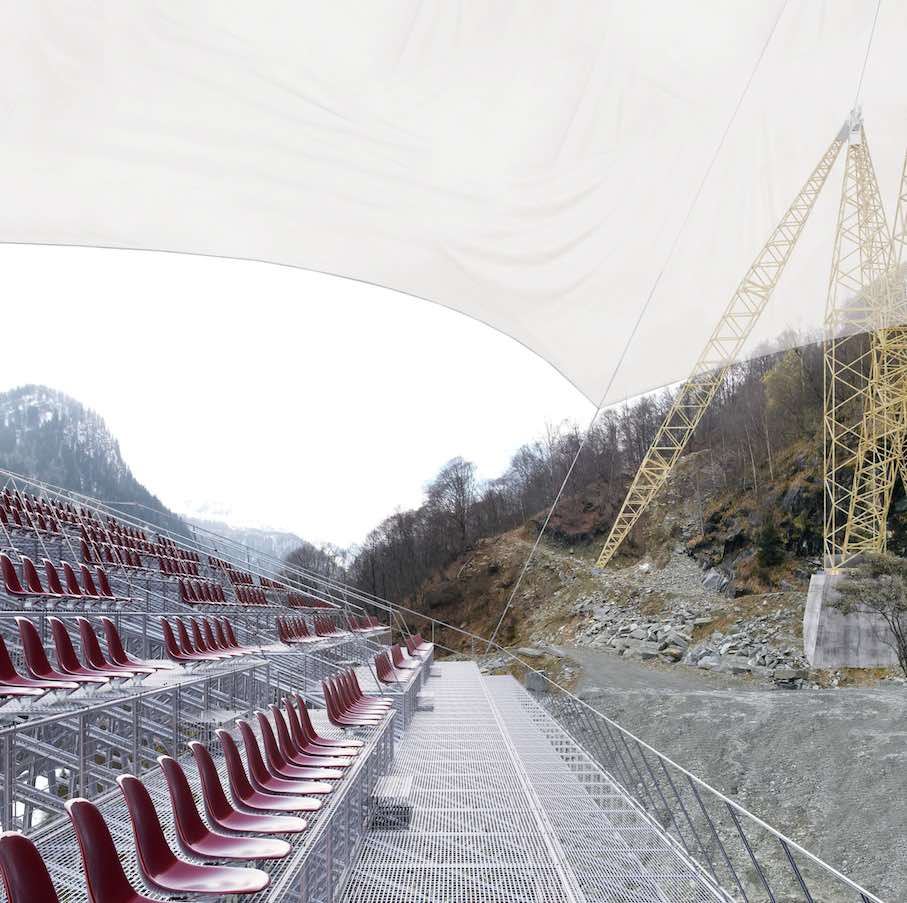
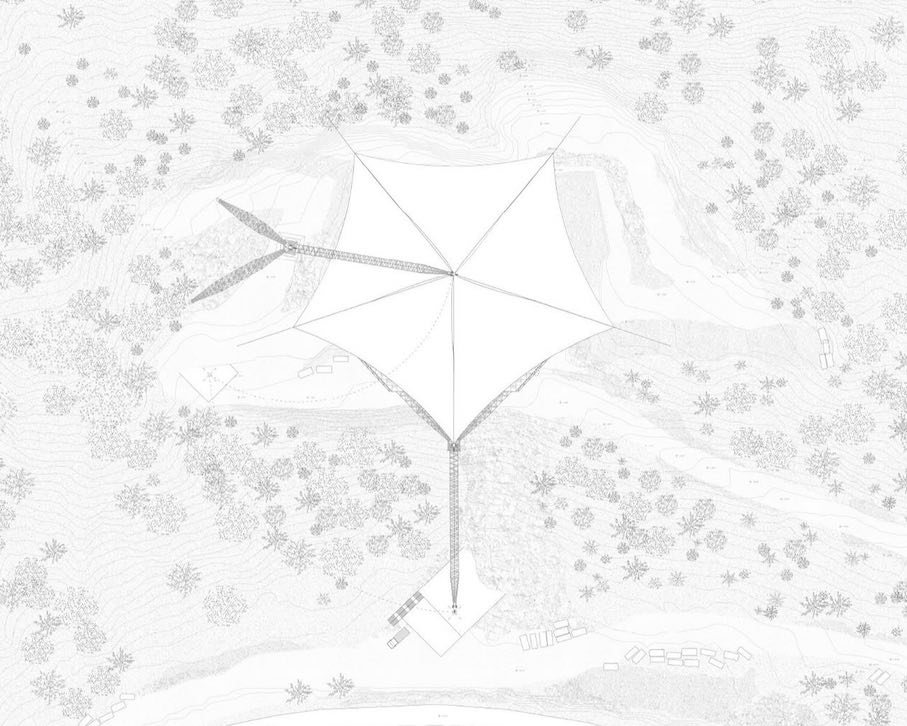
When an abandoned quarry is repurposed, this usually involves removing the machinery and tools. Architect Elisa Valentina Botti did the exact opposite for her project “The Quarry as a Stage,” giving the derrick cranes typical of such sites a crucial role: On the one hand, they support the suspended roof and seating for the new theater on the slope; on the other hand, they bring the former working atmosphere of stone extraction into the present.
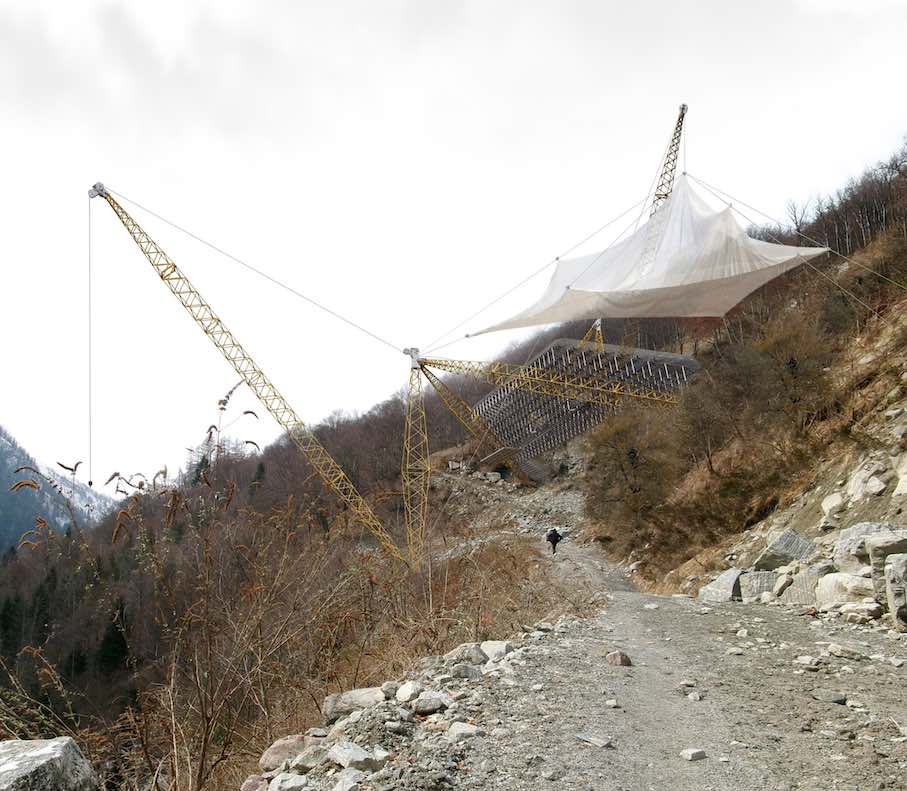
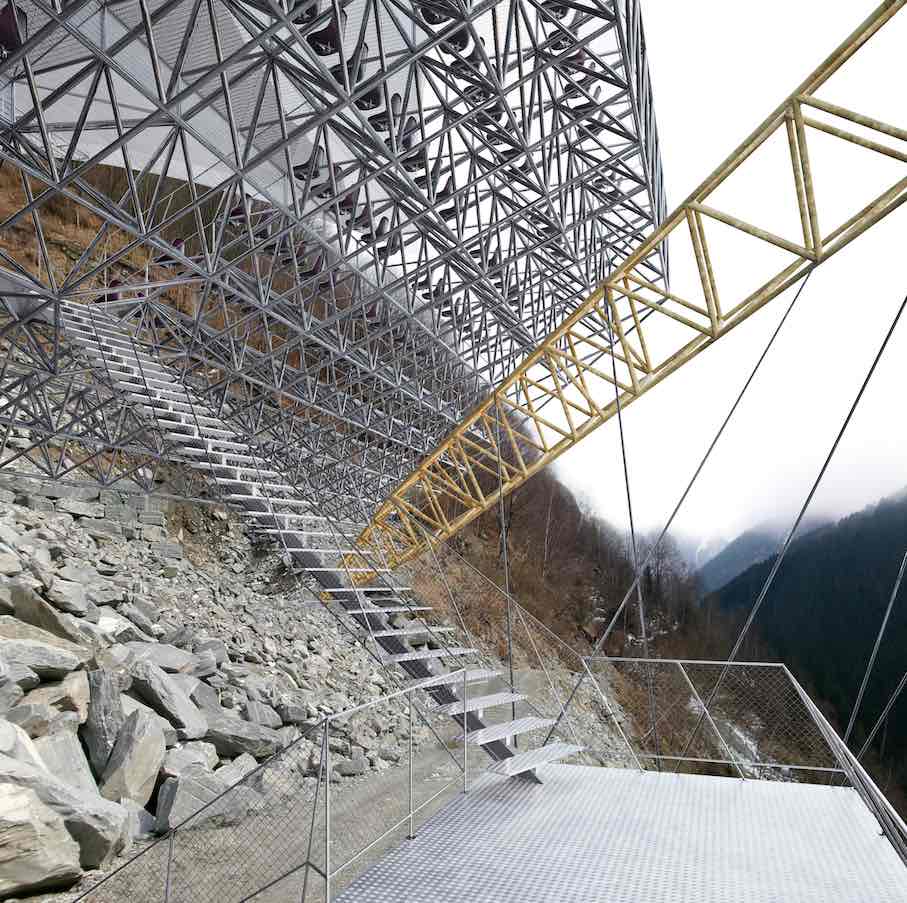
Well, it’s not exactly a present-day project; it’s merely a concept for the repurposing of a quarry in the Swiss canton of Ticino. Elisa Valentina Botti developed the idea in her diploma thesis; the images are renderings.
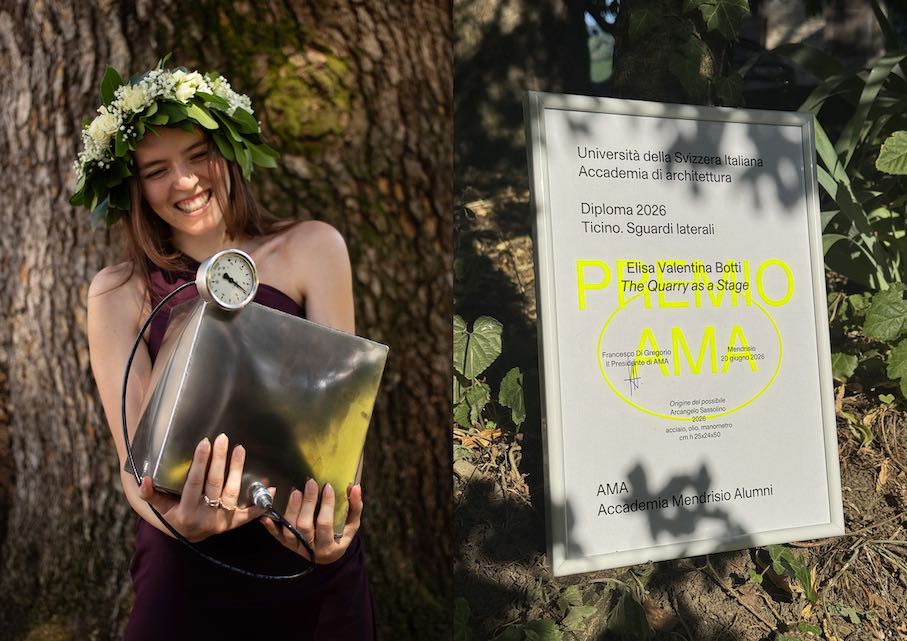
The project was awarded the first edition of the AMA Award, presented by the Faculty of Architecture at the Università della Svizera Italiana (USI), the only public university in Switzerland where Italian is the primary language. The faculty maintains an alumni organization called AMA (Accademia Mendrisio Alumni).
The focus of the competition was “territorial architecture,” specifically building for the side valleys of this Alpine region. Applicants were asked to give their projects a practical benefit to the specific location while highlighting its unique character.
The former “Zona Partus” quarry, which Elisa Valentina Botti had in mind, lies in the Onsernone Valley above a village on the hillside.
The core problem is that the quarry area is carved out of the hillside and is quite narrow – where should seating for visitors be placed?
Elisa Valentina Botti took a bold step: she positioned the seating in front of the hillside in an amphitheater-like arrangement, ensuring that every guest had an optimal view of the stage.
Over everything stretches a tent roof. Its supporting structure comes from the derrick cranes, which date back to the time of stone quarrying.
One arm of the derrick cranes serves to support the seating.
The roof can be erected and dismantled.
Derrick Cranes
There’s a lot to tell about the derrick cranes, some of it quite theatrical, which we found on Wikipedia: Technically, it’s a mast with a rotating boom. The inventor was Thomas Derrick, a London executioner around 1600, who developed the device so he could execute many convicts in quick succession. He himself came to his profession after being involved in war crimes and facing execution along with his accomplices. However, no executioner could be found, so he agreed to the job in exchange for a pardon. By the end of his life, he had executed around 3,000 people and was even immortalized in a popular song.
The Onsernone Valley is characterized by small villages perched high on the slopes, enjoying plenty of sunshine even in winter. According to Wikipedia, it features numerous typical stone houses built from local gneiss with wooden terraces.
Università della Svizera Italiana (USI)
Renderings: Elisa Valentina Botti